


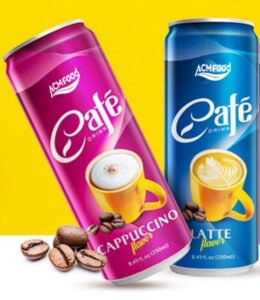



Aluminum Cans in the Beverage Industry – A Sustainable Trend

In the rapidly growing beverage industry, packaging is more than just a protective shell — it represents the brand’s image, product quality, and consumer experience.
Among the common packaging types such as PET bottles, glass bottles, and paper cartons, aluminum cans have emerged as a superior choice thanks to their convenience, preservation efficiency, and environmental benefits.

As modern consumers increasingly value portability, aesthetics, and sustainability, aluminum cans have become the preferred packaging for various drinks — from soft drinks and fruit juice to tea, coffee, and energy beverages.

I. Origin and Material Composition of Aluminum Cans

Aluminum cans are primarily made from aluminum alloy, a lightweight, flexible, and highly recyclable material.
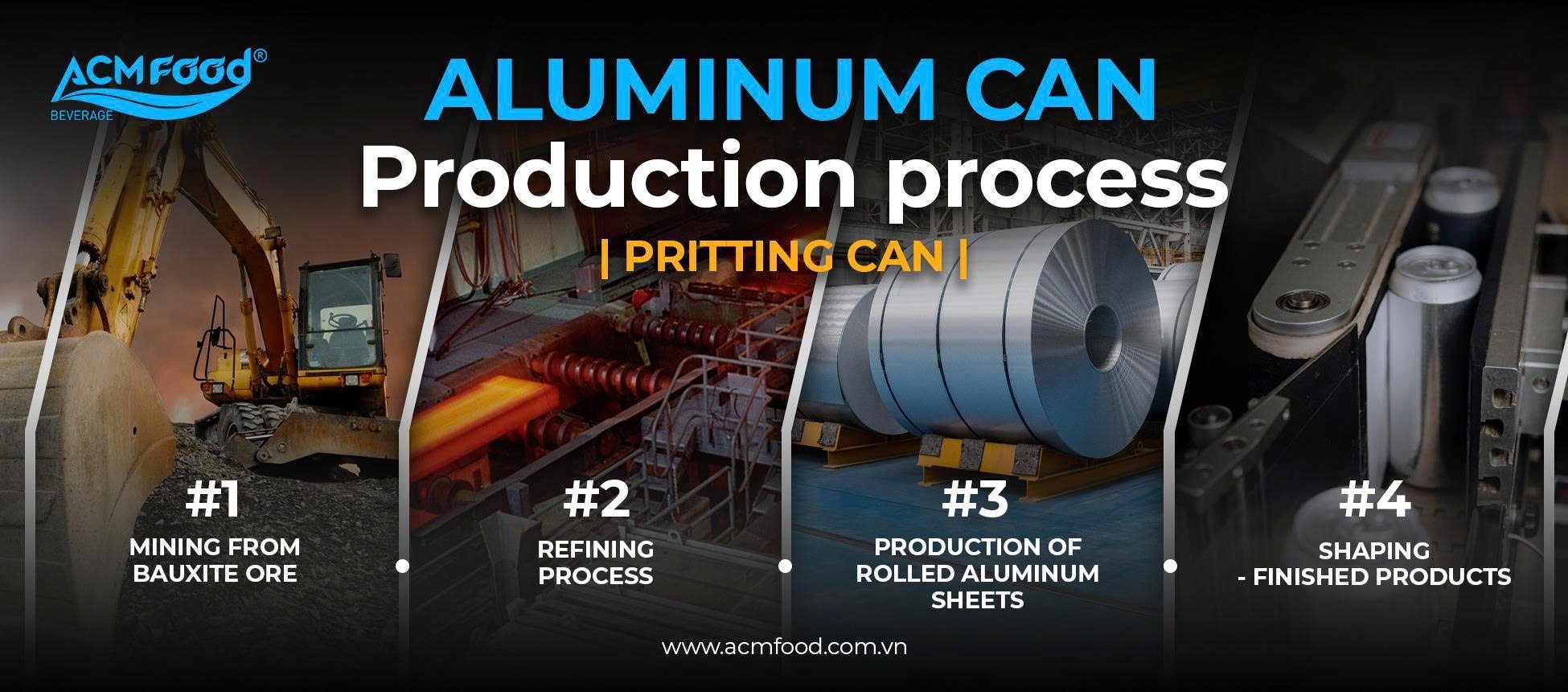
The aluminum is extracted from bauxite ore through an electrolytic refining process, producing high-purity aluminum sheets that are then rolled, shaped, and formed into the body, top, and bottom of the can.

In the beverage industry, aluminum is favored not only for its mechanical durability but also for its excellent resistance to corrosion, oxygen, light, and bacteria, which ensures the drink’s original flavor and freshness.

A modern aluminum can typically consists of:

  • Can body: Pressed from a thin but strong aluminum sheet.

  • Can bottom and lid: Slightly thicker to ensure complete sealing.

  • Inner coating: A food-grade epoxy or BPA-free resin that prevents reactions between the metal and the beverage.

This combination of advanced material and precision engineering has made aluminum cans the global standard in beverage packaging.

II. The Role of Aluminum Cans in the Beverage Sector

Aluminum cans act as a bridge between producers and consumers, adding both functional and aesthetic value.
For the soft drink and fruit juice segments, aluminum cans bring several key advantages:

  • Preserve taste and freshness: They effectively block light and air — the main causes of oxidation and flavor loss.

  • Enhance brand recognition: The metallic surface allows vivid printing and high visual impact on retail shelves.

  • Meet the on-the-go lifestyle: Compact, lightweight, and convenient for storage and transportation.

  • Ideal for export: Reduced shipping costs and superior product protection during long-distance distribution.

Thanks to these characteristics, aluminum cans have become a vital component in the beverage supply chain — from production and distribution to consumption and recycling.

III. Advantages of Aluminum Cans for Beverage Production

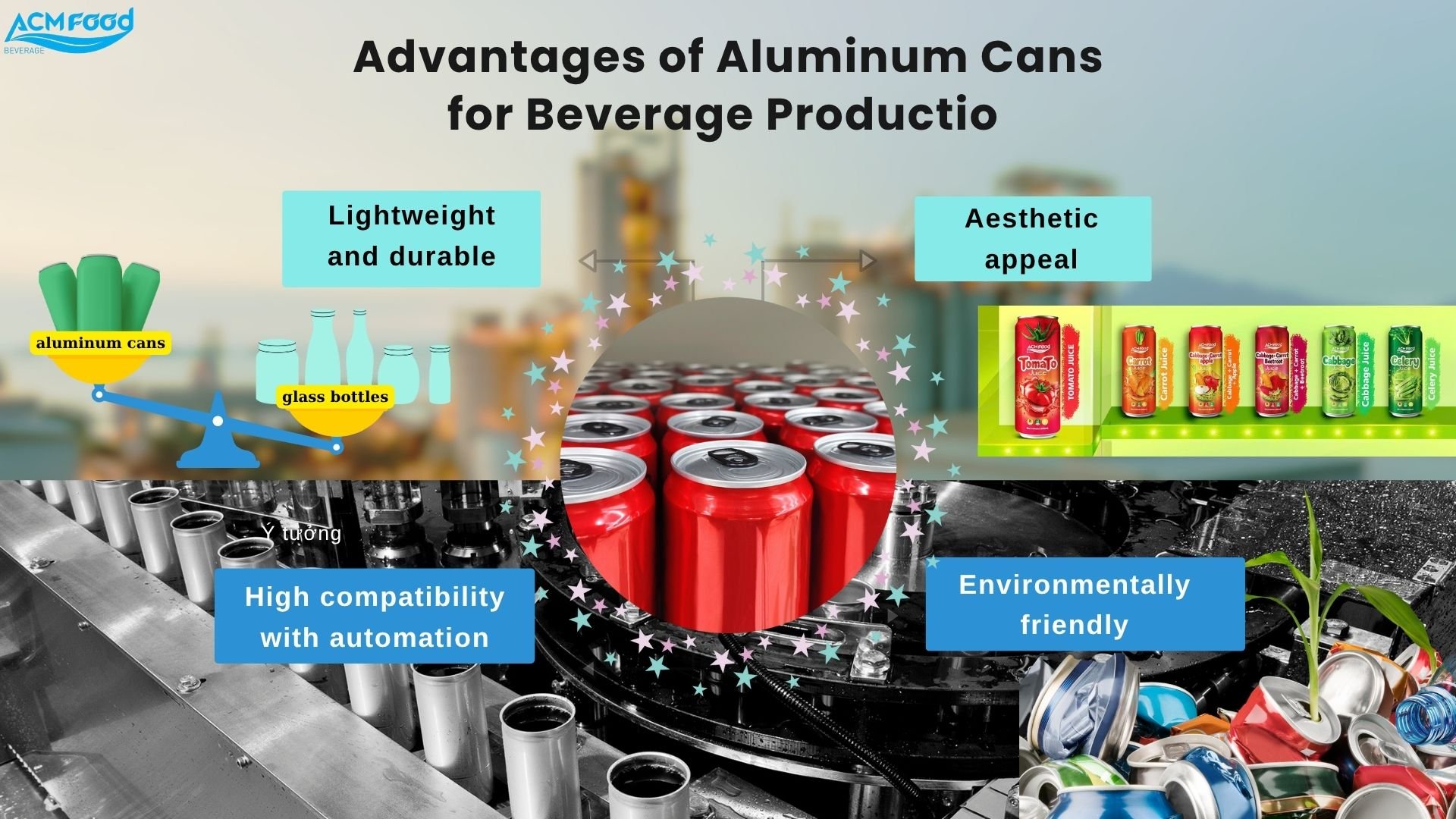
a. Superior product protection
Aluminum cans block oxygen and light, helping beverages maintain their taste, color, and nutritional value longer than other packaging options.

b. Lightweight and durable
Compared with glass bottles, aluminum cans are 20–30 times lighter, minimizing breakage risks during handling and transport.

c. Environmentally friendly
Aluminum cans are 100% recyclable without losing quality. Recycling requires only about 5% of the energy used in primary production, significantly reducing CO₂ emissions.

d. Aesthetic appeal
The metallic surface offers endless design possibilities, enhancing shelf appeal and perceived product value.

e. High compatibility with automation
Aluminum cans are well-suited for fully automated filling and sealing lines, ensuring consistency and efficiency in large-scale production.

IV. Limitations and Challenges of Aluminum Cans

Despite numerous advantages, aluminum cans also come with certain challenges:

  • Higher production costs: Aluminum and the forming process are more expensive compared with PET plastic.

  • Possible reaction with acidic ingredients: Requires a high-quality inner coating to ensure food safety.

  • Specialized equipment required: The filling and sealing process demands specific machinery, which can be costly for small-scale producers.

However, with the development of modern packaging technologies and OEM beverage services, these challenges are being gradually overcome, enabling more companies to enter the aluminum can market.

V. Global Trends in Aluminum Can Usage

Globally, major beverage brands such as Coca-Cola, PepsiCo, Red Bull, and Monster have shifted significantly toward aluminum cans to support plastic reduction and recycling initiatives.

According to the International Aluminium Institute (IAI), the global recycling rate for aluminum cans averages around 70% and continues to rise annually. In Europe, that rate already exceeds 90%, highlighting the material’s sustainable potential.

In Vietnam, a similar shift is taking place. Many beverage manufacturers — especially in fruit juice, soft drinks, and ready-to-drink coffee — are adopting aluminum cans to enhance product image and boost export opportunities to the U.S., Africa, the Middle East, and Europe.

Sustainability and recyclability are now key decision-making factors in packaging selection, shaping the future of the beverage industry.

VI. The Role of Aluminum Cans in Sustainable Development

Aluminum cans not only improve product quality but also contribute to environmental protection.
Switching to aluminum packaging aligns with the principles of the circular economy, where materials are continuously reused to minimize waste and conserve resources.

In the era of ESG (Environmental – Social – Governance), adopting eco-friendly packaging like aluminum cans helps beverage companies enhance their brand reputation and meet global import standards.

VII. ACMFOOD – Your Partner in Aluminum Can Beverage Solutions

With extensive experience in OEM and beverage manufacturing, ACMFOOD provides comprehensive services across various packaging types — especially aluminum cans — tailored to each customer’s product needs and target market.

The company’s philosophy emphasizes partnership and sustainable growth:

“Providing OEM services on all types of beverage packaging suitable for each drink,
always respecting and growing together with our partners.”

ACMFOOD supports its clients not only in production but also in packaging consultation, helping businesses optimize costs, elevate brand value, and comply with international quality standards.

VIII. Conclusion

Aluminum cans have firmly established their role as the leading packaging solution in the global beverage industry — combining functionality, design, and sustainability.
Although production may involve higher costs, ongoing innovations in materials and technology continue to make aluminum cans a future-ready choice for beverage producers worldwide.

For companies seeking to develop high-quality canned beverages and expand into international markets, partnering with ACMFOOD is the key to success — ensuring consistent quality, market adaptability, and sustainable growth.

Related blogs insights

Strawberry Sparkling Drink The Ultimate Guide

Contents1 330ml Canned Strawberry Sparkling Drinks1.1 Nutritional Information1.2 Health Benefits2 330ml Canned Strawberry Sparkling Drink [...]

1 Comment

Tropical Sour Superfruit Innovation Drives Functional Beverage Growth

Explore how the sour superfruit trend, led by tamarind, is reshaping the functional beverage market. [...]

2 Comments

Coconut Drink with Nata de Coco Exploring a Refreshing and Nutritious Beverage

Contents1 Origins of Coconut Drink with Nata de Coco2 How to Use Coconut Drink with [...]

1 Comment

The Refreshing Delight of Coco Lychee Drink

Contents1 The Origins of Coco Lychee Drink1.1 A Fusion of Tropical Flavors1.2 Traditional and Modern [...]

1 Comment

Vietnam International Sourcing & Ho Chi Minh City Export Forum 2025

Contents1 From September 4 to 6, 2025, the Vietnam International Sourcing in combination with the [...]

1 Comment

ACM Low Sugar Peach Juice Drives Wellness Beverage Growth Through Korean Innovation

Explore how ACM's low sugar peach juice drink meets global wellness trends, offering OEM flexibility [...]

One thought on “Aluminum Cans in the Beverage Industry – A Sustainable Trend

  1. Alnafay says:

    The piece rightly highlights aluminum’s infinite recyclability, but the discussion could be strengthened by addressing the full lifecycle emissions. While cans boast high recycling rates, the energy-intensive primary smelting process still carries a significant carbon footprint. A deeper dive into closed-loop systems and end-of-life collection infrastructure would provide a more balanced industry outlook.

Leave a Reply

Your email address will not be published. Required fields are marked *