














A natural aloe vera juice drink is made from the inner-leaf gel of Aloe barbadensis, usually as soft pieces in a lightly sweetened base, with around 6–12 g of sugar per 100 ml. Food-grade aloe must be decolourised to remove aloin, a laxative compound banned in food in the EU since 2021.
Key facts at a glance
- Inner-leaf gel is used; the outer latex contains aloin.
- Aloin was classed as a possible carcinogen (IARC 2B) in whole-leaf extract studies.
- Digestive and skin claims are not authorised in the EU.
- Pieces give the characteristic texture.
- Avoid in pregnancy as a precaution.
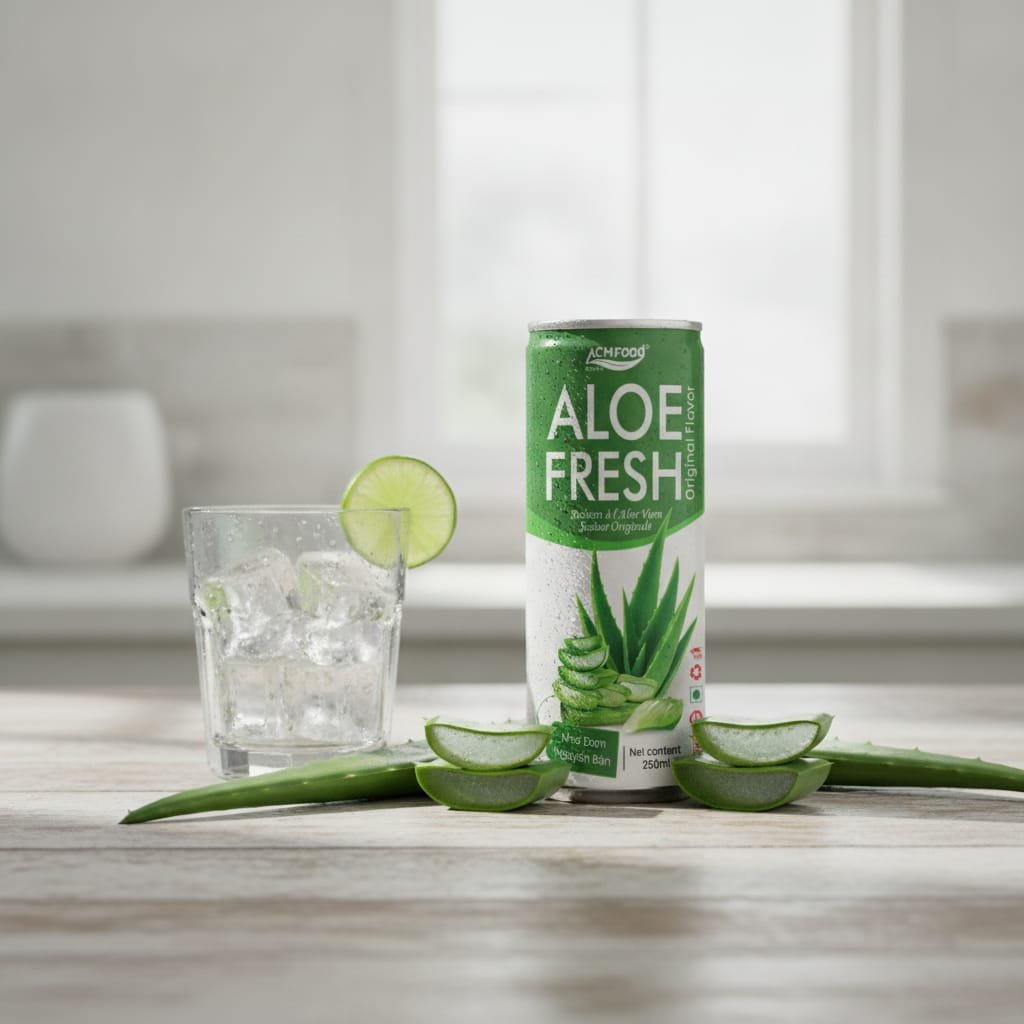
What’s in an aloe vera drink
| Component | Role |
|---|---|
| Aloe gel pieces (often 10–30%) | Texture |
| Water and sugar or sweetener | Base and taste |
| Acidulant (citric acid) | Flavour and stability |
| Fruit juice or flavour (optional) | Variety |
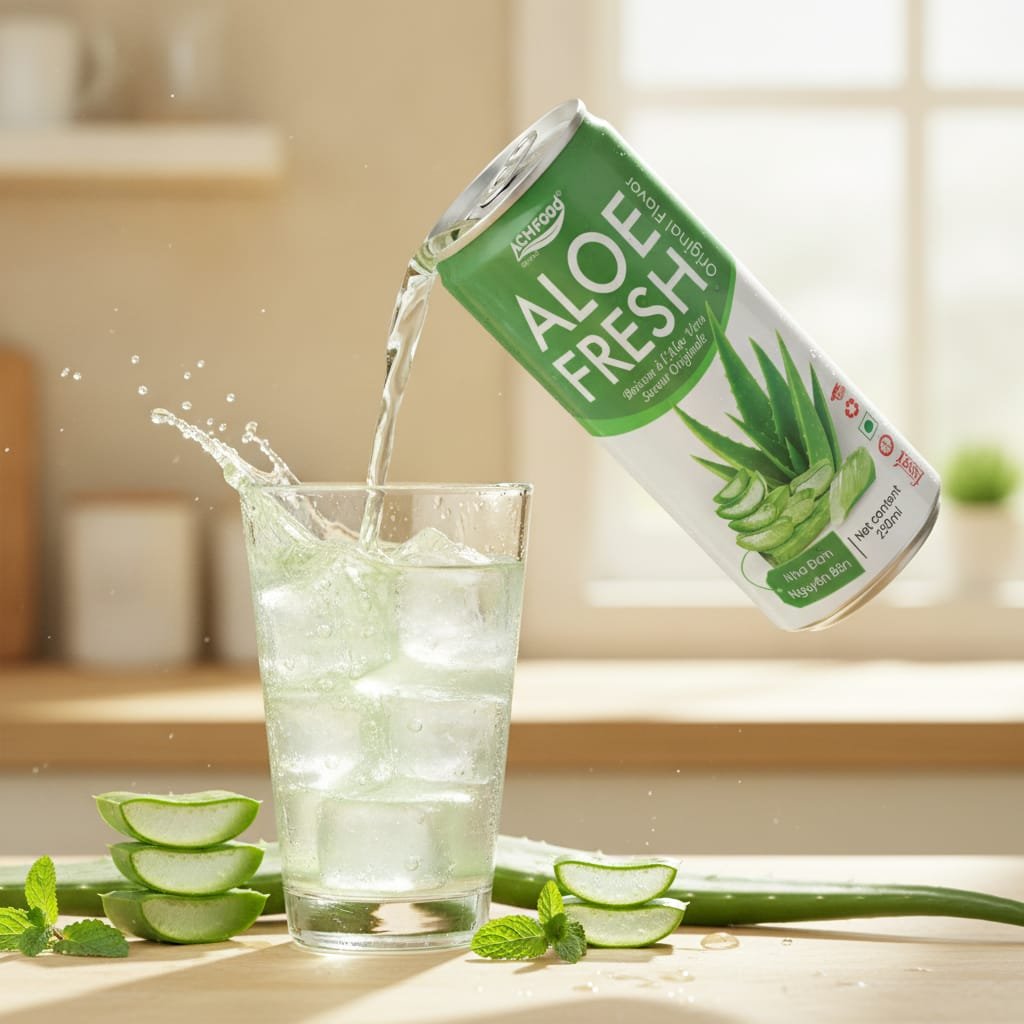
Evidence check
- Digestion / IBS: small, mixed studies, mostly with specific extracts.
- Blood sugar: some small trials of aloe supplements; not applicable to sweetened drinks.
- Skin: evidence is for topical gel, not drinking.
Who should avoid aloe drinks
- Pregnant and breastfeeding women.
- People on diabetes medicines (possible additive effect).
- Anyone reacting with cramps or diarrhoea.
Frequently asked questions
Is drinking aloe vera juice safe?
Drinks made with decolourised inner-leaf gel are considered safe for most adults. Avoid whole-leaf, non-decolourised products.
Does aloe vera juice help digestion?
Evidence is weak and inconsistent. Treat aloe drinks as refreshment rather than a remedy.
What are the pieces in aloe vera drinks?
Cubes of aloe leaf gel, soft and jelly-like.
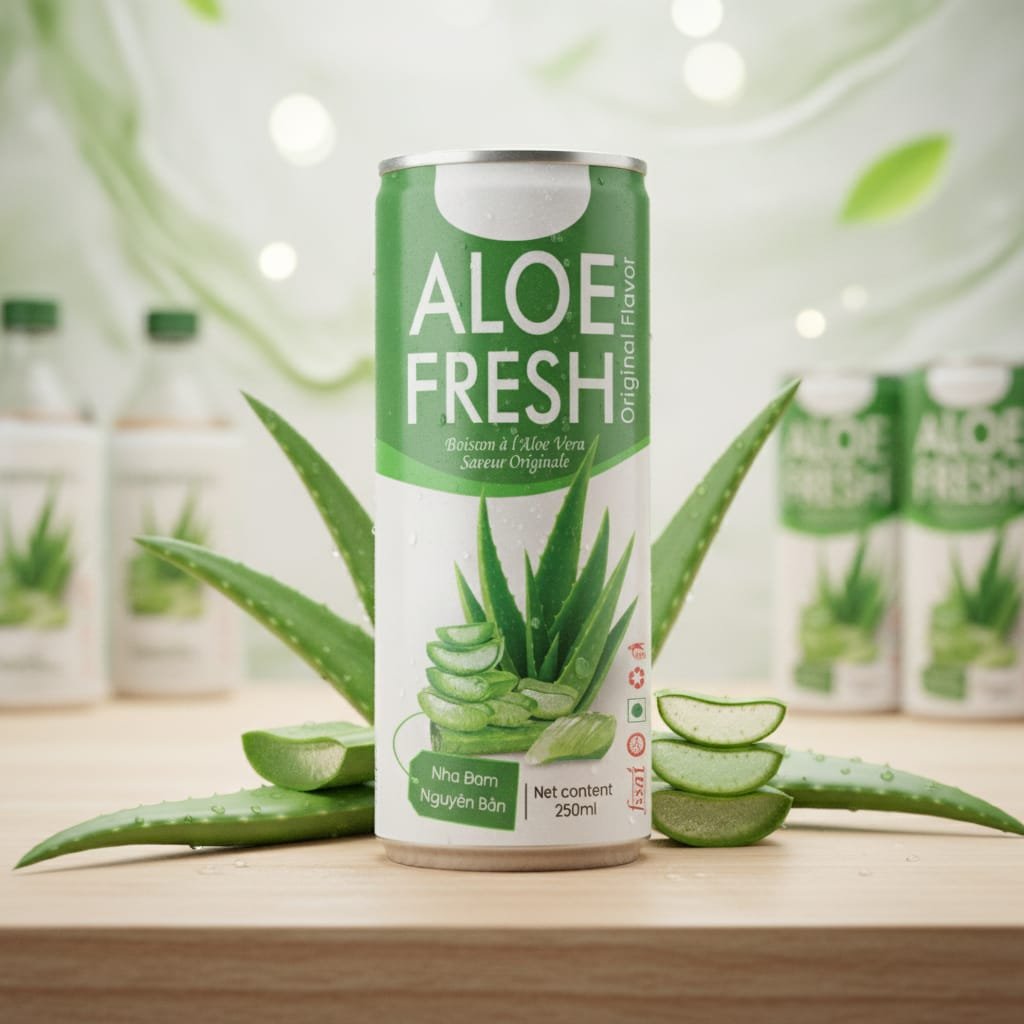
Aloe vera drinks from ACM Beverage
ACM Beverage produces aloe vera drinks in Vietnam for OEM and private label customers. See the 250 ml natural aloe vera juice. Related reading: aloe vera with blueberry and aloe vera with soursop.
This article is general information, not medical advice.






