


Tomato juice is widely reported as a popular drink on aircraft, and airlines and hotel groups that source it tend to ask for the same things: a small can, a long shelf life, predictable salt and a label that fits their catering system. This guide explains what is and is not known about the in-flight popularity of tomato juice, then focuses on the part a supplier can influence: how an airline or hotel buyer chooses, specifies and sources it.
The popularity claim comes with a caution. Explanations circulate widely, but this guide does not rely on a verified source for any of them, so it presents them as reported ideas, not as established fact. The practical sourcing sections below do not depend on them.
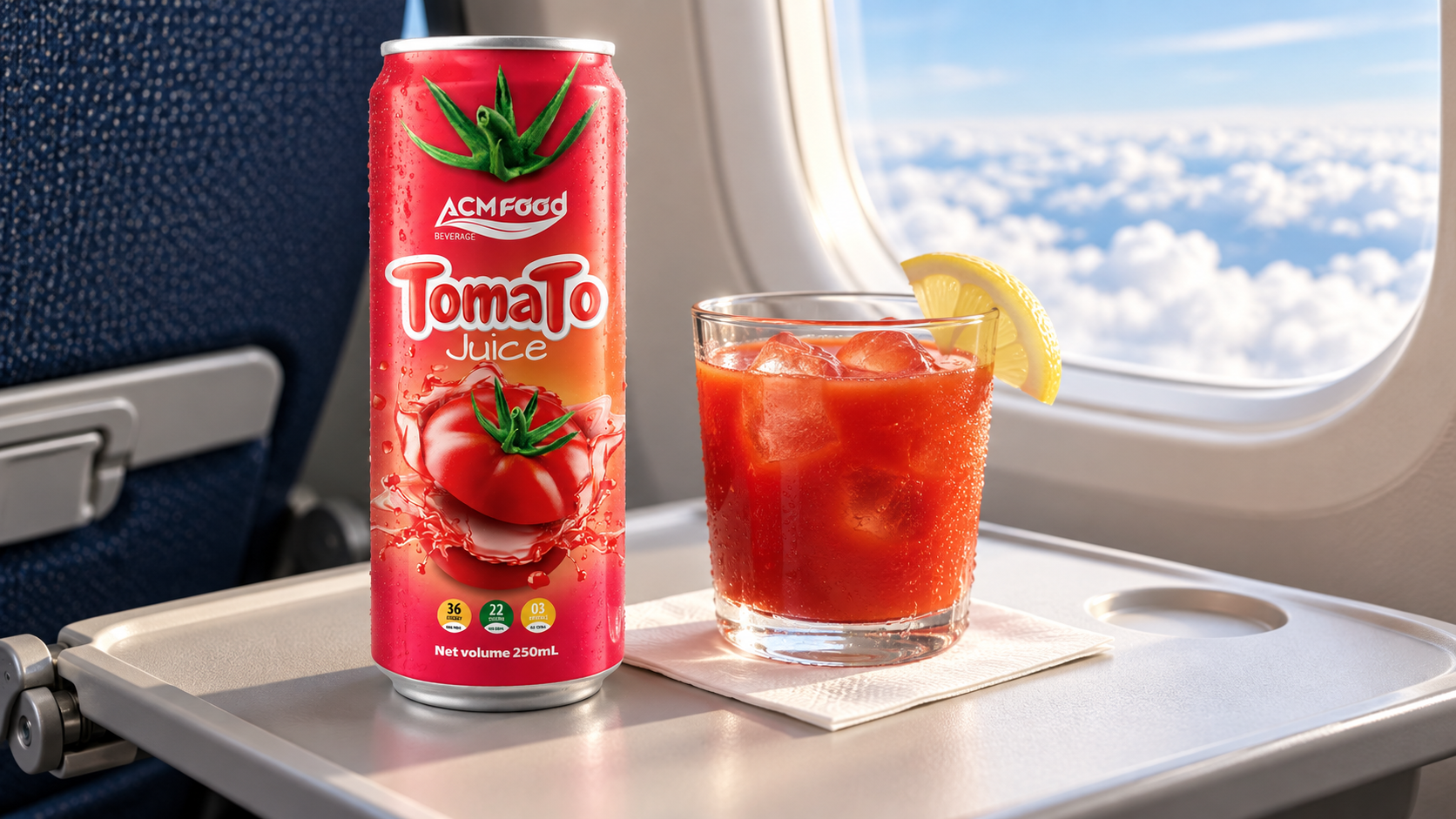
Is tomato juice really a top in-flight drink?
It is commonly described that way, but this guide does not have verified passenger data to support a ranking. Anecdotal reports and trade commentary suggest tomato juice is ordered more often in the air than on the ground, and caterers often keep it on beverage lists for that reason.
For a buyer, the useful reading is narrower. The drink is a familiar item on many airline and hotel beverage menus, and a supplier that can offer it in a convenient single-serve format meets a recognisable need. Whether it ranks first, third or tenth on a given carrier is a question for that carrier’s own sales data, which a buyer can request from a catering partner.
What explanations are given for its in-flight popularity?
The most common explanation is that cabin conditions change how food and drink taste, so savoury, strongly flavoured drinks seem more appealing at altitude. Other suggestions include habit, the wish for a non-alcoholic savoury option and the link with breakfast or cocktail service.
Treat these as hypotheses. This guide does not cite a study for any of them and does not make a health claim about tomato juice. If you plan marketing around an explanation, find a source that supports it first, and use it only in the form the source allows.
What do airline and hotel buyers usually need from a tomato juice?
Buyers in catering and hospitality usually care about format, shelf life, handling, salt, labelling and consistency. These points come from how catering operations work, not from a published standard, so confirm each one with the caterer or procurement team involved.
| Need | Why it matters in catering | What to specify |
|---|---|---|
| Small single-serve pack | Portion control, less waste and easy service from a trolley or minibar | 250ml can as the starting point |
| Long shelf life | Stock is held for weeks and moves between sites | Stated shelf life and storage conditions |
| Easy opening and handling | Cans must open cleanly and travel without leaking | Pull-tab can, secure cartons and a transport test |
| Salt level | Menus increasingly offer lower-salt options | Unsalted, low-salt or regular, with sodium per 100ml |
| Clear labelling | Ingredient and allergen information must be accurate in each market | Languages, ingredient list and allergen statement |
| Consistency | The same taste across hubs and seasons | Brix, acidity and viscosity targets with tolerances |
Which can size and format suits in-flight and hotel service?
A 250ml aluminium can is the usual starting point for single-serve catering because it gives a full glass with ice and stores compactly. A slim can reads as modern and takes less space on a trolley, while a standard 250ml can is simpler and familiar.
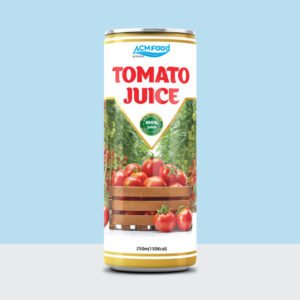
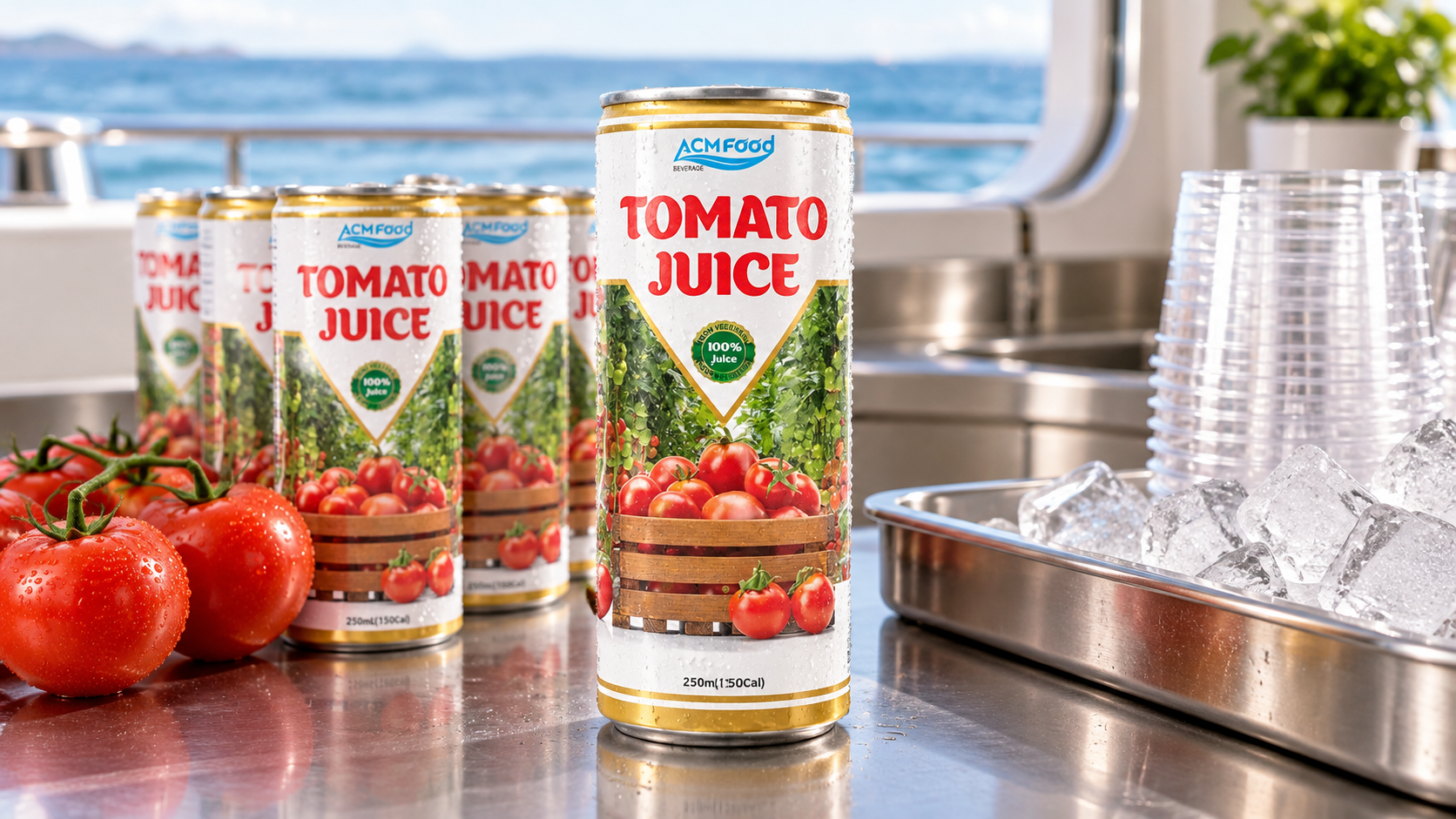
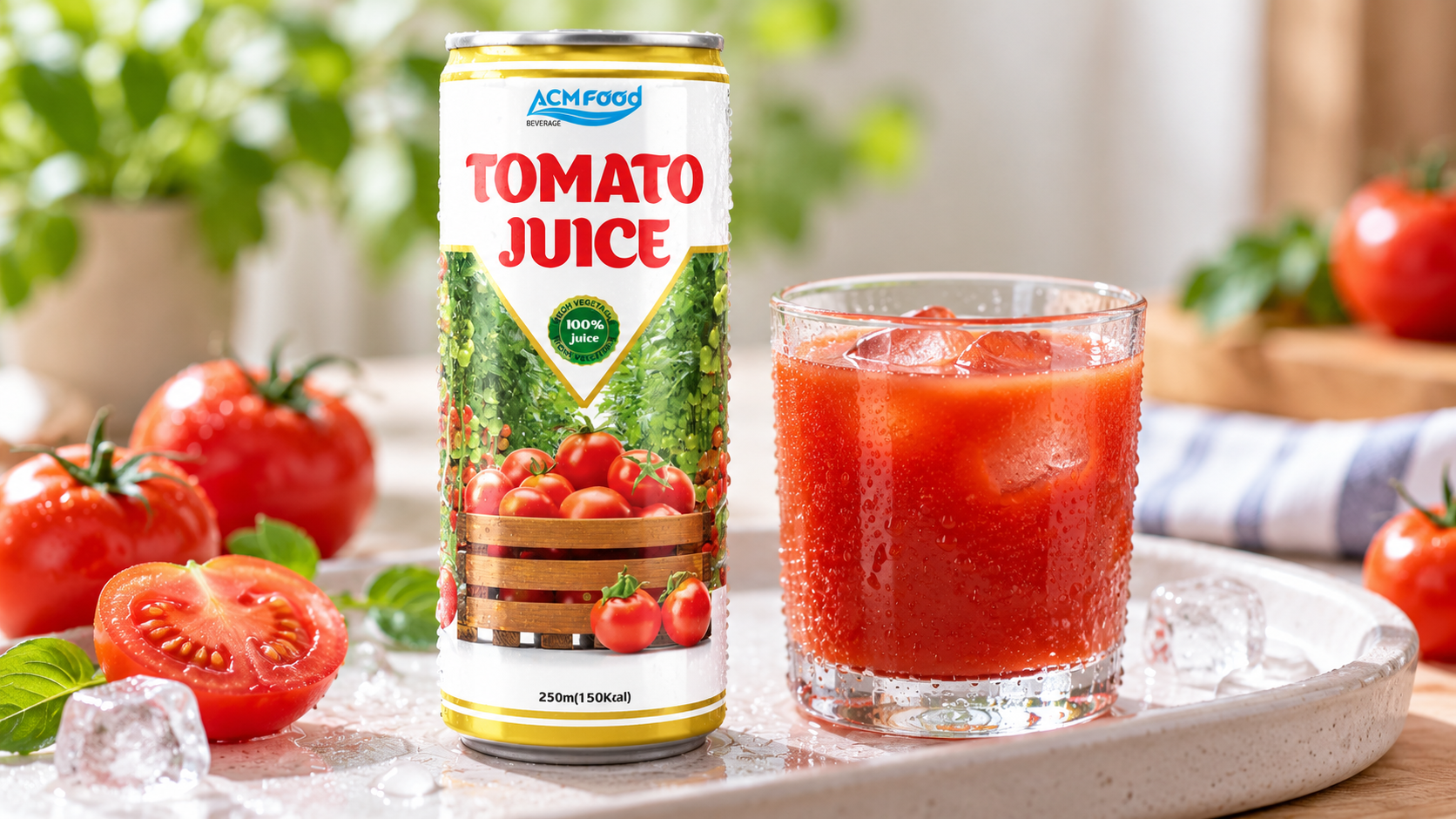
The published tomato juice products include 250ml aluminium cans, in standard and slim profiles, each with a 24-month shelf life and certifications FSSC 22000, HACCP and ISO 22000. The guide to sleek can versus slim can compares the shapes for shelf presence and handling. For a buyer who also needs a 330ml option, the range includes a not-from-concentrate can, which is described in the article on NFC tomato juice and salt.
How do salt and recipe choices affect catering use?
Salt is the most visible recipe choice. Some catering menus prefer unsalted or low-salt juice so guests can season to taste, while others serve a ready-seasoned product. The recipe can also include seasoning or a lemon note, but every addition raises the chance of variation and adds to the ingredient review.
The customisation options described for ACM tomato juice include unsalted, low-salt and regular salt levels, thin or thick texture and plain, spicy or lemon seasoning. Which combination is available should be confirmed. Keep language on the pack factual and avoid describing the drink in terms of effects on the body, since statements about health depend on the final formula, tested content, serving size and local rules.
What is the difference between private label and a standard product?
A standard product comes with its existing label, while private label puts the airline, hotel or catering brand on the pack. Private label gives a consistent branded experience and control over label wording, at the cost of artwork approval and, in some cases, a longer timeline.
Because the formula already exists, private label is usually the shorter route. The page on private label beverage products explains how existing formulas are offered, and the guide to white label, private label and custom beverage paths helps a buyer choose the right model before briefing.
How should a catering buyer evaluate a supplier?
Ask for documents and samples that show the supplier can deliver the same product repeatedly. Catering contracts depend on reliability, so evidence of process control matters more than a promotional description.
- Specification sheet. Targets and tolerances for Brix, acidity, salt and viscosity.
- Certificates. Food safety certificates for the production site, with scope and dates.
- Samples. Cans from a production batch, tested in the catering workflow.
- Labelling. Ingredient and allergen statements in the languages you need.
- Traceability. Batch codes on each can and a certificate of analysis on request.
- Transport performance. Carton strength and a check for dents and leaks after a realistic journey.
Airline catering and travel retail have their own supplier qualification steps, which vary by carrier and country. Treat the list above as a starting point and add whatever your procurement team or caterer requires.
What documents and compliance checks should be expected?
Expect to provide or receive a specification, food safety certificates, a certificate of analysis for each batch, label artwork for approval and import documentation for the destination. Some operations also request allergen information, shelf-life data and transport test results.
Rules for beverages served on aircraft or in hotels differ by country and by operator, so do not assume that a product approved in one market is approved everywhere. Confirm which authority and which internal standards apply before you place an order, and have a named person responsible for each approval.
How would you run a catering pilot for tomato juice?
A pilot tests the product in the real workflow before a contract. Agree a small quantity, a defined period and a set of measures, then review the results with the caterer and the supplier before committing to a larger order.
- Define the goal. For example, confirm handling, taste acceptance or label compliance on a defined route.
- Agree the quantity and the sites. Use one or two locations so problems are easy to trace.
- Record observations. Damage on arrival, opening problems, leakage, waste and any feedback from crew or guests.
- Review documents. Check that labels, batch codes and certificates match what each site needs.
- Decide on scale-up. Move forward only if the pilot meets the measures you defined.
What logistics points matter for a small-can supply?
Small cans move in cartons on pallets, and catering operations care about carton size, weight and how easily cartons can be handled by galley and hotel staff. A carton that is too heavy or awkward slows loading and raises the risk of damage.
Ask the supplier for the carton specification, including the number of cans, dimensions and gross weight, and for the pallet pattern. Confirm that the cartons carry batch and expiry information in a form your stock system can read. If the product travels through several hubs, check the temperature range it will meet, because shelf-stable does not mean immune to heat.
What should a supply agreement for catering cover?
A supply agreement should cover specification, change control, quality complaints, shelf life on delivery and traceability. These points protect both sides when a batch is off-specification or a recipe is changed.
- Specification and tolerances. The agreed targets, attached as a controlled document.
- Change control. Notice before any change to recipe, pack or production site.
- Shelf life on delivery. Minimum remaining shelf life when cartons arrive.
- Complaints and recalls. How problems are reported, investigated and resolved.
- Traceability. Batch coding and records that allow a rapid trace.
Pricing terms and delivery schedules are agreed per project and are not stated in this guide. Ask for a written offer that names the specification it applies to.
How should a buyer present the request to a supplier?
Present the request as a short specification, not as a general enquiry. Name the can size, the salt level, the label language, the expected annual use and the destination, and attach any catering standards your operator requires.
A precise request lets the supplier say quickly whether an existing product fits or whether a development step is needed. It also makes it easier to compare responses from more than one supplier, because each answers the same questions on the same basis.
Frequently asked questions
Is there proof that tomato juice is the most ordered in-flight drink?
This guide has no verified data for a ranking. Reports describe it as popular, but a carrier’s own sales figures are the reliable source for any specific airline.
Which can size is most common for single-serve catering?
250ml is the usual starting point. A 330ml can is available in a not-from-concentrate version and suits a larger serve.
Can a catering brand put its own label on tomato juice?
Yes, through private label. Artwork and wording need approval, and claims must follow the rules of the destination market.
Can the salt level be changed?
Salt level is one of the customisation options listed for the product. Confirm the available levels and the sodium value on the specification sheet.
Keep a written record of the answers you receive. If a carrier or hotel group later changes its standards, the file shows which specification and which approvals applied to each shipment, which makes any re-qualification faster and less disputed.
Summary and next step
The in-flight popularity of tomato juice is widely reported but not verified here, so sourcing decisions should rest on the practical requirements of catering: a small can, long shelf life, predictable salt, clear labelling and consistent quality. Specify these in writing, test samples in your own workflow and confirm approvals with your caterer.
To discuss a tomato juice supply project for airlines, hotels or catering, send your can size, salt level, label needs and destination to ACM Beverage through the contact page.