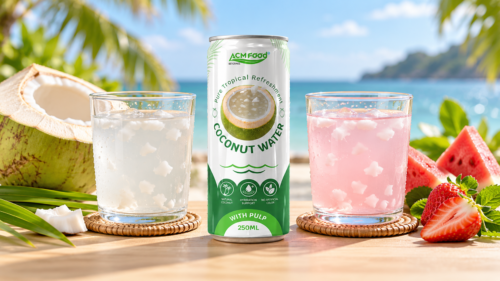
Coconut water coffee is a drink that combines coffee, usually espresso or cold brew, with coconut water instead of, or alongside, plain water or milk. The coconut water adds light natural sweetness, a subtle nutty note and a refreshing finish, turning a strong black coffee into something smoother and more thirst-quenching. It is popular in cafés as an iced drink and is also sold ready to drink in cans.
This guide explains how coconut water and coffee work together, the main ways to make the drink, how it differs from coconut milk coffee, and what cafés and beverage brands should consider when adding it to a menu or range. It focuses on taste and preparation; caffeine content depends entirely on the coffee used and the recipe, so it is not quantified here.

Why does coconut water work with coffee?
Coconut water works with coffee because its gentle sweetness and light body soften coffee’s bitterness and acidity without masking its flavour, the way milk or syrup would. The result tastes cleaner and more refreshing than sweetened iced coffee, while still letting the coffee lead.
Several properties explain the pairing:
- Natural sweetness: coconut water rounds off bitter notes, so many people need little or no added sugar.
- Light body: unlike coconut milk, coconut water does not make the drink creamy or heavy.
- Subtle nutty and mineral notes: these complement chocolatey and nutty coffee profiles in particular.
- Refreshment: served over ice, the combination feels closer to a cold, thirst-quenching drink than a rich coffee.
Coffee roast and origin matter. Medium and darker roasts with chocolate or caramel notes tend to pair smoothly with coconut water, while very light, acidic roasts can taste sharp against the coconut’s sweetness unless the proportions are adjusted.
Coconut water with espresso
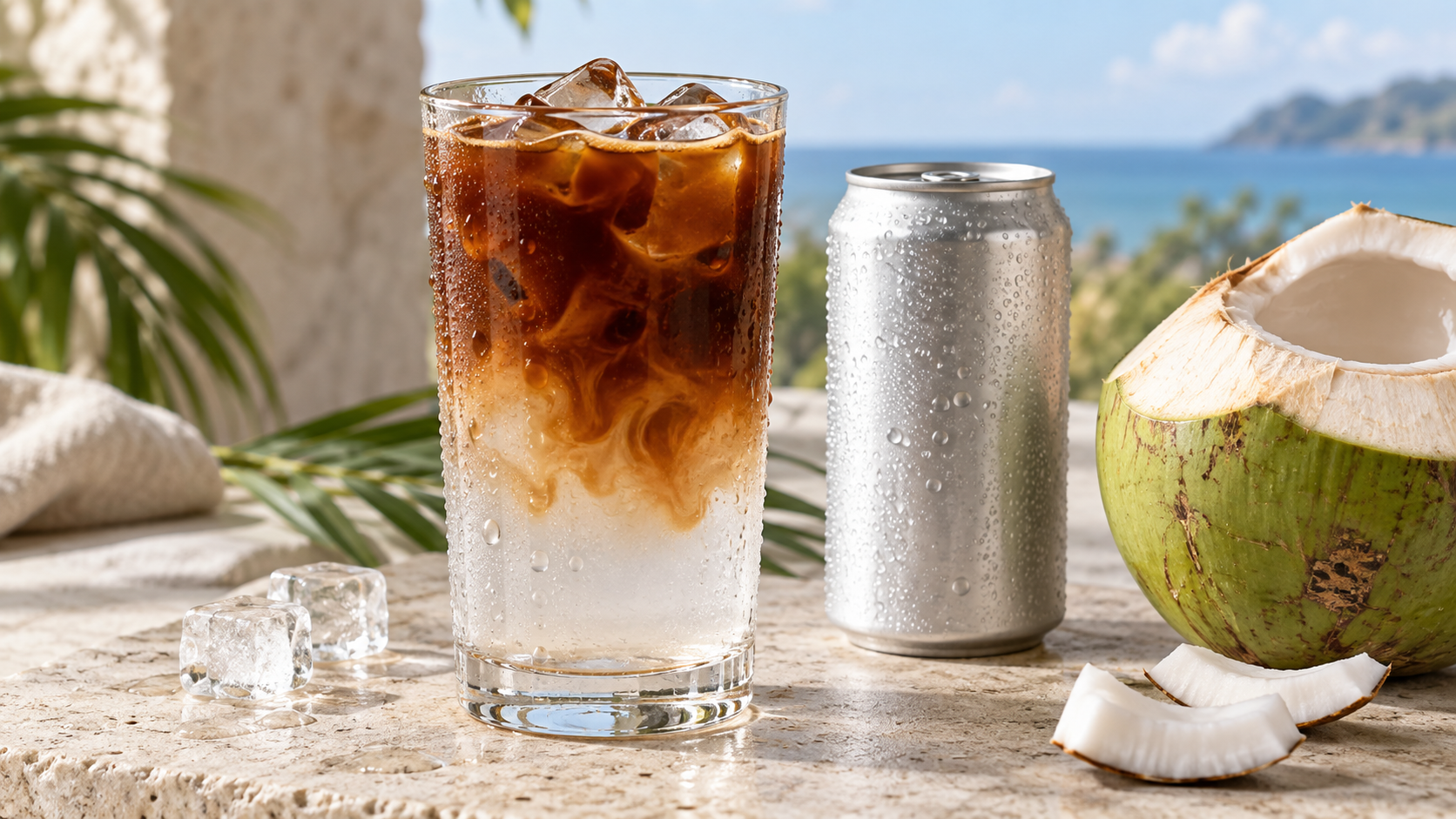
The simplest version is espresso poured over ice and chilled coconut water. In cafés it is often built in a tall glass: ice first, then coconut water, then a shot of espresso floated on top so the layers are visible before stirring.
Ways to vary the serve:
- Classic: a single or double espresso over iced coconut water, stirred before drinking.
- Citrus twist: a strip of orange or lime peel adds brightness that lifts both coffee and coconut.
- Sparkling: topping with a little sparkling water creates a lighter, spritz-style coffee.
- Pulp version: coconut water with pulp adds soft pieces of coconut meat for texture.
The ratio of coffee to coconut water is a matter of taste. More coconut water gives a lighter, sweeter drink; less gives a stronger, more coffee-forward one. Cafés usually test a few ratios with their own espresso before fixing a recipe.
Coconut water cold brew
Cold brew coffee pairs especially well with coconut water because cold brewing produces a smoother, less acidic coffee. Mixing cold brew concentrate with chilled coconut water, instead of diluting it with plain water, gives a mellow, naturally sweet iced coffee that needs little or no sugar.
Some cafés go further and use coconut water as part of the brewing liquid itself. This approach changes extraction and can produce interesting results, but it needs careful testing for taste and food safety, since coconut water contains sugars and spoils faster than water. For most venues, mixing finished cold brew with coconut water at serving time is simpler and more consistent.

How to choose a coffee for coconut water
The best coffee for coconut water is usually a medium to medium-dark roast with chocolate, caramel or nutty notes, because those flavours sit naturally alongside coconut. Fruity, very bright coffees can work too, but they need more testing to avoid a sour or thin result.
- Robusta-heavy blends: bold and bitter; coconut water softens them well, which is one reason the pairing feels natural in Southeast Asia.
- Arabica medium roasts: balanced and sweet; they give the most approachable version for new customers.
- Light, floral roasts: delicate and acidic; use more coffee or less coconut water so the coffee’s character is not lost.
- Decaffeinated coffee: works the same way for customers who want the taste without caffeine.
Extraction strength matters as much as the bean. A slightly stronger shot or concentrate holds up better once ice and coconut water dilute it.
Other ways to combine coconut water with café drinks
Coffee is not the only café drink that benefits from coconut water. The same idea, replacing some water or milk with coconut water, works with tea and other bases. Matcha with coconut water is a popular example; our article on matcha coconut water and what to expect covers its taste and caffeine considerations. Cafés also use coconut water in fruit-based iced drinks and alcohol-free mixes, and our collection of easy drinks made with canned coconut water offers further ideas.
Common mistakes when making coconut water coffee
A few simple errors explain most disappointing results:
- Using warm coconut water, which makes the drink taste flat; keep it well chilled.
- Adding too much ice before the coffee, which over-dilutes a single shot.
- Using sweetened or strongly flavoured coconut water, which can clash with coffee.
- Leaving opened coconut water unrefrigerated, which affects taste and safety.
- Pouring hot espresso straight onto coconut water without ice, which cooks off some of its fresh aroma.
Coconut water coffee vs coconut milk coffee
Coconut water coffee and coconut milk coffee are often confused, but they are very different drinks. Coconut water is the clear liquid inside a young coconut; coconut milk is made from pressed coconut meat and is rich and creamy.
| Feature | Coconut water coffee | Coconut milk coffee |
|---|---|---|
| Coconut ingredient | Coconut water | Coconut milk or coconut cream |
| Texture | Light, clear, refreshing | Creamy, rich, smooth |
| Flavour effect | Softens bitterness, adds light sweetness | Adds richness and strong coconut flavour |
| Typical serve | Iced, often with espresso or cold brew | Hot or iced latte-style drinks |
| Closest comparison | Iced black coffee with a natural sweetener | A dairy-free latte |
Coconut milk coffee is a well-established style in Vietnamese café culture, and our Vietnamese coffee guide to brewing and classic drinks covers those traditions.
What does coconut water coffee taste like?
Coconut water coffee tastes like a lighter, smoother iced coffee with gentle sweetness and a faint nutty finish. The coffee remains the main flavour, but its bitterness is softer and the drink feels more refreshing than a standard iced Americano.
People new to it often notice three things: that it needs less sugar than they expect, that it feels less heavy than milk-based iced coffee, and that the coconut is subtle rather than dominant. Those who expect a strong coconut taste are sometimes surprised, which is why menus should describe it clearly.
How to make coconut water coffee at home
Making coconut water coffee at home takes only a few minutes and no special equipment beyond a way to brew strong coffee.
- Fill a tall glass with ice.
- Pour in chilled original coconut water until the glass is about two-thirds full.
- Brew a strong espresso, moka pot coffee or a splash of cold brew concentrate.
- Pour the coffee slowly over the top, stir and taste; add more coconut water for a lighter drink or more coffee for a stronger one.
Drink it straight away, while it is cold and the aroma is fresh.
Ready-to-drink coconut water coffee
Coconut water coffee is also sold in cans as a ready-to-drink product. These drinks combine coconut water with coffee or coffee flavour in a sealed, shelf-stable pack, offering the taste without preparation.
When comparing ready-to-drink versions, check:
- The coffee source: brewed coffee, coffee extract or coffee flavour each give a different strength and authenticity.
- Caffeine information: where the market requires it, the label should state caffeine content or a warning; check this if you are sensitive to caffeine.
- Sugar: some versions rely on the natural sugars of coconut water, others add sugar.
- Pack format and shelf life: cans protect against light and suit grab-and-go fridges.
The ACM FOOD range from ACM Beverage includes a coconut water with coffee flavour in a 330ml aluminium can, listed with a 24-month shelf life on its product page. Other coffee-based drinks are grouped in the coffee drinks product category.
Adding coconut water coffee to a café menu or product range
For cafés, coconut water coffee is an easy addition because it uses ingredients most venues already have: espresso or cold brew, ice and a good coconut water. It suits warm-weather menus, health-conscious customers looking for lower-sugar options and venues that want a signature iced drink.
Practical tips for venues:
- Use original, unflavoured coconut water as the base so the coffee stays in focus.
- Keep coconut water well chilled and use opened bottles promptly.
- Fix a standard recipe and ratio so the drink tastes the same across shifts.
- Describe it on the menu as “iced coffee with coconut water” to avoid confusion with coconut milk drinks.
For brands, a ready-to-drink coconut water coffee sits between the coffee and coconut water categories, which creates both opportunity and positioning questions. It can appeal to coffee drinkers wanting something lighter and to coconut water drinkers wanting a lift. Brands should decide which audience leads, test coffee strength carefully, and confirm caffeine labelling rules in each market. Convenience retail is often a natural home for these drinks; our overview of beverage products for convenience retail covers formats that fit that channel.
FAQ about coconut water coffee
Does coconut water coffee taste like coconut?
Only slightly. Coconut water adds light sweetness and a faint nutty note, but the coffee remains the main flavour.
Can I use flavoured coconut water in coffee?
You can, but plain coconut water is more reliable. Fruit flavours may clash with coffee, although citrus can work well in small amounts.
Is coconut water coffee the same as a coconut latte?
No. A coconut latte is usually made with coconut milk and is creamy. Coconut water coffee is light and clear.
Does coconut water coffee contain caffeine?
Yes, from the coffee. The amount depends on the coffee used and the recipe, so check the label of ready-to-drink products.
Can I make coconut water coffee with instant coffee?
Yes. Dissolve the instant coffee in a little hot water first, let it cool slightly, then pour it over ice and chilled coconut water.
Conclusion
Coconut water coffee pairs espresso or cold brew with coconut water to create a lighter, naturally sweetened iced coffee that is smoother and more refreshing than many alternatives. It is easy to make in cafés and is also available ready to drink in cans. The key is choosing a coffee that complements coconut, setting a consistent ratio and describing the drink clearly so customers know it is not a coconut milk latte.
If you are exploring coconut water coffee for a café supply programme or a ready-to-drink range, ACM Beverage can share samples and discuss formats, recipes and labelling for your market.