
A coconut water distributor is a business that buys coconut water in trade quantities, imports or stocks it, and sells it on to retailers, foodservice operators or smaller wholesalers in a defined territory. Becoming one means building four things in the right order: a clear market and channel plan, a reliable supply source, the import and compliance setup for your country, and the sales capacity to move stock before its shelf life runs short.
This guide walks through those steps as a practical sequence, from choosing a distribution model to placing a first order and growing a range. It also highlights how requirements differ between the United States, Europe and the Middle East, since import rules, labelling and buyer expectations vary by region. It does not rank coconut water brands; the focus is on how to set up the business.
What does a coconut water distributor actually do?
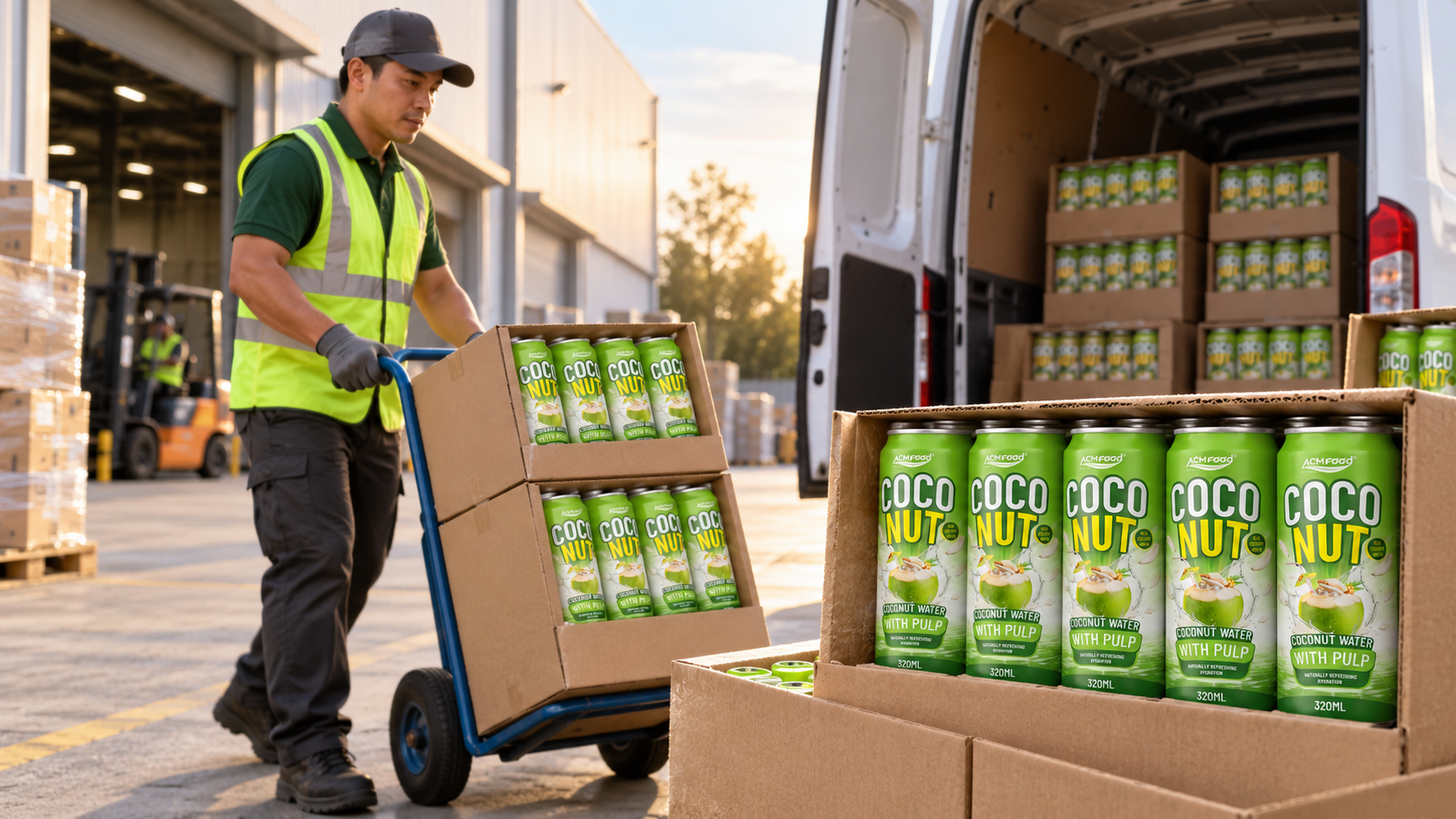
A coconut water distributor connects producers with the shops, cafés and venues that sell to consumers, taking on importing, storage, delivery, credit and often in-store promotion. The distributor earns a margin between its purchase price and its selling price to customers.
Day-to-day responsibilities typically include:
- Sourcing: selecting products and suppliers, negotiating prices and agreeing terms.
- Importing: arranging freight, customs clearance and any product registration required locally.
- Warehousing: storing stock under suitable conditions and rotating it so older stock sells first.
- Selling: winning listings with retailers, wholesalers and foodservice customers, and managing accounts.
- Delivery and service: getting orders to customers on time and handling returns or damaged goods.
- Marketing support: sampling, promotions and point-of-sale materials agreed with the brand owner.
Which distribution model should you choose?
The right model depends on how much control you want over the brand and how much capital you can commit. Most new distributors choose between representing an existing brand, building a private label range, or combining both.
| Model | What it involves | Advantages | Trade-offs |
|---|---|---|---|
| Distributor for an existing brand | Importing and selling a producer’s branded coconut water in your territory | Product and packaging ready; faster to start | Brand owned by someone else; terms set by agreement |
| Exclusive distributor | Sole rights to a brand in a defined territory or channel | Protection from competing importers of the same brand | Usually tied to volume or performance commitments |
| Private label importer | Selling coconut water under your own brand, produced by a manufacturer | Brand equity stays with you; flexible positioning | Label design, approvals and higher setup effort |
| Wholesale trader | Buying and reselling several brands without exclusivity | Flexible range; low commitment to any one brand | Price competition; less support from producers |
Many distributors start with an existing brand to learn the market, then add a private label line once they understand which formats and flavours sell.
How to become a coconut water distributor: step by step
Becoming a coconut water distributor follows a sequence: define the market, register the business for food import, find and evaluate suppliers, test samples, plan logistics, then launch with a focused range. Skipping the early steps is the most common reason first containers sell slowly.
- Define your territory and channels. Decide whether you will serve supermarkets, convenience stores, ethnic grocery, online retail, gyms, cafés or hotels. Each channel prefers different pack sizes and price points.
- Research demand. Visit stores, note which coconut water styles, sizes and price levels are on shelf, and talk to potential customers about gaps they want filled.
- Set up the legal and food business basics. Register the company, obtain any import licences or food business registrations your country requires, and arrange insurance.
- Shortlist suppliers. Look for producers with relevant certifications, export experience and product formats that match your channels.
- Request samples and specifications. Compare taste, packaging quality, ingredient lists, shelf life and documentation before talking about price.
- Agree commercial terms. Confirm price, trade term, payment method, minimum quantities, lead time and any exclusivity in writing.
- Prepare labels and compliance. Make sure labels meet local language, nutrition and claim rules before production, not after arrival.
- Plan logistics. Choose a freight forwarder and customs broker, and secure warehouse space suitable for beverages.
- Launch with a focused range. Start with a small number of proven SKUs, support them with sampling, and add products once sell-through is clear.
Pack size decisions are easier when you know how each format performs on shelf; our comparison of beverage packaging sizes from 250ml to 500ml shows the trade-offs.
What do coconut water distributors in the USA need to know?
Distributors in the United States should plan around FDA rules for imported food, including facility registration of the producer, prior notice of shipments, and US-compliant labelling with a Nutrition Facts panel. Importers also carry responsibilities for verifying that foreign suppliers meet US food safety requirements.
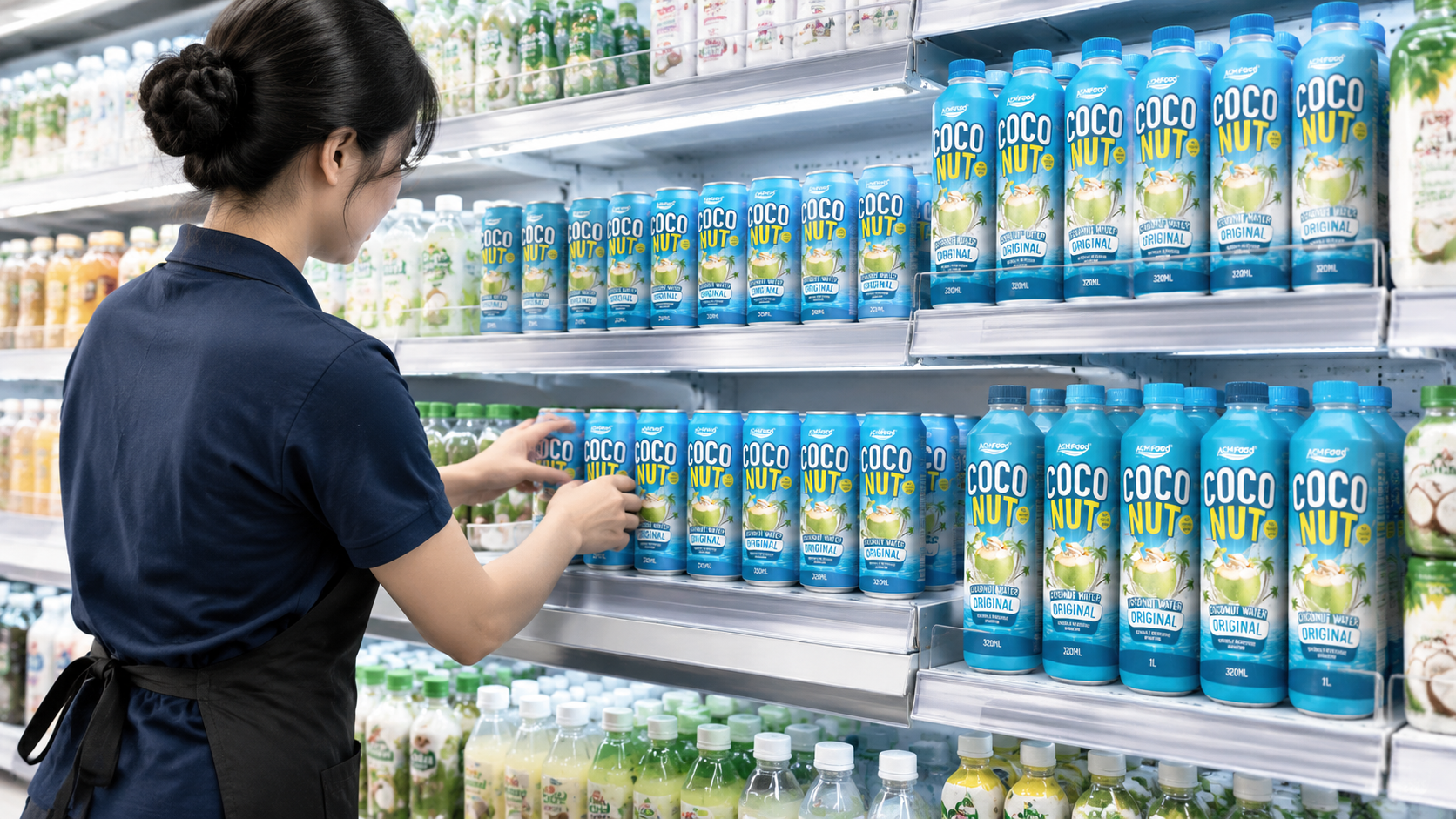
Coconut water in the US is sold across mainstream supermarkets, natural food stores, convenience channels and club stores, and consumers often compare 100% coconut water with flavoured and sparkling options. For a wider view of which product concepts fit the market, see our overview of beverage products for the US market.
What should a coconut water distributor in Europe consider?
A distributor in Europe needs to meet EU food law on labelling, additives, contaminants and health claims, and to plan for language requirements in each country where the product will be sold. Products sold in several EU countries often need multilingual labels.
European buyers frequently look closely at ingredient lists, sugar content and packaging sustainability, so clean recipes and recyclable formats can help listings. Our guide to beverage products for Europe outlines concepts that suit the region.
What about coconut water distributors in the Middle East?
In the Middle East, halal requirements and Arabic labelling are central, alongside the import standards of each Gulf state. Distributors should confirm that the producer can provide the halal documentation their market accepts, and that labels carry the required Arabic information.
Hot climates and large foodservice and hospitality sectors make coconut water a natural fit for the region, and larger pack sizes often perform well in family retail. Our article on halal-ready beverage products for the Middle East covers product options for these markets.
Other regions: Australia and Africa
Australia has its own food standards code covering labelling, country-of-origin statements and permitted ingredients, and import inspections apply to food shipments. Distributors there should confirm label wording before production and plan for strict biosecurity and documentation checks at the border. Our guide to beverage products for Australia covers product options for the market.
African markets vary widely from country to country. Some have well-developed modern retail in major cities, while others rely heavily on traditional wholesale and open markets. Import documentation, registration requirements and preferred pack sizes differ, so distributors should research each country separately rather than treating the continent as one market.
How do distributors build demand after launch?
Winning a listing is only the start; the distributor’s job is to make sure the product leaves the shelf. Coconut water is a category many shoppers try first through sampling or recommendation, so active support in the first months matters.
- In-store sampling: chilled tastings let shoppers compare flavours and understand the product quickly.
- Foodservice placement: cafés, juice bars and gyms that use coconut water in drinks introduce it to new customers.
- Range discipline: review sales by SKU regularly and replace slow lines rather than adding more.
- Promotions agreed with retailers: multi-buy offers and secondary displays during warm months.
- Stock rotation with customers: help retailers rotate stock so shoppers always find fresh dates.
How do you evaluate a coconut water supplier as a distributor?
Evaluate suppliers on product consistency, documentation and reliability before price. A slightly cheaper supplier that misses shipments or sends inconsistent batches costs a distributor far more in lost listings than it saves.
- Product range: does the supplier offer the styles and sizes your channels need, such as original, with pulp, flavoured and sparkling, in cans and PET?
- Certifications: request copies of food safety certifications and check that they are current.
- Shelf life: confirm the declared shelf life and how much remaining shelf life you can expect on arrival.
- Label support: ask whether the supplier can print labels that meet your market’s rules or supports private label designs.
- Commercial terms: payment method, lead time, trade term and minimum quantities.
- Communication: response time, clarity of documents and willingness to share specifications.
- Sample consistency: compare samples from more than one batch where possible.
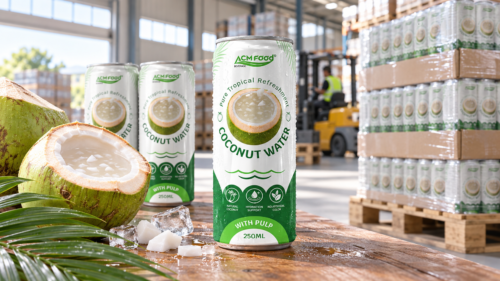
Current ACM FOOD coconut water product pages list FSSC 22000, HACCP and ISO 22000 certifications, a shelf life of 24 months for canned products and 18 months for PET bottles, T/T payment and a lead time of 15 to 30 days. These details should be confirmed for each specific order.
Common mistakes new distributors make
Most early problems come from moving too fast on volume and too slowly on compliance and sales planning.
- Ordering too many SKUs at once, which spreads sales effort thin and leaves slow lines ageing in the warehouse.
- Finalising labels after production instead of before, leading to costly relabelling at the destination.
- Underestimating landed cost by ignoring duties, port charges and inland transport.
- Choosing pack sizes that do not match the target channel, such as large bottles for convenience stores.
- Relying on price alone to win listings without sampling or marketing support.
- Agreeing exclusivity without clear volume expectations on both sides.
FAQ about becoming a coconut water distributor
Do I need an exclusive agreement to distribute coconut water?
No. Exclusivity is optional and usually tied to performance targets. Many distributors start without it and negotiate exclusivity once they have proven sales in a territory.
Should I start with a brand or my own private label?
Starting with an existing brand is faster and needs less setup. Private label suits distributors who already know their channels and want to own the brand long term.
Which coconut water formats sell best for distributors?
It depends on channel. Single-serve cans suit convenience and foodservice, while larger PET bottles suit family retail. Research your channels before choosing.
How much stock should a first order include?
Size the first order around realistic sell-through within the product’s shelf life, and confirm the supplier’s minimum quantities per SKU before planning.
Do I need my own warehouse to start?
Not necessarily. Many new distributors use a third-party logistics provider for storage and delivery at first, then invest in their own warehouse once volumes justify it.
Conclusion
Becoming a coconut water distributor is a sequence of decisions: choose a model and channels, set up compliant importing, select suppliers on consistency and documentation, and launch with a focused range that matches local demand. Requirements differ significantly between the United States, Europe and the Middle East, so labelling and compliance should be settled before the first production run.
If you are planning to distribute coconut water, ACM Beverage can share product specifications and samples in can and PET formats, and discuss branded or private label options for your territory.