

Beverage products for the US market succeed or fail on a narrower set of decisions than most first-time exporters expect: sugar position, label format, pack size convention and channel fit matter more than flavour novelty. The US shopper has specific expectations around each of these, shaped by a retail landscape that differs meaningfully from Europe or Asia in how it stocks and prices beverages.
This guide sets out the product decisions that matter most when developing or selecting a beverage for US distribution, rather than listing categories, since the categories themselves are less important than getting these underlying decisions right.
What makes the US market distinct from other export destinations?
The US beverage retail landscape is defined by a few structural features that shape what sells. Convenience and grocery channels both carry significant volume, private label penetration is high and growing, and sugar and ingredient transparency have become purchase-decision factors for a large share of shoppers, not a niche segment. A product developed without these in mind tends to underperform even when the flavour itself tests well.
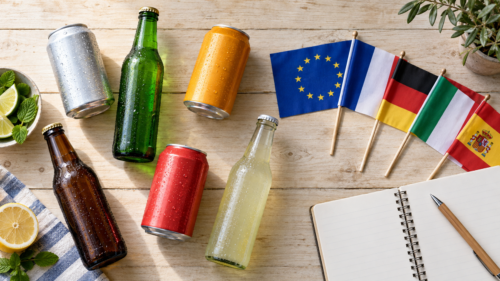
Label format is also a hard constraint rather than a preference: US nutrition labelling follows its own structure, distinct from the formats used in the EU, the UK or most of Asia, and getting this wrong is one of the most common reasons a first shipment is held or rejected at entry. This is worth treating as a design input from the first artwork draft rather than a compliance check applied to a finished layout, since retrofitting a label built for a different market’s format is usually slower than designing to the US structure from the outset.
Sugar position: the single biggest product decision
US shoppers increasingly sort beverages by sugar content before flavour, and retailers have responded by expanding low-sugar and no-sugar-added sections rather than treating them as a niche. A product entering the US without a clear position on sugar — full sugar, reduced, or none added — is entering a category where that position is often the first thing a buyer asks about.
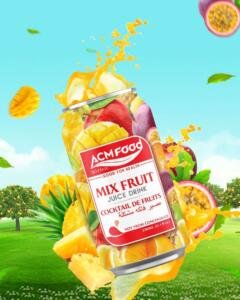
This does not mean every product needs to be sugar-free. It means the sugar position needs to be a deliberate development decision rather than an afterthought, made with the specific claim requirements of US labelling in mind before the formulation is finalised. Brands building a reduced-sugar juice line often start from an existing private label fruit juice base and adjust sweetness rather than developing a new recipe from scratch, since the adjustment is faster and lower risk than a full rebuild.
That adjustment path matters because US sugar expectations are not uniform across categories. A hydration or functional drink is often expected to carry very little sugar by default, while a fruit juice retains more latitude provided the sugar content and any added sweetener are declared clearly. Treating every category as though it needs the same sugar target produces either an unnecessarily restrictive formulation or one that underestimates what the category actually expects.
Pack format conventions in US retail
US retail has its own conventions around pack size and format that differ from other export markets, and matching them reduces friction at the listing stage. Single-serve cans in the standard global size are widely stocked, and larger multipack-anchor formats are common in grocery and club channels. A format outside these conventions is not disqualifying, but it does require the brand to make a stronger case for why the size makes sense on a US shelf.
| Consideration | What it means for a US-bound product |
|---|---|
| Sugar position | Must be a deliberate, declared choice reflected in the label claim |
| Label format | Follows US-specific nutrition panel structure, distinct from EU or Asian formats |
| Pack format | Standard single-serve and multipack-anchor sizes reduce listing friction |
| Ingredient transparency | Clean, recognisable ingredient lists are increasingly expected, not optional |
| Channel fit | Convenience, grocery and club channels each expect different pack economics |
Where hydration and functional positioning fit
Hydration and functional beverages occupy a large and still-growing share of US beverage retail, spanning everything from coconut water to electrolyte drinks to fortified juices. Products in this space benefit from a clean, verifiable ingredient story more than from an elaborate one, since US shoppers in this category tend to reward simplicity and recognisability over a long claim list.
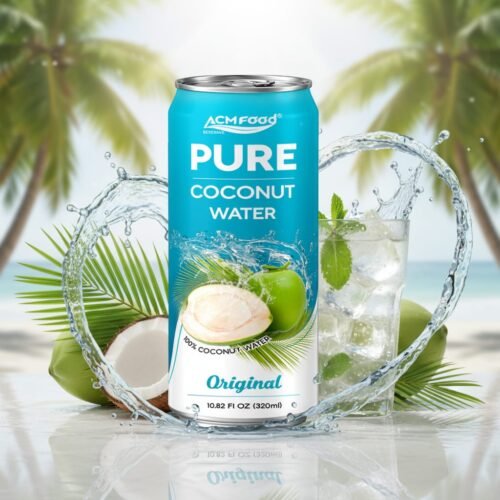
A pure, single-ingredient product such as pure coconut water without additives often performs well specifically because the ingredient statement is short and easy for a shopper to evaluate at a glance, which matters more in this category than an extensive functional claim would. Products carrying an added functional ingredient can still perform well in this environment, but the ingredient needs to be one the shopper already recognises rather than an unfamiliar addition that raises more questions than it answers on the shelf.
Texture and format innovation as a differentiator
Where the core product decisions are handled well, texture and inclusion-based formats can offer genuine differentiation in a crowded US shelf, provided they do not compromise the label clarity that increasingly drives purchase decisions. Products combining a recognisable fruit base with a textural element, such as mango juice with nata de coco inclusions, illustrate how a distinctive format can be introduced without abandoning the ingredient simplicity US shoppers respond to.
This is a useful pattern for a brand deciding how to differentiate without taking on the risk of an entirely unfamiliar flavour: keep the base recognisable, and let the format or texture carry the novelty. It also tends to travel well across channels, since a familiar base flavour needs less explanation on a convenience shelf where the purchase decision happens in seconds, while the textural point of difference still gives a grocery shopper a reason to try it over a more conventional competing product.
Building a US-ready product brief
Five inputs shape a product concept that fits US retail expectations without a costly redesign later in development.
- Sugar position. Decide and declare this early, since it drives formulation, labelling and even which retail set the product competes in.
- Label format. Confirm the US nutrition panel structure applies from the first artwork draft, rather than adapting a label built for another market.
- Ingredient list length and clarity. A shorter, more recognisable ingredient list tends to perform better than a longer one with unfamiliar additives, particularly in hydration and functional categories.
- Pack format and size. Match standard US conventions unless there is a clear commercial reason to diverge.
- Target channel. Convenience, grocery and club each reward different pack economics and positioning, so naming the primary channel early focuses every other decision.
Brands starting from an existing formula rather than a full custom development often move through this process faster, since the base recipe and much of the specification are already proven and only need adjustment against these five points rather than being built from a blank page.
Common mistakes brands make entering the US for the first time
A handful of avoidable errors account for most of the friction brands encounter on a first US shipment or listing attempt.
- Adapting a European or Asian label rather than building a US-specific one. The nutrition panel structure, serving size conventions and mandatory declarations differ enough that a direct adaptation usually needs more correction than a label built for the US from the outset.
- Treating sugar reduction as a marketing decision rather than a formulation one. A sugar claim has to be true of the finished product at the declared serving size, which means the target has to be set before development begins, not adjusted into the copy afterward.
- Choosing an unusual pack size without checking channel expectations first. A format that performs well elsewhere can create listing friction in the US if it does not match what buyers in the target channel already expect to stock.
- Over-claiming on a functional or hydration product. A long list of functional claims can work against a product in a category where shoppers increasingly reward a short, verifiable ingredient list instead.
Each of these is avoidable with planning rather than with a larger budget, which is why the product brief stage matters more for a US launch than for many other markets. A brand that resolves label format, sugar position and pack convention before development starts spends the rest of the project on flavour, positioning and channel strategy instead of retracing steps that should have been settled at the outset.
Frequently asked questions
Does a product need to be reformulated specifically for the US, or can an existing recipe work?
Many existing recipes work with adjustment rather than a full rebuild, particularly around sugar level and label content. Adjusting sweetness, flavour intensity or an ingredient in an existing formula is usually the faster and lower-risk route compared with developing an entirely new product for the US market alone.
Is private label a common entry route for the US market?
Yes, private label penetration in US beverage retail is substantial and continues to grow, which makes it a realistic entry route for a brand without its own established US distribution. Starting from an existing formula, as covered in exploring existing private label formulas, is a common way to enter without the cost and time of full custom development.
How important is the sugar claim compared with the flavour itself?
For a meaningful share of US shoppers, the sugar position is evaluated before or alongside the flavour choice, not after it. A strong flavour concept with an unclear or unfavourable sugar position can underperform a more ordinary flavour with a clear, well-positioned sugar claim.
Do hydration and functional products need extensive claims to compete?
Not necessarily. A short, recognisable ingredient list is often more persuasive to US shoppers in this category than a long list of functional claims, particularly for pure or minimally processed products.
Should artwork be designed once for global markets or built separately for the US?
Building the US layout as its own artwork, rather than adapting a global design, is generally the more reliable approach given how much the nutrition panel structure and mandatory declarations differ. A shared brand identity can carry across markets even where the underlying label structure has to be rebuilt for each one.
Starting a US-focused product brief
The products that perform best in US beverage retail are the ones where sugar position, label format and pack convention were treated as core development decisions rather than late adjustments. Getting these right first makes the flavour and positioning conversation that follows considerably more straightforward.
ACM Beverage develops and supplies products against these US-specific requirements and can review an existing concept or an established formula for fit before a first order is placed. Reach out through the enquiry and contact page with the target channel and sugar position in mind to start that review, and expect that review to focus first on label structure and sugar claim rather than on flavour, since those two decisions carry the most downstream cost if they need to change later in development.