
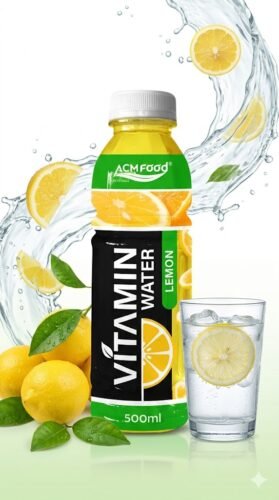


Vitamin drink products carry a formulation challenge that sits apart from most other functional beverage categories: the added vitamins themselves are often unstable, sensitive to light, heat and oxygen exposure, and can degrade meaningfully between production and the point a shopper actually drinks the product. A vitamin drink developed without carefully accounting for this degradation risks a finished product that no longer genuinely delivers the vitamin level stated on its label by the time it actually reaches shelf, which is a formulation and packaging problem quite specific to this category rather than a general functional beverage consideration.
This guide focuses closely on vitamin stability, claim substantiation and the specific taste-masking challenges unique to vitamin fortification, rather than on functional beverage positioning and marketing strategy in general.
Why vitamin stability is the central formulation challenge
Different vitamins degrade at meaningfully different rates and in response to quite different environmental conditions. Some are sensitive primarily to light exposure, others to heat during pasteurisation, others to oxygen exposure over the course of shelf life, and many are sensitive to some combination of all three. This means a vitamin drink’s actual vitamin content at the point of consumption can be meaningfully lower than what was added during production, unless the formulation, packaging and processing are specifically designed to protect against the relevant degradation pathways for the vitamins used.
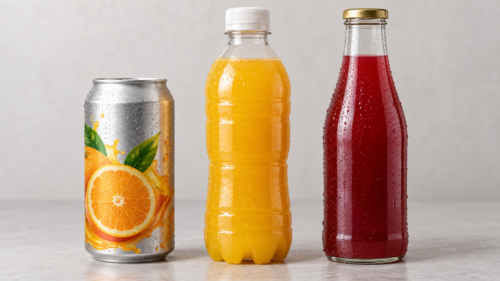
This is why a vitamin drink brief needs to specify not just which vitamins and at what level, but also how stability will be protected through packaging choice, such as an opaque or UV-protective can versus a clear bottle, and through processing choices that minimise unnecessary heat or oxygen exposure during production. A brief that names only the vitamin and target level, without addressing stability, leaves the most technically demanding part of the project unaddressed.
Fat-soluble and water-soluble vitamins also behave differently within a beverage matrix, which affects how evenly and stably they can be incorporated. A water-soluble vitamin generally disperses more readily and predictably through a liquid formulation, while a fat-soluble vitamin often needs to be specially prepared, such as through microencapsulation or emulsification, to disperse evenly and remain stable in what is otherwise a water-based product. This distinction is worth raising directly with a manufacturer early in the brief, since it affects both the achievable stability and the processing complexity of the finished formulation.
Claim substantiation and overage
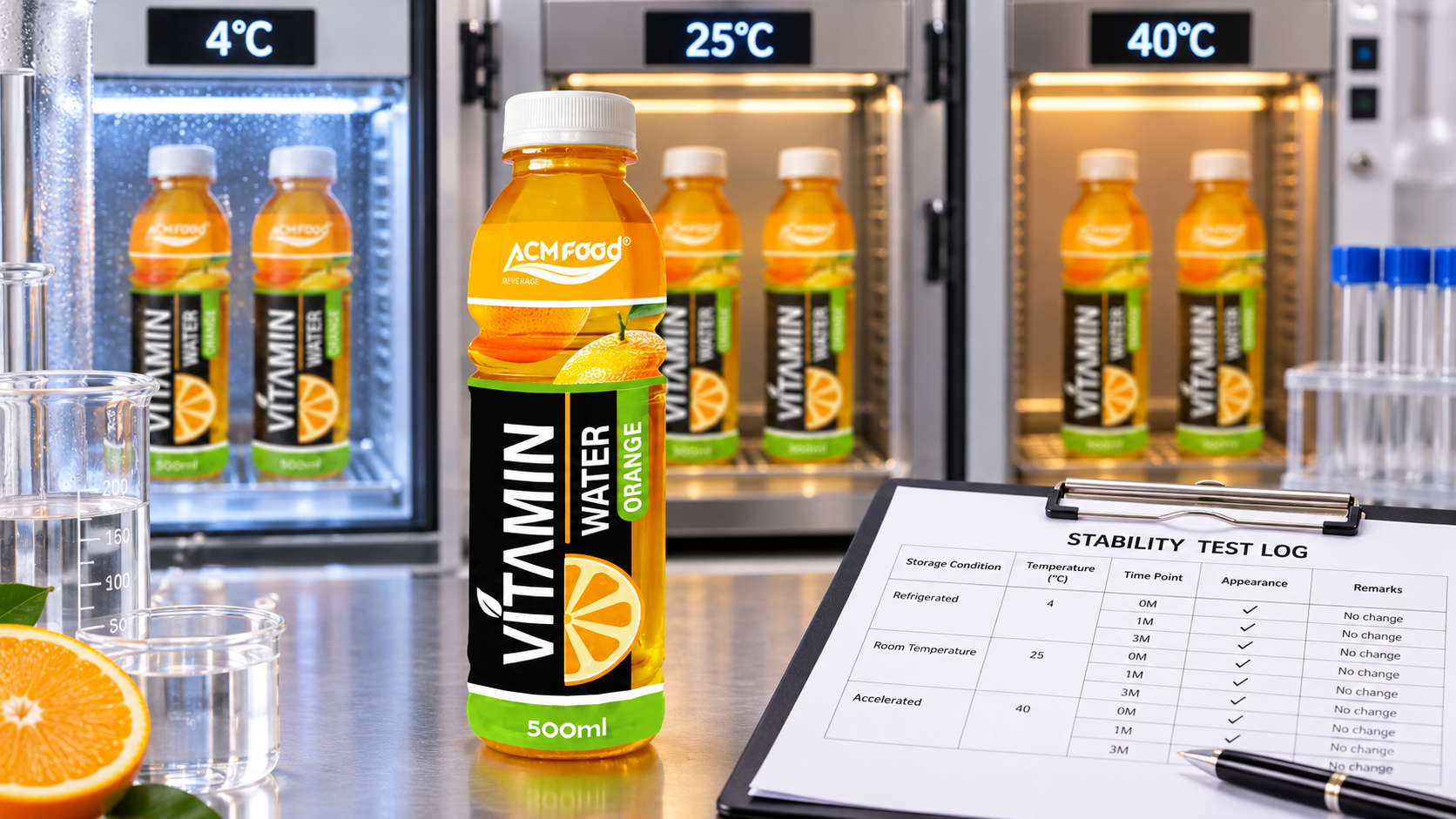
Most markets require a vitamin-fortified product’s label claim to be accurate not just at the point of production but through to the end of its stated shelf life, which means a formulator typically needs to add a certain overage, more of the vitamin than the label claim states, to account for expected degradation over the product’s shelf life. Calculating this overage requires actual stability testing under realistic storage conditions for the specific formulation, packaging and expected distribution climate, rather than a generic industry assumption, since degradation rates can vary considerably by vitamin, formulation and packaging combination used.
| Consideration | What it means for a vitamin drink formulation |
|---|---|
| Degradation pathway | Light, heat and oxygen sensitivity vary by specific vitamin |
| Packaging protection | Opaque or UV-protective packaging can meaningfully extend vitamin stability |
| Overage requirement | Extra vitamin added at production to ensure claim accuracy through shelf life |
| Taste masking | Many vitamins carry a bitter or metallic note that needs formulation management |
| Regulatory claim basis | Nutrient reference values and permitted claim wording vary by target market |
Skipping proper stability testing and instead relying on an assumed overage figure is a common shortcut that risks a product falling below its label claim before the end of its stated shelf life, which is both a compliance risk and, if discovered, a credibility problem with retailers and shoppers.
Real-time stability testing, storing finished product under actual expected distribution conditions and testing vitamin content at intervals through the full claimed shelf life, is the most reliable way to confirm an overage figure, though it takes as long as the shelf life itself to complete fully. Accelerated stability testing, using elevated temperature and humidity to predict degradation over a shorter testing window, can give an earlier indication but should ideally be validated against real-time data before a brand commits fully to a specific overage and shelf life claim, since accelerated models do not always predict real-world degradation perfectly for every vitamin and packaging combination.
Managing the taste of vitamin fortification
Several commonly used vitamins carry a noticeable bitter, metallic or chalky taste note at meaningful fortification levels, which is one of the more underestimated formulation challenges in this category. Masking this effectively without simply overwhelming it with added sugar requires careful selection of the base flavor and, often, specific flavor-masking techniques that manufacturers with vitamin drink experience have already developed through trial and error.
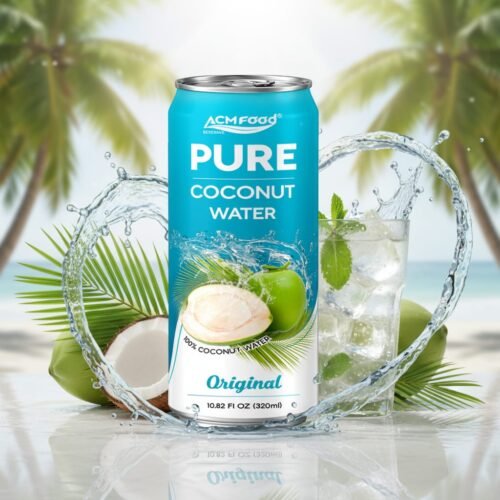
A naturally bold, aromatic base flavor generally has an easier time masking a vitamin’s off-notes than a delicate, subtle one, since the dominant flavor has more intensity to work with. A functional beverage built around a distinctive fruit combination, such as a coconut milk and pineapple blend, illustrates the kind of bold, tropical flavor base that can more comfortably absorb a noticeable vitamin fortification without its off-notes becoming apparent, compared with a considerably more delicate or subtly flavored base recipe.
Learning from existing functional formulations
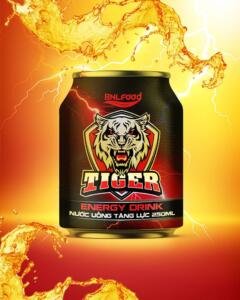
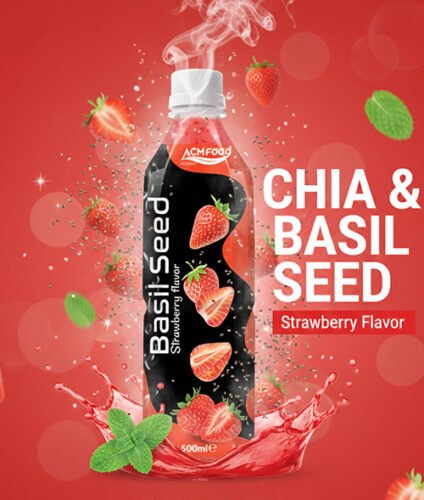
A chia seed drink with lychee flavor shows how a functional ingredient and a distinctive fruit flavor can be combined successfully, a useful reference point for the same kind of careful flavor-function balancing a vitamin fortification project requires. Energy drink formulations, such as those covered in the Rage energy drink range, often already incorporate B-vitamin fortification as part of their functional positioning, since B vitamins are commonly paired with caffeine and other energy-positioned ingredients, and these existing formulations offer a genuinely proven starting point for a brand specifically interested in this vitamin-plus-energy combination product category.
Building a vitamin drink product brief
Five inputs help a brand plan a vitamin drink project around its real technical requirements.
- Target vitamins and degradation profile. Confirm which vitamins are being used and their specific sensitivity to light, heat and oxygen.
- Packaging protection strategy. Decide whether an opaque or UV-protective format is needed to support the target shelf life claim.
- Overage and stability testing plan. Confirm the manufacturer will conduct real stability testing rather than relying on an assumed overage figure.
- Taste-masking approach. Choose a base flavor with enough natural intensity to help absorb any bitter or metallic vitamin off-notes.
- Target market regulatory basis. Confirm the nutrient reference values and permitted claim wording for the specific target market before finalising label copy.
Common mistakes in vitamin drink development
A consistent set of avoidable errors accounts for much of the compliance and taste friction in vitamin drink projects specifically.
- Skipping real stability testing. Relying on an assumed overage rather than testing the specific formulation and packaging combination risks a claim that falls short by the end of shelf life.
- Choosing clear packaging for a light-sensitive vitamin formulation. This can accelerate degradation well beyond what an opaque or UV-protective format would allow.
- Underestimating taste-masking difficulty. Adding vitamins to a delicate, subtle base flavor without a masking plan often results in a noticeably bitter or metallic finished product.
- Assuming claim requirements are identical across markets. Nutrient reference values and permitted claim wording differ by country, so a claim compliant in one market may need adjustment for another.
Each of these is avoidable by treating stability, taste-masking and claim substantiation as core technical requirements from the outset, rather than assumptions carried over from a less technically demanding functional beverage project. A brand new to this category benefits from asking a prospective manufacturer directly about their stability testing history with the specific vitamins under consideration, since a manufacturer with genuine prior experience formulating and testing those particular vitamins will generally flag degradation and taste-masking risks earlier and more accurately than one encountering the combination for the first time.
Frequently asked questions
Why does a vitamin drink need more vitamin added than the label states?
Because vitamins degrade over shelf life, an overage is typically added at production so the product still meets its label claim by the end of its stated shelf life. The exact overage needed depends on the specific vitamin, formulation and packaging, and should be confirmed through real stability testing rather than assumed.
Does packaging choice really make a meaningful difference to vitamin stability?
Yes, often significantly so for light-sensitive vitamins specifically. An opaque can or a UV-protective bottle can meaningfully slow degradation compared with a clear format, which can be the difference between a product that reliably meets its claim through shelf life and one that does not.
Can vitamin off-notes be fully masked, or will shoppers always notice something?
At reasonable fortification levels with a well-chosen base flavor and proper formulation technique, off-notes can usually be reduced to the point where most shoppers do not notice them, though very high fortification levels can be harder to fully mask than more moderate ones.
Should a vitamin drink brief specify exact vitamins or leave that to the manufacturer?
A brand with a specific functional positioning in mind should specify the target vitamins and any regulatory claim it wants to support, but the manufacturer’s technical expertise on stability, overage and taste-masking is where most of the formulation problem-solving actually happens, so a collaborative approach generally produces a better result than a brief that dictates every technical detail upfront.
Is accelerated stability testing a reliable substitute for real-time testing?
It can give a useful early indication and shorten the initial development timeline, but it is not always a perfect predictor of real-world degradation for every vitamin and packaging combination. Validating an accelerated result against at least some real-time data, particularly before a brand commits to its final shelf life claim, is the more cautious and generally more reliable approach.
Do fat-soluble vitamins require different packaging than water-soluble ones?
Not necessarily different packaging specifically, but they often require different formulation handling, such as encapsulation or emulsification, to disperse evenly and remain stable within a water-based beverage. Packaging protection against light and oxygen still matters for both types, but the underlying formulation technique needed to incorporate them successfully can differ meaningfully.
Starting a vitamin drink product brief
A vitamin drink product performs best when stability, overage and taste-masking are treated as core formulation requirements from the first trial, rather than details addressed only after a flavor concept is already finalised.
ACM Beverage develops vitamin-fortified beverage products against these stability, overage and taste requirements and can advise on packaging and formulation approach before a first order is placed. Reach out through the enquiry and contact page with the target vitamins, claim goals and market in mind to start that conversation, and expect the first discussion to focus on degradation risk and packaging protection before flavor development begins in earnest.