
Glass bottle beverages sit at the premium end of the packaging spectrum, chosen when a brand needs a format that signals quality and preserves flavour with a clarity aluminium and PET cannot match. Glass is heavier and more fragile to transport than either alternative, which means the decision to use it is almost always a deliberate trade of logistics cost for shelf and perceptual benefit.
This guide sets out what glass actually offers over other formats, where it is genuinely the right choice, and what a brand needs to plan for in freight and handling once it commits to the format.
What glass offers that other formats do not
Glass is chemically inert, which means it imparts no flavour or odour to the liquid inside it, unlike some plastics under certain storage conditions. It is also fully transparent, letting a shopper see the actual colour and clarity of the product before purchase, which is a meaningful cue for juices and premium beverages where colour is part of the quality signal.
Beyond the physical properties, glass carries a weight and tactile quality in the hand that both aluminium and PET lack, and that sensory cue is closely associated with premium positioning across most beverage categories. A brand competing on perceived quality rather than on price or convenience often finds this the deciding factor over any functional advantage.
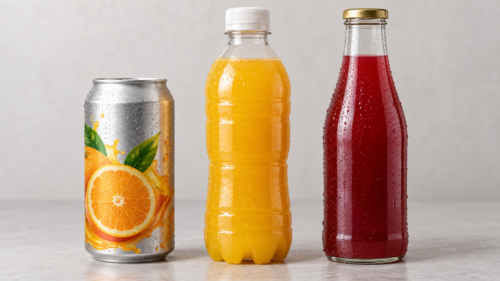
| Property | Glass | Aluminium can | PET bottle |
|---|---|---|---|
| Flavour neutrality | Fully inert | Inert with internal lining | Generally inert; can be affected by certain oils or acids over time |
| Light exposure | Depends on tint; clear allows light through | Fully opaque | Depends on tint; clear allows light through |
| Visual transparency | Full | None | Full |
| Weight per unit | Heaviest | Lightest | Light |
| Breakage risk in transit | Highest | None | None |
| Typical positioning | Premium, food service, gifting | Mainstream to premium, high volume | Mainstream, hydration, sports |
Where glass is the right commercial choice
Glass performs best where the shopper is already paying a premium price and expects a premium unboxing experience, or where the product is being sold through a channel that rewards presentation, such as fine dining, hotel minibars or gift sets. Premium juices, botanical and functional drinks, and any product positioned as an occasion beverage rather than an everyday one tend to justify the format’s added cost.
Fruit-forward products with a genuinely striking colour, such as a formulation built around coconut milk and pineapple, benefit from the visual transparency in a way an opaque can cannot replicate, since the colour itself becomes part of the shelf appeal.

Where glass is the wrong choice
Glass is a poor fit for high-volume, price-sensitive retail, for any channel with significant handling risk such as convenience or vending, and for export routes where freight cost per unit is the dominant factor in landed price. The weight penalty compounds over a long shipping distance, and the breakage risk introduces a category of loss that simply does not exist with aluminium or PET.
A brand entering a new export market for the first time, particularly one testing demand before committing to volume, is usually better served starting in a can or bottle format and reserving glass for a later premium line extension once the core range has proven itself. The pattern that works well commercially is a two-tier range: an aluminium or PET SKU carrying the volume, and a glass variant reserved for a specific channel or occasion where the added cost is recovered in price rather than absorbed as a margin loss.
Bottle shapes and their positioning
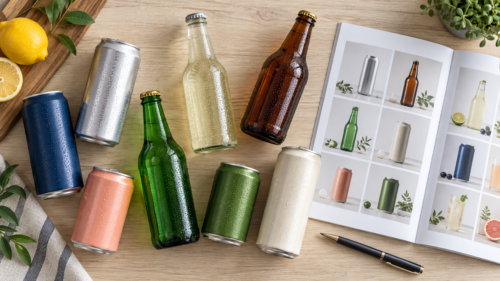
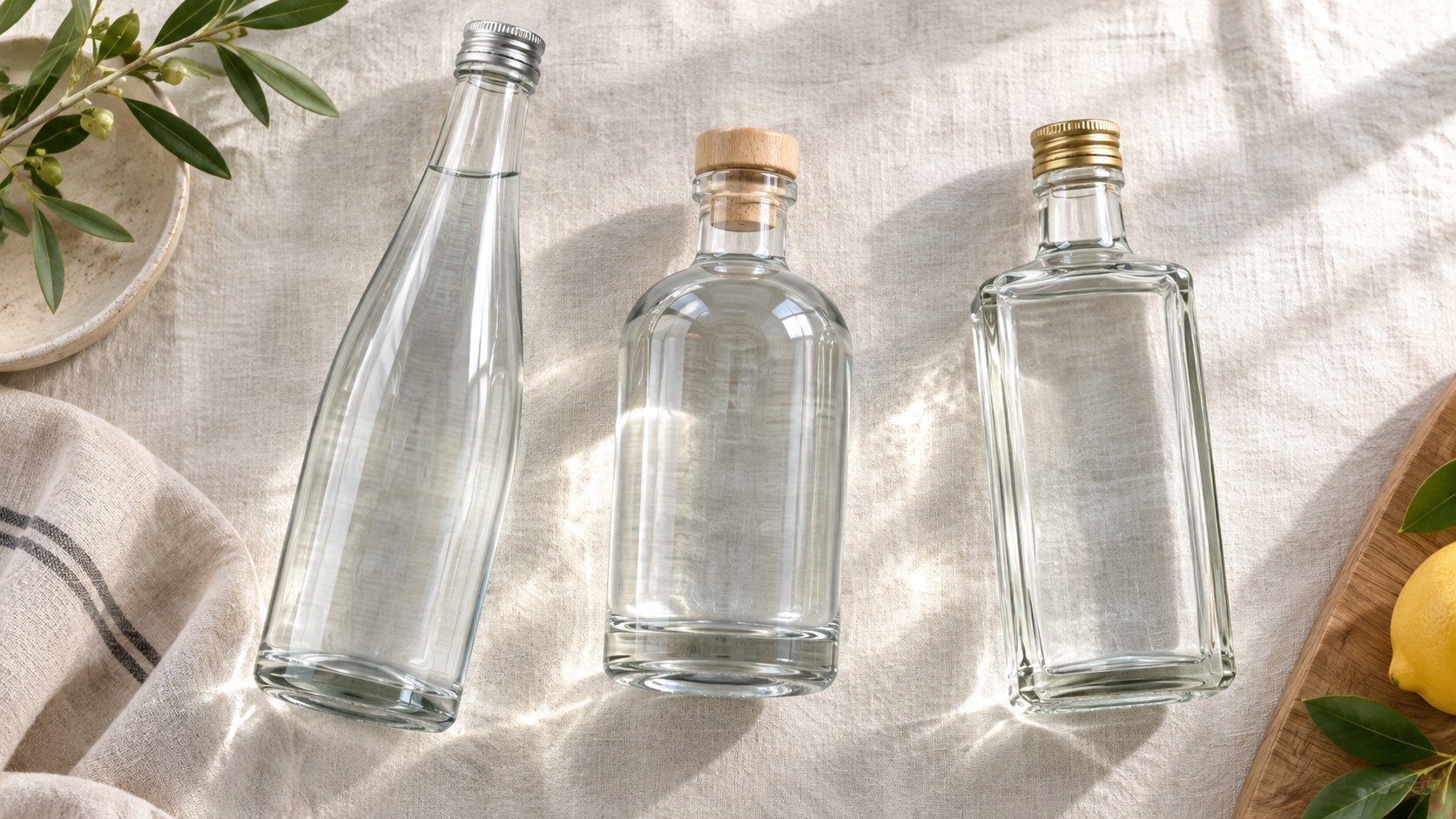
Glass bottles come in a range of shapes beyond the standard cylindrical form, and shape carries as much positioning weight in glass as it does in aluminium cans. A tall, slender bottle reads differently from a short, wide-shouldered one, and the choice interacts with the label design and the intended retail context.
- Tall and slender profiles suit a premium, minimalist positioning and are common for functional and botanical drinks.
- Short, rounded bottles read as artisanal or traditional, often chosen for juice and fermented products with a craft positioning.
- Wide-mouth bottles suit products with texture or pulp, since they allow easier filling and, where relevant, easier consumption of any suspended solids.
- Custom-moulded shapes offer the strongest brand differentiation but carry the highest tooling cost and the longest lead time to first production.
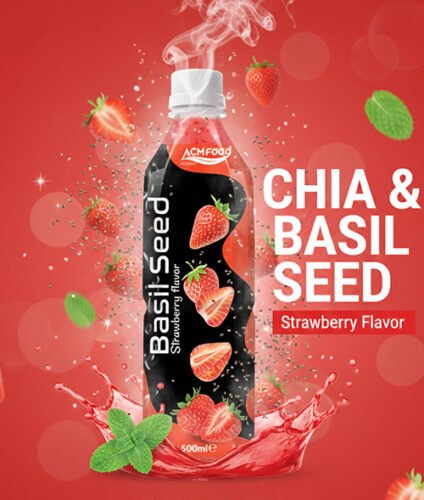
Products carrying visible suspended ingredients, such as those built around strawberry juice with chia seeds, often use glass specifically because the transparency lets the texture itself become part of the shelf appeal, which an opaque pack would hide entirely.
Colour and light protection in glass
Clear glass offers no light protection, which matters for products with light-sensitive flavour or colour compounds. Tinted glass, most commonly amber or green, blocks a substantial portion of light while retaining some visual transparency, offering a middle ground between full clarity and full opacity.
The choice between clear and tinted glass is a genuine trade-off rather than a simple upgrade: clear glass maximises the visual appeal that is often the whole reason for choosing glass in the first place, while tinted glass protects shelf life at the cost of some of that visual impact. Products with delicate aromatic profiles, including tropical formulations like a passion fruit juice OEM product, are worth assessing specifically for light sensitivity before defaulting to clear glass on visual grounds alone.
Freight, handling and cost planning
Glass changes the logistics calculation for an export order in ways that are worth modelling before the format is chosen rather than after the first shipment. Freight cost per unit is higher due to weight, container fill efficiency is lower because glass cannot be packed as densely as cans, and breakage risk introduces a loss category that has to be built into the commercial terms of the order.
None of this makes glass unworkable for export; it simply means the total landed cost has to be modelled honestly rather than compared to a can or bottle quote on unit cost alone. Brands that skip this step are the ones most likely to find the glass line underperforming its margin target once freight and loss are accounted for.
Three practical planning steps reduce the risk this creates:
- Confirm the packaging and cushioning specification with the manufacturer. Divider inserts, shrink wrap and carton strength all affect breakage rates and are worth reviewing before a first order rather than after a claim.
- Model freight cost per unit at the actual order volume. The weight penalty is proportionally larger on a smaller order, since fixed shipping costs are spread across fewer units.
- Agree how breakage claims are handled before shipment. Establishing the process in advance avoids a dispute over responsibility if damage is found on arrival.
Closures and finishing touches
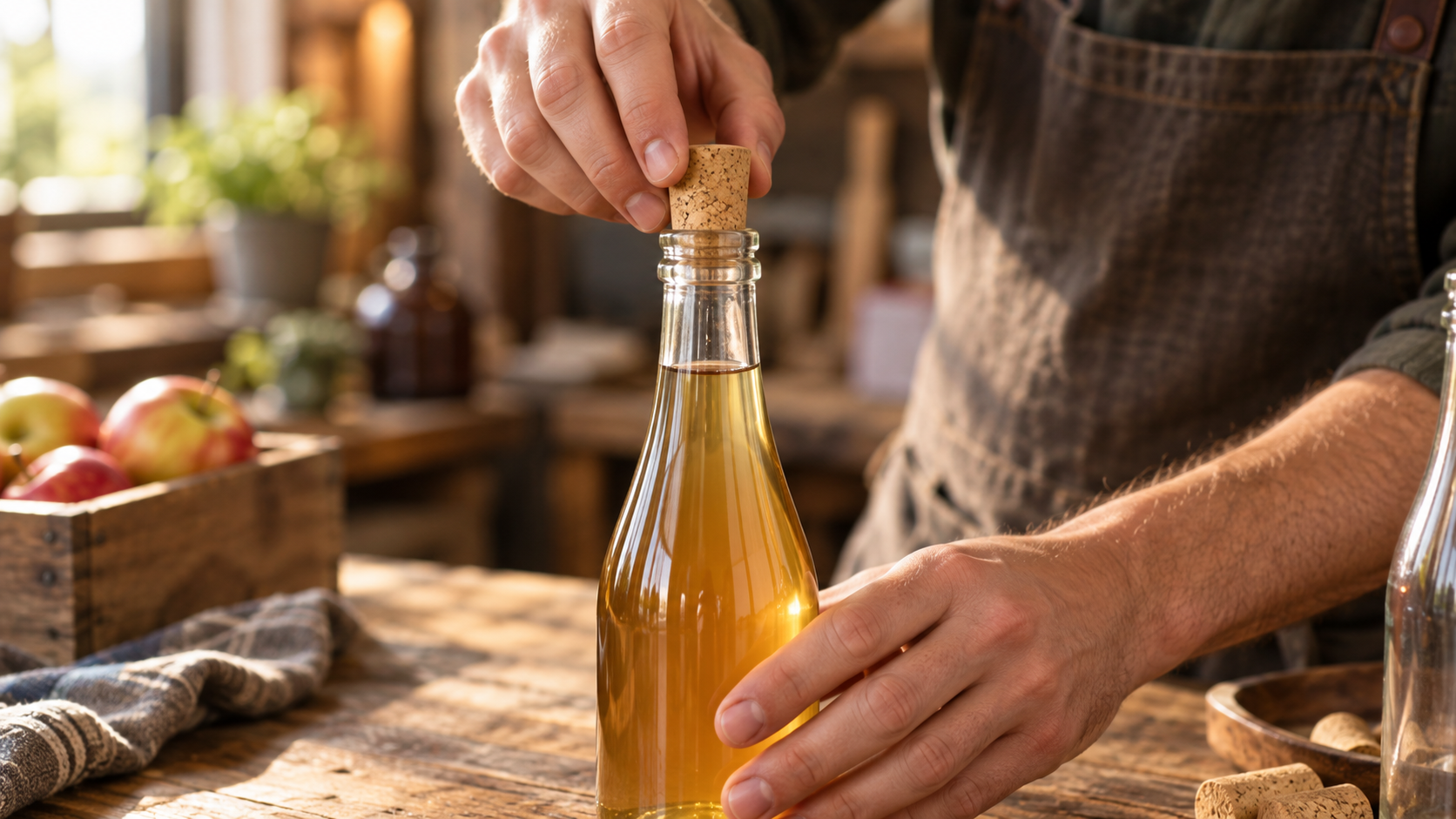
Glass supports a wider range of closures than either can or PET formats, from a standard screw cap to a crown cap, a swing-top, or a cork-style finish for a more artisanal presentation. Each closure choice carries its own line compatibility and cost implications, and some are only practical above a certain order volume because of the tooling involved.
Labelling also behaves differently on glass than on a can. Because the substrate is rigid and transparent, a wrap-around paper or film label reads differently than the same artwork applied to a curved aluminium surface, and some brands choose to leave part of the bottle unlabelled deliberately, letting the liquid colour itself do part of the visual work. This is one of the format-specific design decisions worth discussing with a manufacturer’s packaging team before artwork is finalised, since a layout drawn for a can rarely transfers cleanly to glass without adjustment.
Finishing details such as embossing on the glass itself, a wax seal, or a textured label stock all add cost proportional to the order volume, and are typically reserved for a smaller premium run rather than a full-volume launch. A brand should decide early whether these details are essential to the positioning or a later refinement once the core product has proven itself commercially, since retrofitting them after a first production run adds both cost and lead time that a launch plan rarely has room for.
Frequently asked questions
Is glass more expensive than aluminium or PET overall?
Usually yes, once freight and handling are included, even where the empty bottle cost is comparable to other formats. The weight and breakage risk during transit are the main drivers of the total cost difference rather than the raw material cost of the bottle itself.
Can the same recipe be used in glass as in a can or PET bottle?
Generally yes, since the formulation itself is independent of pack material. What can differ is the thermal process in some cases, since glass and other pack materials do not always share identical fill and closure conditions, so this is worth confirming with the manufacturer rather than assumed.
Does glass extend shelf life compared with other formats?
Not inherently, and clear glass without a light-blocking tint can actually reduce shelf life for light-sensitive products compared with an opaque can. Tinted glass narrows this gap but rarely matches full aluminium opacity.
How does glass affect artwork and label design?
The transparency changes what artwork needs to accomplish, since the liquid colour itself is visible around and often behind the label rather than being fully concealed. Designers working on glass typically leave more of the bottle unlabelled than they would on an opaque can, letting the product colour contribute to the shelf presentation instead of competing with a full-coverage label.
Is glass a realistic choice for a first export order?
It can be, but a brand should weigh the added freight and breakage risk against the premium positioning benefit before committing a first order to glass. Many brands find it more practical to prove demand in a lighter format first and introduce a glass line once volume justifies the added logistics complexity.
Deciding whether glass fits the brand
Glass earns its cost where the product genuinely benefits from visual transparency and where the channel rewards a premium physical presentation, whether that is fine dining, gifting, or a premium retail set. It is a weaker fit for high-volume, cost-sensitive or handling-intensive channels, where the weight and breakage risk outweigh the perceptual benefit.
ACM Beverage produces in glass alongside aluminium and PET, and can help model the freight and handling implications of a glass format against a specific target market and order volume before a launch plan is finalised. Reviewing formulation adjustments possible for a glass launch is also worth doing early through the custom formula adjustment process, since sweetness, clarity and colour intensity can all be tuned to make the most of the format’s visual advantage.
A brief that names the target channel, the expected order volume and whether the product’s visual appeal is central to its positioning is usually enough to determine quickly whether glass is the right starting format or a later line extension worth planning toward once volume has grown.