
Beverage lead time is the elapsed period from a sample request to a shipped order, and it is not one number. It is the sum of several stages that run partly in sequence and partly in parallel, and the total depends far more on how the brand manages those stages than on how fast any single factory step runs.
This guide breaks the timeline into its component stages, explains what drives the length of each one, and sets out where a brand’s own decisions add or remove weeks without anyone at the factory doing anything differently.
The stages that make up a beverage timeline
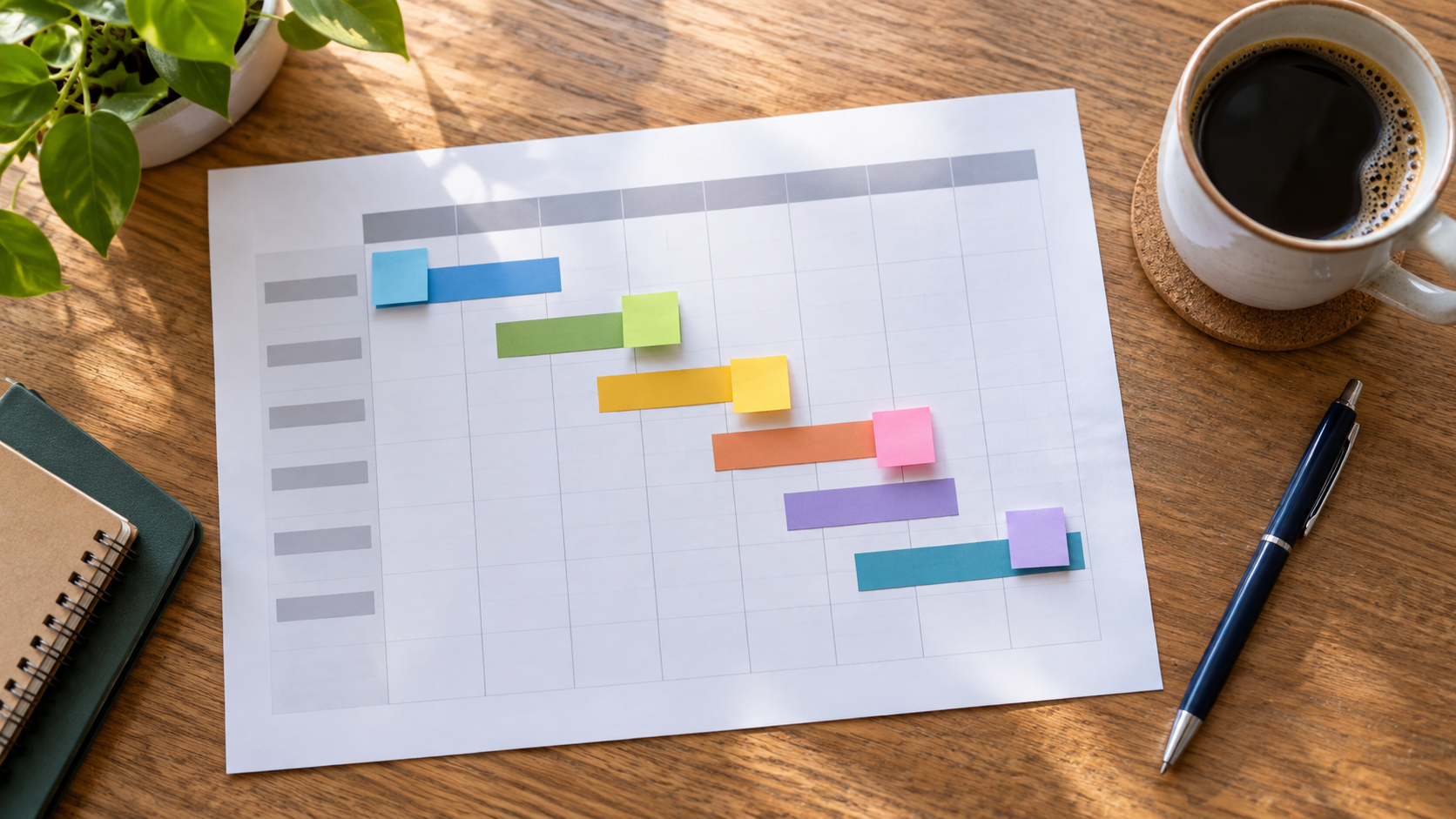
A first order runs through five stages, and each one has a different owner and a different kind of delay risk. Confusing the stages is the most common reason a launch date slips, because a brand plans against the wrong stage’s duration.
| Stage | Primary owner | Main driver of duration |
|---|---|---|
| Sample request and tasting | Brand | How many rounds of feedback are needed |
| Formulation adjustment | Factory, guided by brand feedback | Whether the change is a variable or a rebuild |
| Artwork and label approval | Brand | How many stakeholders sign off |
| Packaging procurement | Factory, on brand’s specification | Whether the format is a standard stock item |
| Production and shipping | Factory | Batch size and booking availability |
Every stage after the first depends on the one before it closing cleanly. A sample round that ends without a clear decision does not delay itself; it delays formulation, artwork, packaging and production behind it.
Sample requests: where most of the variable time sits
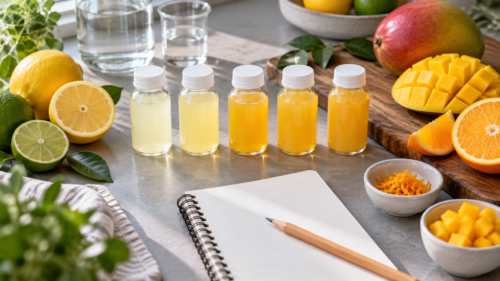
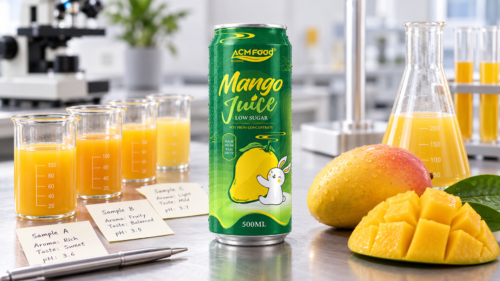
The sample stage is rarely one round. A brand tastes, gives feedback, waits for a revised sample, tastes again, and the cycle repeats until a profile is accepted. Each round carries the same fixed cost regardless of how close the sample already is: preparation time at the factory, international shipping in both directions, and a tasting session on the brand side.
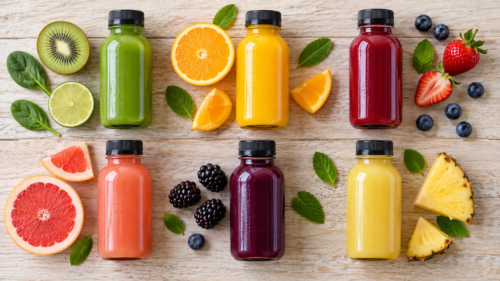
What shortens this stage is not faster shipping. It is fewer rounds, and fewer rounds come from specific feedback rather than general impressions. A note that a sample needs less sweetness and a firmer citrus top note gives the next round a target. A note that the sample is not quite right gives it a guess. Brands exploring a completely new flavour direction, such as the orange and coconut cream combination developed for the functional beverage segment, should expect more rounds than brands adjusting an existing private label formula, simply because there is more to converge on.
Formulation adjustment: a variable change is not a rebuild
Once a sample is accepted with a defined change, the factory adjusts the formulation to match. This is where the type of change matters more than the size of it. Moving a sweetness level or a flavour concentration is a parameter adjustment against an existing recipe. Building a genuinely new profile, or adding an ingredient system the base recipe has never carried, is closer to a rebuild.
The distinction shows up across very different product types. A lime sparkling drink and an orange sparkling drink share most of their process, so shifting between them is largely a formulation swap. A drink built around suspended inclusions, or a formulation that has to carry a functional ingredient at a declared level, involves more variables and more verification before it is ready to scale.
Artwork and label approval: the brand-side bottleneck
Artwork depends on the formulation being locked, because the nutrition panel and any claim on the pack follow the final recipe. Once that dependency is satisfied, the remaining delay is almost always internal to the brand: how many people need to sign off, how many rounds of design revision are expected, and whether market-specific label content has been confirmed before design starts rather than after.
Brands that name their target markets at the brief stage, before the first sample is even requested, consistently move through this stage faster, because the label requirements are known rather than discovered midway through artwork.
Packaging procurement: often the true constraint
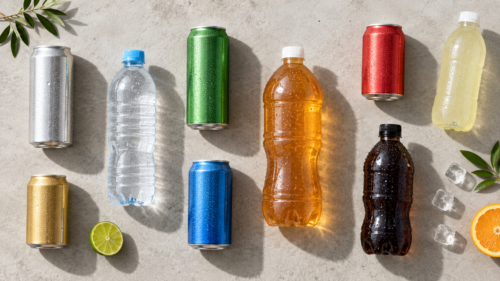
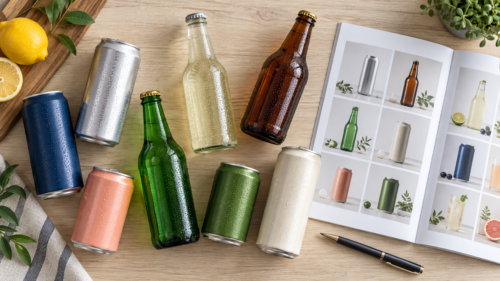
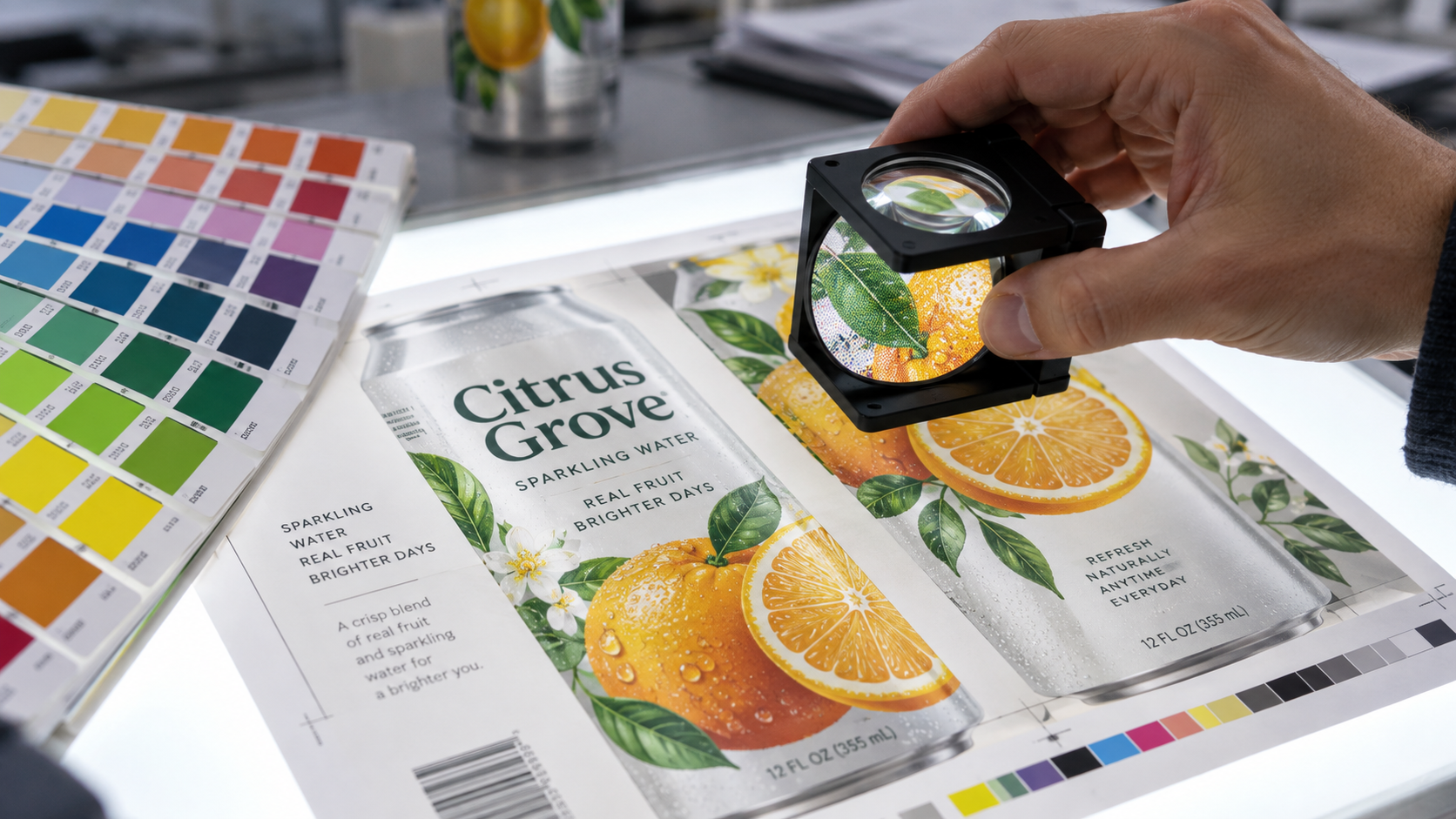
Cans, bottles and printed labels are made to order rather than held as generic stock once branding is applied. A standard format ordered against an existing print run schedule moves faster than a less common size or a decoration method requiring its own setup. This is frequently the stage that actually sets the earliest possible ship date, even though it rarely gets named as the bottleneck in early planning conversations.
The practical implication is that packaging decisions belong in the brief, not after the formulation is approved. A brand deciding between a standard can and a less common format should ask about the packaging timeline before committing, not assume it will be absorbed into slack elsewhere in the schedule.
Multiple flavours in a launch range compound this further, because each variant needs its own printed components even when they share the same base can and closure. A four-flavour launch is not one packaging order; it is four, run in parallel where the factory’s print supplier allows it and in sequence where it does not.
Production and shipping: the stage with the least variance
Once formulation, artwork and packaging are all settled, production itself is the most predictable stage. Two elements decide how quickly a confirmed order becomes a shipped one:
- Batch size relative to line scheduling. A batch that fits inside a normal production slot moves faster than one requiring a dedicated run to be scheduled around other orders.
- Vessel booking availability. Sea freight capacity fluctuates by season and by route, and booking early against a confirmed production date avoids the order sitting in a warehouse waiting for space.
Neither of these tends to move by more than a few days under normal circumstances, which is why production is also the stage brands worry about least and plan for most accurately, somewhat backwards given how much more variable the earlier stages are.
What actually shortens a timeline
Four practices consistently reduce total elapsed time, and none of them require the factory to work faster.
- Start from an existing formula where possible. Adjusting a recipe that already runs on the line removes most of the formulation-stage uncertainty.
- Name the target market before the first sample. This fixes label and claim constraints early instead of forcing an artwork rewrite later.
- Choose a standard pack format for a first order. A less common format can always follow once volume justifies its own print run.
- Assign one person to consolidate feedback. A single point of decision on the brand side removes the delay caused by unreconciled comments from multiple stakeholders.
Each of these addresses a brand-side decision rather than a factory capability, which is why two brands ordering the same product from the same factory can see materially different timelines.
Reading a quoted timeline correctly
When a factory quotes a lead time, it is worth asking which stages the figure actually covers. A quote given at the enquiry stage, before any sample has been tasted, usually describes production and shipping only, because sample rounds have not started yet and cannot be forecast in advance. A quote given after sample approval is a different and more reliable number, because the most variable stage has already closed.
Treating an early-stage estimate as a fixed delivery date is a common source of frustration on both sides. The more useful question to ask a supplier is not how long the whole project will take, but how long production and shipping take once formulation and artwork are both locked — that figure is genuinely comparable between suppliers, where the end-to-end figure is not, since it depends on how the brand itself runs its side of the process.
It is also worth asking whether the quoted figure assumes a standard pack format or the specific one under discussion. A quote given before the packaging conversation has happened is provisional by definition, and confirming it once format and decoration are fixed avoids a mismatch between the number in an early email and the date that actually holds.
Frequently asked questions
Which stage usually takes the longest?
Sample rounds, in most first-order projects. Because the elapsed time compounds with every round rather than growing linearly, a project needing several rounds of adjustment often spends more calendar time in tasting and feedback than in production.
Can packaging procurement run at the same time as sample rounds?
Only partially. Ordering printed components before the formulation is locked is risky, since a late recipe change can affect nutrition panel content and force a reprint. Sourcing and format decisions can be made early, but placing the print order is safer once the sample is approved.
Does a reorder move faster than a first order?
Generally yes, because the formulation, artwork and packaging specification are already established. A reorder mainly runs through production and shipping, which is the most predictable stage of the whole process.
What is the single most common cause of delay?
Feedback that does not name a specific, sized change. A comment that a sample needs to be less sweet, without saying by how much, produces another exploratory round rather than a converging one.
Should sample rounds happen before or after a market is chosen?
Ideally the market is named first, even provisionally. Sweetness expectations, permitted ingredients and label requirements all vary by destination, and a profile approved without that context can need rework once the market is confirmed. Naming the market at the brief stage lets the sampling process converge on something that will actually be usable rather than something that has to be revisited.
Does ordering more than one flavour at once add much time?
It adds artwork and packaging work in proportion to the number of variants, since each flavour needs its own label content and its own print run, but it does not usually add production time in the same proportion if the flavours can run back to back on the same line. The artwork and approval stage is where a multi-flavour launch typically feels slower than a single-SKU order.
Planning a realistic timeline
A beverage lead time is not a fixed number to request from a supplier. It is the sum of decisions a brand controls as much as steps a factory runs, and the fastest path to shipment comes from starting close to an existing formula, fixing the target market early, and keeping feedback specific through every sample round.
ACM Beverage works through each of these stages with brand owners, from the first sample request to a confirmed production schedule, and can advise on where a specific product concept is likely to add rounds before the project begins. Bringing a reference product, a sweetness direction and a target market to the first conversation is usually enough to turn a rough estimate into a schedule the whole project can actually be planned against.