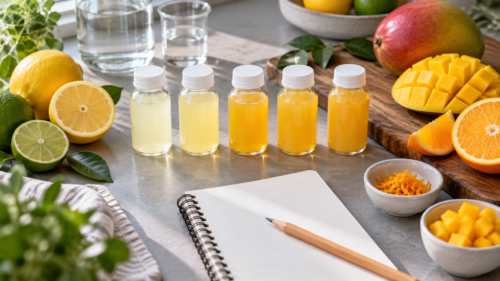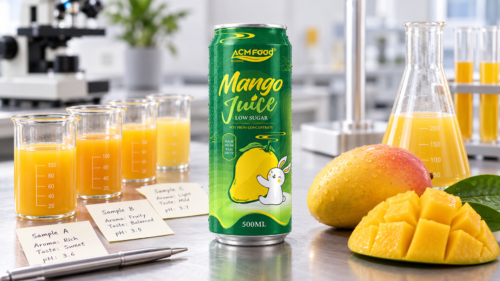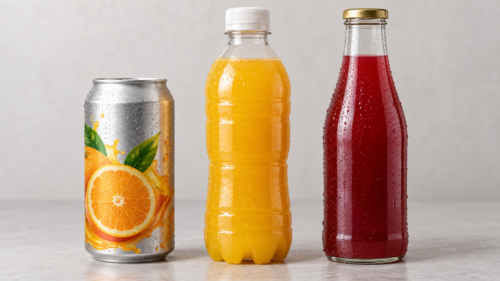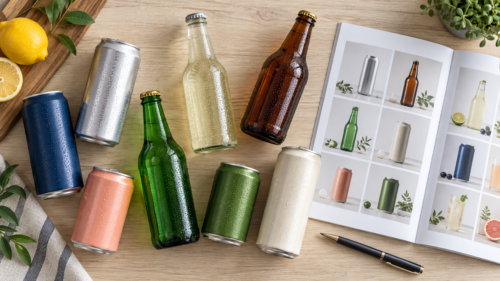


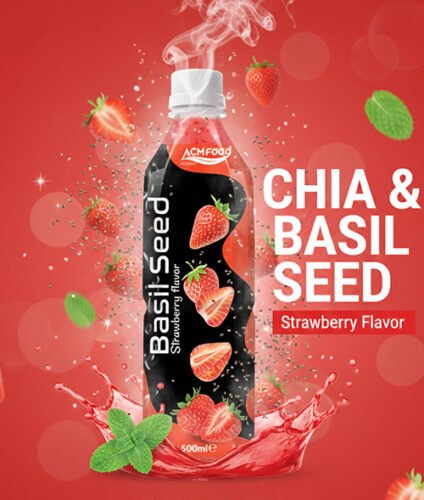
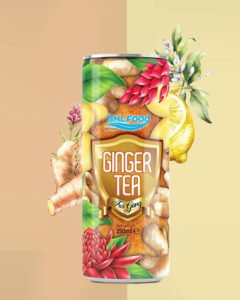
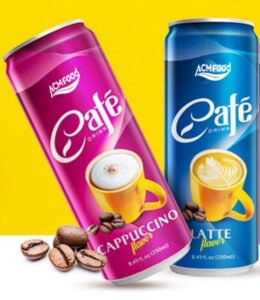
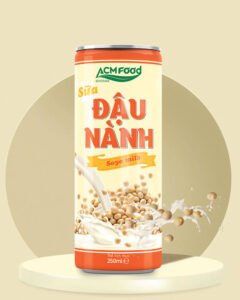

A beverage sample request is the step where a brand asks a supplier to send physical product to taste before committing to an order. It sounds simple, and it is the step most often wasted, because samples arrive without anyone having agreed what question they are supposed to answer.
A sample can settle several different questions: whether an existing product is good enough as it stands, whether a flavour direction is right, or whether a specific formulation change worked. Each of those needs a different kind of sample, and asking for the wrong one costs a round trip.
What is a beverage sample request?
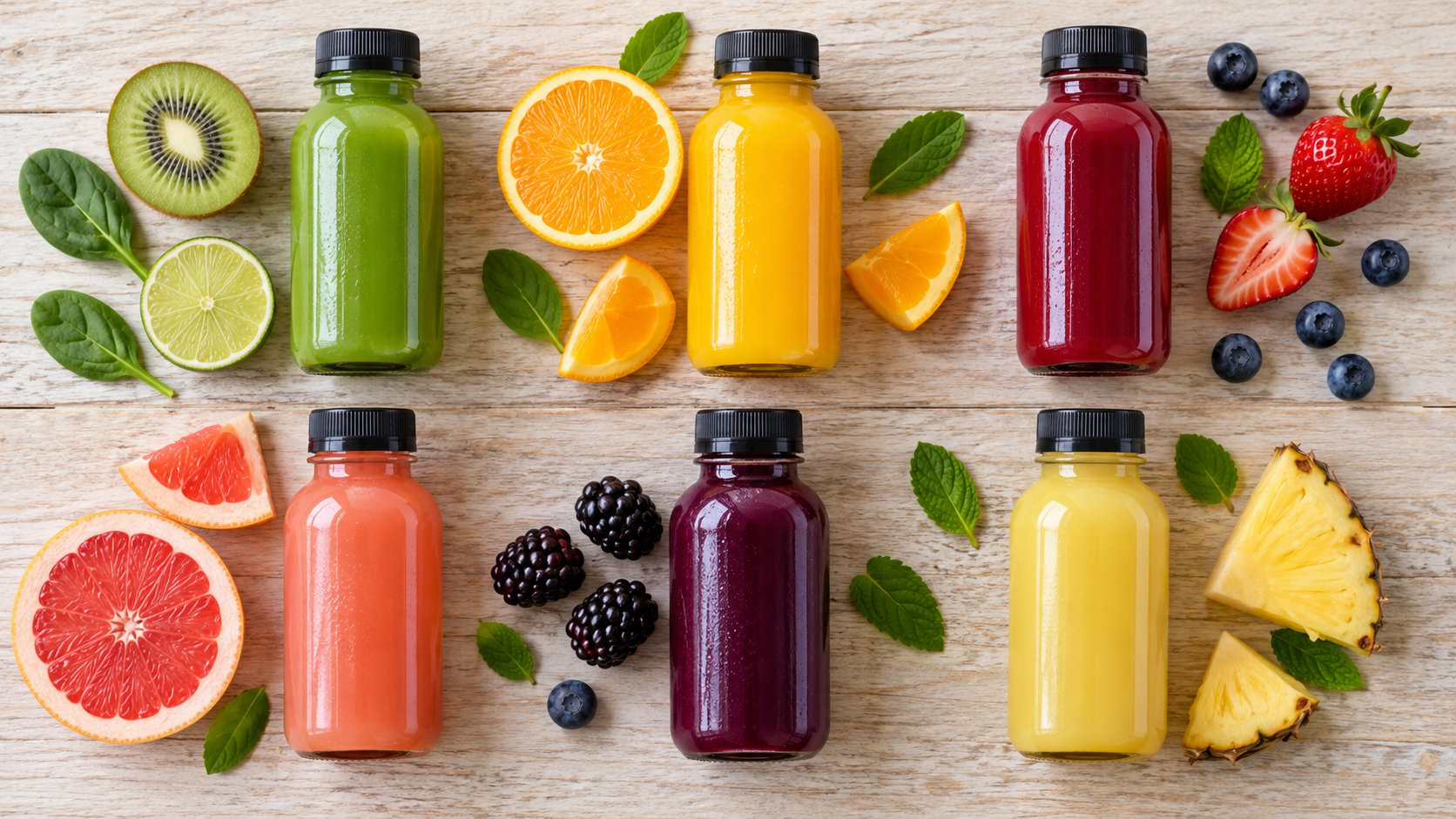
It is a formal request for physical product, sent so that a buyer can taste and assess it before ordering. In practice it covers three different things: a selection of existing products, a sample of one specific product, or a developed sample made against a brief. Which of the three you need depends on how far the concept has already been decided.
The distinction matters because the three have different turnaround and different purposes. A selection of existing products answers what is available. A single product sample answers whether that product is right. A developed sample answers whether a requested change worked.
Which type of sample do you actually need?
| Type | What it answers | When to ask for it |
|---|---|---|
| Selection of existing products | What the range tastes like and which direction fits | Concept is still open; category chosen but not the product |
| Single existing product | Whether this specific product meets the requirement | A shortlist already exists |
| Existing product with a change | Whether an adjustment to sweetness, flavour or content works | The base is agreed and one variable is being tuned |
| Developed sample against a brief | Whether a new formulation matches the target | No existing product fits and development has started |
Most first requests should be the first type. Tasting a spread of what already exists is the fastest way to discover that the concept in your head corresponds to something quite different on the palate, and it costs the least time to find out.
What to include in the request
A request that carries context produces a more useful selection than one that names a product category alone. The supplier is choosing what to send, and the quality of that choice depends on what they know about the intended use.
- Category and format. Whether the interest is juice, coconut water, sparkling, tea or a functional drink, and in which pack format.
- Target market. Sweetness expectations and acceptable ingredients differ by region, and a selection tuned to the wrong market wastes a round.
- Positioning. Whether the product is intended as a value line, a mainstream offer or a premium position, because that changes which products are worth sending.
- Reference product. Anything commercially available that is close to the target, which removes more ambiguity than a written description.
- Sweetness direction. Whether the intent is conventional, reduced or no added sugar, since this alone can halve the shortlist.
- Who will taste it. One person, a panel, or a customer, because that affects how many units of each item are useful.
Where the interest is in adjusting an existing product rather than picking one as it is, it helps to say so at the request stage. The scope of what can be changed is set out in the article on what can be changed on a beverage product.
How to taste a sample properly
Tasting is where most of the value is either captured or lost. The aim is not to decide whether you like the drink, but to describe it accurately enough that the next round can be aimed rather than guessed.
That shift in purpose changes how a tasting is run. Personal preference is a poor guide when the product is intended for a market the taster does not belong to, and it is particularly unreliable on sweetness, where expectations differ sharply between regions. A taster who records that a sample is sweeter than the reference has produced information that transfers to any market; a taster who records that it is too sweet has produced an opinion that may not.
Building a simple tasting protocol
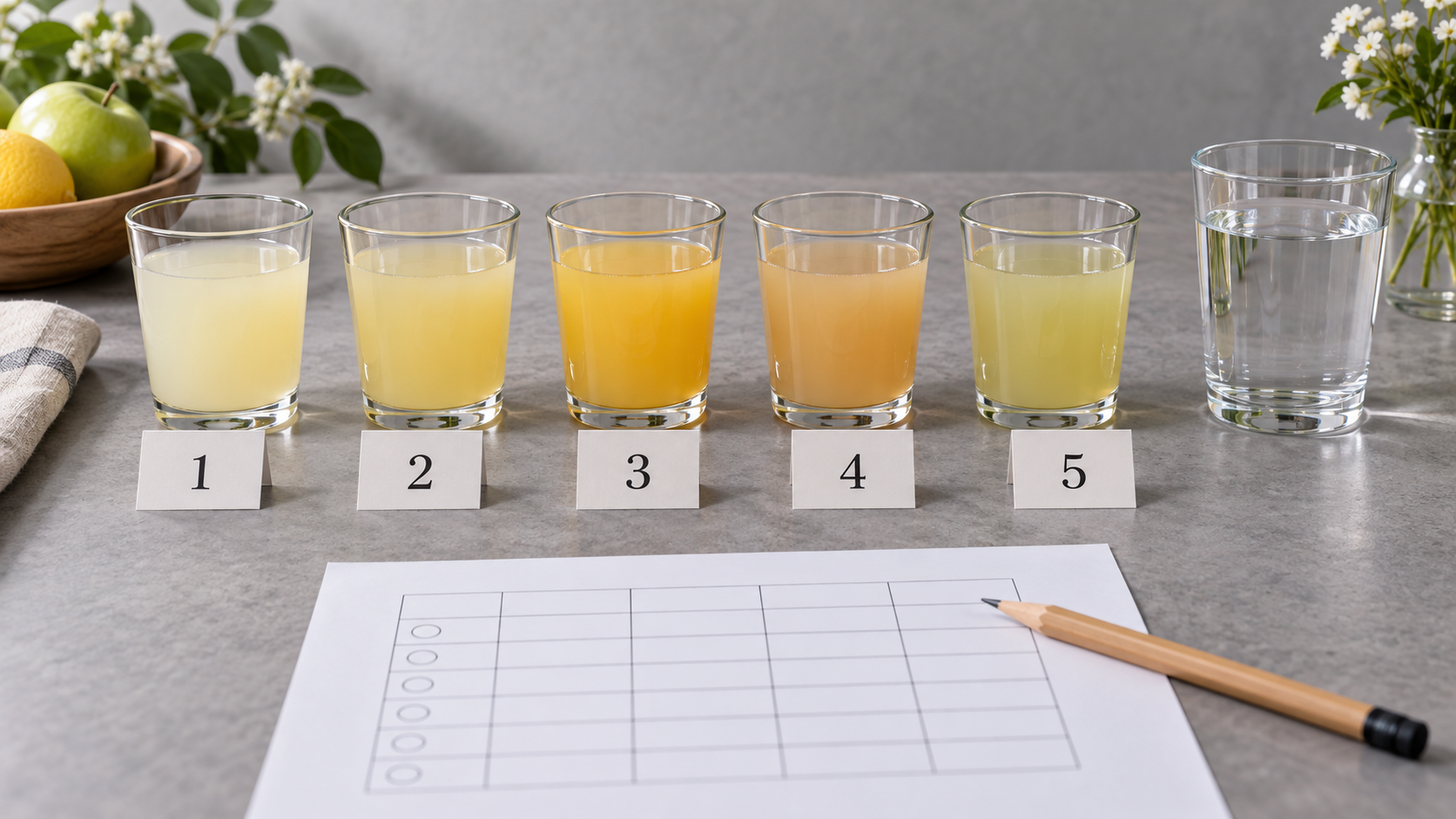
A protocol does not need to be elaborate to be useful. Four controls remove most of the noise that makes sample feedback unreliable.
- Serve at the temperature of consumption. Chilling changes perceived sweetness and acidity substantially, and a sample tasted warm will be judged as a different product.
- Taste blind and in random order. Knowing which sample is the favourite candidate changes the assessment more than most people expect.
- Score attributes separately. Sweetness, acidity, fruit character, body and aftertaste each get their own note rather than one overall verdict.
- Compare against the reference. Taste the reference product alongside, not from memory, since memory of a flavour drifts quickly.
The output that helps a supplier is a short note per sample along the lines of sweeter than reference, acidity too sharp, fruit character good, aftertaste short. That gives a direction. A note saying the sample is not quite right gives none.
What sample feedback should contain
Useful feedback separates three things that are easily blurred: what the product is, what you want changed, and how much. A comment that a drink is too sweet does not say whether it should be slightly less sweet or substantially less sweet, and those lead to different formulations.
It also helps to distinguish between attributes that are wrong and attributes that are merely different from expectation. A juice that tastes unlike the reference is not automatically worse; sometimes the reference itself is the thing being reconsidered once a real alternative is on the table.
Where the feedback points to a single variable such as sweetness or fruit intensity, the next step is usually an adjustment rather than a new development, and the route for that is described in the guide to adjusting flavour, sweetness and ingredients.
Practical constraints worth knowing
Samples travel internationally as physical goods, which introduces constraints that have nothing to do with the product. Liquids are heavy and are subject to carrier rules, so the format and the number of items affect what can be shipped and how. Customs treatment of samples varies by destination and may require documentation even for small quantities.
Shelf life also applies to samples. A product sent by sea arrives having used part of its life in transit, and a sample held for several weeks before a tasting is no longer representative of a fresh product. Tasting promptly after arrival is a practical requirement rather than a courtesy.
Because of these constraints, a focused request generally produces a better outcome than a broad one. A small number of well-chosen products, tasted quickly, moves a project further than a large box tasted over a month.
Mistakes that waste a sample round
The same handful of errors account for most repeated rounds, and each has a straightforward remedy.
- Tasting alone, from memory, against no reference. Without a side-by-side comparison the assessment records a mood rather than a difference. Buy the reference product locally and open it at the same session.
- Collecting opinions from too many people. Five unreconciled verdicts produce a contradictory brief. Nominate one person to consolidate feedback into a single set of attribute notes.
- Judging a sample on packaging. Samples often arrive in plain or interim packaging, and confusing that with the finished presentation leads to rejecting a product for a reason unrelated to the liquid.
- Waiting weeks before tasting. A sample that has sat at ambient temperature past its useful window no longer represents the product, and the resulting feedback misdirects the next round.
- Asking for a change without a size. Less sweet is a direction, not a target. Stating whether the change should be slight or substantial saves at least one round.
From sample to decision
A sample round should end with one of three outcomes, and naming which one has been reached prevents projects drifting. The first is acceptance of a product as it stands, which moves the project to commercial terms and artwork. The second is acceptance with a defined change, which moves it to an adjustment round with a specific variable named. The third is rejection of the direction, which returns the project to the concept stage rather than to another sample.
The third outcome is the one most often mishandled, because another sample round feels like progress. If the direction itself is wrong, no further sample will fix it, and revisiting the brief is faster. Where the decision is to proceed from something that already exists, the available starting points are described in exploring existing private label formulas.
Frequently asked questions
How many products should a first sample request cover?
Enough to compare directions, few enough to taste in one session. A spread that covers the range of sweetness and flavour styles under consideration is more informative than a large box of similar items, because comparison is what makes tasting useful.
Can a sample be made to a specific recipe straight away?
It can, but it is usually not the fastest route for a first request. Tasting what already exists calibrates expectations and often changes the brief, which means a developed sample made before that calibration may be aimed at the wrong target.
Does the sample represent what production will taste like?
A sample drawn from existing commercial product does. A bench-developed sample may differ from production, because processing at scale affects flavour, so a pilot or production sample is normally confirmed before final approval.
Should a customer or retail buyer taste the samples too?
Often it is worth it, and it changes what should be requested. If a retail buyer will taste, the selection needs enough units of each item for a separate session, and the products should be ones that could realistically be supplied rather than the full exploratory spread. It is also worth agreeing internally beforehand which product is being presented as the preferred option, since an undirected tasting with an external buyer tends to produce feedback on the range rather than a decision on a product.
What should be documented after tasting?
Attribute-level notes for each sample, the reference used, the serving temperature and who tasted. That record is what makes the next round comparable, and it becomes the basis of the specification if a sample is eventually approved.
Making the request count
The difference between a sample round that advances a project and one that repeats it is almost entirely in the preparation. Decide what question the sample is meant to answer, give the supplier enough context to choose well, taste under controlled conditions against a reference, and record attribute-level feedback rather than a verdict.
A request to ACM Beverage that names the category, the format, the target market, the sweetness direction and a reference product is enough to assemble a focused selection, and that specificity is what turns the first tasting into a decision rather than an impression.