
Hibiscus tea contains 0 mg of caffeine and has the best-supported functional claim in the botanical drinks category: meta-analyses of controlled trials show modest reductions in blood pressure. Pineapple is added for a formulation reason — hibiscus is sharply acidic on its own, and pineapple’s sweetness balances it without needing much sugar.
Key facts at a glance
- The plant: Hibiscus sabdariffa — the calyx, not the flower petal.
- Caffeine: zero. It is not a true tea (Camellia sinensis).
- Best-supported benefit: modest blood pressure reduction, shown in controlled trials.
- Red colour: anthocyanins — delphinidin-3-sambubioside and cyanidin-3-sambubioside.
- The tartness: citric, malic and hibiscus acids, not added acidulant.
- Known regionally as karkade, bissap, roselle and agua de Jamaica.
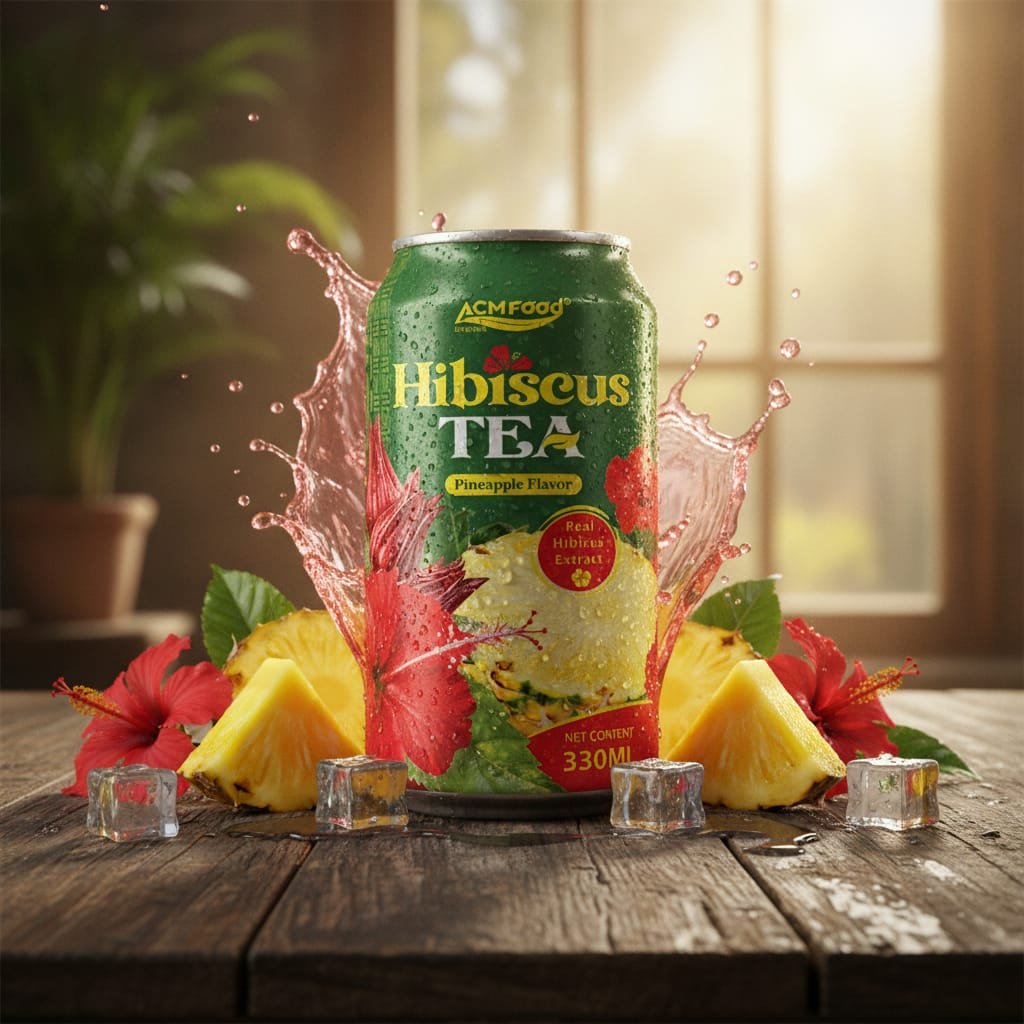
What hibiscus is, and what it is not
Hibiscus tea is an infusion of the dried calyces of Hibiscus sabdariffa — the fleshy red structure that remains after the flower drops, not the petals themselves. Because it comes from a hibiscus rather than from the tea plant, it contains no caffeine at all.
That single fact drives much of its commercial position. It occupies the same shelf as iced tea while suiting evening consumption, children’s ranges and caffeine-sensitive consumers — occasions that black and green tea cannot serve.
What the evidence actually supports
Blood pressure: the strong claim
Several randomised controlled trials and meta-analyses have found that regular hibiscus tea consumption produces modest but measurable reductions in both systolic and diastolic blood pressure. Among botanical beverage claims this is unusually well supported, and it is the one worth making.
The effect size is modest and applies to regular intake over weeks, not to a single can. It complements rather than replaces medical treatment.
Anthocyanins: plausible, less specific
The deep red comes from anthocyanins, among the better-studied polyphenol groups. Dietary anthocyanin intake is associated with cardiovascular markers in observational research. The honest framing is “associated with” rather than “proven to prevent”.
Cholesterol and liver: weaker
Some trials report effects on lipid markers, but results are inconsistent and study quality varies. Claims about liver health rest on limited evidence and should not be presented as established.
Three claims to avoid
- “Hibiscus is a rich source of vitamin C.” Fresh calyces contain some, but drying and hot infusion destroy most of it. A commercial hibiscus RTD is not a meaningful vitamin C source unless it has been fortified or contains substantial fruit juice.
- “The bromelain in pineapple aids digestion.” Bromelain is a protein and is largely inactivated by the pasteurisation any shelf-stable drink requires. What survives is denatured by stomach acid. It is a genuine enzyme in fresh pineapple, not in a canned tea.
- “It is a superfood.” The term has no regulatory definition. Hibiscus has one good, specific claim — blood pressure. That is more persuasive than a vague one.
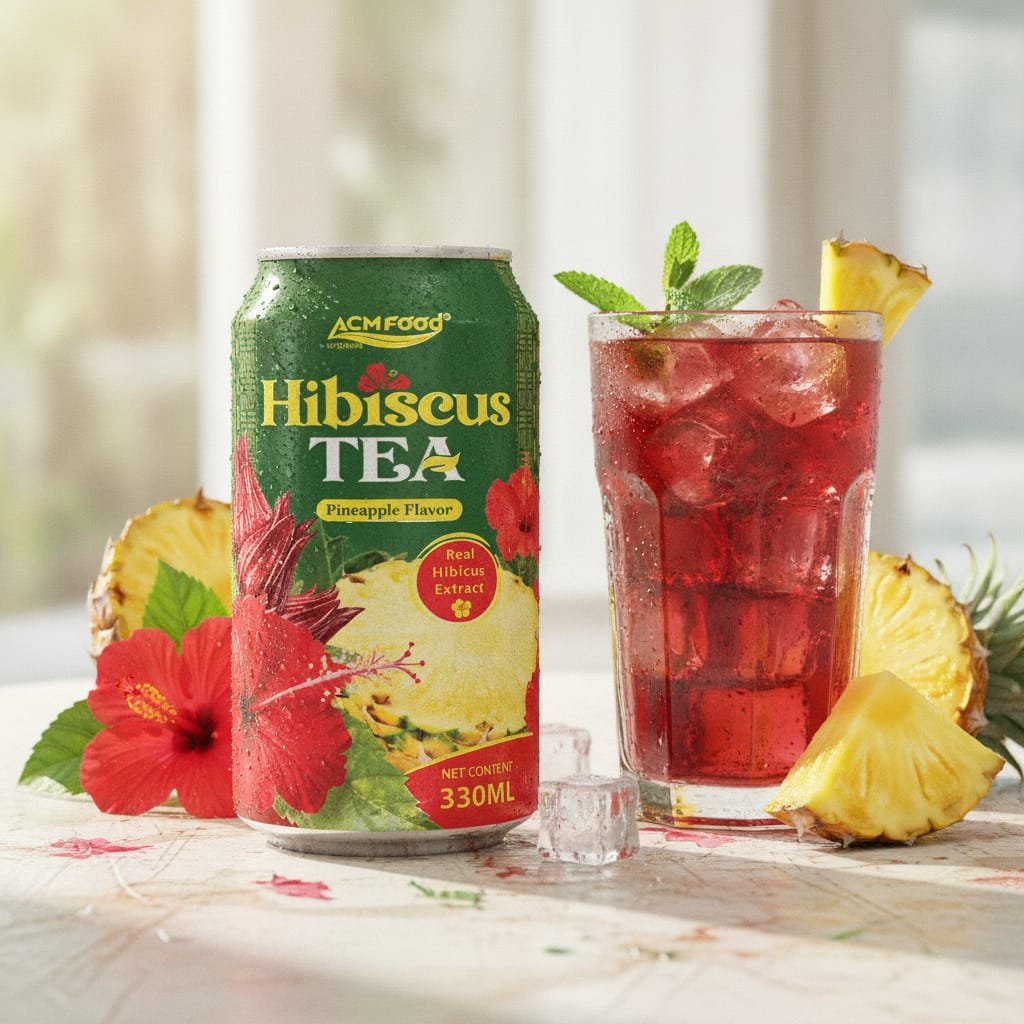
Why pineapple, specifically
Pairing hibiscus with pineapple is a technical decision more than a marketing one. Three reasons:
- Acidity balance. Hibiscus is genuinely sour — its organic acid content is high enough that unsweetened infusions are difficult for most palates. Pineapple’s sweetness offsets this at a lower sugar addition than sweetening hibiscus alone would need.
- Colour stability. Anthocyanins hold their red better at low pH. Pineapple keeps the pH where the colour is stable, so the product does not brown over shelf life.
- Flavour bridging. Hibiscus reads as tart and faintly berry-like. Tropical fruit sits naturally alongside it, where dairy or vanilla notes clash.
How to serve it
- Chilled over ice. The tartness reads as refreshing when cold and as sour when warm.
- With mint. Herbal notes complement the floral end of hibiscus.
- As a soft drink alternative in the evening, since it is caffeine-free.
- As a mixer. The acidity and colour work with white spirits, and as a non-alcoholic base.
- Diluted with sparkling water if the concentrate strength is high.
Who should be careful
- People taking antihypertensive medication. Because the blood pressure effect is real, regular intake alongside medication is worth discussing with a clinician.
- Pregnancy. Guidance on hibiscus in pregnancy is cautious and inconsistent; ask a healthcare professional.
- People on hydrochlorothiazide or chloroquine, where interactions have been reported.
- Dental enamel. The drink is genuinely acidic. Drink with a meal rather than sipping over hours.
Frequently asked questions
Does hibiscus tea contain caffeine?
No. Hibiscus is Hibiscus sabdariffa, not the tea plant Camellia sinensis, so it contains no caffeine. This is one of its main commercial advantages — it suits evening drinking and caffeine-sensitive consumers.
Does hibiscus tea really lower blood pressure?
Controlled trials and meta-analyses do show modest reductions in systolic and diastolic blood pressure with regular consumption. The effect is real but modest, applies over weeks rather than from one drink, and does not replace medical treatment.
Is hibiscus tea high in vitamin C?
No. Fresh calyces contain vitamin C, but drying and hot infusion destroy most of it. A commercial hibiscus drink is not a meaningful source unless fortified or blended with substantial fruit juice.
Why is hibiscus tea so sour?
Its natural content of citric, malic and hibiscus acids. The tartness is intrinsic to the calyx, not an added acidulant, which is why hibiscus drinks are usually blended with a sweet fruit rather than served plain.
What is hibiscus tea called in other countries?
Karkade in Egypt and Sudan, bissap in West Africa, agua de Jamaica in Mexico, and roselle across parts of Asia. It is the same plant, already familiar to shoppers in each of those markets under a local name.
Is the red colour natural?
In a properly made hibiscus drink, yes — it comes from anthocyanins in the calyx. The colour is pH-sensitive and fades with heat and light, which is why a stable ruby colour through shelf life indicates careful process design rather than added pigment.
Pineapple hibiscus tea at commercial scale
ACM Beverage manufactures canned hibiscus and fruit tea drinks in Vietnam under OEM and private label terms, in facilities certified to ISO 22000, FSSC 22000 and HACCP, exporting to more than 40 countries. The technical work in this category is colour retention: anthocyanins degrade with heat and light, so pH control and packaging choice decide whether the product still looks ruby at month 18.
See the 330 ml pineapple hibiscus tea, the green tea hibiscus 320 ml, or the wider tea drink range (29 SKUs). To discuss a formulation, contact our export team.
This article is general nutrition information, not medical advice. Consult a qualified healthcare professional before using hibiscus regularly, particularly if you take blood pressure medication.