
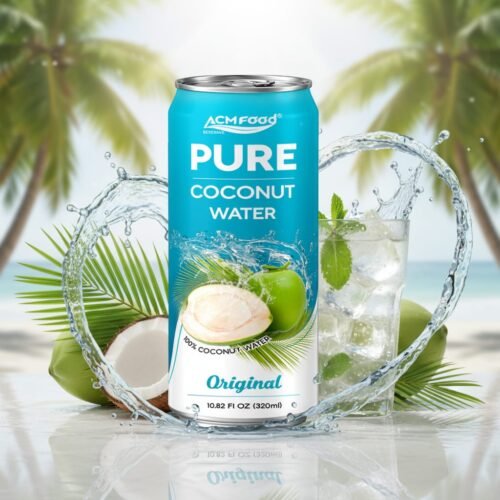
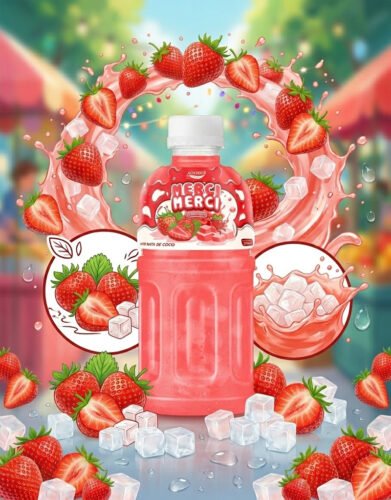
Coconut water with pulp is coconut water containing soft strips of young coconut flesh, usually 10–20% of the pack by weight. The pulp adds texture, a little fibre and some fat, while the water keeps its roughly 250 mg of potassium per 100 ml.
Key facts at a glance
- The pulp is young coconut meat — soft and jelly-like, much lower in fat than mature coconut flesh.
- Fibre contribution is modest; this is a texture product first.
- Electrolytes come from the coconut water: potassium, sodium and magnesium.
- Check for added sugar. Some pulp versions are sweetened; pure versions are not.
- Short cans (250 ml) and 320–500 ml formats are common.
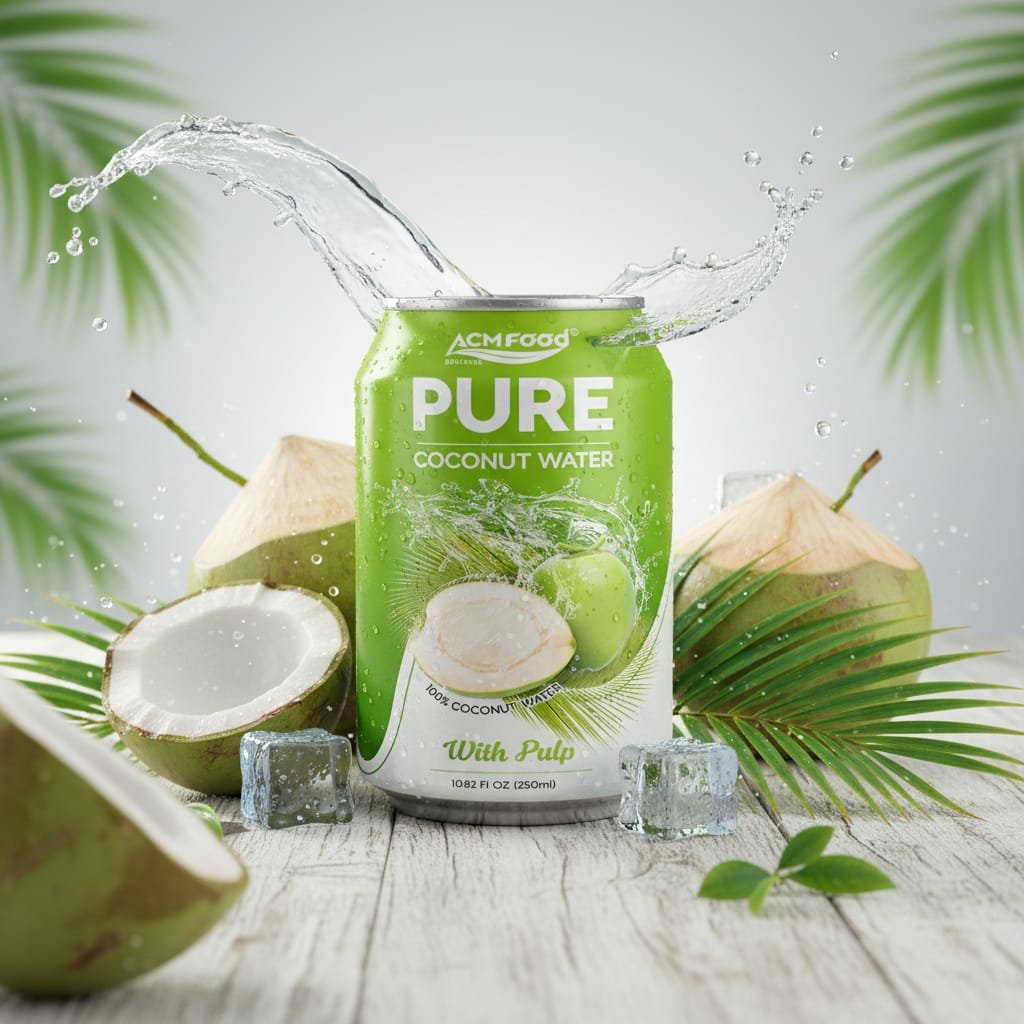
Plain versus with pulp
| Plain coconut water | Coconut water with pulp | |
|---|---|---|
| Texture | Thin, clear | Soft coconut pieces |
| Energy | About 19 kcal per 100 ml | Slightly higher, depending on pulp and sugar |
| Fat | Negligible | Small amount from the flesh |
| Fibre | Negligible | Small amount |
| Best use | Rehydration after exercise | Snack-like refreshment |
| Drinking speed | Fast | Slower; chewing required |
Coconut water nutrition
| Nutrient (coconut water) | Per 100 ml |
|---|---|
| Energy | 19 kcal |
| Sugars | 2.6 g |
| Potassium | 250 mg |
| Sodium | 105 mg |
| Magnesium | 25 mg |
Source: USDA FoodData Central, coconut water. Values for pulp products vary with pulp percentage.
How it is made
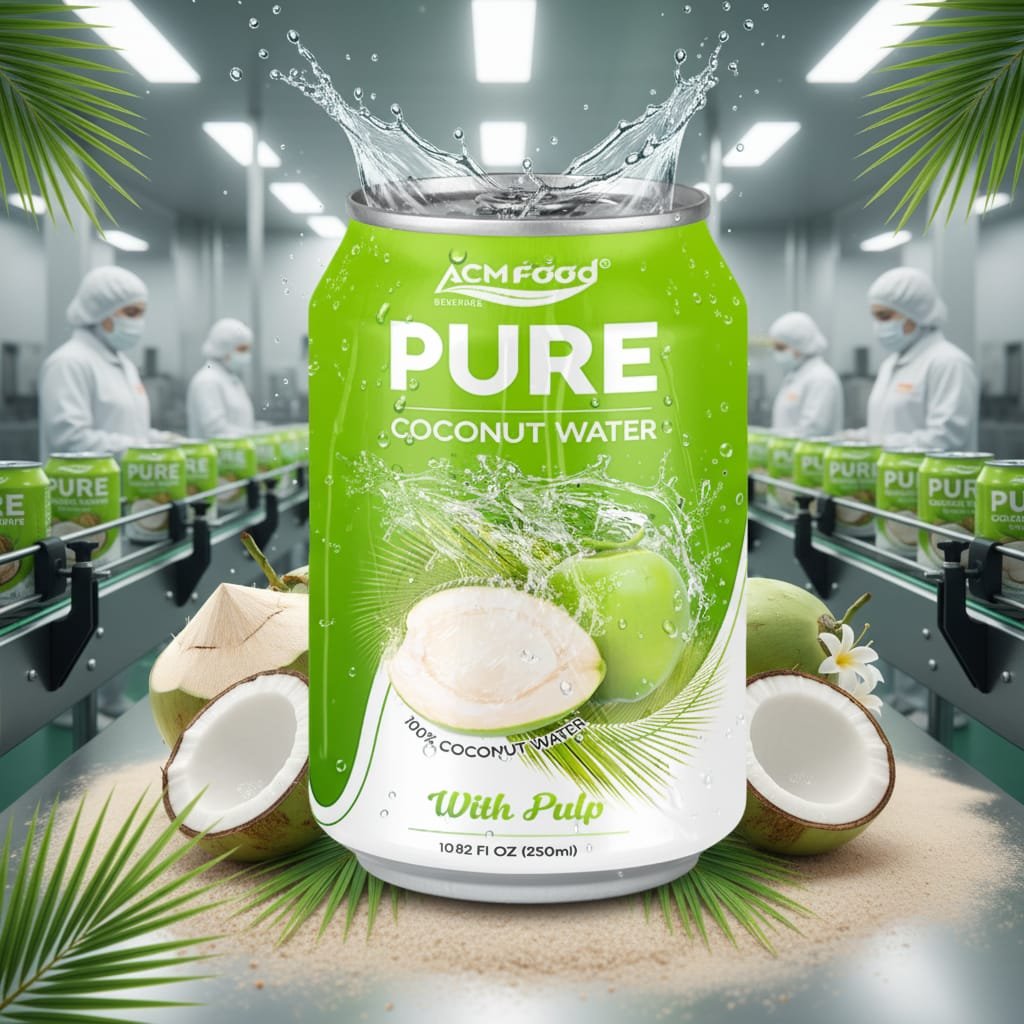
- Young coconuts, typically 6–8 months old, are opened and the water collected.
- The soft flesh is scraped and cut into strips or cubes.
- Water and pulp are filled together, the pulp dosed by weight.
- The sealed can is sterilised (retort) because coconut water is low-acid, at pH about 5.0–5.4.
Pulp texture is the main quality challenge: too-young flesh turns mushy after sterilisation, too-mature flesh becomes tough.
What brands should specify with an OEM
- Pulp percentage by drained weight, and piece size.
- Coconut water content — 100% or with added water.
- Sugar policy — unsweetened or sweetened, and the target level.
- Additives allowed, such as vitamin C as an antioxidant.
- Certifications required, for example FSSC 22000, HACCP or Halal.
Frequently asked questions
What is the pulp in coconut water?
Soft flesh from young coconuts, cut into strips or pieces. It is much softer and lower in fat than the white meat of mature coconuts.
Is coconut water with pulp healthier than plain?
Nutritionally they are close. The pulp adds a little fibre and fat and makes the drink more filling; plain coconut water is better for fast rehydration.
Does coconut water with pulp have added sugar?
Some do and some do not. Check the ingredient list for sugar and the nutrition panel for total sugars per 100 ml.
Is it good after exercise?
It rehydrates like plain coconut water, but the pieces make it slower to drink. For long, heavy sweating, a higher-sodium drink is more suitable.
How long does canned coconut water with pulp last?
Typically 12–24 months unopened. Refrigerate after opening and use within 1–2 days.
Coconut water with pulp from ACM Beverage
ACM Beverage produces coconut water with pulp in Vietnam for OEM and private label customers, in facilities certified to ISO 22000, FSSC 22000 and HACCP, exporting to more than 40 countries. See the 250 ml pure coconut water with pulp or the full coconut water range. Related reading: clean label coconut water. To discuss a specification, contact our export team.