

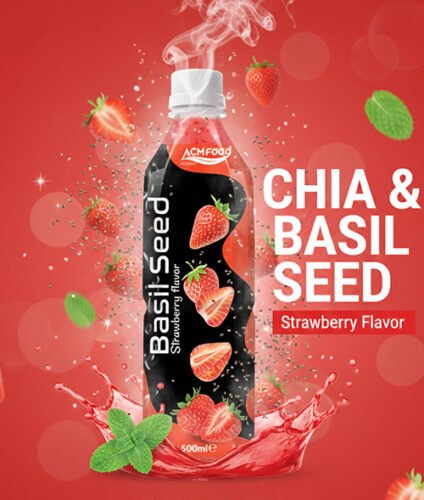



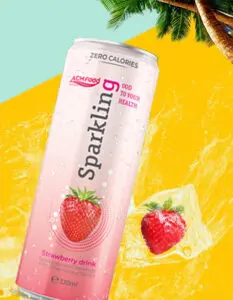
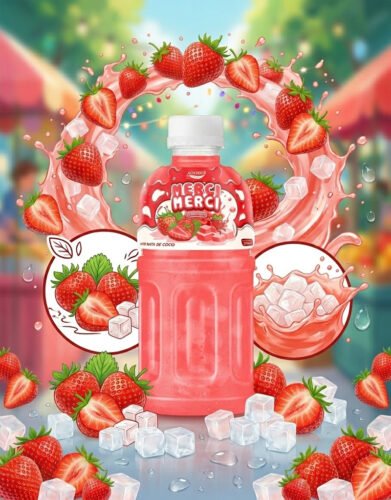
Mango pairs best with orange, pineapple, strawberry or banana, and each pairing does a different job. Mango carries 36.4 mg of vitamin C per 100 g; adding orange (53.2 mg) or strawberry (58.8 mg) pushes a single glass past the 75-90 mg adult daily requirement, while banana adds potassium instead.
This guide covers the four pairings that work reliably, the ratio and method for each, and the nutrient each one actually delivers, so you can pick a blend by what you want from it rather than by taste alone. All vitamin figures below are calculated from USDA FoodData Central values per 100 g of raw fruit and will vary with ripeness, variety and portion size.
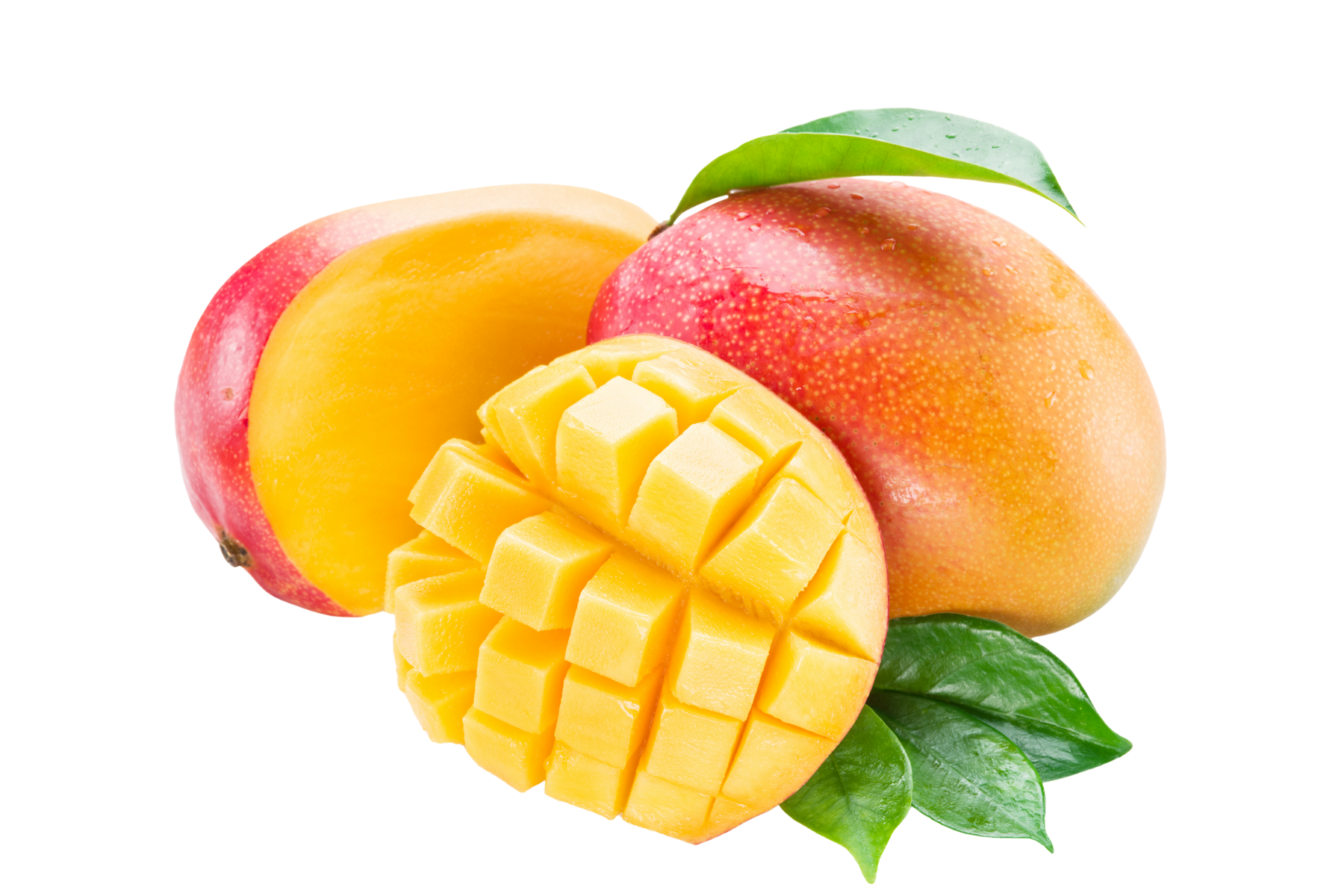
Which mango blend should you choose?
The four pairings differ more in function than in flavour. This table gives the short answer before the recipes.
| Blend | Approx. vitamin C per serving | Best for | Key nutrient beyond vitamin C |
|---|---|---|---|
| Mango + orange | ~140 mg | Immunity and morning energy | Citric acid, which improves non-heme iron absorption |
| Mango + pineapple | ~170 mg | Digestion after a heavy meal | Bromelain, a protein-digesting enzyme |
| Mango + strawberry | ~120 mg | Skin and collagen support | Polyphenols and anthocyanins |
| Mango + banana | ~85 mg | Post-workout recovery | Potassium, 358 mg per 100 g of banana |
For context, the adult reference intake for vitamin C is 90 mg per day for men and 75 mg for women. Three of the four blends clear that on their own, which is why the pairing choice is better made on the second column than on the vitamin C column.
Mango itself is the constant in all four. It supplies 36.4 mg of vitamin C, 54 micrograms of vitamin A (RAE) and 1.6 g of fibre per 100 g, which is why it works as a base rather than as an accent fruit. The mango juice range on this site is built on the same logic.
Mango + orange: the immunity and energy blend
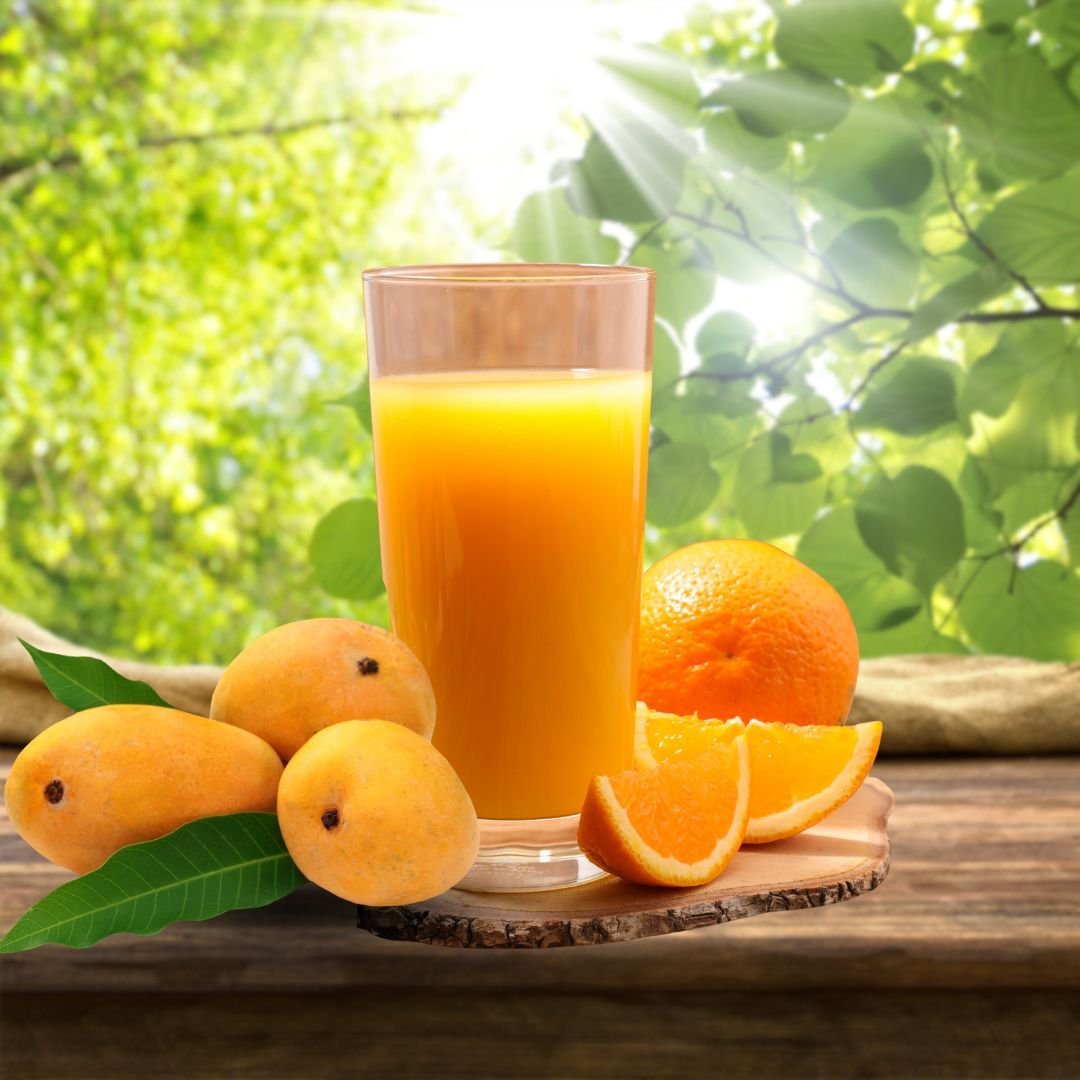
Ingredients:
- 1 ripe mango (about 200 g of flesh)
- 1-2 fresh oranges
- 1 teaspoon honey (optional)
- Ice cubes
Method:
- Juice the oranges and keep the pulp rather than straining it out.
- Cut the mango flesh into small pieces.
- Blend mango, orange juice and honey until smooth.
- Add ice and serve immediately.
Why it works: mango and orange together deliver roughly 140 mg of vitamin C, well above a full day’s reference intake. The citric acid in orange also improves absorption of non-heme iron from plant foods eaten in the same meal, which is the practical reason this blend suits breakfast rather than late evening. Mango contributes the vitamin A that orange largely lacks, supporting eye and skin function. Both fruits appear separately in the orange juice range.
Mango + pineapple: the digestion blend
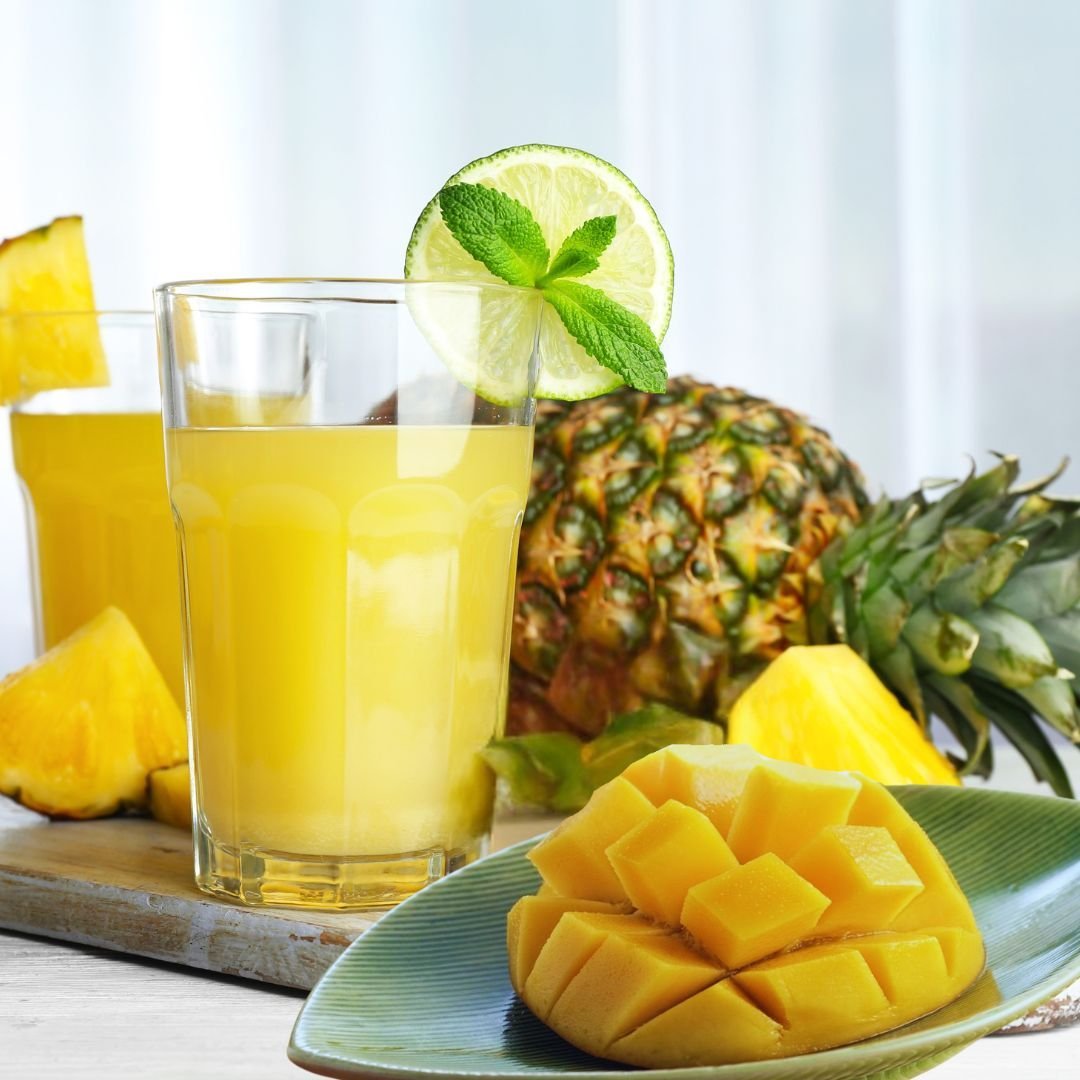
Ingredients:
- 1 ripe mango
- Half a fresh pineapple (about 200 g of flesh)
- Half a lime
- Fresh mint leaves (optional)
Method:
- Trim the pineapple core out, as it is fibrous and bitter.
- Blend mango, pineapple, lime juice and mint together.
- Strain through a coarse sieve if you prefer a smoother texture.
- Serve chilled, ideally within 20 minutes of blending.
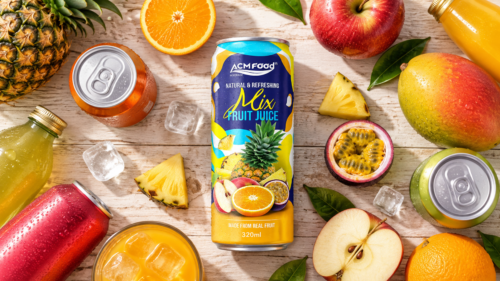
Why it works: this is the highest vitamin C blend of the four at roughly 170 mg per serving, since pineapple contributes 47.8 mg per 100 g on top of mango’s 36.4 mg. Pineapple also contains bromelain, a group of enzymes that break down protein, which is why this combination sits better after a heavy meal than the dairy-based blends below. The pineapple juice range and the mixed fruit juice range both use this pairing commercially.
Mango + strawberry: the skin and collagen blend
Ingredients:
- 1 ripe mango
- 6-8 fresh strawberries (about 85 g)
- Half a cup of plain yogurt
- 1 teaspoon honey (optional)
Method:
- Hull the strawberries and halve the larger ones.
- Blend with mango, yogurt and honey until creamy.
- Chill for 10 minutes before serving so the yogurt thickens.
Why it works: strawberries carry 58.8 mg of vitamin C per 100 g, the highest of any fruit in this guide, and vitamin C is a required cofactor in collagen synthesis. Together with mango’s beta-carotene and the polyphenols in both fruits, this blend targets skin rather than energy. The yogurt adds protein and slows the sugar release, which makes it the most filling of the four. See the strawberry juice range for the ready-to-drink equivalent.
Mango + banana: the post-workout recovery shake
Ingredients:
- 1 ripe mango
- 1 banana
- 150 ml milk or almond milk
- 1 tablespoon oats or chia seeds (optional)
Method:
- Blend mango, banana and milk until smooth.
- Add oats or chia seeds and blend again briefly.
- Drink within 30 to 60 minutes of finishing exercise.
Why it works: this is the lowest vitamin C blend at roughly 85 mg, because banana contributes only 8.7 mg per 100 g. Its value is elsewhere: 358 mg of potassium per 100 g to replace what is lost in sweat, plus fast-releasing carbohydrate to restock muscle glycogen. Mango adds vitamin B6, which is involved in protein metabolism. If recovery is the goal, this blend beats the higher vitamin C options.
How to keep the vitamin C in the glass
Vitamin C is water-soluble and degrades on exposure to heat, light and oxygen, so handling matters as much as fruit choice.
- Blend and drink within 20 minutes. Oxidation begins as soon as the fruit cell walls are broken.
- Keep the pulp. Straining removes fibre and a share of the polyphenols along with it.
- Use ripe fruit, not overripe. Vitamin C peaks at ripeness and falls as the fruit softens past it.
- Skip added sugar. Ripe mango already supplies about 14 g of natural sugar per 100 g; honey is optional, not necessary.
- Blend cold and serve in an opaque glass if the drink has to stand, since light accelerates vitamin C loss.
Common mistakes when combining mango with other fruits
- Pairing mango with another low-acid fruit. Mango plus papaya or mango plus banana alone gives a flat, heavy drink. At least one acidic fruit, citrus or pineapple, keeps the profile bright.
- Adding citrus to a dairy blend. Orange or lime juice curdles yogurt and milk. Keep the citrus blends dairy-free.
- Over-diluting with ice. Blending ice into the drink rather than adding it afterwards thins both the flavour and the nutrient density per glass.
- Treating a fruit blend as a full meal. Only the yogurt and milk versions carry meaningful protein; the juice blends do not.
Frequently asked questions
Which fruit adds the most vitamin C to a mango blend?
Strawberry, at 58.8 mg per 100 g, is the highest by concentration, followed by orange at 53.2 mg and pineapple at 47.8 mg. By serving size, however, mango plus pineapple delivers the most overall at roughly 170 mg, because a half pineapple is a larger portion than a handful of strawberries.
Does blending destroy the vitamin C in mango?
Blending itself does not destroy vitamin C, but it exposes the juice to oxygen and heat from the blender motor, which starts degrading it. The practical loss over a few minutes is small. Leaving the drink standing for hours, or storing it warm and in the light, causes far greater loss than the blending step.
Can I use frozen or canned mango instead of fresh?
Frozen mango retains most of its vitamin C, since freezing happens shortly after harvest and halts degradation. Canned mango in syrup loses more vitamin C to the heat of processing and adds sugar. If fresh is unavailable, frozen is the closer substitute for both nutrition and texture.
How much of these blends can I drink each day?
One 250-300 ml glass per day suits most adults. The limiting factor is sugar rather than vitamin C: a single blend contains roughly 25 to 35 g of natural fruit sugar. Excess vitamin C is excreted in urine, but the sugar load from several glasses a day is not trivial.
Should I add honey or sugar to a mango blend?
Usually not. A ripe mango already contains about 14 g of sugar per 100 g, and pairing it with orange or pineapple adds more. Honey is worth adding only when the mango is underripe and the blend tastes sharp, and a single teaspoon is enough for a full glass.
Can these blends be produced as ready-to-drink beverages?
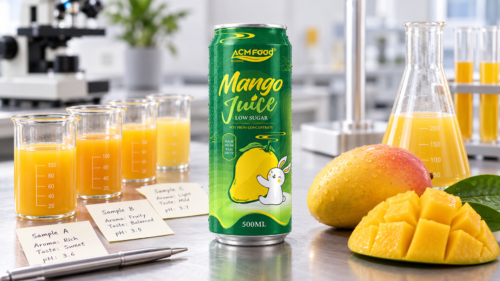
Yes. All four pairings exist as commercial RTD formats in cans and bottles, with the formulation adjusted for pasteurisation and shelf life rather than copied directly from a home recipe. ACM Beverage develops and manufactures this category; see the mixed fruit juice products or the contact page to discuss a specific blend.
Choosing your blend
Pick by purpose, not by vitamin C count alone. Mango and orange for immunity in the morning, mango and pineapple after a heavy meal, mango and strawberry for skin, mango and banana after exercise. Use ripe fruit, keep the pulp, and drink it within 20 minutes of blending.
For the commercial side of these combinations, see pure mango juice in the global RTD market and low sugar mango juice, which cover how these same fruit pairings translate into a manufactured product.