
Popping boba and tapioca pearls are both round toppings used in bubble tea, but they are made from different ingredients and feel completely different to eat. Tapioca pearls are chewy balls of cooked cassava starch, while popping boba are thin gel spheres filled with fruit juice that burst when bitten.
This comparison covers what each topping is made of, how they are prepared, how their textures differ, how long they keep, and how each behaves in ready-to-drink cans and bottles. It is meant to help both curious drinkers and buyers decide which pearl fits a particular drink or format.
What is the difference between popping boba and tapioca pearls?
The main difference is structure: tapioca pearls are solid and chewy all the way through, while popping boba are liquid inside with a thin skin that pops. Tapioca pearls are made from starch, and popping boba are made from juice set in an alginate membrane, so the eating experience, preparation and storage are all different.
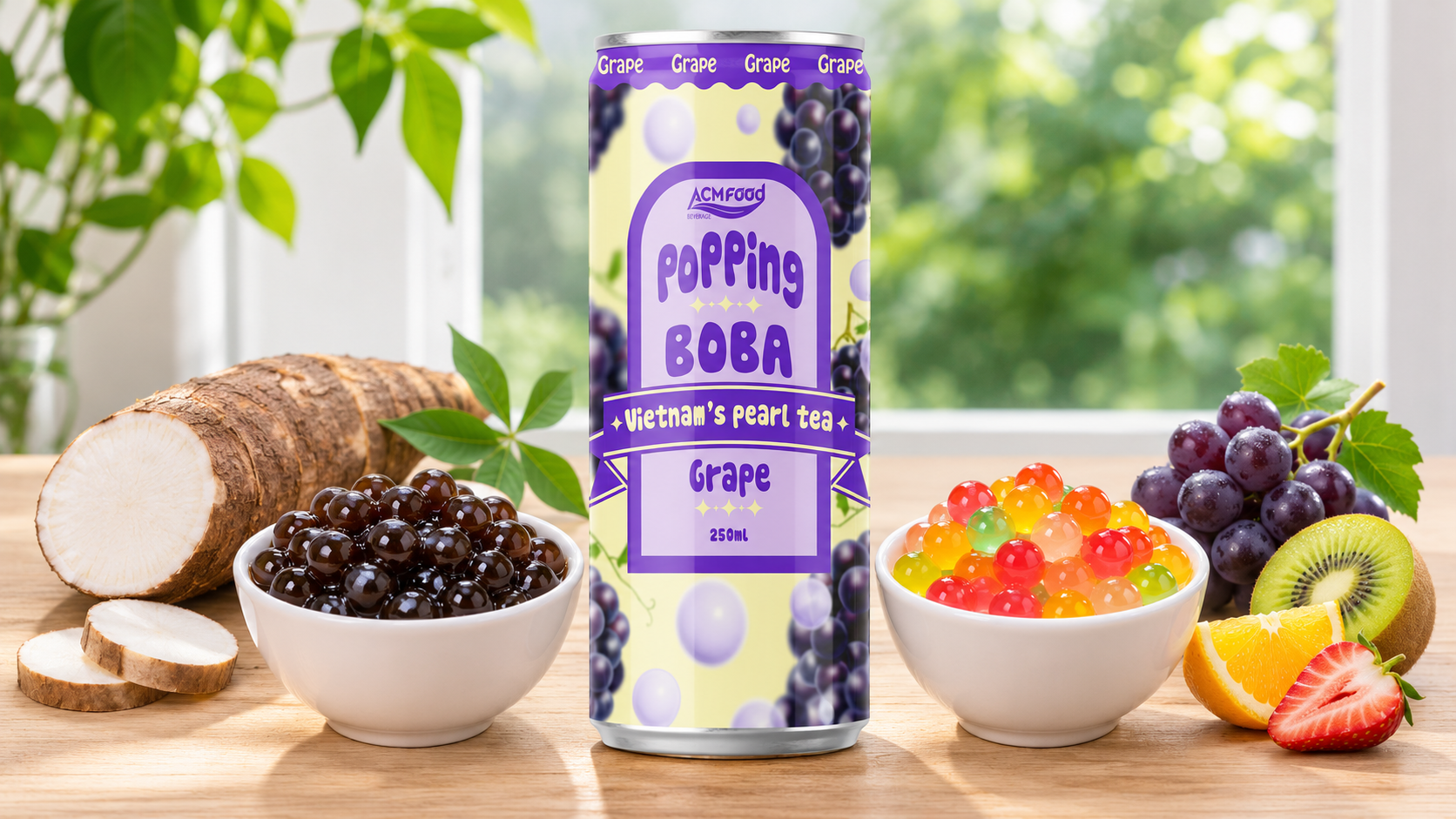
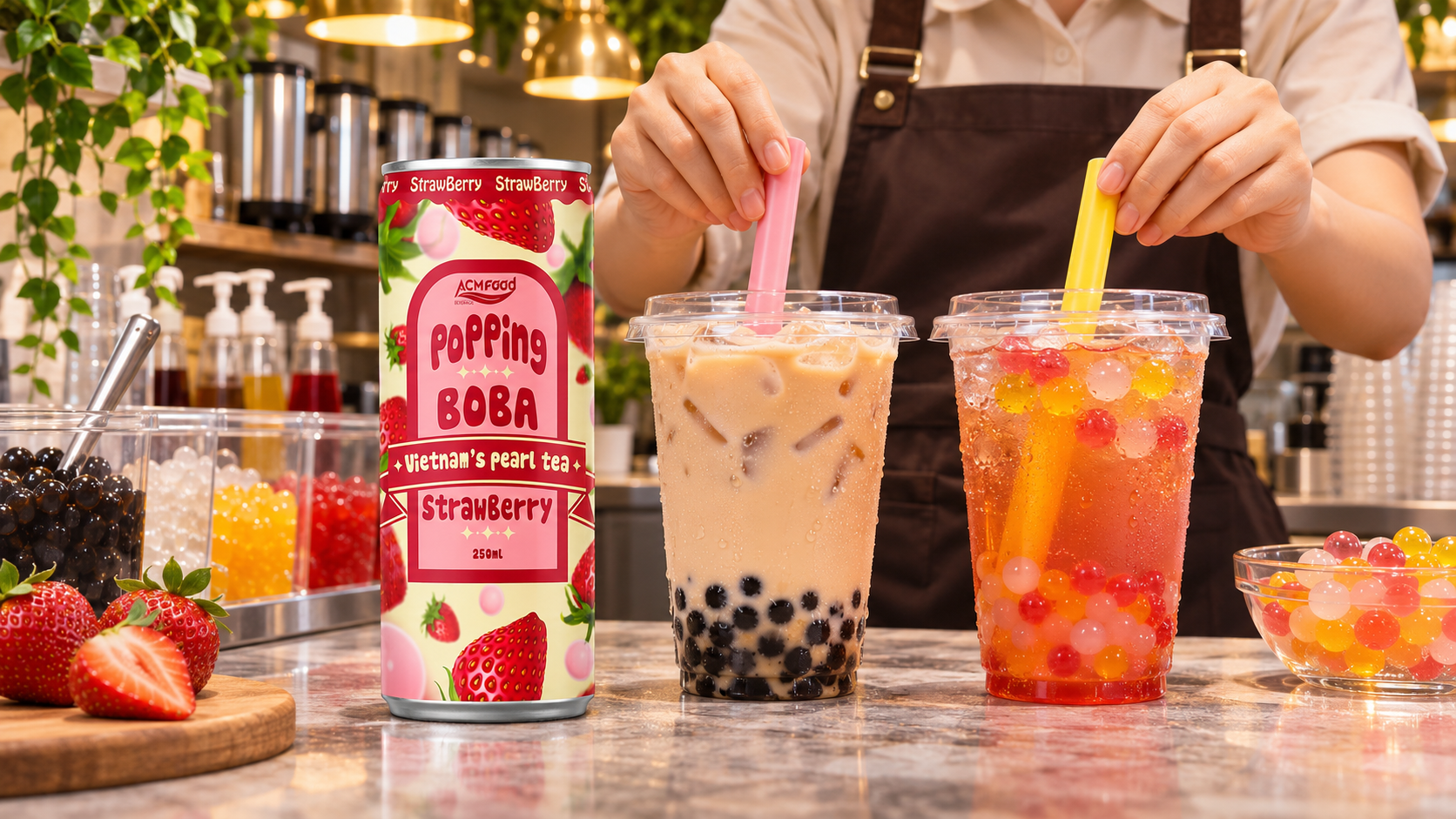
In a cup of bubble tea, tapioca pearls add body. You chew them slowly, and their mild, slightly sweet taste comes mostly from the syrup they are soaked in. Popping boba add flavour and surprise. They burst on the tongue, release fruit juice and leave almost nothing to chew.
Both are called “boba” in casual conversation, which causes confusion. In many cafés, plain “boba” means tapioca pearls, while “popping boba” or “popping pearls” refers specifically to the juice-filled spheres.
What are tapioca pearls made of?
Tapioca pearls are made primarily from tapioca starch, extracted from the root of the cassava plant (Manihot esculenta), mixed with water and often with brown sugar or caramel for colour and flavour. The dough is rolled into small balls, which are then cooked until chewy.
Key points about tapioca pearls:
- They are mostly starch, which becomes translucent and elastic when cooked.
- Dark pearls usually get their colour from brown sugar, caramel or added colouring.
- Raw pearls are hard and must be boiled, then usually rested and soaked in syrup.
- Freshly cooked pearls are softest and chewiest within a few hours; they harden as they cool and age.
The chewy texture that fans call “QQ” in Taiwanese slang comes from gelatinised starch. It is pleasant when fresh but is sensitive to time and temperature, which is the main challenge for packaged drinks.
What is popping boba made of?
Popping boba are made from fruit juice or flavoured syrup enclosed in a thin skin formed by sodium alginate, a gelling agent from seaweed, reacting with a calcium salt. Sugar, acids, colours and flavourings are usually added to the filling.
The process, known as spherification, sets a skin instantly around each drop of liquid. The centre stays fluid, so when the skin breaks, the juice is released. Because the skin is made from alginate rather than gelatin, popping boba are usually suitable for plant-based diets, though the full ingredient list of a specific product should always be checked.
Popping boba vs tapioca pearls compared
The table below compares the two toppings in general terms. Exact ingredients and nutrition vary by producer and recipe, so product labels are the reference for specific values.
| Feature | Tapioca pearls | Popping boba |
|---|---|---|
| Main ingredient | Tapioca (cassava) starch | Fruit juice or syrup with alginate skin |
| Structure | Solid throughout | Liquid centre, thin membrane |
| Texture | Chewy, elastic, dense | Soft skin that bursts, juicy |
| Flavour | Mild; mostly from soaking syrup | Fruity; built into the filling |
| Preparation | Must be boiled and soaked before use | Ready to use from the container |
| Best within | Hours after cooking for best texture | Producer’s stated period; longer when sealed |
| Effect of chilling | Tends to harden over time | Generally keeps its pop |
| Energy contribution | Starch-based, usually more filling per serving | Mostly from sugars in the filling and syrup |
| Suited to | Milk teas, brown sugar drinks, warm or freshly made drinks | Fruit teas, juices, sparkling and chilled drinks, desserts |
Neither topping is a low-calorie food; both add energy to a drink, mainly as carbohydrates. How much depends on portion size and the syrup or juice they are served in, so comparing nutrition labels is more meaningful than comparing categories.
Which tastes better: popping boba or tapioca pearls?
Neither is objectively better; they suit different preferences. People who enjoy chewing and a dessert-like feel usually prefer tapioca pearls, while those who want fruit flavour and a light, fun texture tend to choose popping boba. Many drinkers switch depending on the drink.
General pairing tendencies:
- Tapioca pearls work best with milk teas, brown sugar milk, taro and other rich, creamy drinks, where their chew complements the body of the drink.
- Popping boba work best with fruit teas, juices, lemonades and lighter iced drinks, where a heavy topping would feel out of place.
- Mixed toppings, combining both, appear on some café menus for customers who want contrast.
Temperature also influences the choice. Tapioca pearls are traditionally cooked fresh and enjoyed warm or at room temperature in the drink. Popping boba are best cold and should not be soaked in very hot drinks for long, as heat can weaken the skin.
How are they prepared in a café?
Tapioca pearls need cooking and timing, while popping boba are scooped straight from their container. That single difference shapes kitchen routines, staff training and how consistent each drink tastes across a busy day.
A typical tapioca routine involves boiling dry pearls in plenty of water, simmering until the centres are no longer white, resting them off the heat, rinsing, and then holding them warm in brown sugar or simple syrup. Pearls are then used over the next few hours. If demand is lower than expected, leftover pearls harden and are usually discarded, so shops plan batch sizes carefully around peak periods.
Popping boba skip all of that. Staff open the container, spoon a portion into the cup and add the drink. The main care points are:
- Using a perforated spoon, so excess syrup does not over-sweeten the drink.
- Handling pearls gently, as rough stirring can burst them before serving.
- Keeping opened containers covered and chilled, then using them within the stated time.
- Adding pearls last to hot or warm drinks, if they are used there at all.
For outlets with limited kitchen space or staff, this ease of use is a major reason to offer popping boba. Shops that build their identity around freshly cooked tapioca accept the extra work because the chewy texture is central to their drinks. Packaged ready-to-drink products take the preparation question away entirely, since the topping is already in the can or bottle.
Which keeps better: shelf life and storage
Popping boba generally keep better than freshly cooked tapioca pearls. Sealed popping boba in syrup can be stored for the period stated by the producer, while cooked tapioca pearls are at their best for only a few hours and lose their chewiness as they cool and age.
Storage differences in practice:
- Raw, dry tapioca pearls store well in sealed packaging, but need cooking before use.
- Cooked tapioca pearls are usually kept warm in syrup and used the same day; refrigeration makes them hard.
- Quick-cook or pre-cooked tapioca pearls shorten preparation but still lose texture over time once prepared.
- Sealed popping boba are ready to use and keep for longer, then should be refrigerated and used within the stated time after opening.
For cafés, this difference affects workflow and waste. Tapioca needs scheduled cooking and careful batch sizes. Popping boba can be portioned as needed, which helps outlets with uneven demand.
Which works better in canned and bottled drinks?
Popping boba are usually easier to use in shelf-stable canned or bottled drinks, because their structure is designed around a liquid centre and an alginate skin that can be made robust enough for processing. Tapioca pearls are harder to keep chewy through heat treatment and long storage, as starch tends to harden or soften over time.
When toppings go into a ready-to-drink package, they face filling, heat treatment, transport and months of storage. The questions to ask are:
- Will the topping keep its texture after the process that makes the drink shelf stable?
- Will it change the clarity or flavour of the surrounding drink during storage?
- Can it pass comfortably through the can opening or bottle neck when the drink is consumed?
- Does the format allow consumers to see the topping, or is the experience based on texture alone?
For context on how canned bubble tea with pearls came to the ready-to-drink shelf, see our article on canned grape bubble tea with popping boba.
Which pearls does ACM Beverage offer?
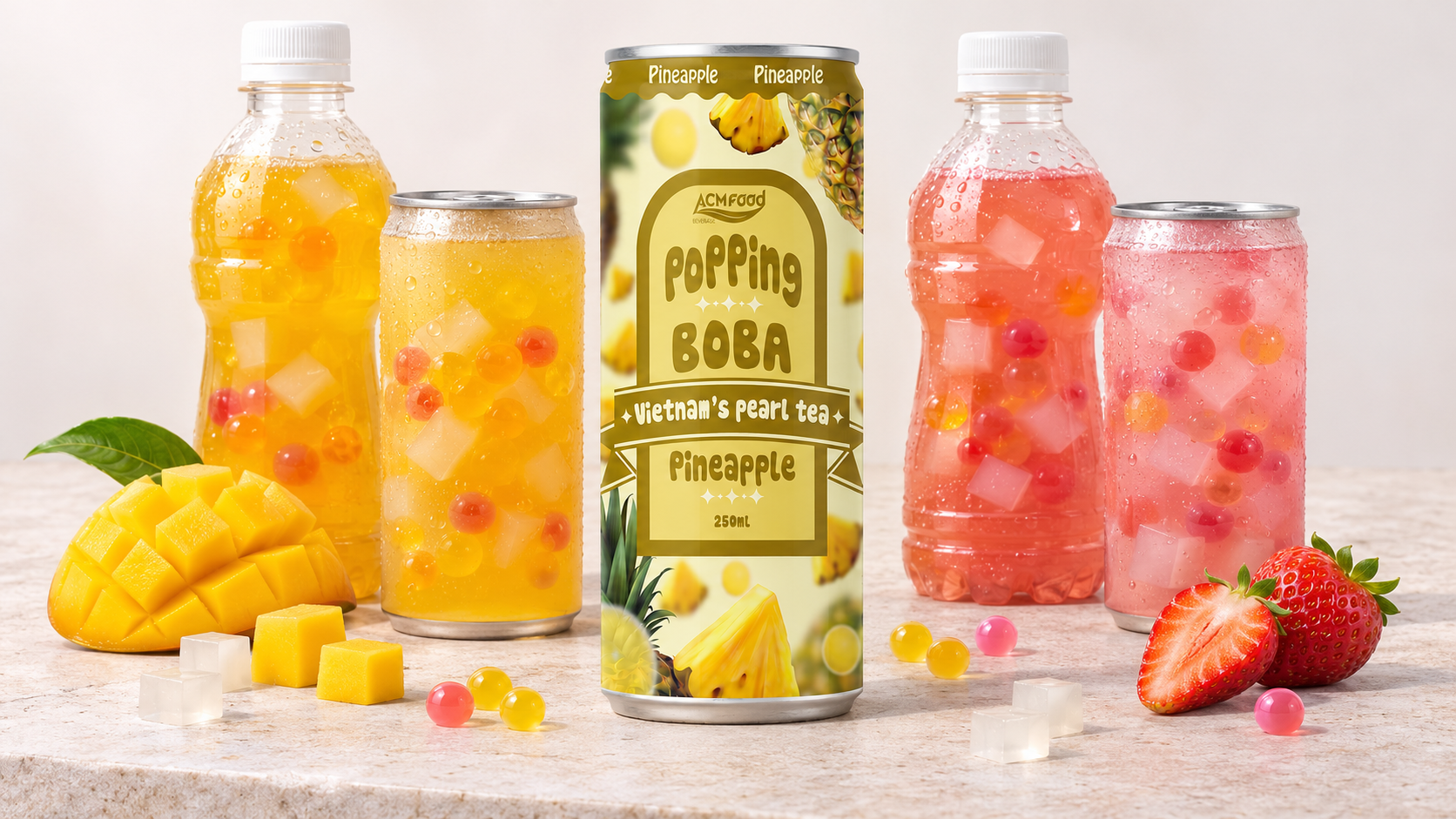
ACM Beverage does not produce tapioca pearls. Its packaged topping drinks under the ACM FOOD label use popping boba and other jelly-style toppings designed for shelf-stable cans and bottles.
The range includes:
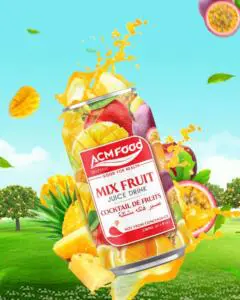
- Drinks with popping boba in 250ml slim cans, in grape, mango, peach, pineapple and strawberry, shown in the popping boba drink range.
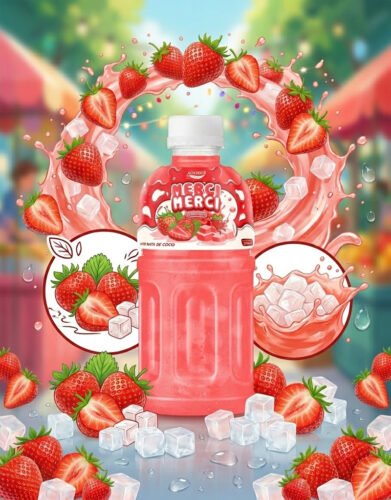
- Juice drinks with nata de coco in 320ml PET bottles in a variety of fruit flavours.
- A coconut drink with coconut jelly in a 320ml PET bottle.
Products with nata de coco and coconut jelly offer a chewier bite than popping boba, which makes them a closer alternative to tapioca for customers who want texture in a packaged drink. These are grouped in the topping series drink range, and ideas for using nata de coco at home are covered in our nata de coco drink recipes.
FAQ: popping boba and tapioca pearls
Is boba the same as tapioca?
In most cafés, “boba” refers to tapioca pearls made from cassava starch. Popping boba are a different product with a juice centre and alginate skin, though they are often grouped under the same name.
Are popping boba healthier than tapioca pearls?
Neither is a health food. Both add carbohydrates, mainly as starch in tapioca and sugars in popping boba. Portion size and the drink they are served in matter more, so read the nutrition label of the specific product.
Can you put popping boba in hot drinks?
Briefly, yes, but it is not ideal. Heat can soften the skin and cause pearls to burst early. Popping boba are best in cold or room-temperature drinks.
Why do tapioca pearls go hard in the fridge?
Cooked starch gradually recrystallises when cooled, a process called retrogradation, which makes tapioca pearls firm and less chewy. This is why they are usually cooked fresh and used the same day.
Choosing between popping boba and tapioca pearls
Tapioca pearls are chewy starch balls best enjoyed freshly cooked in creamy drinks, while popping boba are juice-filled spheres that burst with flavour and suit cold fruit drinks. Popping boba keep longer and adapt better to shelf-stable packaging, while tapioca offers a substantial chew that many bubble tea fans love. The right choice depends on the drink, the occasion and whether it is made fresh or sold packaged.
If you are looking for packaged drinks with popping boba or jelly toppings for your market, contact the ACM Beverage team through the beverage enquiry contact page.