














Tomato juice is low in calories (about 17 kcal per 100 ml) and one of the richest sources of lycopene, an antioxidant that the body absorbs better from cooked and processed tomatoes than from raw ones. Studies link tomato products with modest benefits for blood pressure and skin, but choose unsalted juice: salted versions can contain 200–400 mg of sodium per 100 ml.
What nutrients are in tomato juice?
| Nutrient (per 100 ml, approx.) | Amount |
|---|---|
| Energy | 17 kcal |
| Sugars | 2.6 g |
| Potassium | 220 mg |
| Vitamin C | Varies widely; often fortified in commercial juice |
| Lycopene | About 9–10 mg |
Source: USDA FoodData Central, canned tomato juice. Values vary by product.
What are the benefits of tomato juice?
- Lycopene: heat processing releases lycopene from the tomato’s cell walls, so juice and sauce deliver more usable lycopene than fresh tomatoes.
- Blood pressure: a Japanese study found that drinking unsalted tomato juice daily for a year modestly lowered blood pressure in people with high readings.
- Skin: small trials suggest regular lycopene-rich tomato products may slightly reduce sunburn sensitivity. It does not replace sunscreen.
- Low sugar: tomato juice has far less sugar than most fruit juices.
Claims that tomato juice “detoxes” the body or burns belly fat are not supported by evidence.
How is tomato used in the Vietnamese kitchen?

- Fresh in salads and with grilled dishes.
- Cooked with eggs, fish, tofu or meat for a sweet-sour sauce (for example đậu sốt cà chua).
- In soups and hot pots such as canh chua and bún riêu.
- As canned, puréed or concentrated tomato for sauces.
How can you make tomato drinks at home?
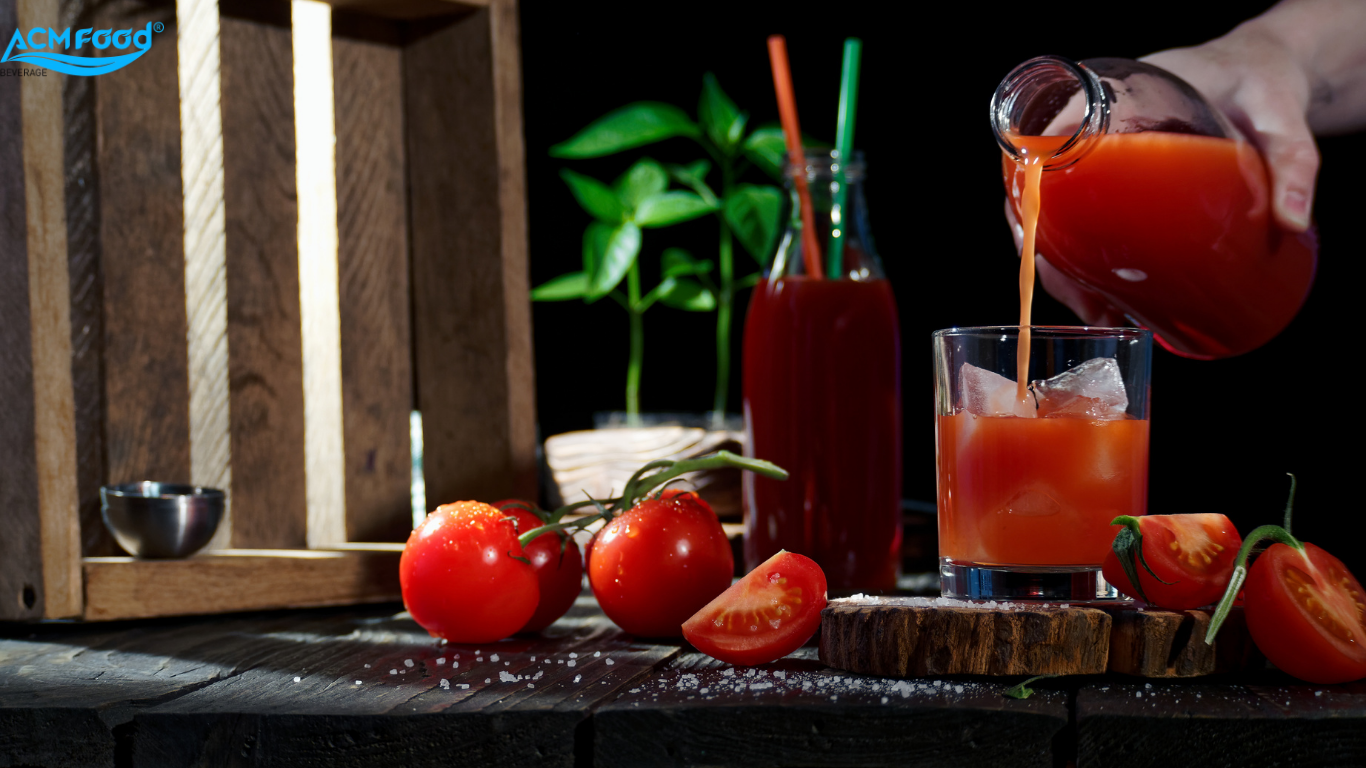
- Plain tomato juice: blend ripe tomatoes, strain, add a pinch of salt or a little honey.
- Tomato, carrot and apple: a sweeter blend with beta-carotene.
- Tomato, celery and lemon: savoury and refreshing.
- Tomato smoothie: blend with unsweetened yoghurt and ice.
- Warm tomato broth: simmer tomato with onion and apple, then strain – a Japanese and Korean home style.
Adding a little fat, such as a few drops of olive oil or eating the juice with a meal, helps the body absorb lycopene.
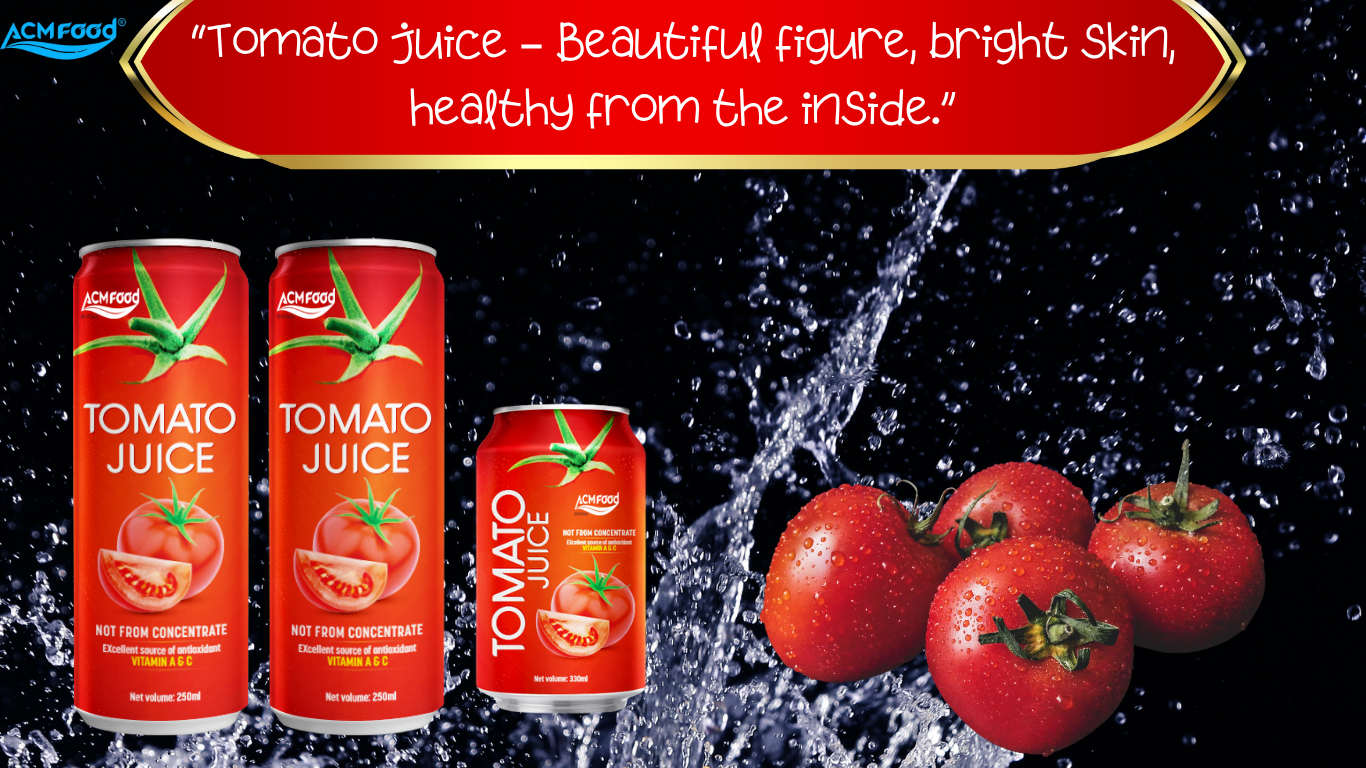
ACM tomato juice
| Item | Detail |
|---|---|
| Product | ACM Tomato Juice 250ml |
| Packaging | Slim aluminium can |
| Shelf life | 24 months |
| Certifications | FSSC 22000, HACCP, ISO 22000 |
Available for private label with custom salt and sugar levels. See also the vegetable drinks range.
Can tomatoes be used on the skin?

Tomato masks are a popular home remedy. Tomato contains mild fruit acids and vitamin C, which may leave skin feeling fresher, but evidence for topical use is limited. Tomato acid can sting sensitive skin, so patch-test first and avoid broken skin or active acne lesions.
Frequently asked questions
Is it good to drink tomato juice every day?
Yes, for most people a glass of unsalted tomato juice a day is a healthy, low-sugar choice. Watch the sodium if you have high blood pressure.
Is cooked tomato healthier than raw?
For lycopene, yes – heating makes it easier to absorb. Raw tomatoes keep more vitamin C.
Does tomato juice help with weight loss?
It is low in calories and can replace sugary drinks, but it does not burn fat on its own.
Who should limit tomato juice?
People with acid reflux may find it triggers symptoms, and people on low-sodium or low-potassium diets should check the label.






