

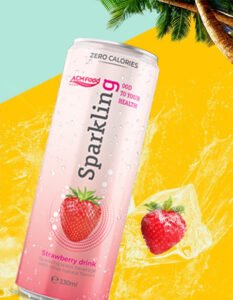

Finding or developing a beverage based on a reference product is one of the most common starting points for a brand approaching a manufacturer, and it is a genuinely different brief from an open-ended “develop something new” request. A reference product gives a manufacturer a concrete target to match, adapt or improve on, which usually shortens the development timeline considerably compared with starting from a blank flavour concept.
This guide sets out how a reference-based brief actually works, what a manufacturer can and cannot promise when matching an existing product, and how to get from a reference sample to a finished specification with the fewest surprises along the way.

What a reference-based brief actually asks for
A reference product can serve a brief in several different ways, and being specific about which one applies changes how the development process runs. Sometimes the reference is a direct competitor’s product that a brand wants to match closely, for a private label or close-alternative strategy. Sometimes it is an inspiration point, a flavour direction or format the brand likes but wants to differentiate from rather than copy. And sometimes it is an existing product from the brand’s own portfolio in another market that needs adapting for a new one. Each of these is a legitimately different project, and naming which one applies at the outset avoids a mismatch between what the brand expects and what the manufacturer delivers.
A manufacturer working from a reference sample typically starts by analysing its visible attributes, colour, viscosity, apparent sweetness and acidity, and any declared ingredients on its label, then builds a trial formulation aimed at those characteristics. This is a starting point for iteration, not an instant, guaranteed match, since an exact recipe cannot be reverse-engineered from a finished product alone.
What matching can and cannot promise
A close flavour and mouthfeel match is achievable in many cases, particularly for straightforward juice, tea or carbonated formats built from common ingredients. What a reference-based brief cannot promise is an identical replication of a proprietary recipe, since the exact formulation, including any specific supplier ingredients or process techniques, is not visible from a finished sample and may itself be protected. The realistic goal is a close, commercially credible match rather than a guaranteed exact duplicate, and setting that expectation early avoids disappointment later in development.
| Consideration | What it means for a reference-based project |
|---|---|
| Type of reference | Competitor match, inspiration point or own-portfolio adaptation each run differently |
| Achievable outcome | A close, credible match is realistic; an exact proprietary replica is not |
| Sample quality | A fresh, well-stored reference sample gives a more reliable starting analysis |
| Iteration process | Trial rounds refine flavour, sweetness and mouthfeel against the reference |
| Legal consideration | Trademark, trade dress and any patented process need independent review |
Sending a fresh, properly stored reference sample matters more than brands sometimes expect, since a sample that has degraded in transit or storage can lead a manufacturer’s initial analysis astray, adding an extra iteration round to correct for a comparison that was never accurate to begin with. Where the sample has to travel a long distance or cross a border, checking the manufacturer’s preferred shipping and storage conditions in advance is a small step that meaningfully improves the odds of a useful first analysis.
Cost also tends to shift depending on which type of reference-based project is underway. A close match to a straightforward juice or carbonated format built from common ingredients is typically a lower-cost, faster project than one built around a reference with a specialist functional ingredient, an unusual texture element, or a proprietary process that has to be independently reconstructed. Setting expectations on cost and timeline against the specific reference, rather than against reference-matching projects in general, avoids a budget assumption that does not match the actual complexity of the target product.
How the iteration process typically runs
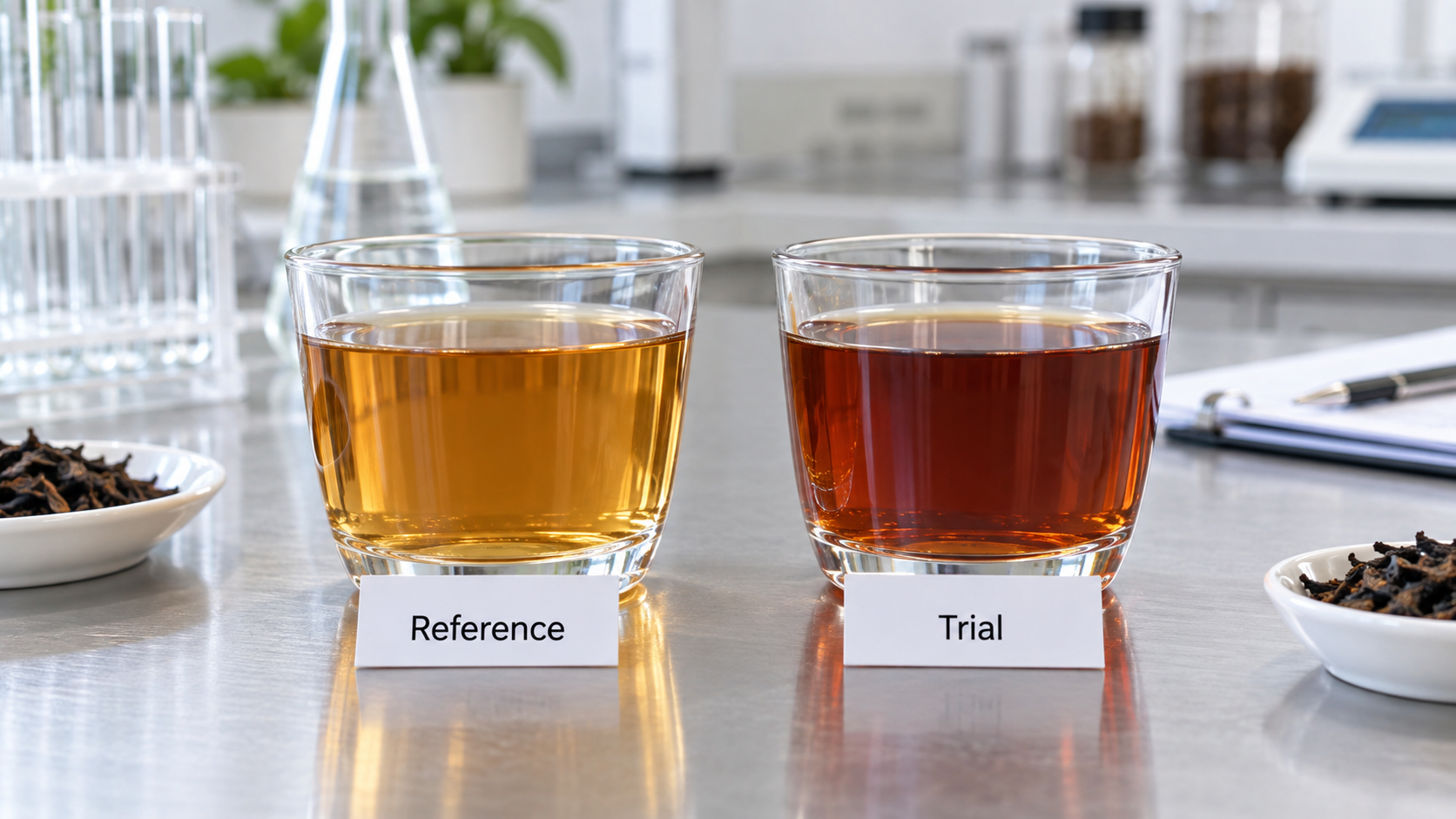
A reference-matching project usually moves through several trial rounds rather than landing on target in a single attempt. An initial trial gets the broad flavour and sweetness direction close, then subsequent rounds fine-tune acidity, mouthfeel and any specific notes the first trial missed. Providing clear, specific feedback at each round, rather than a general “not quite right,” speeds this process considerably, since a manufacturer working from vague feedback has to guess which variable to adjust next.
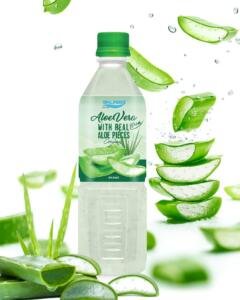
Existing base formulas can shorten this process meaningfully. Where a reference product sits close to an existing recipe a manufacturer already produces, such as a guava juice with nata de coco base or an aloe vera juice formulation, starting from that proven base and adjusting toward the reference is typically faster than building a trial from nothing. A custom beverage formula service that adjusts flavour, sweetness and ingredients from a proven starting point is the practical mechanism most reference-matching projects actually use, even when the brief is framed around a specific target product rather than a custom development from scratch.
When the reference points toward a genuinely different product
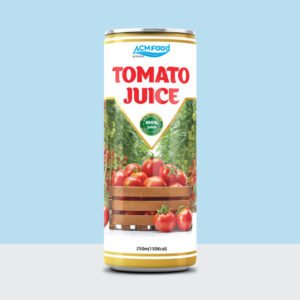
Sometimes the reference product analysis reveals that the closest achievable match sits meaningfully apart from what the brand originally described, often because the reference relies on a specific ingredient or process the brand had not considered, or because a legally cleaner alternative achieves a similar consumer experience through a different route. A clean-label reference built around a short ingredient list, such as an NFC tomato juice made without concentrate, is a useful example of how closely a well-chosen alternative formulation can approximate a reference’s positioning and quality perception without being a literal copy of its recipe.
This is a normal part of the process rather than a failure of the brief, and a manufacturer flagging this early, before a full trial round is committed, is generally more useful than one that pushes ahead with a literal interpretation that turns out to be commercially or legally impractical. A brand open to this kind of guided adjustment usually ends up with a stronger final product than one that insists on an exact match regardless of what the analysis suggests.
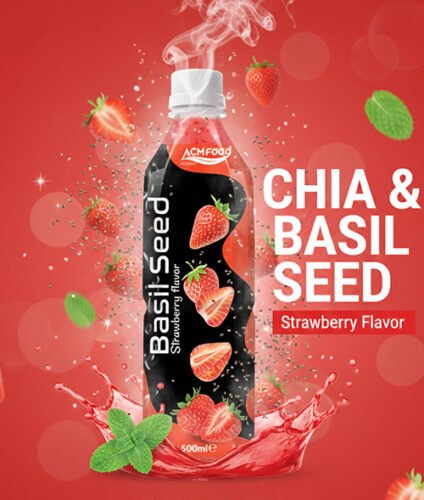
A functional reference is a common example of this pattern. A brand referencing a product built around chia seeds for texture and omega-3 positioning, similar in spirit to a strawberry and chia seed formulation, may find that the closest practical match uses a different but comparably functional seed or fibre ingredient, depending on sourcing, cost and regulatory status in the target market. Flagging this kind of substitution early, and explaining the reasoning behind it, keeps the brand’s expectations aligned with what the finished product will actually be rather than what the original brief assumed before analysis began.
Building a reference-based product brief
Five inputs help a reference-matching project move efficiently from sample to finished specification.
- A fresh, well-stored reference sample. A degraded sample leads the initial analysis astray and adds an unnecessary iteration round.
- Clarity on the type of reference. State whether the goal is a close competitor match, an inspiration point, or an adaptation of an existing product for a new market.
- Realistic expectations on exactness. A close, credible match is achievable; an identical proprietary replica generally is not.
- Specific, round-by-round feedback. Detailed feedback on each trial speeds convergence toward the target far more than general comments.
- Openness to a guided alternative. Where analysis reveals a cleaner or more practical route to a similar result, a brand willing to consider it usually reaches a stronger final product faster.
Common mistakes in a reference-based development project
A consistent set of avoidable errors accounts for much of the friction in reference-matching projects specifically.
- Sending a degraded or improperly stored sample. An inaccurate starting analysis compounds through every subsequent trial round rather than correcting itself.
- Expecting an exact proprietary replica. A brief framed around perfect duplication rather than a close, credible match sets an expectation the process cannot reliably meet.
- Giving vague trial feedback. General comments slow convergence considerably compared with specific notes on which attribute needs adjustment.
- Skipping a trademark and trade dress review. Matching a flavour and format is a formulation exercise; matching packaging, branding or a protected process is a separate legal question that needs its own review.
Each of these is avoidable with a clearer brief at the outset, which is why naming the reference type and expectations explicitly at the first conversation saves time across the whole project.
Frequently asked questions
Can a manufacturer guarantee an exact match to a competitor product?
Not an exact, identical match, since the precise proprietary formulation is not fully visible from a finished sample. A close, commercially credible match on flavour, sweetness and mouthfeel is a realistic goal, and most reference-based briefs are framed around that outcome rather than a guaranteed duplicate.
How many trial rounds does a typical reference-matching project take?
This varies by product complexity, but most projects move through several rounds before reaching a final approved specification. Providing specific, detailed feedback at each round is the single biggest factor in reducing the number of rounds needed.
Is it legal to develop a product similar to an existing competitor product?
Matching a flavour profile and format is generally a formulation question rather than a legal one, but packaging, branding, trade dress and any patented process are separate considerations that need independent legal review specific to the target market. This is worth raising with the manufacturer and, where needed, separate legal counsel before finalising a close-match brief.
Does starting from an existing base formula limit how close the final match can be?
Not necessarily. An existing base formula is often just a starting point for adjustment rather than a fixed constraint, and can usually be modified significantly in flavour, sweetness and ingredient composition to move toward a reference target, provided the adjustments stay within what the base recipe can reasonably support.
What happens if the reference analysis reveals a substitute ingredient is needed?
The manufacturer should explain the reasoning behind the substitution, including why the original ingredient is not practical to source, formulate or bring to market as specified, and what the substitute is expected to deliver in its place. A brand that understands the reasoning is generally better placed to judge whether the substitute still serves the underlying goal of the brief than one presented with the change as an unexplained fact.
Starting a reference-based product brief
A reference-matching project moves fastest when the sample is fresh, the type of match is stated clearly, and feedback during iteration is specific rather than general, with realistic expectations set from the first conversation about what an achievable outcome looks like.
ACM Beverage develops products against a reference sample or inspiration point and can advise on the closest achievable match before a first trial begins. Reach out through the enquiry and contact page with the reference product, the target market and the intended launch timeline in mind to start that conversation.