
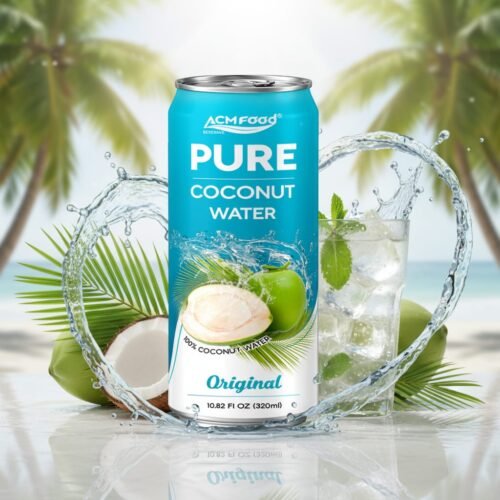
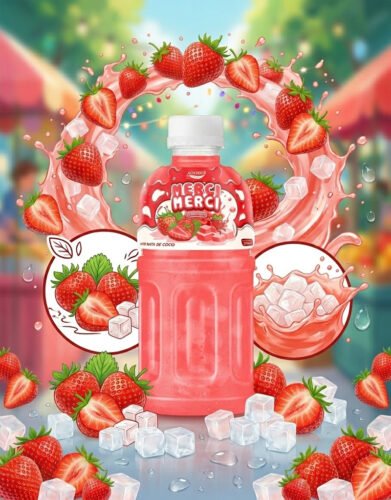
Coconut drink with nata de coco is coconut water or coconut milk served with cubes of nata de coco — a chewy gel grown by fermenting coconut water with the bacterium Komagataeibacter xylinus. The coconut water base supplies about 19 kcal and 250 mg of potassium per 100 ml. The gel itself is almost pure insoluble fibre.
Key facts at a glance
- What the gel is: bacterial cellulose, not a fruit or a jelly made from gelatine.
- Origin: the Philippines, where it has been made since the 1940s.
- Coconut water base: ~19 kcal, 250 mg potassium, 105 mg sodium, 25 mg magnesium per 100 ml.
- The gel’s own nutrition: essentially zero protein, fat or vitamins — it is dietary fibre and water.
- Where the calories come from: the syrup the gel is packed in, not the gel.
- Suitable for: vegans — the gel is bacterial, not animal-derived.
What is nata de coco?
Nata de coco is bacterial cellulose. Coconut water is inoculated with Komagataeibacter xylinus (formerly Acetobacter xylinum), and over roughly one to two weeks the bacteria spin a thick mat of cellulose fibres on the surface of the liquid. That mat is harvested, washed, cut into cubes and usually packed in sugar syrup.
Two things follow from this, and both are commonly misunderstood:
- It is not a jelly. Gelatine and agar jellies are set by cooling a dissolved gel. Nata de coco is grown, not set, which is why it keeps its bite in a hot fill and does not melt.
- It is not a fruit. The name translates as “cream of coconut” in Spanish, but no coconut flesh is involved — only the water, as a growth medium.
The product is Filipino in origin, developed in the 1940s as a way to use coconut water that would otherwise be discarded during copra production. For the home fermentation process, see our nata de coco recipe.

Coconut drink with nata de coco nutrition
The drink has two components with very different nutritional profiles, and reading them separately is the only way to judge a product on the shelf.
| Component | What it contributes | What it does not |
|---|---|---|
| Coconut water base | ~19 kcal, 250 mg potassium, 105 mg sodium, 25 mg magnesium per 100 ml | Negligible protein and fat |
| Nata de coco cubes | Insoluble dietary fibre, texture, bite | No meaningful vitamins, minerals, protein or fat |
| Packing syrup | Most of the drink’s sugar and calories | No nutritional benefit |
Coconut water values are from USDA FoodData Central for unsweetened ready-to-drink coconut water and vary by brand and by whether the product is from concentrate.
The practical takeaway: if a nata de coco drink is high in sugar, it is the syrup, not the gel or the coconut water. Comparing sugar-per-100 ml on the label tells you more than any front-of-pack claim about the gel.
What coconut drink with nata de coco will not do
Three claims appear regularly on this product category and do not survive scrutiny:
- “The nata de coco adds vitamins and minerals.” It does not. Bacterial cellulose is fibre and water. Any vitamins and minerals in the drink come from the coconut water base.
- “It is automatically low in calories.” Only if it is packed without syrup or with a reduced-sugar syrup. A standard syrup-packed version can carry more sugar per serving than a soft drink.
- “It replaces a sports drink.” Coconut water is high in potassium but low in sodium relative to a formulated rehydration drink. It works for light rehydration, not for heavy sweat losses.

How to use coconut drink with nata de coco
- Chilled, straight from the can or bottle. The most common serve. The cubes settle, so invert the container once before opening.
- Over ice with fresh lime. Acidity cuts the syrup sweetness and makes the coconut note read more clearly.
- As a cocktail base. The cubes survive shaking and stirring without breaking down, which gelatine jellies do not.
- Spooned into fruit salad or over ice cream. Drain the syrup first unless you want the extra sugar.
- In bubble tea as a topping. Nata de coco is the standard alternative to tapioca pearls and holds texture far longer.
For recipes built around the cubes rather than the drink, see our nata de coco drink recipes and the coconut milk version, which uses a creamier base than coconut water.
How to read the label
- Check sugar per 100 ml, not per serving. Serving sizes vary widely across this category and make per-serving figures hard to compare.
- Look for “coconut water” high in the ingredient list. Some products are water, sugar and flavouring with a small share of coconut water.
- Check whether it is from concentrate. Not-from-concentrate coconut water keeps more of its aroma and vitamin C.
- Note the cube proportion. Good products declare the drained weight of nata de coco; vague ones do not.

How it compares with other coconut drinks
| Drink | Base | Texture | Typical use |
|---|---|---|---|
| Coconut water | Liquid from young green coconuts | Thin, clear | Hydration |
| Coconut milk drink | Pressed coconut flesh, diluted | Creamy, opaque | Dessert-adjacent refreshment |
| Coconut water with nata de coco | Coconut water plus cellulose cubes | Thin liquid, chewy solids | Refreshment with texture |
| Coconut milk with nata de coco | Coconut milk plus cellulose cubes | Creamy liquid, chewy solids | Dessert drink |
Texture is the real differentiator in this category rather than flavour, which is why it has become a focus of product development. We cover that in nata de coco and mixed fruit juice in the global RTD market.
Frequently asked questions
Is nata de coco safe for people with nut allergies?
Coconut is botanically a drupe, not a tree nut, and most people with tree nut allergy tolerate it. US FDA labelling rules do classify coconut as a tree nut, so it will appear in allergen declarations there. Anyone with a diagnosed nut allergy should confirm with a clinician rather than relying on the botanical distinction.
Is coconut drink with nata de coco vegan?
Yes. Nata de coco is produced by bacteria, not animals, and contains no gelatine. The coconut water or coconut milk base is plant-derived. Check the label only for added dairy in creamier formats.
Is nata de coco high in calories?
The gel itself is not — it is cellulose and water with negligible energy. Almost all the calories in a commercial product come from the sugar syrup it is packed in, so the figure varies enormously between brands.
Can I make nata de coco at home?
It is possible but not a casual recipe. You need a live Komagataeibacter xylinus culture, a sterile environment and one to two weeks of undisturbed fermentation at a stable temperature. Contamination is the usual failure point.
How long does coconut drink with nata de coco keep?
Commercially sterilised cans and bottles hold for 12 to 24 months unopened at ambient temperature, depending on the fill process and packaging. Once opened, refrigerate and drink within two to three days.
Does nata de coco count as dietary fibre?
Yes — it is insoluble cellulose, which is dietary fibre by definition. Whether a serving contributes a meaningful amount depends on the drained weight of cubes, which varies between products and is often small.
Sourcing coconut drink with nata de coco
ACM Beverage manufactures coconut water and coconut milk drinks with nata de coco in Vietnam under OEM and private label terms, in facilities certified to ISO 22000, FSSC 22000 and HACCP, exporting to more than 40 countries. Formats include PET bottle, alu-can and glass bottle, with cube proportion and syrup level specified per order — which is where most of the product positioning is decided.
See the fresh coconut water range (96 SKUs) or a representative build in the 320 ml coconut topping with jelly. To discuss a specific formulation, contact our export team or browse the full beverage product range.