Carrot apple juice combines the mellow, earthy sweetness of carrot with the clean, familiar sweetness of apple, and it is one of the easiest vegetable-and-fruit blends to like. The formulation challenge is not flavour appeal but balance: too much apple turns the drink into a fruit juice with a hint of carrot, while too little leaves the blend flat. This guide covers the starting directions, the sweetness question, cloud and colour, and the pack decisions for a ready-to-drink version.
All ratios are starting directions for tasting trials, not a formula. Varieties and seasons change the result, so every blend needs bench testing.
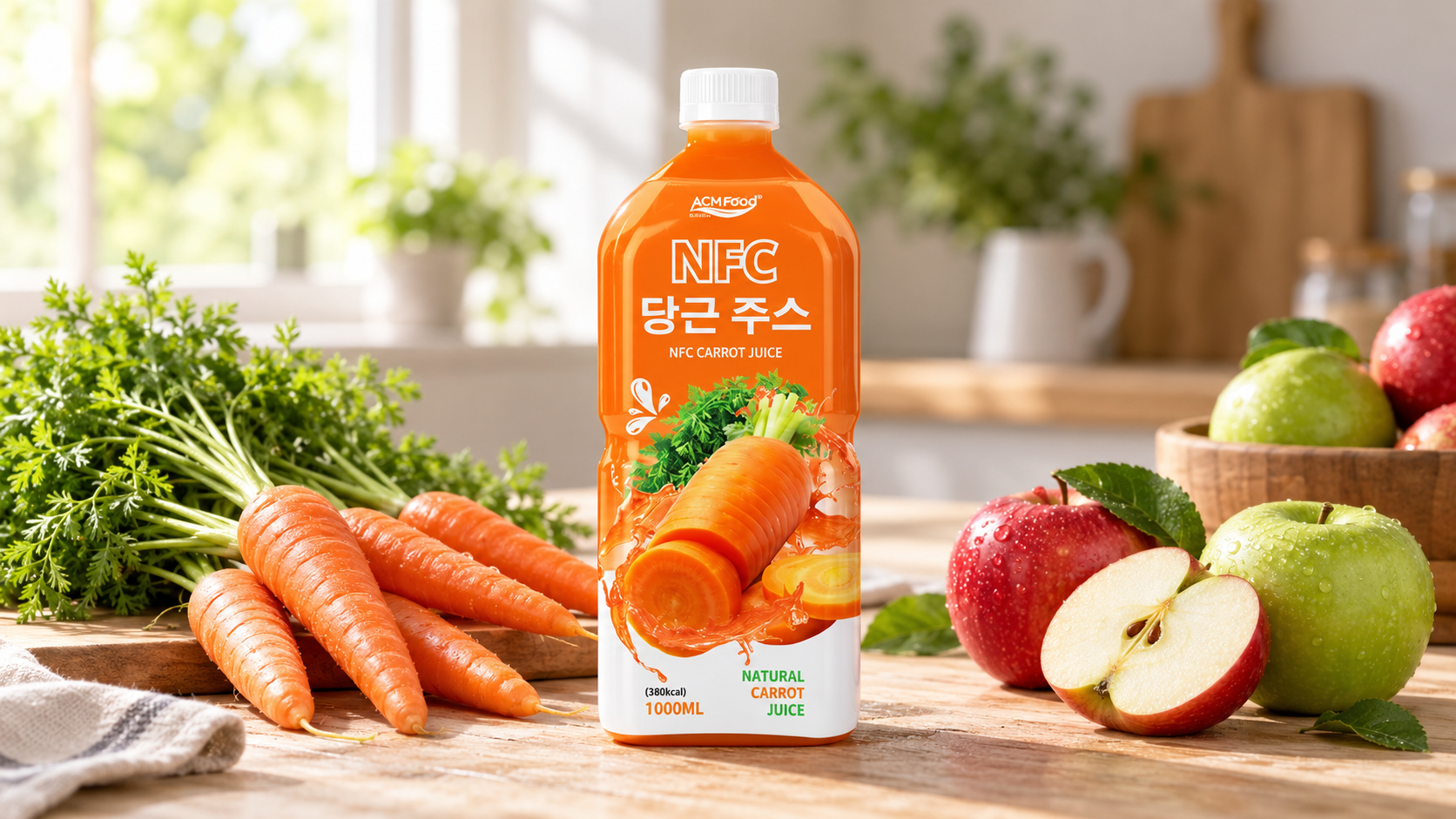
Why is apple such a common partner for carrot?
Apple is mild, widely liked and easy to work with. It brings sweetness and a little acidity without a strong flavour of its own, so it supports carrot without hiding it. Many consumers also see apple as a familiar, reassuring ingredient, which makes a carrot blend more approachable for people who are unsure about vegetable juice.
For a brand, the combination offers a clear, simple story that needs few words: carrot and apple. That clarity is valuable on a small can or bottle label.
What starting ratio works for carrot and apple?
| Starting direction | Character | Who it suits |
|---|---|---|
| Carrot-led, a little apple | Earthy-sweet, mellow | Vegetable juice drinkers |
| Balanced carrot and apple | Sweet, round, easy | Mainstream retail, families |
| Apple-led, a little carrot | Fruit-forward, carrot as body and colour | First-time vegetable juice drinkers |
Prepare versions on both sides of your target and taste them chilled. Because apple is gentle, differences between ratios are subtle, so tasters need clear notes to tell them apart. Use plain words such as “sweeter”, “fuller” or “thinner” and add the sample code.
How sweet should the drink be?
Both juices contain natural sugars, so the blend is sweet before anything is added. The question is how sweet you want the drink to taste and how that will be described on the label.
- A carrot-led version tastes less sweet and more vegetal.
- An apple-led version tastes sweeter and lighter.
- Acidity from a squeeze of lemon can reduce the impression of sweetness without changing the sugar content.
- Different apple varieties vary in sweetness and acidity, so confirm which one you are using.
If your positioning is a lower-sugar drink, consider the carrot-led direction and a tart apple, but check the result by analysis of the finished drink, because taste impressions and sugar numbers do not always agree. Whether a statement such as “no added sugar” is possible depends on the formulation and the rules of your market.
How do you manage cloud, pulp and separation?
Carrot juice carries fine particles that give a cloudy, opaque look, while apple juice can be clear or cloudy depending on processing. The blend can therefore range from a smooth cloud to a slightly separated drink. Decide what you want and ask how it will be kept stable.
- Smooth and cloudy: looks fresh and rich, needs a stable cloud.
- Lightly cloudy: lighter feel, may separate faster.
- With pulp: adds texture but needs a suitable pack and filling.
Natural drinks may settle, so a shake-before-use note is acceptable, but good formulation reduces how often it is needed.
Why does carrot need careful processing?
Carrot is a low-acid vegetable, and low-acid products require a process designed for them. Adding apple lowers the pH, which can change what heat treatment is appropriate. The correct approach depends on the final pH, the pack and the storage plan, and it must be confirmed by the producer and verified by testing.
Ask for the final pH, the heat treatment and the storage conditions of any sample you evaluate, and record them in the specification. Do not assume that a process used for another juice will suit this one.
How do you protect colour and flavour?
Carotenoid colour is relatively stable, but it changes with heat, light and oxygen. Apple juice can brown if it is exposed to oxygen, which affects the look of the blend. Practical protection includes limiting oxygen at filling, sealing well, choosing a pack that blocks light or planning storage that does, and testing at the end of the intended shelf life.
The article on how juice colour and clarity influence buyers shows why a bright, even colour matters at the shelf.
Which pack suits carrot and apple juice?
| Format | Strengths | Points to check |
|---|---|---|
| Slim or sleek aluminium can | Opaque, light, single-serve | Line compatibility, lining |
| Glass bottle | Shows golden colour, premium | Weight, light exposure |
| PET bottle | Light, practical, family sizes | Barrier needs, recycling rules |
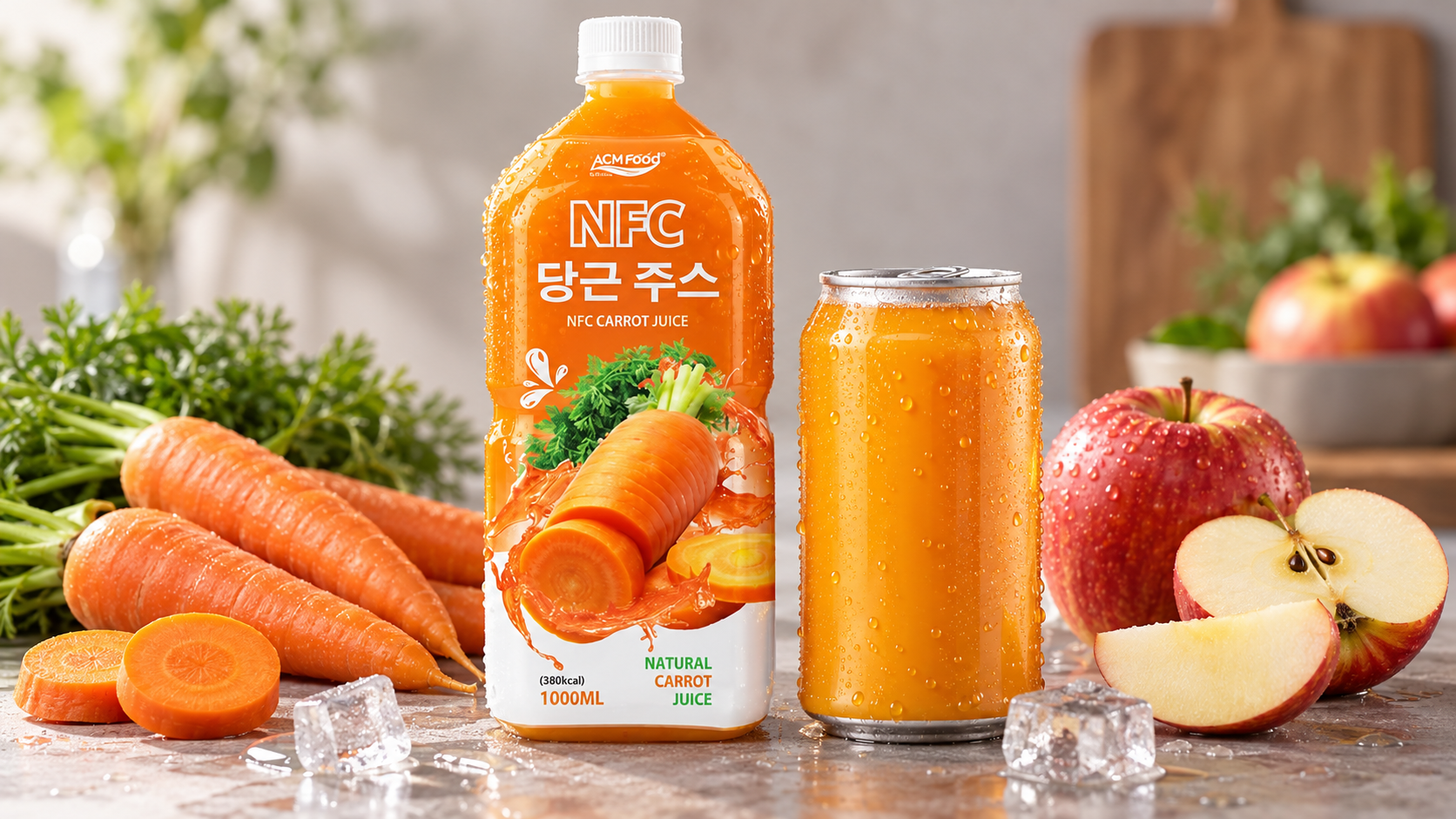
ACM Beverage supplies finished drinks in cans and bottles. For a family-oriented carrot apple blend, a larger PET bottle can make sense; for single-serve and travel, a can is convenient.
Can you add ginger or another fruit?
Yes, but each addition changes the concept and the label.
- Ginger: adds warmth and a clean finish.
- Orange: adds acidity and brightness, moving toward a fruit-led drink.
- Lemon: a small amount lifts flavour with little change.
Keep the first launch simple. Two ingredients and a touch of citrus is a clean story, and you can add flavour extensions later. For context on how finished vegetable drinks are developed with a supplier, see beetroot juice OEM and private label production, which follows a similar process.
How do you run a development trial?
- Choose the lead: carrot or apple.
- Prepare three ratio versions and taste them chilled.
- Adjust sweetness impression with a small amount of lemon.
- Decide on cloud level and check how it holds over a day.
- Check colour in the real can or bottle.
- Store samples at the intended temperature and re-evaluate.
- Approve a written reference and a physical reference sample.
What should a product brief include?
- Lead ingredient and ratio direction.
- Taste target in plain words.
- Cloud and pulp preference.
- Label naming: 100% juice, blend or drink.
- Pack type and size.
- Sugar positioning.
- Target markets and labelling rules.
Claims and labelling depend on the final recipe, tested values, serving size and destination market rules. The carrot juice recipe and nutrition guide covers home preparation, while this page focuses on finished product formulation. For label terms such as organic, see what organic juice means.
Common mistakes with carrot apple juice
- Letting apple dominate until the carrot is only a colour.
- Ignoring the low-acid nature of carrot when choosing a process.
- Judging sweetness without checking the finished drink by analysis.
- Skipping a storage test for cloud stability.
- Printing claims that the recipe does not support.
How do apple varieties change the blend?
Apple varieties differ widely in sweetness, acidity and aroma, so the same ratio can taste very different from one season or supplier to the next. Sweeter, low-acid varieties give a rounder, softer blend, while tart varieties give a lively, fresher taste and can balance the natural sweetness of carrot. Many producers blend several varieties to keep the flavour steady through the year.
For a brand, the practical step is to agree on a flavour target and let the producer manage the blend of varieties to meet it, instead of naming a single variety unless it is genuinely fixed. Ask how consistency is controlled between batches and what the acceptable range of sweetness and acidity is.
How do you handle browning and oxidation?
Apple juice darkens when its natural enzymes react with oxygen, and the same process can dull a blend. Carrot colour is more stable, so the visible effect is often a slightly duller or browner orange. The usual tools are limiting oxygen contact during pressing and filling, controlling acidity and using appropriate heat treatment. If browning appears in a sample, record when it happened and under what conditions, so the cause can be traced.
How should you plan pack sizes for different channels?
| Channel | Suitable formats | Notes |
|---|---|---|
| Single-serve retail | Slim can, small bottle | Grab-and-go, travel-friendly |
| Family retail | Larger PET bottle | Needs good resealing closure |
| Foodservice | Cans or bottles in cases | Easy storage and portioning |
| Online | Cases of cans or bottles | Protection in transit |
Choose the lead channel first and design the pack around it, and treat other sizes as later extensions once the recipe is proven.
How do you position a family-friendly blend responsibly?
Carrot and apple is often seen as a mild, family-friendly flavour. Keep marketing factual: describe the ingredients, the taste and the format. Avoid claims about children’s health or development, and avoid giving feeding advice, because those are sensitive areas that require professional guidance and market-specific compliance.
Frequently asked questions
Is carrot apple juice sweeter than carrot juice?
Yes, usually. Apple adds sweetness and lightness, so the blend tastes less earthy than pure carrot juice. How sweet it feels depends on the ratio and the apple variety.
Does it need added sweetener?
Not necessarily. Both juices contain natural sugar, and many blends need no sweetener. Whether a “no added sugar” statement is allowed depends on the formulation and market rules.
Why does the drink separate?
Natural fine particles can settle over time. Good formulation and processing reduce this, and a shake-before-use note is common for natural drinks.
Summary
A good carrot and apple blend balances mellow earthiness with clean sweetness, keeps a stable cloud and a bright colour, and is processed in a way suited to a low-acid ingredient. Define the lead ingredient, test in the pack you will sell and record each version. If you are planning a finished carrot and apple drink for your own label, ACM Beverage can discuss can and bottle formats and recipe options once you share your brief.