










Beverage products for Africa cover one of the most commercially diverse regions any exporter deals with, spanning markets with very different retail structures, climate handling requirements and purchasing power. Treating the continent as one opportunity, or one set of product decisions, tends to underperform against a plan built around a small number of named target countries with clearly different requirements from each other.
This guide sets out the product and format decisions that matter most for African markets, where genuine growth is concentrated, and how to sequence a launch across a region this varied without overcommitting to any single approach too early.

Why Africa cannot be treated as one market
The continent spans dramatically different retail environments, from large, modern supermarket chains in major cities to informal trade that still carries substantial volume in many countries. Climate conditions place real demands on shelf life and pack durability across most of the region, since ambient temperatures and supply chain conditions can be more demanding than in temperate export markets. Purchasing power and price sensitivity also vary significantly by country and by urban versus rural distribution.
A product brief that names specific target countries, rather than “Africa” broadly, allows format, price point and shelf life requirements to be set against real conditions instead of an average that may not match any actual market well.
Shelf life and packaging durability as core requirements
Ambient shelf life and pack durability deserve more weight in African market product decisions than in many other export destinations, given the combination of climate exposure and, in some distribution channels, longer and less controlled supply chains between the port and the final point of sale. A pack format and a shelf life target should be set with these realistic conditions in mind rather than the shortest transit time on the most favourable route.
| Consideration | What it means for an Africa-bound product |
|---|---|
| Retail structure | Ranges from modern supermarket chains to substantial informal trade volume |
| Shelf life and durability | Climate and supply chain conditions favour robust, long ambient shelf life formats |
| Price sensitivity | Varies significantly by country and by urban versus rural channel |
| Flavour preference | Strong appetite for tropical and fruit-forward profiles across much of the continent |
| Format | Aluminium cans generally offer the most robust handling and shelf life combination |
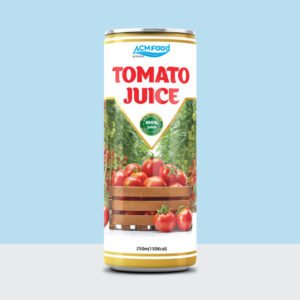
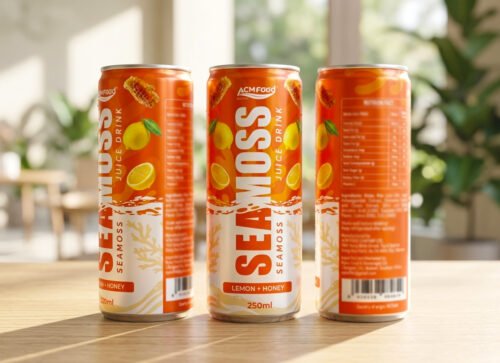
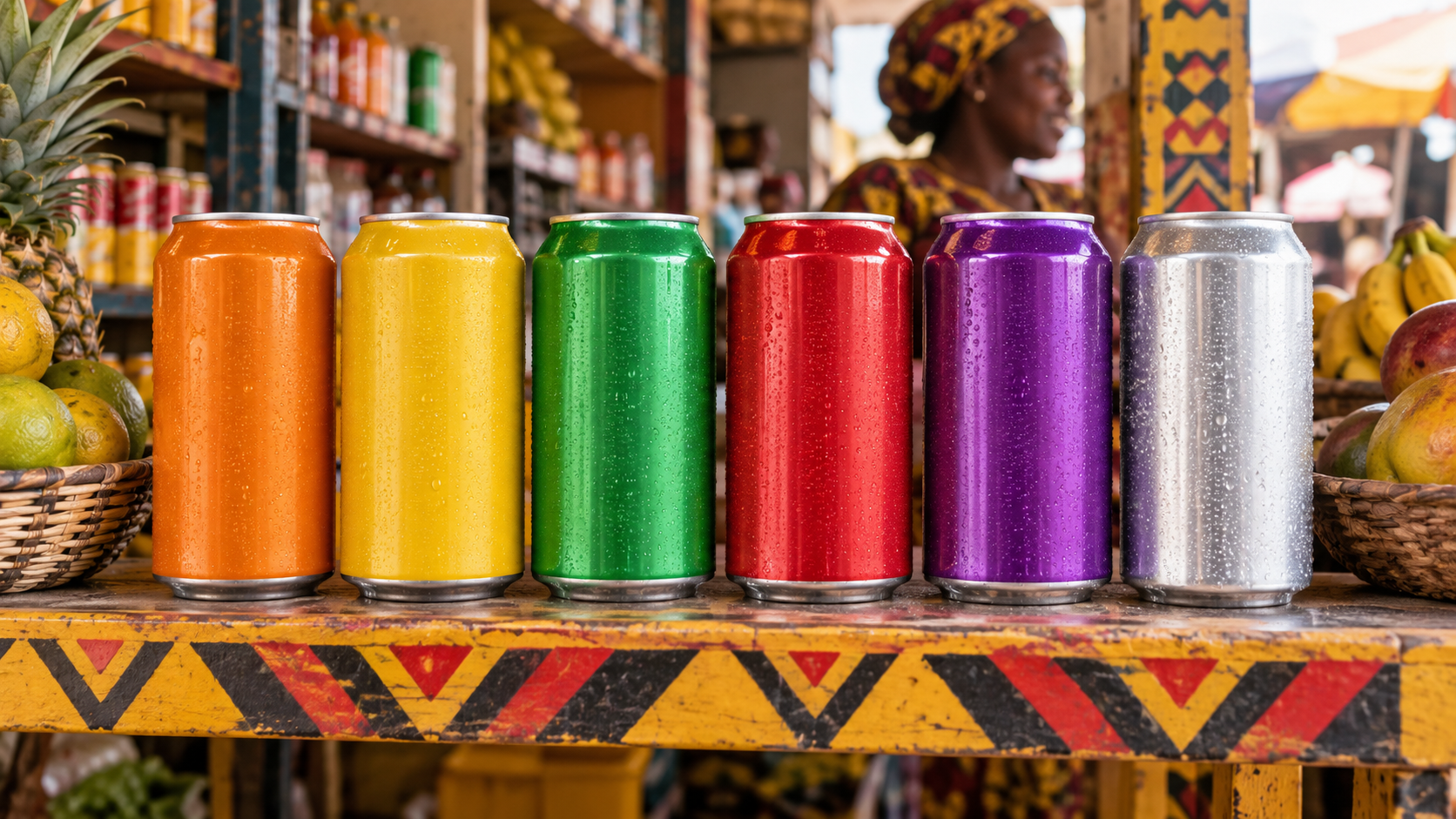
Aluminium cans tend to be the more resilient format choice for many African markets specifically because they combine a long ambient shelf life with strong resistance to the handling conditions common in less controlled distribution chains, an advantage that carries more weight here than in markets with tighter cold chain and retail control.

Tropical and fruit-forward flavours
Tropical and fruit-forward flavour profiles perform strongly across much of the continent, reflecting both local fruit availability and consumer preference for bold, recognisable fruit character. A product such as a coconut milk and pineapple blend illustrates the kind of distinctive, fruit-led formulation that tends to resonate, provided the formulation is built to withstand the shelf life and durability requirements described above rather than optimised purely for flavour. A soursop and aloe vera fusion is another example of the same principle: an unusual pairing of two ingredients that are individually well recognised in several African markets, combined into a single product that reads as distinctive without asking the shopper to accept an entirely unfamiliar flavour category.
Passion fruit is a particularly strong performer across several African markets, and a formulation that pairs it with a functional positioning combines an already-familiar flavour with the growing appetite for functional credentials in the region’s more developed urban retail channels. This kind of pairing, a familiar base flavour carrying a genuine functional addition, tends to travel better across the region’s more varied markets than an entirely novel flavour would, since the shopper only has to evaluate one new element rather than two at once.
Carbonated and energy formats
Carbonated soft drinks and energy drinks both carry meaningful volume across African markets, and the appeal of tropical fruit-flavoured carbonated drinks specifically reflects the same fruit-forward preference driving the still juice category. Energy drink demand is also substantial in several markets, and a product built with genuine functional benefits addresses a category with established consumer demand rather than one that needs to be built from scratch.
Where an energy or functional carbonated format is being considered for African distribution, the same durability requirements that apply to still juice apply here as well: the format needs to hold its condition through the same climate exposure and handling conditions described earlier, which generally argues for a can format over glass in markets with less controlled distribution. A functional claim also needs to be genuinely supportable by the formulation rather than added to the label as a general positioning statement, since overstating a functional benefit creates the same accuracy risk in African markets as it would anywhere else.
Choosing flavours by country
Flavour selection for African markets benefits from the same deliberate, market-specific approach covered in choosing the right juice flavours for export markets: a flavour that performs well in one country’s retail environment does not automatically translate to a neighbouring market with different fruit availability, taste conventions and price expectations. Naming target countries early, rather than assuming continent-wide consistency, keeps flavour decisions grounded in actual local conditions.
West, East and Southern Africa each carry their own distinct fruit preferences and retail habits, and a flavour direction chosen for one sub-region should not be assumed to carry across to another without confirmation. A brand entering more than one sub-region within its first year is often better served by validating a single strong flavour direction in its first target country, then using that market’s actual sales performance to decide whether the same profile is worth carrying into a second country or whether a locally adjusted variant makes more sense.
Price positioning interacts closely with flavour choice in this context as well. A distinctive, higher-cost fruit combination may fit a modern urban retail channel in one country while being a poor fit for a more price-sensitive informal trade channel in another, even within the same national market. Setting flavour and price positioning together, rather than choosing a flavour first and fitting a price to it afterward, avoids a mismatch that only becomes visible once the product is already on shelf.
Building an Africa-ready product brief
Five inputs help shape a product concept that fits real conditions in a specific target market rather than an assumed continental average.
- Named target countries. Naming the first one or two markets lets shelf life, format and price decisions be made against real conditions rather than a broad regional guess.
- Shelf life and durability target. Set these against realistic climate and distribution conditions for the specific market rather than the most favourable case.
- Pack format. Favour robust, long ambient shelf life formats, particularly where distribution runs through less controlled channels.
- Flavour direction by country. Confirm fruit availability and taste preference for each named market rather than assuming continent-wide consistency.
- Price positioning. Align the format, size and specification with the price sensitivity of the specific target channel and country.
Sequencing a launch across the region
Given how varied the continent is, most successful entries start with one or two markets where the retail structure, shelf life conditions and flavour preference are best understood, rather than attempting a simultaneous multi-country rollout. This staged approach allows a brand to validate the format and formulation decisions with real sales data before extending to additional countries, each of which may still require its own adjustment to price point, pack size or flavour direction.
A staged sequence also limits how much packaging and artwork commitment is required at each stage. A can decoration or label proven in the first target country can often carry into a second market with only minor adjustment, provided the two countries share broadly similar retail structure and language requirements, while a market with a genuinely different profile is better treated as its own planning step rather than folded into the first rollout by default.
Common mistakes brands make entering African markets
A consistent set of avoidable errors accounts for much of the friction brands encounter on a first entry into African beverage retail.
- Treating the continent as a single market in the product brief. A brief that says “Africa” without naming specific countries leaves shelf life, format and price decisions without real conditions to be set against, and usually needs revisiting once a target country is actually named.
- Underestimating shelf life and durability requirements. A format and shelf life target set against a shorter, more controlled supply chain elsewhere often falls short once it meets the climate and distribution conditions common across much of the region.
- Assuming a flavour that performs well in one country will translate directly to a neighbouring one. Fruit availability, taste convention and price expectation can all differ meaningfully between markets that are geographically close, which is why country-specific flavour confirmation matters even within a single sub-region.
- Attempting a simultaneous multi-country rollout on a first order. Committing to several markets at once, before any of them has generated real sales data, multiplies the packaging and compliance workload without giving the brand a chance to validate its format and formulation choices first.
Each of these is a sequencing or planning error rather than a product quality issue, and each is avoidable by naming target countries early and building the product brief around their specific conditions rather than a regional average.
Frequently asked questions
Is one product specification enough for multiple African markets?
Sometimes, particularly where the target countries share similar retail structure and climate conditions, but this should be confirmed rather than assumed. Shelf life, format and price sensitivity can all vary enough between markets that a specification suited to one country may need adjustment for another.
Are aluminium cans always the best format choice for Africa?
They are frequently the most robust choice given typical climate and distribution conditions, but the right format still depends on the specific target market and channel. A market with strong modern retail and reliable cold chain infrastructure has more format flexibility than one relying heavily on informal trade and ambient distribution.
Does private label work well as an entry route for African markets?
Yes, in many markets it is a realistic route, particularly where a local partner already has established retail relationships. Starting from an existing formula rather than a fully custom development generally shortens the path to a first order and reduces the risk of a specification mismatched to local conditions.
How important is functional positioning in African markets?
It varies significantly by country and by channel. Functional and energy category demand is strong in several more developed urban retail environments, while other markets and channels reward a straightforward, recognisable fruit product without an elaborate functional claim attached.
Starting an Africa-focused product brief
A product built for African markets performs best when shelf life, format durability and flavour direction are set against the real conditions of a small number of named target countries, rather than a single specification applied across the whole continent.
ACM Beverage develops and supplies products against these regional requirements and can help sequence a multi-country African launch plan before a first order is placed. Reach out through the enquiry and contact page with the target countries and intended channel in mind to start that conversation.