







Beverage products for Europe have to work across a fragmented set of national markets rather than one uniform region, and that fragmentation shapes product development more than any single trend does. Sugar levy structures, front-of-pack labelling conventions and language requirements all vary by country, so a product built for one market rarely transfers unchanged to the next.
This guide sets out the decisions that matter most when developing or selecting a beverage for European distribution, focused on what actually differs between markets and how to design a product that adapts to that variation without becoming several different products.
Why Europe cannot be treated as one market
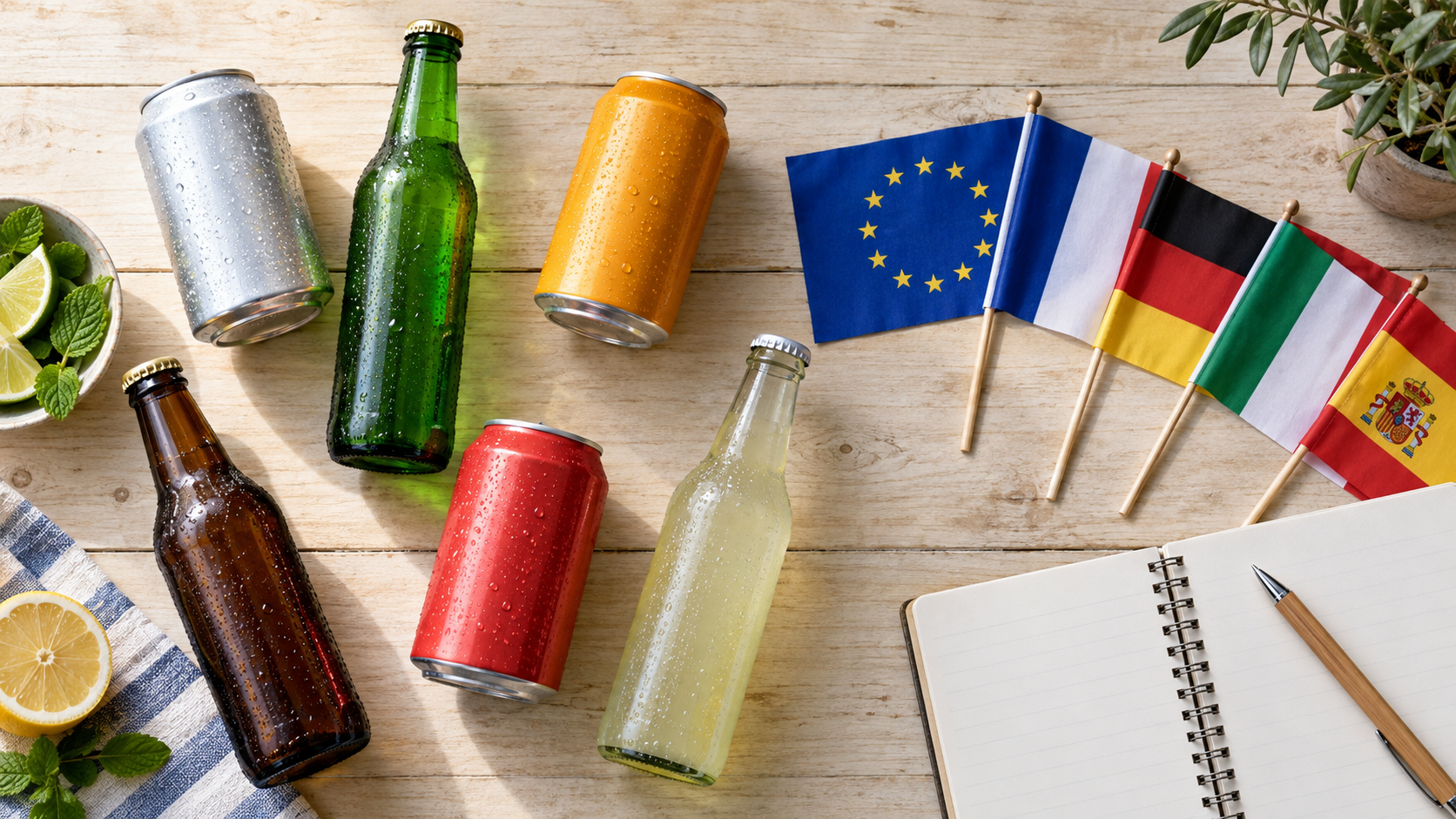
Unlike a single-country destination, Europe presents a set of national regulatory and taste environments layered under a shared but incomplete EU framework. Sugar levies apply in some countries and not others, and where they do apply, the threshold and rate differ. Front-of-pack nutrition labelling conventions are not identical across the region. Language requirements are national rather than EU-wide, so a label compliant in one country may not be compliant in the next without translation and format adjustment.
The practical implication is that a European launch plan needs to name its first markets specifically rather than treating the region as a single target, because the formulation and label decisions that follow depend on which countries are actually in scope. A brief that simply says “Europe” without naming priority countries forces the development team to guess which rules to design against, and that guess is rarely right for every market the brand eventually wants to enter.
Sugar levies: a market-by-market variable
Several European countries apply a levy on sugar-sweetened beverages, but the design differs meaningfully between them: some apply a single threshold, others a tiered structure with the rate increasing at higher sugar levels, and some countries apply no levy at all. A product formulated to sit under one country’s threshold is not automatically compliant, or optimally positioned, in a neighbouring market with a different structure.
This is why sugar position needs to be treated as a per-market decision during development rather than a single formulation choice. A product designed to serve several European markets often ends up with a sugar target set to the lowest common threshold among its intended destinations, since that single recipe can then be sold across all of them without a country-specific reformulation.
Front-of-pack labelling and language
Nutrition labelling conventions in Europe include both the shared nutrition declaration required across the EU and, in several countries, an additional voluntary or expected front-of-pack scheme that shoppers have come to recognise. These schemes are not identical between countries, and a product’s formulation directly affects how it scores under whichever scheme applies in a given market.
| Consideration | What it means for a Europe-bound product |
|---|---|
| Sugar levy exposure | Varies by country; some apply tiered thresholds, others none at all |
| Front-of-pack labelling | National schemes differ; formulation affects how a product scores under each |
| Language requirements | Set nationally, not EU-wide; a single label rarely serves every market |
| Flavour preference | Sweetness and acidity expectations shift noticeably between northern and southern Europe |
| Retail structure | Discount, mainstream grocery and speciality channels carry different weight by country |
Language requirements compound this further. A single artwork rarely serves every European market unchanged, since mandatory label content must appear in the official language, or languages, of the country of sale. Planning for at least a language variant, even where the underlying formulation and packaging stay constant, is standard practice for a multi-country European launch. Where a market requires more than one official language on pack, the layout itself has to accommodate that from the design stage, since fitting two full language blocks onto a label drawn for a single language rarely produces a clean result after the fact.
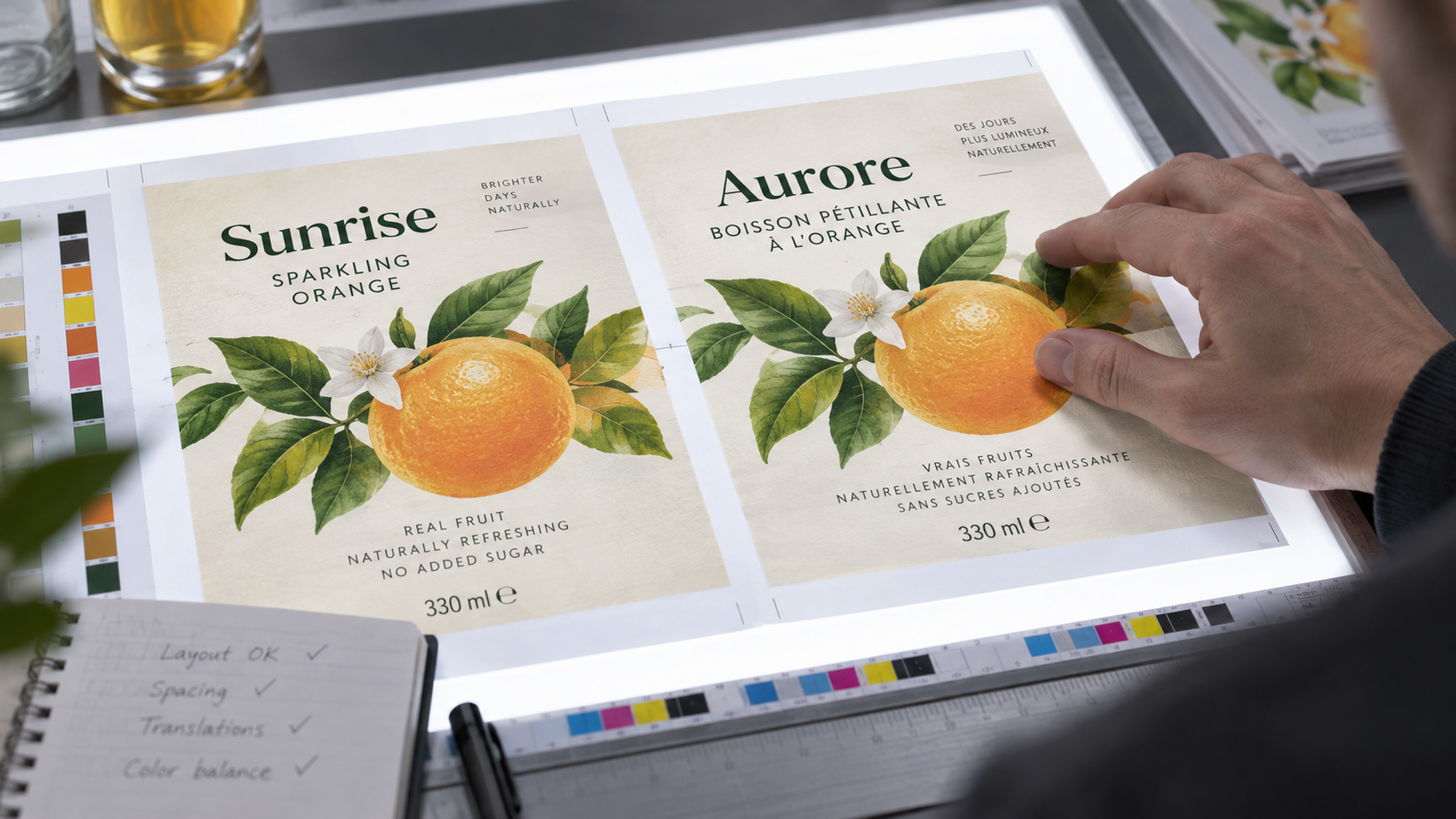
Flavour and format preferences across the region
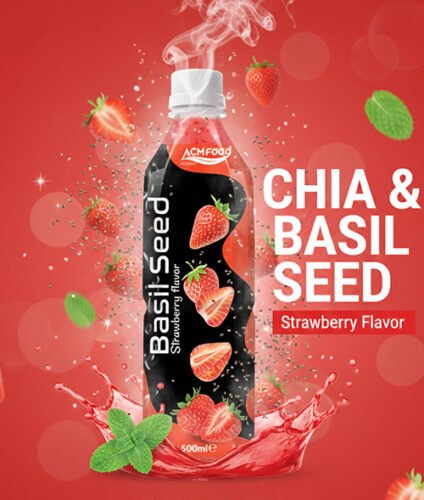
Taste expectations shift meaningfully across Europe, and a flavour direction that performs well in one part of the region does not automatically transfer to another. Sparkling and carbonated formats carry strong volume across much of the continent, and fruit-forward profiles with a distinctive character, such as cherry sparkling juice or lime sparkling drinks, tend to translate well across multiple markets because the citrus and berry categories they sit in are broadly familiar continent-wide.
More distinctive tropical combinations, such as an orange and coconut cream blend, often perform better as a premium or speciality-channel entry in a specific market first, rather than as a simultaneous continent-wide launch, since acceptance of less familiar tropical profiles varies more by country than mainstream citrus and berry does.
Clean label positioning in Europe
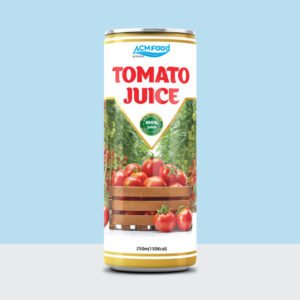
Clean label expectations are strong across most of Europe, and a short, recognisable ingredient list is increasingly a competitive requirement rather than a differentiator in several categories. Products built around a genuinely simple ingredient statement, such as an NFC tomato juice made without concentrate, tend to align well with this expectation because the ingredient list itself supports the positioning without requiring additional claims.
This matters for development sequencing: building the clean label position into the formulation from the outset is more reliable than adding claims to a more complex recipe afterward, since European retailers and consumers alike tend to scrutinise ingredient lists closely in categories where clean label has become the norm. Reformulating a product to remove or replace an ingredient after a listing is already agreed is a slower and more disruptive path than reaching that position during initial development, when the specification is still open to adjustment.
Building a Europe-ready product brief
Five inputs keep a European product concept adaptable across markets rather than locked to a single country’s requirements.
- Named target countries. Naming the first two or three markets, rather than “Europe” generally, lets sugar and label decisions be made against real requirements.
- Sugar target set to the strictest relevant threshold. A single recipe designed to the lowest common threshold among target markets avoids a per-country reformulation.
- Language plan for artwork. Deciding early how many language variants are needed prevents a late scramble when a new market is added.
- Flavour familiarity by market. Distinguishing between broadly familiar profiles and more distinctive ones helps sequence a multi-country launch sensibly.
- Ingredient list simplicity. A shorter, cleaner ingredient statement supports both regulatory positioning and consumer expectation across most of the region.
Sequencing a multi-country European launch
Most successful European launches do not attempt every market simultaneously. A common and lower-risk sequence starts with one or two markets where the sugar levy structure, label requirements and flavour familiarity are best understood, uses that launch to validate the recipe and packaging, and then extends to additional countries with the language and, where needed, formulation adjustments already planned rather than improvised.
This staged approach also limits the packaging and artwork commitment at each stage, since a language variant or a formulation adjustment for a second market can be planned once real sales data exists from the first, rather than committing to every market’s requirements before any of them has been tested. It also gives a brand a real basis for negotiating with a manufacturer on subsequent markets, since a proven first listing carries more weight in that conversation than a launch plan that exists only on paper.
Common mistakes in a first European launch
A recurring set of errors accounts for most of the friction brands encounter entering Europe for the first time.
- Treating Europe as one regulatory environment. Sugar levy structures and front-of-pack schemes are set nationally, and a plan built around a single assumed rulebook usually needs correction once a second market is added.
- Launching in every target country simultaneously. Spreading a first order across many small national listings multiplies the artwork and compliance workload before any market has generated sales data to justify it.
- Assuming English artwork is sufficient. Mandatory label content has to appear in the official language of the country of sale, and assuming English coverage is enough for markets where it is not the primary language is a common and avoidable delay.
- Choosing a flavour direction before naming target markets. Flavour familiarity varies enough across the region that fixing a profile before the destination countries are known risks a mismatch that formulation alone cannot fully correct.
Each of these is a sequencing error rather than a product quality issue, which is why naming target markets early in the brief resolves most of them before they become a problem.

Frequently asked questions
Is one formulation ever enough for the whole of Europe?
Sometimes, if the sugar target is set to the strictest threshold among the intended markets and the flavour profile is broadly familiar across the region. Where either of those does not hold, a single formulation risks being either non-compliant in a stricter market or under-positioned in a more permissive one.
Does packaging need to change by country?
The physical pack format usually does not need to change, but the label content generally does, due to language and, in some cases, national labelling scheme requirements. Planning the artwork with this in mind from the outset avoids treating each new market as a full redesign.
Which flavour profiles are safest for a first European launch?
Citrus, berry and other broadly familiar profiles tend to carry the least market-specific risk for a first launch, since they require little explanation to a shopper regardless of country. More distinctive tropical or novel profiles are often better introduced in a single market first before a wider regional rollout.
How does sugar levy variation affect pricing strategy?
Where a levy applies, it typically flows through to shelf price in the affected market, which can shift the competitive price position of an otherwise identical product between countries. This is worth factoring into the commercial plan alongside the formulation decision, not treated as a separate downstream issue.
Does discount retail require a different approach than mainstream grocery?
Discount retail carries substantial volume in several European markets and typically rewards a simpler, more efficient specification over an elaborate premium presentation. A brand targeting discount channels as a primary route should factor that into pack format and decoration decisions early, since a specification built for a premium mainstream listing does not always translate efficiently into a discount retail cost structure.
Starting a Europe-focused product brief
A European launch works best when the formulation, sugar position and language plan are built around a small number of named target markets rather than the region as a whole, with a clear path for extending to additional countries once the first launch has proven itself.
ACM Beverage develops and supplies products against these European market requirements and can help sequence a multi-country launch plan before a first order is placed. Reach out through the enquiry and contact page with the target countries in mind to start that conversation, since naming even two or three priority markets at the outset is enough to shape the sugar target, the language plan and the flavour sequencing before development begins.