
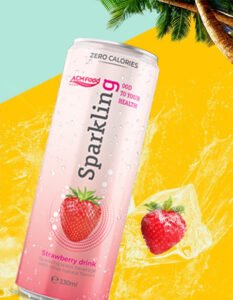
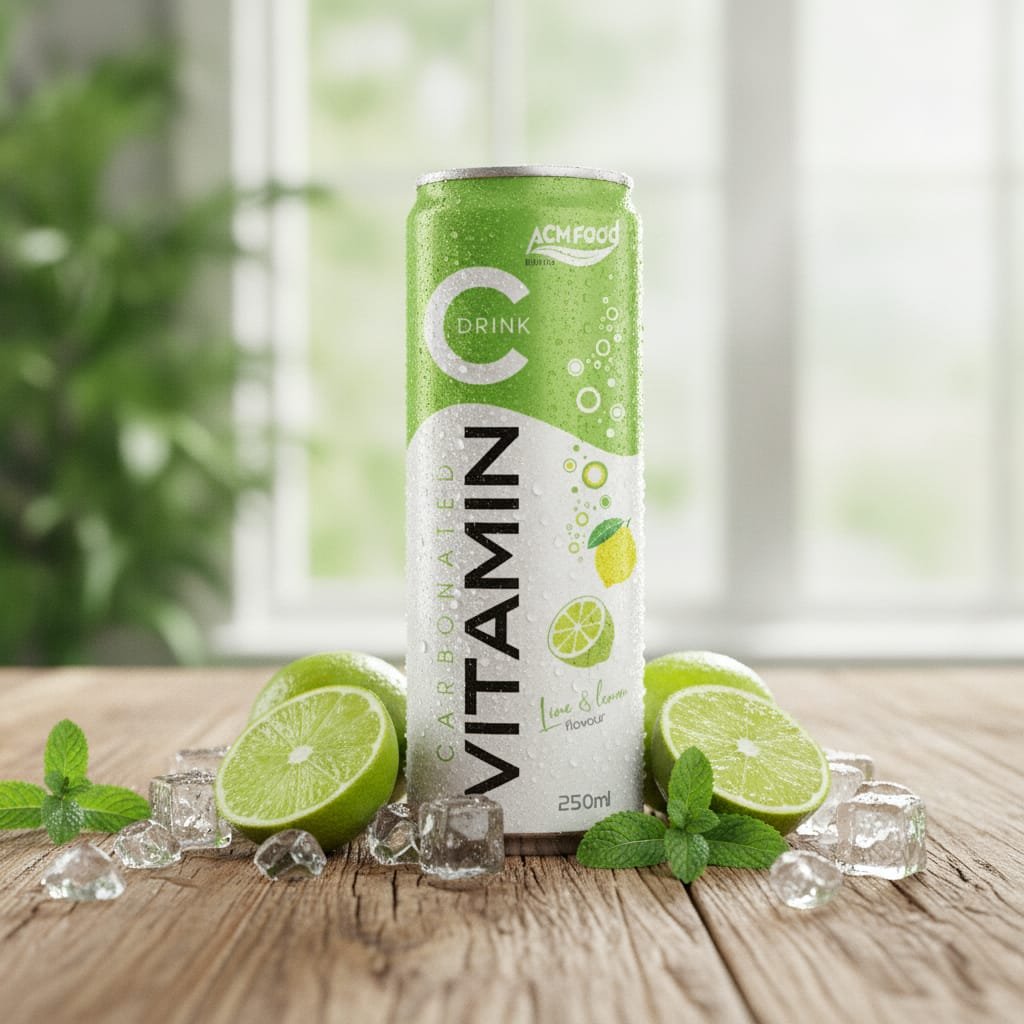
Lime sparkling juice is carbonated water with a small share of lime juice — usually 3–10% — balanced with sugar or sweetener, because lime juice at pH around 2.0–2.4 is too sour to drink in quantity. Lime juice has about 30 mg of vitamin C per 100 g, so at these levels a drink provides only a few milligrams per 100 ml unless vitamin C is added.
Key facts at a glance
- Low juice content is normal for lime drinks; the fruit is used for acidity and aroma, not volume.
- Sugar decides the category. Full-sugar versions reach 8–10 g per 100 ml; reduced-sugar versions use stevia, monk fruit or blends.
- Vitamin C is meaningful only if the drink is fortified.
- Lime oil from the peel carries most of the aroma, and is sensitive to light and heat.
- Carbonation for citrus sodas is typically 2.5–3.5 volumes of CO₂.
Why lime works in sparkling drinks
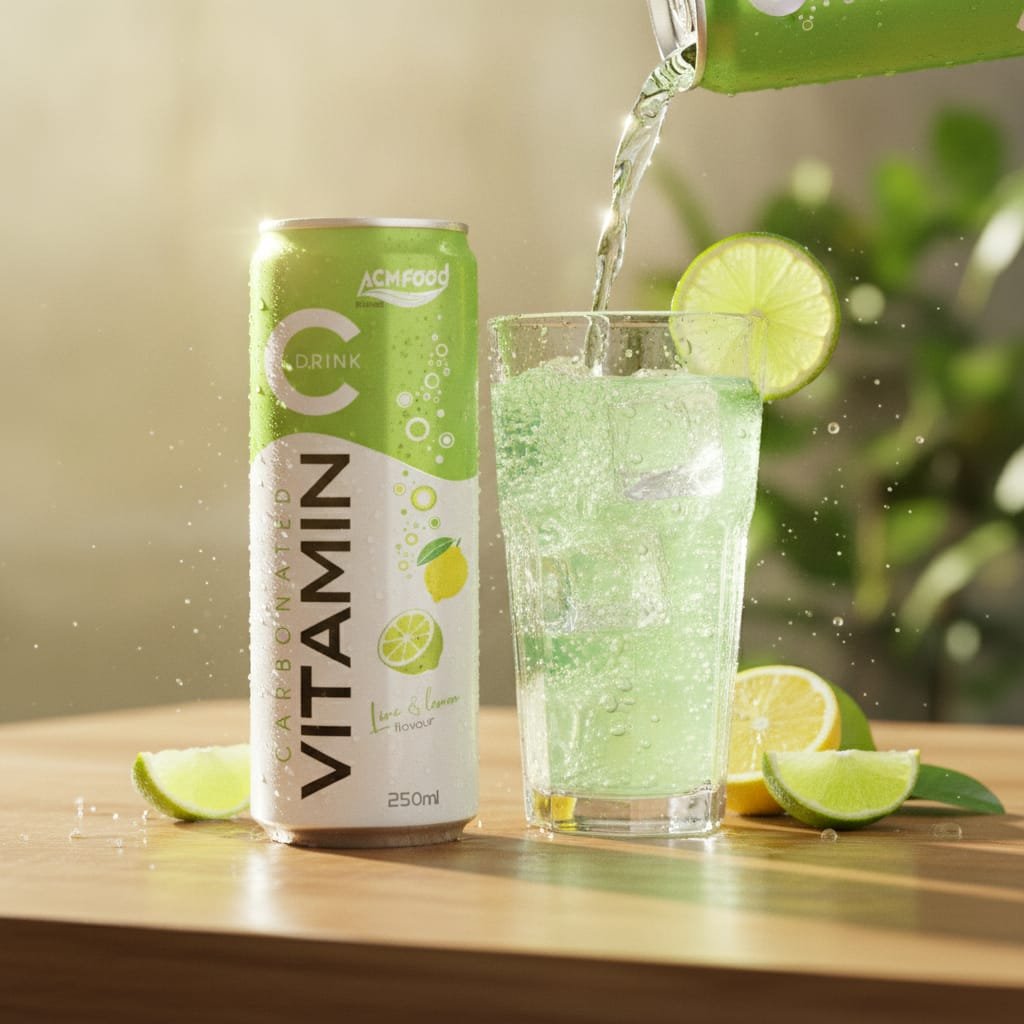
- Acidity lifts carbonation. Citrus sharpness and CO₂ together give a clean, dry finish.
- It suits sugar reduction. Tartness masks the aftertaste of many sweeteners better than mild fruits do.
- It is familiar worldwide and works as both a soft drink and a mixer.
- It pairs easily with mint, ginger, cucumber, lemongrass and passion fruit.
How the drink is formulated
| Parameter | Typical range | Effect |
|---|---|---|
| Lime juice content | 3–10% | Sourness, cloudiness, cost |
| Sugars | 0–10 g per 100 ml | Body, calories, sugar-tax band |
| pH | 2.8–3.3 | Microbial stability, sharpness |
| Carbonation | 2.5–3.5 volumes CO₂ | Bite and perceived freshness |
| Aroma | Lime oil or natural lime flavour | Top note; fades with light and heat |
Sugar and sweetener options
| Approach | Sugar per 100 ml | Trade-off |
|---|---|---|
| Full sugar | 8–10 g | Best body; taxed in many markets |
| Reduced sugar | 4–5 g | Below common sugar-tax thresholds |
| Zero sugar | 0 g | Relies on sweeteners; thinner mouthfeel |
What brands should specify with an OEM
- Lime juice percentage and whether it is NFC or from concentrate.
- Sugar target and sweetener system, checked against rules in each destination market.
- Vitamin C fortification, if you plan a nutrition claim.
- Carbonation level with a tolerance.
- Can size — 250 ml slim and 320–330 ml standard are common.
- Shelf-life testing for aroma and CO₂ retention.
Frequently asked questions
Is lime sparkling juice healthy?
Reduced or zero-sugar versions are a reasonable swap for regular soda. Full-sugar versions are similar to other soft drinks. Lime itself contributes little nutrition at the levels used.
Does lime sparkling juice contain vitamin C?
Only a few milligrams per 100 ml from the lime juice, unless the product is fortified. Check the nutrition panel.
Is it bad for teeth?
It is acidic, like all citrus soft drinks. Drinking it with meals and not sipping all day reduces enamel erosion.
Can it be used as a mixer?
Yes. Lime sparkling drinks pair well with rum, gin and tequila, or with mint for a mojito-style mocktail.
Can the recipe be customised for private label?
Yes. Lime content, sweetness, flavour pairings, carbonation and can design are standard OEM variables.
Lime sparkling drinks from ACM Beverage
ACM Beverage produces lime sparkling juice in Vietnam for OEM and private label customers, in facilities certified to ISO 22000, FSSC 22000 and HACCP, exporting to more than 40 countries. See the 250 ml lime sparkling juice, the sparkling drink range or the fruit juice range. To discuss a formulation, contact our export team.