














A premium energy drink stands out through its ingredients, formula and pack rather than price alone: natural caffeine sources, less or no sugar, added vitamins, and a slim 250 ml can. ACM’s Premium Energy Drink comes in a 250 ml (8.5 fl oz) slim aluminium can with a 24-month shelf life, available for private label.
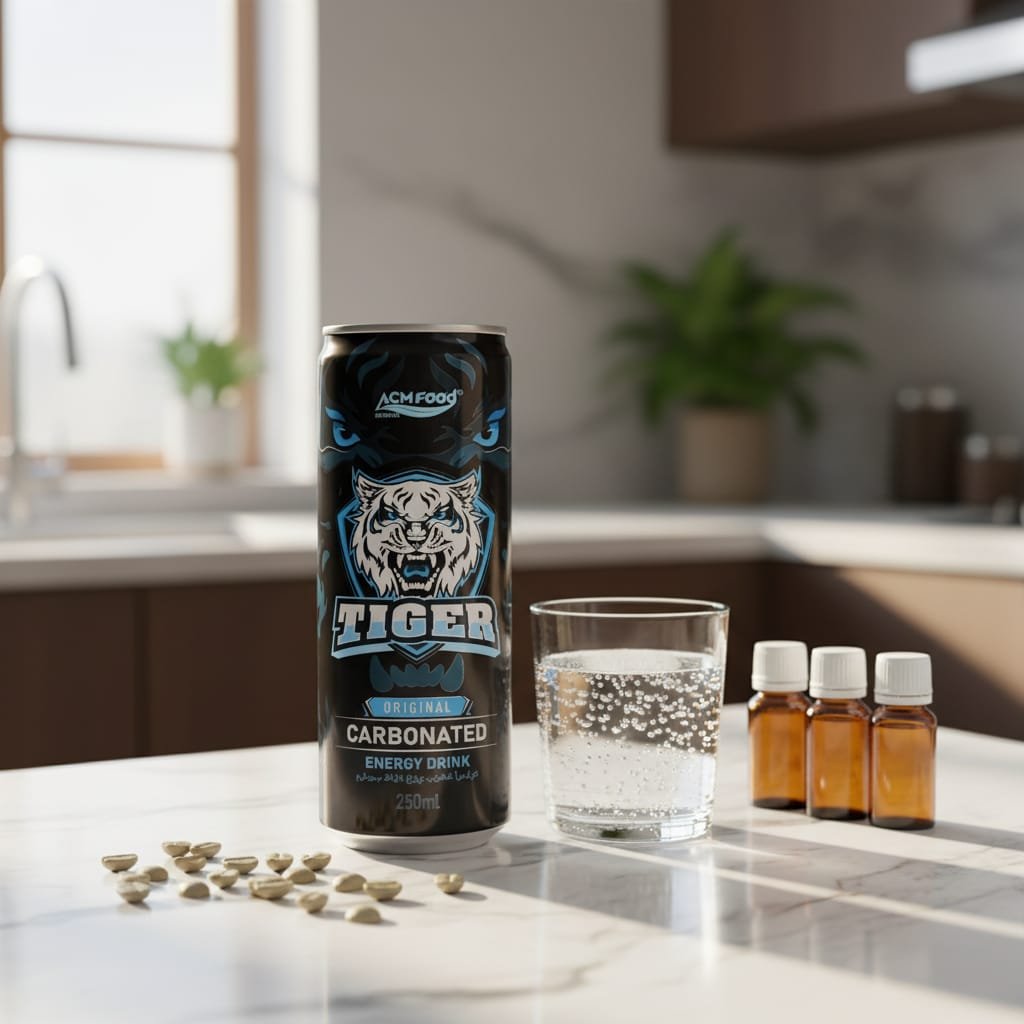
What makes an energy drink “premium”?
- Caffeine source: green coffee, green tea or guarana instead of, or alongside, synthetic caffeine.
- Sugar: reduced-sugar or sugar-free versions using permitted sweeteners.
- Added ingredients: B vitamins, electrolytes, or botanical extracts such as ginseng.
- Flavour: fruit-led profiles (berry, citrus, tropical) rather than the classic “tutti-frutti” taste.
- Packaging: slim cans, matte or tactile finishes and clean graphic design.
How much caffeine is in an energy drink?
Most energy drinks contain around 30–32 mg of caffeine per 100 ml, so a 250 ml can has about 75–80 mg – similar to a cup of coffee. The European Food Safety Authority considers up to 400 mg a day safe for healthy adults and up to 200 mg a day in pregnancy. In the EU and UK, drinks above 150 mg/L must carry a “high caffeine content” warning, and many markets restrict sales to children.
ACM Premium Energy Drink specifications
| Item | Detail |
|---|---|
| Product | Premium Energy Drink 250ml Slim Can |
| Volume | 250 ml (8.5 fl oz) |
| Packaging | Slim aluminium can |
| Shelf life | 24 months |
| Certifications | FSSC 22000, HACCP, ISO 22000 |
| Options | OEM, ODM, private label |
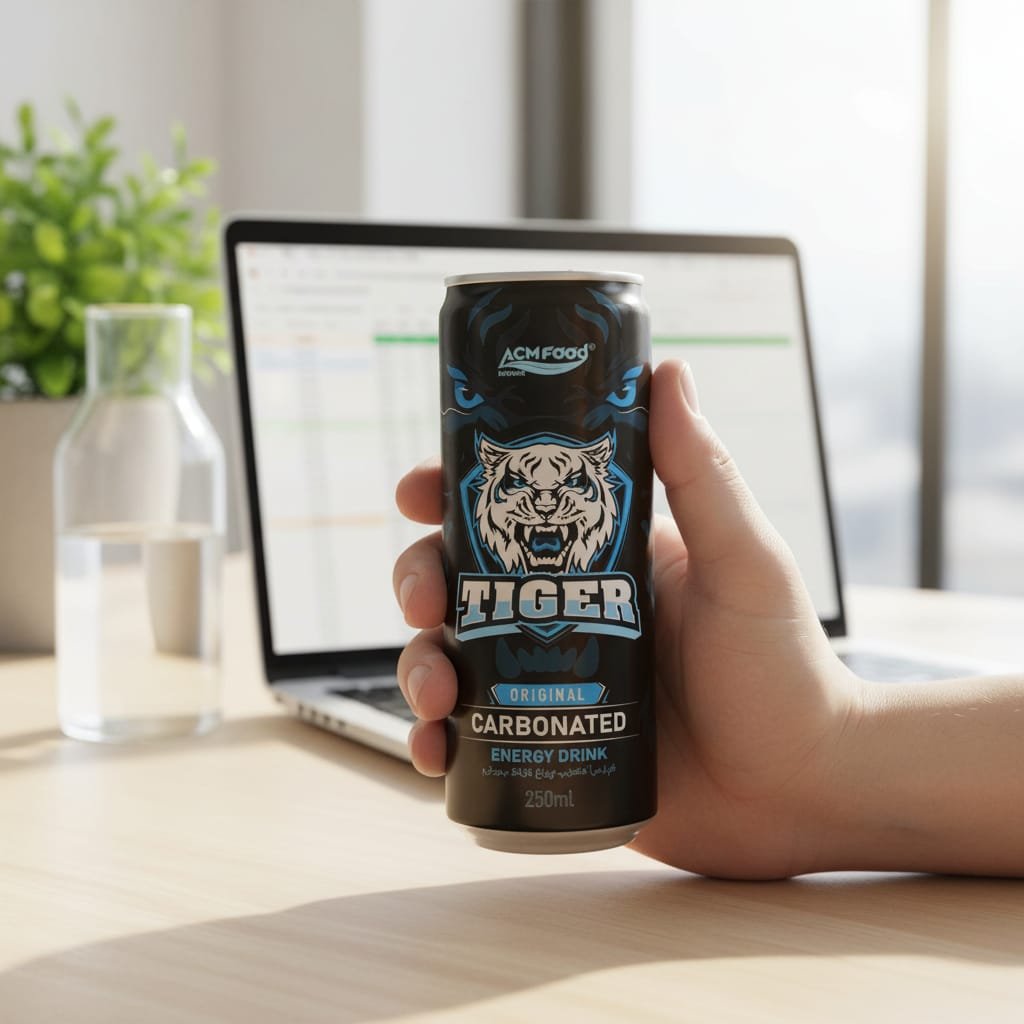
What can be customised for a private-label energy drink?
- Caffeine level and source, within the limits of the target market.
- Sugar content: regular, reduced or zero sugar.
- Functional additions such as taurine, B vitamins or electrolytes, where permitted.
- Flavour, carbonation level and colour.
- Can size (250 ml slim, 330 ml sleek, 500 ml) and artwork.
Browse the full energy drink range or read about carbonated energy drinks.
How do you launch a premium energy drink brand?
- Pick the position: performance, focus, natural energy or zero sugar.
- Check the rules: caffeine limits, warning labels and permitted additives differ by country.
- Sample and taste-test: compare against the leading brands in your market.
- Design the can: the pack does much of the “premium” work on shelf.
- Start focused: launch one or two flavours in chosen channels such as gyms, convenience stores or online.
Frequently asked questions
What is the difference between a premium and a regular energy drink?
Premium drinks usually use natural caffeine sources, less sugar, added vitamins or botanicals, and more refined packaging. The caffeine content is often similar.
Is 80 mg of caffeine a lot?
No. It is about the same as a cup of brewed coffee and well below the 400 mg daily limit EFSA considers safe for healthy adults.
Why are energy drinks sold in 250 ml slim cans?
The 250 ml slim can is the traditional energy drink format. It keeps caffeine per serving moderate and looks premium on shelf.
Can I make a sugar-free energy drink under my own brand?
Yes. ACM can produce sugar-free versions using sweeteners permitted in your target market.






