




Kombucha is naturally carbonated, but only lightly and not always consistently. The bubbles come from carbon dioxide produced by yeast during fermentation, and how much of that gas stays in the drink depends on whether the kombucha is fermented a second time in a sealed container, how it is packaged and whether extra CO2 is added.
This article explains why kombucha is fizzy, why one bottle can be lively while another is almost flat, and how “sparkling kombucha” differs from kombucha that relies only on natural fizz. It focuses on the drink in the glass: what you can expect to see, taste and feel, and what drives those differences.
Why is kombucha fizzy?
Kombucha is fizzy because the yeasts in the culture convert sugar into carbon dioxide and a small amount of ethanol during fermentation. When that gas is trapped in a closed container, it dissolves into the liquid and is released as bubbles when the drink is opened and poured.
A kombucha culture, often called a SCOBY, is a mixed community of yeasts and acetic acid bacteria. The two groups do different jobs. Yeasts break down sucrose into simpler sugars and ferment some of them, releasing CO2. Bacteria then use ethanol and sugars to form organic acids, mainly acetic acid, which gives kombucha its sour taste.
During the first fermentation, kombucha is normally brewed in a wide vessel covered with a breathable cloth. The culture needs oxygen, so the container is not sealed, and most of the carbon dioxide escapes into the air. That is why kombucha straight from the first fermentation usually tastes tart but only faintly prickly.
How does secondary fermentation create natural carbonation?
Secondary fermentation creates natural carbonation by sealing kombucha in an airtight container with a small amount of fresh sugar or fruit, so the remaining yeast produces more CO2 that cannot escape. The gas builds pressure and dissolves into the drink, producing visible bubbles.
The steps are simple in principle:
- The finished first-ferment kombucha is separated from the culture.
- Fruit juice, purée or a small sugar addition is mixed in as fresh food for the yeast.
- The liquid is sealed in pressure-rated bottles or tanks.
- It rests for a short period while yeast produces carbon dioxide.
- The drink is chilled to slow the yeast before it becomes over-pressurised.
Natural carbonation tends to give a softer, finer bubble than injected CO2. It also comes with variability. Temperature, the amount of sugar added, the health of the yeast and the seal quality all change the final fizz, so two batches of the same recipe can feel quite different in the mouth.
Why is my kombucha flat?
Kombucha goes flat when carbon dioxide escapes faster than it is produced, or when too little gas was created in the first place. Common causes are a poor seal, warm storage after opening, too little sugar for secondary fermentation, or a culture with weak yeast activity.
Typical reasons for flat kombucha include:
- Loose or worn caps that let gas leak out slowly during storage.
- Short or cool secondary fermentation, which gives yeast too little time or warmth to produce CO2.
- Low residual sugar, especially when the first fermentation ran long and most of the sugar was already consumed.
- Opening and resealing, since each opening releases dissolved gas that the drink cannot recover once yeast activity is low.
- Warm serving temperature, because CO2 is less soluble in warm liquid and escapes quickly when poured.
Flat kombucha is not necessarily spoiled. It can still taste fine, simply with less sparkle. If it smells off, shows fuzzy growth on the surface or tastes unpleasant, that is a different matter and it should be discarded.
Is kombucha more or less carbonated than soda?
Naturally carbonated kombucha is usually less fizzy than a typical cola or lemon-lime soda, and its bubbles often feel finer and softer. Sparkling kombucha with added CO2 can come closer to soft drink levels, depending on the producer’s target.
Soft drinks are carbonated in controlled conditions to a precise level, so each can feels the same. Kombucha that depends only on fermentation has a wider range. Some home and craft batches are almost still, others can foam vigorously when opened. Producers who want a consistent experience therefore measure and adjust CO2 before packaging.
The perception of fizz also depends on acidity. Kombucha’s sourness can make moderate carbonation feel sharper than it would in a sweet soda, which is one reason a lightly sparkling kombucha can still seem lively on the tongue.

Sparkling kombucha vs kombucha: what is the difference?
The difference is mainly the level and source of carbonation. Regular kombucha relies on the light fizz that remains from fermentation, while sparkling kombucha is made to have noticeably more bubbles, often by adding carbon dioxide or by tightly controlling secondary fermentation to reach a higher target.
| Feature | Kombucha with natural fizz | Sparkling kombucha |
|---|---|---|
| Main CO2 source | Yeast activity during fermentation | Added CO2, controlled secondary fermentation, or both |
| Bubble feel | Soft, fine, sometimes faint | Brisker and more noticeable |
| Batch-to-batch consistency | Variable | More uniform |
| Typical positioning | Traditional fermented tea | Soda alternative, refreshment occasion |
| Serving suggestion | Cold, gently poured | Very cold, over ice or straight from the can |
Neither term has a single legal definition everywhere, so the label wording and the producer’s description are the best guide. The word “sparkling” generally signals that the drink was designed to be bubbly rather than left to chance.
Does added CO2 change kombucha?
Added carbon dioxide changes the texture and the perceived sharpness of kombucha, not its basic identity as fermented tea. Extra CO2 forms a small amount of carbonic acid in the drink, which can make the taste feel brighter and the acidity slightly more pronounced.
Producers add or adjust CO2 for practical reasons:
- Consistency, so every can or bottle feels the same to the consumer.
- Stability, because a kombucha that has been filtered or heat-treated to stop fermentation can no longer build its own gas.
- Flavour lift, since fizz helps carry fruit aromas such as mango, lychee or guava.
- Pressure control, reducing the risk of over-carbonated packages from uncontrolled fermentation.
Whether a kombucha is stabilised and then carbonated, or carbonated naturally and kept cold, affects storage and claims. A drink that has been heat-treated should not be described as containing live cultures unless testing supports that. The broader question of how fermented drinks fit a balanced diet is covered in our article on the evidence on fermented fruit drinks.
How does temperature affect kombucha carbonation?
Temperature affects kombucha carbonation in two ways: it changes how fast yeast produces carbon dioxide, and it changes how much of that gas the liquid can hold. Warm kombucha ferments faster but loses dissolved CO2 more easily, while cold kombucha ferments slowly and keeps its bubbles longer.
This is why the same drink can behave very differently from one day to the next. A raw kombucha left in a warm room may keep building pressure because the yeast is still active, then spray when opened because warm liquid releases gas quickly. The same bottle, kept cold for a day, will usually open calmly and pour with a steady stream of fine bubbles.
Temperature also changes how fizz is perceived. Cold drinks feel more refreshing and the bubbles seem sharper, while warm kombucha can taste flat and more vinegary even when the gas level is similar. For serving, the practical rule is simple:
- Store cold or cool, depending on whether the kombucha is raw or shelf-stable.
- Serve well chilled, ideally straight from the refrigerator or over ice.
- Avoid temperature swings, such as moving bottles in and out of a hot car or sunny window.
- Do not shake a sealed kombucha before opening, since agitation releases gas from solution.
For shelf-stable kombucha that has been filtered or heat-treated, temperature no longer drives fermentation, but it still matters for gas retention and taste. Heat speeds up flavour changes in most packaged drinks, so cool storage helps keep both bubbles and fruit aroma closer to how the drink was designed.
How do cans and bottles affect kombucha fizz?
Both cans and pressure-rated bottles hold carbonation well when sealed properly. Aluminium cans have a very tight seam and block light, which helps keep CO2 and flavour stable. Swing-top or screw-cap bottles can lose gas over time if the seal is worn.
A few practical points for keeping bubbles:
- Store sealed kombucha cool and upright, away from heat.
- Chill thoroughly before opening, because cold liquid holds more gas.
- Pour slowly down the side of a tilted glass to reduce foaming and gas loss.
- Finish smaller formats such as 250ml cans in one serving, when the drink is at its fizziest.
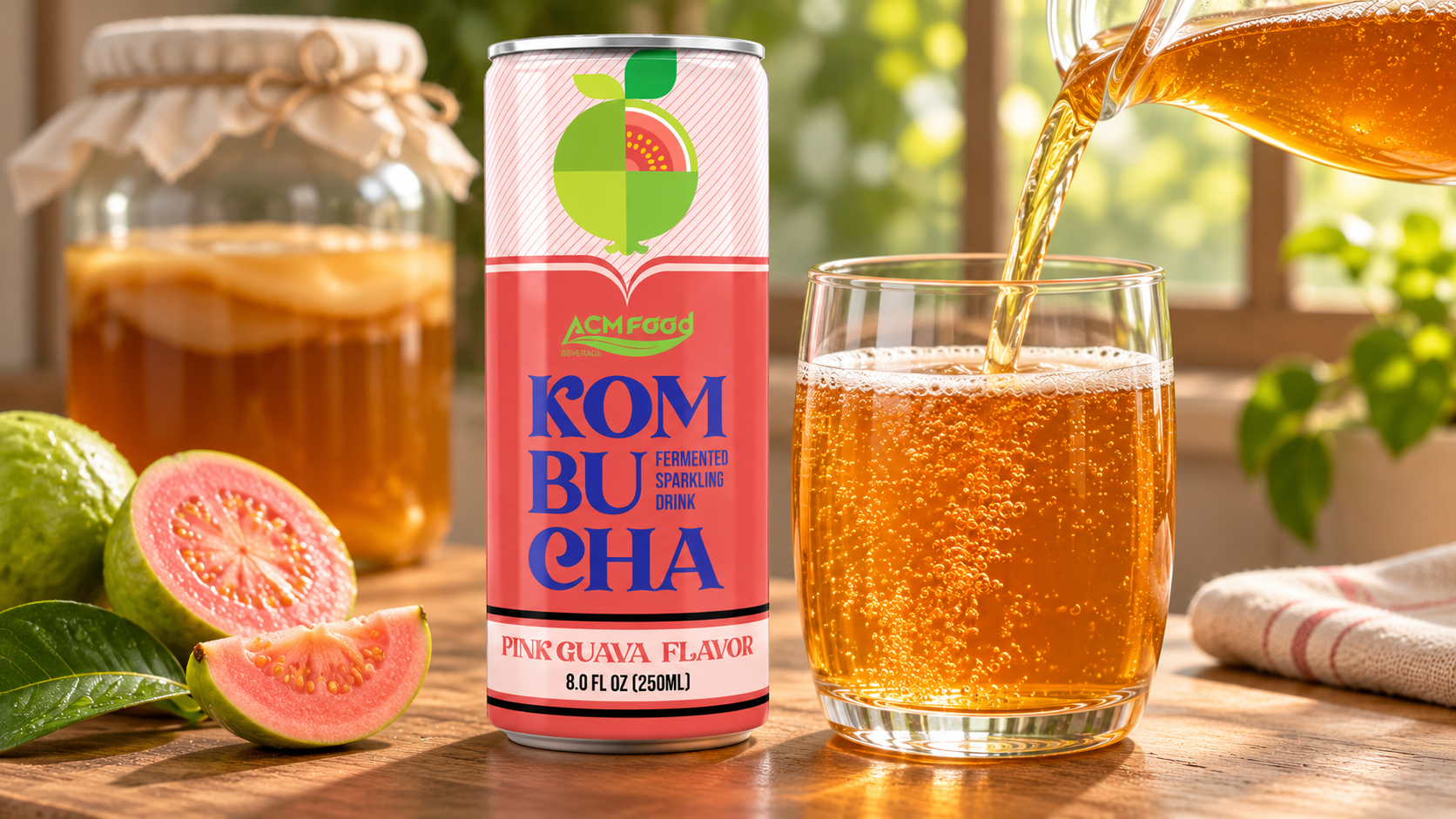
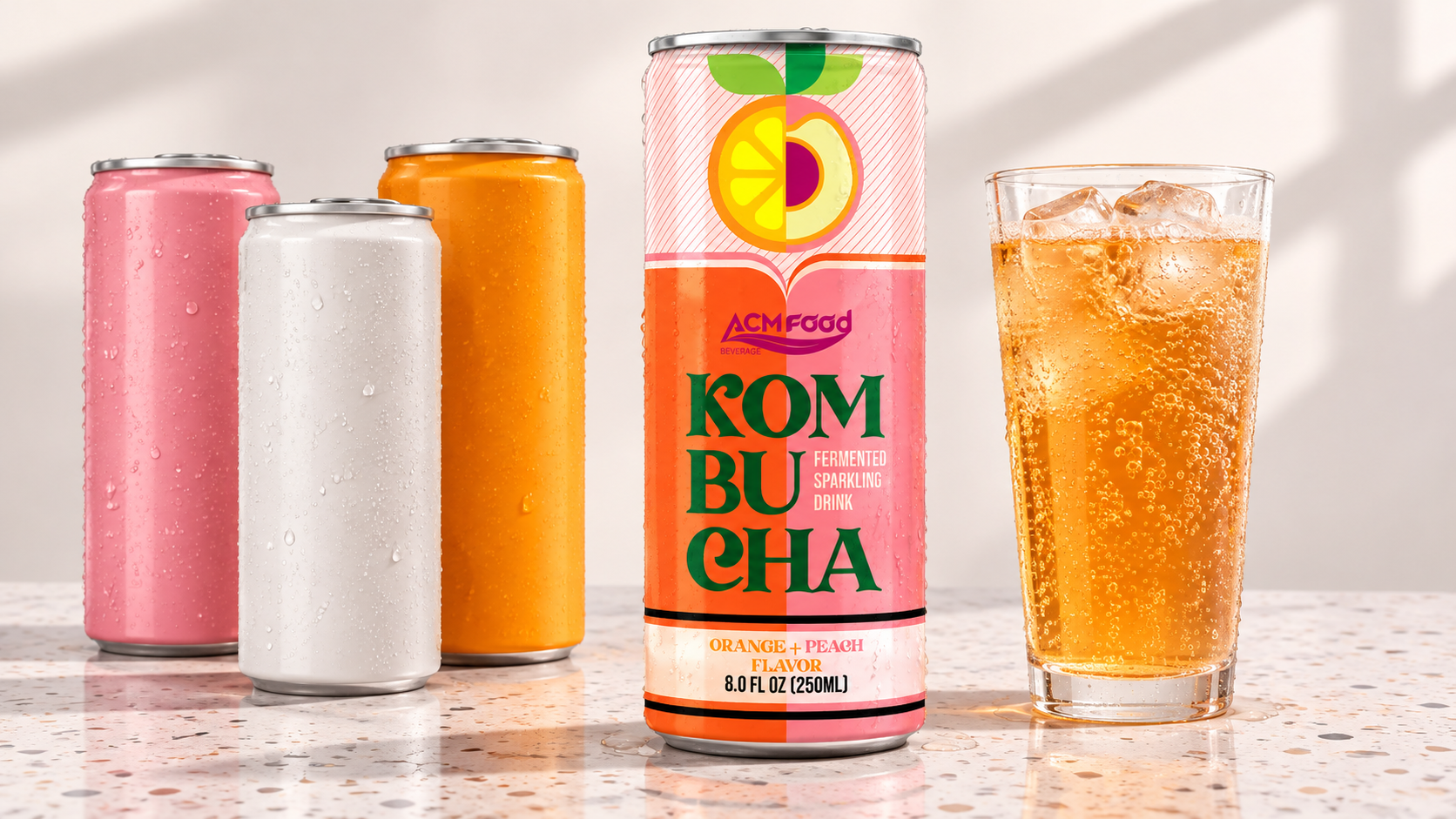
Shoppers comparing fizz levels can see the two styles side by side in the ACM FOOD range offered by ACM Beverage. The fruit kombucha drink range includes Peach, Orange Peach, Pomegranate and Strawberry, while the sparkling kombucha range covers Guava, Lychee and Mango with a livelier bubble. All seven come in 250ml slim aluminium cans.
What should buyers check about kombucha carbonation?
Buyers should check how carbonation is achieved, how consistent it is between batches, and how the product must be stored to keep it. These points affect customer experience, shelf placement and complaint rates more than most flavour decisions.
- Is the CO2 natural, added or a combination, and what target level does the producer work to?
- Is the kombucha stabilised for ambient storage, or must it stay refrigerated to control fermentation?
- How does the packaging hold pressure during long transport and temperature changes?
- Does the product description match local rules for terms such as “sparkling”, “naturally carbonated” or “live”?
- What are the alcohol testing results, since fermentation and carbonation are linked to yeast activity?
FAQ: kombucha and carbonation
Does kombucha have bubbles?
Most kombucha has some bubbles, from light prickle to strong fizz. The amount depends on secondary fermentation, sealing and whether CO2 is added. Very freshly brewed first-ferment kombucha may have almost none.
Is all kombucha carbonated?
Nearly all kombucha contains some dissolved carbon dioxide because fermentation produces it, but not all kombucha is noticeably carbonated. Flat or still kombucha exists, especially when it has been stored open or warm.
Why does my kombucha foam over when I open it?
Foaming usually means high pressure, often from continued fermentation in a warm place, or from opening a bottle that is not fully chilled. Chill it well and open slowly over a sink.
Is flat kombucha safe to drink?
Loss of fizz alone does not mean kombucha is unsafe. Discard it if it smells unusual, tastes off or shows mould on the surface, and always follow the storage instructions on the label.
Is kombucha carbonated? The short answer
Kombucha is carbonated by nature, because the yeast in its culture produces carbon dioxide while it ferments. How fizzy a particular kombucha is comes down to secondary fermentation, sealing, storage temperature and whether the producer adds CO2. Natural fizz is softer and more variable, while sparkling kombucha is made to be brisk and consistent. For anyone selecting kombucha for retail or hospitality, the key questions are how carbonation is achieved and how it is protected through storage.
If you want to compare natural-style and sparkling kombucha in 250ml cans for your market, the ACM Beverage team can share product details on request through the beverage enquiry contact page.