














Corn milk is made by blending sweet corn with water, straining it, and usually sweetening it. It is naturally gluten-free and free of dairy, soy and nuts. It is not a high-protein plant milk — corn contributes roughly 1 g of protein per 100 ml, a third of soy. Its distinctive nutritional asset is carotenoids.
Key facts at a glance
- What it is: sweet corn blended with water, strained, usually sweetened; sometimes blended with dairy.
- Protein: ~1 g per 100 ml — well below soy (~3.3 g) and cow’s milk (~3.4 g).
- Distinctive asset: lutein and zeaxanthin, the carotenoids that concentrate in the retina.
- Free from: gluten, dairy, soy and nuts.
- Watch: sugar. Most commercial corn milk is sweetened; check per 100 ml.
- Known in Vietnam as sữa bắp or sữa ngô, traditionally served warm.
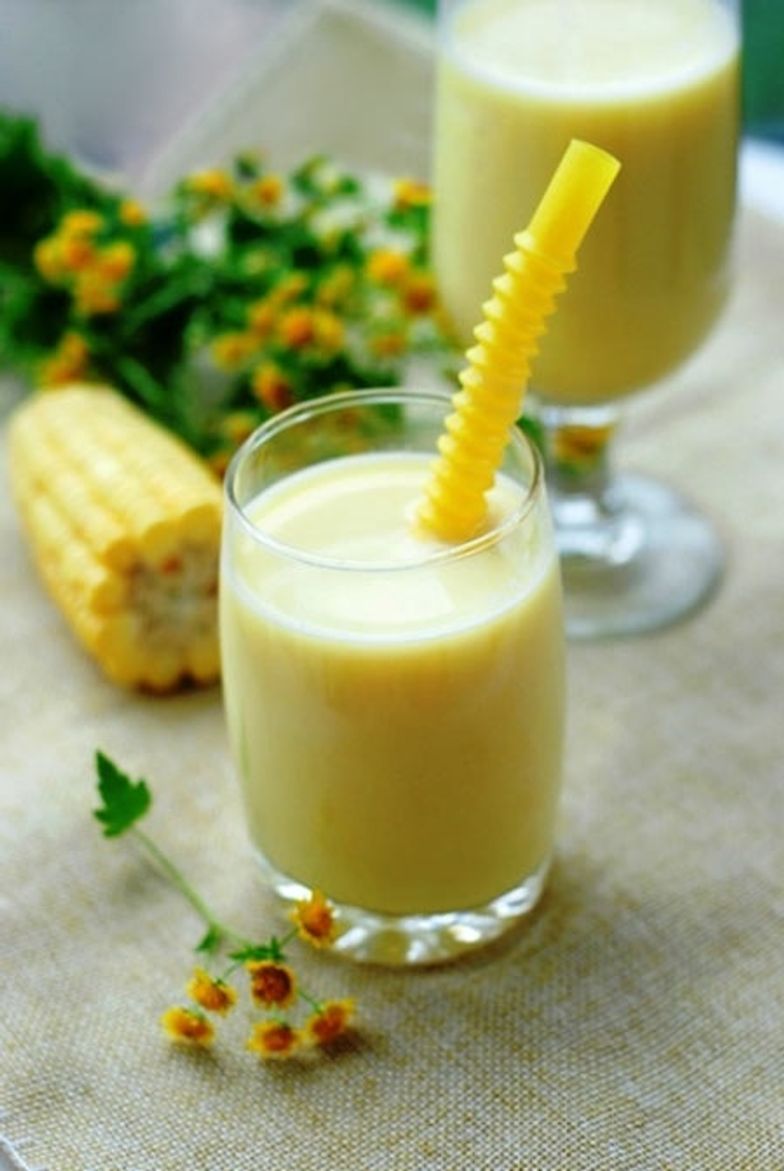
How corn milk is made
Sweet corn kernels are cut from the cob, blended with water, then strained to remove the fibrous solids. The liquid is usually sweetened and often stabilised, because corn starch settles out otherwise. Vietnamese preparations commonly add pandan leaf for aroma and a small amount of dairy or condensed milk for body.
Two points follow from the process:
- The fibre is strained out. Whole sweet corn is a decent fibre source; corn milk is not.
- It separates naturally. Settling is normal in a clean-label product without added stabiliser — shake before drinking rather than treating it as a fault.
Corn milk nutrition compared with other plant milks
| Per 100 ml | Corn milk | Soy milk | Oat milk | Rice milk |
|---|---|---|---|---|
| Protein | ~1 g | ~3.3 g | ~1 g | ~0.3 g |
| Typical sugar | Often added | Low if unsweetened | From starch breakdown | From starch breakdown |
| Gluten-free | Yes | Yes | Only if certified | Yes |
| Common allergens | None | Soy | Gluten risk | None |
| Notable compounds | Lutein, zeaxanthin | Isoflavones | Beta-glucan | — |
Values are typical and vary widely by brand and recipe, particularly sugar. Read the specific label.
What corn milk is genuinely good for
1. Lutein and zeaxanthin
This is corn milk’s real and under-stated advantage. Yellow corn is one of the better dietary sources of lutein and zeaxanthin, the two carotenoids that accumulate in the macula of the retina. Dietary intake of both is associated with eye health in observational research. No other common plant milk offers this.
2. The lightest allergen profile in the category
No dairy, no lactose, no soy, no nuts, no gluten. For someone managing several allergies at once, corn milk belongs on a very short list alongside rice milk — and unlike rice milk it carries no arsenic concern.
3. Palatability without additives
Sweet corn is naturally sweet, so a corn milk needs less added sugar than a neutral base to taste finished. Families often accept it where they reject less familiar plant milks.
4. A locally grown raw material in Southeast Asia
Corn grows well across the region, so the raw material does not need long-haul shipping to a Vietnamese production site. That shortens the supply chain compared with almond or oat, both of which are largely imported into Asia.
What corn milk will not do
- It is not a protein source. At around 1 g per 100 ml it does not substitute for dairy or soy nutritionally. If protein is the reason for drinking plant milk, choose soy.
- It is not naturally rich in vitamins A and D. Where these appear on a label, they have been added. Corn contributes carotenoids, which is a different thing from retinol.
- It is not automatically low in sugar. Most commercial corn milk is sweetened, and some Vietnamese-style products add condensed milk. Check per 100 ml.
- It is not high in fibre. Straining removes it. Whole sweet corn keeps it.
- It is not always dairy-free. Traditional recipes often include milk. Read the ingredients if that matters.
How to use corn milk
- Chilled, on its own. The standard modern serve.
- Warm with pandan. The traditional Vietnamese preparation; warming brings the corn aroma forward.
- In smoothies. The natural sweetness means no added sweetener is needed.
- In soups and chowders. It reinforces corn flavour instead of diluting it the way dairy does.
- In baking. A 1:1 replacement for dairy milk; reduce added sugar to compensate.
Frequently asked questions
Is corn milk healthy?
It is a reasonable plant milk with a light allergen profile and useful carotenoid content. It is low in protein and often sweetened, so it works better as an enjoyable drink than as a nutritional substitute for dairy. Compare sugar per 100 ml between brands — that is where products differ most.
Does corn milk contain protein?
Around 1 g per 100 ml, roughly a third of soy milk or cow’s milk. Corn protein is also low in lysine. It is not a meaningful protein source.
Is corn milk dairy-free?
Corn milk made only from corn and water is. Many traditional and commercial recipes add milk or condensed milk for body and sweetness, so check the ingredient list rather than assuming.
Is corn milk gluten-free?
Yes. Corn contains no gluten, so plain corn milk is suitable for coeliac disease. Check for certification if the product is made on shared lines.
Is corn milk suitable for diabetics?
Caution is warranted. Corn is starchy and most corn milk is sweetened, so it is not a low-sugar drink by default. An unsweetened version is a different proposition — check the label and discuss it with a clinician.
Why does corn milk separate in the can?
Corn starch and fine solids settle over time. This is normal in a product without heavy stabilisation and does not indicate spoilage. Shake before opening.
Corn milk drink at commercial scale
ACM Beverage manufactures corn milk and other plant-based drinks in Vietnam under OEM and private label terms, in facilities certified to ISO 22000, FSSC 22000 and HACCP, exporting to more than 40 countries. The variables that matter most in this category are sugar level (increasingly set by destination-market thresholds), whether the recipe includes dairy, and the stabiliser system that controls settling over a long ambient shelf life.
See the milk drinks range (16 SKUs) or the full beverage product range. For related plant milks, see brown rice milk and green bean milk. To discuss a formulation, contact our export team.
This article is general nutrition information, not medical advice. Consult a qualified healthcare professional about your own diet.






