


Brown rice milk supplies roughly 47–60 kcal per 100 ml but only about 0.3 g of protein — around a tenth of cow’s milk. It is naturally free of lactose, gluten and nuts, which is its real advantage. It is not a high-protein drink and it does not have a low glycaemic index.
Key facts at a glance
- Protein: ~0.3 g per 100 ml, against ~3.4 g in cow’s milk and ~3.3 g in soy.
- Energy: ~47–60 kcal per 100 ml, depending on brand.
- Glycaemic index: high (commonly cited at 79–92), not low.
- Free from: lactose, dairy protein, gluten, soy and nuts.
- Calcium and vitamin D: only if the product is fortified. Unfortified rice milk has almost none.
- Not suitable as a milk substitute for children under 5 — see the arsenic section below.
How brown rice milk is made
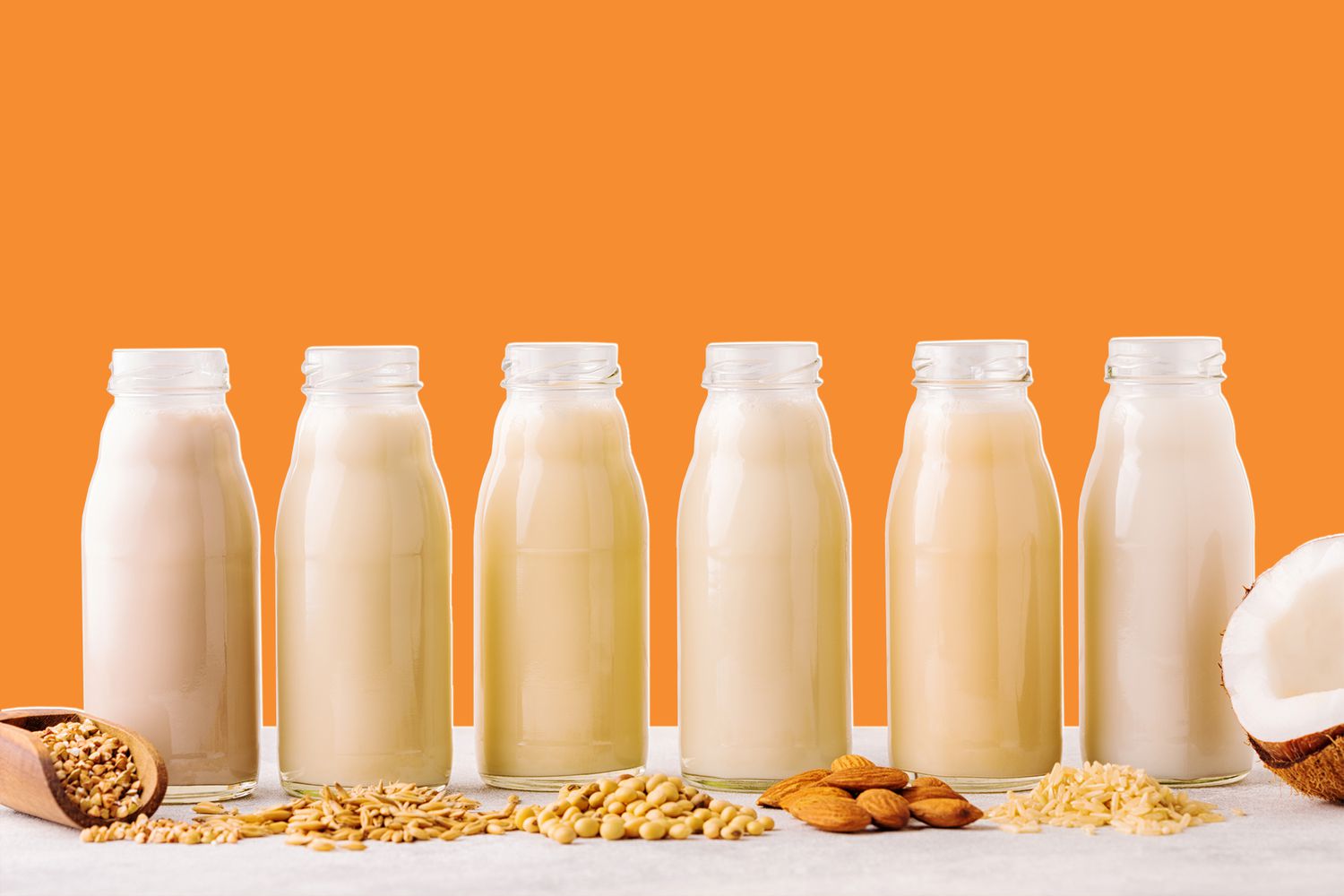
Understanding the process explains most of the nutrition. Brown rice is cooked, then treated with enzymes that break its starch down into shorter sugars. The liquid is strained, and oil and emulsifier are usually added to give it body.
Three consequences follow directly:
- The sweetness is not added sugar. It comes from the enzymatic breakdown of rice starch, so a product can be truthfully labelled “no added sugar” and still be sweet.
- The glycaemic index is high. Those short-chain sugars are absorbed quickly. This is the single most misreported fact about rice milk.
- Most of the fibre is strained out. Whole brown rice is high in fibre; brown rice milk is not.
Brown rice milk nutrition compared
| Per 100 ml | Brown rice milk | Cow’s milk (whole) | Soy milk | Oat milk |
|---|---|---|---|---|
| Energy | ~47–60 kcal | ~61 kcal | ~43 kcal | ~45 kcal |
| Protein | ~0.3 g | ~3.4 g | ~3.3 g | ~1.0 g |
| Fat | ~1.0 g | ~3.3 g | ~1.8 g | ~1.5 g |
| Glycaemic index | High | Low | Low | Moderate–high |
| Calcium | Only if fortified | ~120 mg | Only if fortified | Only if fortified |
| Common allergens | None | Dairy | Soy | Gluten (unless certified) |
Figures are typical values and vary widely by brand and by whether the product is fortified. Always read the specific label.
What brown rice milk is genuinely good for
1. The broadest allergen profile of any milk alternative
This is the real case for rice milk. It contains no dairy protein, no lactose, no soy, no nuts and no gluten. For someone managing several allergies at once, it is often the only plant milk left on the list — and that is a genuine, practical benefit that no other category matches.
2. Mild flavour that does not dominate
Rice milk is neutral and faintly sweet. It disappears into tea, coffee, cereal and baking in a way almond and oat milk do not. For cooking where you do not want the milk to be noticeable, that matters.
3. Naturally cholesterol-free and low in saturated fat
Like all plant milks, it contains no cholesterol. Its fat content is low and mostly unsaturated, usually from added sunflower or rapeseed oil.
4. Easy to digest
The enzymatic breakdown that raises the glycaemic index also makes it gentle on the digestive system. For people recovering from gastrointestinal illness, that is a legitimate use case.
Five claims about brown rice milk that are not true
- “It is a complete protein with all nine essential amino acids.” It is not. Rice protein is limited in lysine, and at ~0.3 g per 100 ml there is very little of it either way. Anyone relying on plant milk for protein should choose soy.
- “It has a low glycaemic index.” The opposite. Enzymatic hydrolysis of rice starch produces rapidly absorbed sugars, putting rice milk among the highest-GI plant milks.
- “It is high in fibre.” Whole brown rice is. The milk is strained, which removes nearly all of it.
- “It is a good source of calcium and vitamin D.” Only when fortified. Check the label — unfortified rice milk supplies almost none.
- “It has a lower environmental footprint than oat or almond milk.” Rice has a high water footprint and paddy cultivation is a significant source of methane. On greenhouse gas emissions, oat and soy generally score better.
Arsenic: why rice milk is not for young children
Rice takes up inorganic arsenic from soil and water more readily than other cereals, and that carries through into rice drinks. Because young children consume more relative to their body weight, food safety authorities treat this as a specific risk group.
The UK Food Standards Agency advises that children under five should not be given rice drinks as a substitute for breast milk, infant formula or cow’s milk. The EU sets maximum levels for inorganic arsenic in rice intended for infant and young-child food.
This does not make rice milk unsafe for adults, and it is not a reason to avoid it in tea or cooking. It does mean the common advice to give rice milk to lactose-intolerant children is wrong, and should be replaced with a calcium-fortified soy or oat drink, or a clinician’s recommendation.
Who should choose something else
- Children under five — see above.
- People managing blood glucose — the high GI makes it a poor default for diabetes or insulin resistance.
- Anyone using plant milk for protein — soy is the only plant milk comparable to dairy on protein.
- People relying on it for calcium — only if the product is explicitly fortified.

How to use brown rice milk
- In tea and coffee. Neutral enough not to compete. It will not froth like a barista oat milk.
- On cereal and in porridge. The mild sweetness works without added sugar.
- In baking. A direct 1:1 replacement for dairy milk in most recipes.
- In soups and sauces. Thinner than dairy, so reduce liquid slightly or add a thickener.
- Chilled, on its own. The traditional Vietnamese serve, nước gạo lứt, often toasted first for a nuttier flavour.
Frequently asked questions
Is brown rice milk healthier than cow’s milk?
Not on nutrient density. Cow’s milk has around ten times the protein and naturally contains calcium. Rice milk’s advantage is allergen profile — no dairy, lactose, soy, gluten or nuts — rather than superior nutrition.
Does brown rice milk contain protein?
Very little: roughly 0.3 g per 100 ml. It is also not a complete protein, being limited in lysine. If protein is the reason you are drinking plant milk, soy milk is the appropriate choice.
Is brown rice milk good for diabetics?
Generally not as a default. Its high glycaemic index means it raises blood glucose relatively quickly. Unsweetened soy or almond milk are better-suited options; discuss this with a clinician or dietitian rather than relying on a label claim.
Can babies and toddlers drink rice milk?
No, not as a milk substitute. The UK Food Standards Agency advises against rice drinks for children under five because of inorganic arsenic content. Rice milk is not a replacement for breast milk, infant formula or cow’s milk.
Is brown rice milk gluten-free?
Rice is naturally gluten-free, so plain rice milk is suitable for coeliac disease. Check the label for certification, since some products add barley-derived enzymes or are made on shared lines.
Does brown rice milk contain added sugar?
Often none is added, yet it still tastes sweet. The sweetness comes from the enzymatic breakdown of rice starch during production, which is why “no added sugar” on a rice milk label does not mean low sugar.
Brown rice milk at commercial scale
ACM Beverage manufactures plant-based and cereal milk drinks in Vietnam under OEM and private label terms, in facilities certified to ISO 22000, FSSC 22000 and HACCP, exporting to more than 40 countries. Formulation variables that matter most in this category are fortification level, degree of starch hydrolysis (which sets both sweetness and GI) and raw material origin controls for arsenic.
See the milk drinks range (16 SKUs) or the full beverage product range. To discuss a specific formulation or private label specification, contact our export team.
This article is general nutrition information, not medical advice. Consult a qualified healthcare professional about your own diet, and particularly about feeding infants and young children.