



Nata de coco is made by fermenting sweetened, slightly acidified coconut water with the bacterium Komagataeibacter xylinus, which grows a firm cellulose layer on the surface in 10–14 days. A typical home batch uses 1 litre of coconut water, 50–100 g of sugar, 20 ml of vinegar and 150 ml of starter liquid, left completely undisturbed at 28–30 °C.
Key facts at a glance
- What it is: bacterial cellulose — a chewy, translucent gel, not a jelly set with gelatine or agar.
- Origin: the Philippines, developed in 1949 as a coconut-water alternative to nata de piña.
- Time: 10–14 days fermentation, plus 1–2 days washing and soaking.
- The rule that matters most: do not stir or move the container. The layer forms only on a still surface.
- Nutrition: almost pure fibre and water; the calories come from the syrup it is stored in.

Ingredients
| Ingredient | Amount (per 1 L batch) | Purpose |
|---|---|---|
| Coconut water | 1 litre | Growth medium |
| White sugar | 50–100 g | Food for the bacteria |
| White vinegar (5% acetic acid) | about 20 ml | Lowers pH to 4–4.5, suppresses unwanted microbes |
| Starter liquid | 100–150 ml | Liquid from a previous batch, or a purchased nata starter |
Commercial producers also add a small nitrogen source such as ammonium sulphate to speed growth. At home it is optional.
Step-by-step method
- Sterilise a wide, shallow glass or food-grade plastic tray and all utensils with boiling water. Contamination is the most common cause of failure.
- Boil the coconut water with the sugar for 5 minutes, then let it cool to room temperature.
- Acidify by stirring in the vinegar. Aim for pH 4–4.5 if you have test strips.
- Inoculate by adding the starter liquid and mixing once.
- Cover with clean cloth or paper secured with a band. The bacteria need air, so do not seal it.
- Leave it still at 28–30 °C, away from direct sun, for 10–14 days. Do not stir, tilt or lift the cover to check.
- Harvest when the layer is 1–1.5 cm thick. Keep some of the liquid underneath as starter for the next batch.
- Wash and neutralise. Rinse, soak in fresh water for 1–2 days changing the water several times, then boil for 10 minutes to remove the vinegar taste.
- Cut and sweeten. Cut into 1 cm cubes, boil briefly in syrup (about 1 part sugar to 2 parts water) and refrigerate in the syrup.
Common mistakes
- Stirring during fermentation. Breaks the forming cellulose sheet; you get scattered fragments instead of a layer.
- Sealing the container. K. xylinus is aerobic and grows at the air surface.
- Skipping the vinegar. Without acid, moulds and other bacteria compete and often win.
- Too cold. Below about 25 °C growth slows sharply.
- Not washing long enough. The result tastes sour and vinegary.
Storage
Homemade nata de coco in syrup keeps about 1–2 weeks in the refrigerator. Discard it if it turns cloudy, slimy, pink or develops an off smell. Commercial nata de coco in sealed cans or cups is heat-treated and keeps 12–24 months unopened.
How to use nata de coco
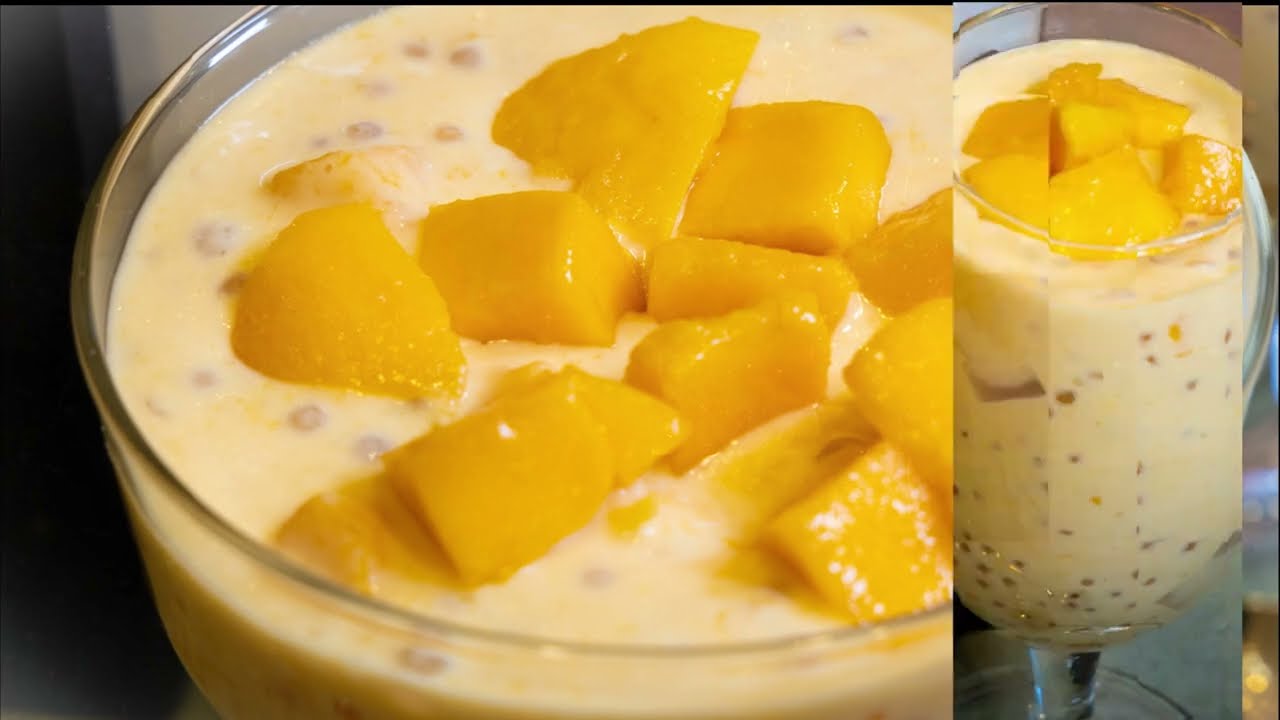
- Fruit salad: mix with mango, pineapple and a spoon of condensed milk; chill before serving.
- Milk tea: use drained cubes in place of, or alongside, tapioca pearls.
- Juice drinks: add 15–25% cubes by volume to fruit juice for texture.
- Desserts: fold into jellies, top shaved ice or Filipino halo-halo.
Nata de coco does not suit baking or long cooking in sauces; it toughens rather than softens.
Frequently asked questions
How long does it take to make nata de coco?
About 10–14 days of fermentation at 28–30 °C, plus 1–2 days to wash out the acidity and soak in syrup.
Can I make nata de coco without a starter?
Not reliably. The bacterium has to be introduced. Use liquid from a previous successful batch or a purchased nata starter culture.
Why did my nata de coco not form a layer?
The usual causes are stirring or moving the container, sealing it airtight, too low a temperature, or a weak starter.
Is nata de coco healthy?
Nata de coco itself is mostly water and insoluble fibre with very few calories. The syrup it is packed in supplies nearly all the sugar, so drain it if you are limiting sugar.
Is nata de coco gluten-free and vegan?
Yes. It is made from coconut water, sugar, vinegar and bacteria.
Can I use a sugar substitute?
Not for fermentation — the bacteria need real sugar to produce cellulose. You can use a sweetener in the final syrup.
Ready-made nata de coco drinks
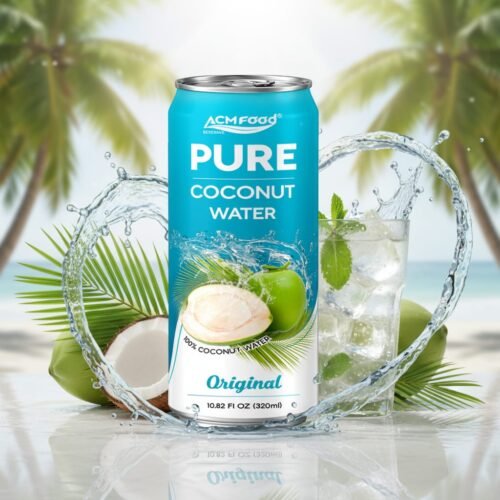
ACM Beverage produces fruit juices and coconut drinks with nata de coco in Vietnam for OEM and private label customers. See the 320 ml orange juice with nata de coco, the coconut water range, or our guides to nata de coco drink recipes and coconut drinks with nata de coco. To discuss a formulation, contact our export team.