

Chia seeds and basil seeds look similar at a glance, since both are tiny dark seeds that form a gel coating when soaked, but they come from different plants and behave differently in drinks. Basil seeds swell almost instantly into large, soft, jelly-coated beads, while chia seeds hydrate more slowly and form a thicker, slightly firmer gel with a gentle crunch at the centre.
This comparison focuses on what each seed does in a beverage: how quickly it gels, how it looks and feels, how it tastes, how it is prepared and how it performs in bottled and canned drinks. It also covers how to tell them apart and when it makes sense to combine them. The health benefits of basil seeds are covered separately in our article on basil seeds nutrition and evidence.
What is the difference between chia seeds and basil seeds?
Chia seeds come from Salvia hispanica, a plant in the mint family native to Central America, while basil seeds, often called sabja or tukmaria, come from sweet basil (Ocimum basilicum). Both produce a gel when wet, but basil seeds gel faster and swell more, while chia seeds gel more slowly and stay a little firmer.
The differences that matter most in a drink are:
- Gel speed: basil seeds gel within minutes; chia seeds take noticeably longer to reach full hydration.
- Swelling: basil seeds expand into larger translucent beads; chia seeds swell less and keep a more compact shape.
- Texture: basil seeds feel soft and slippery; chia seeds feel thicker, with a slight crunch at the core.
- Appearance: soaked basil seeds look like tiny frogspawn with a white halo; soaked chia seeds look like small grey-black beads in a thick gel.
- Raw use: chia seeds can be eaten dry or sprinkled; basil seeds are almost always soaked first.
How can you tell chia seeds and basil seeds apart?
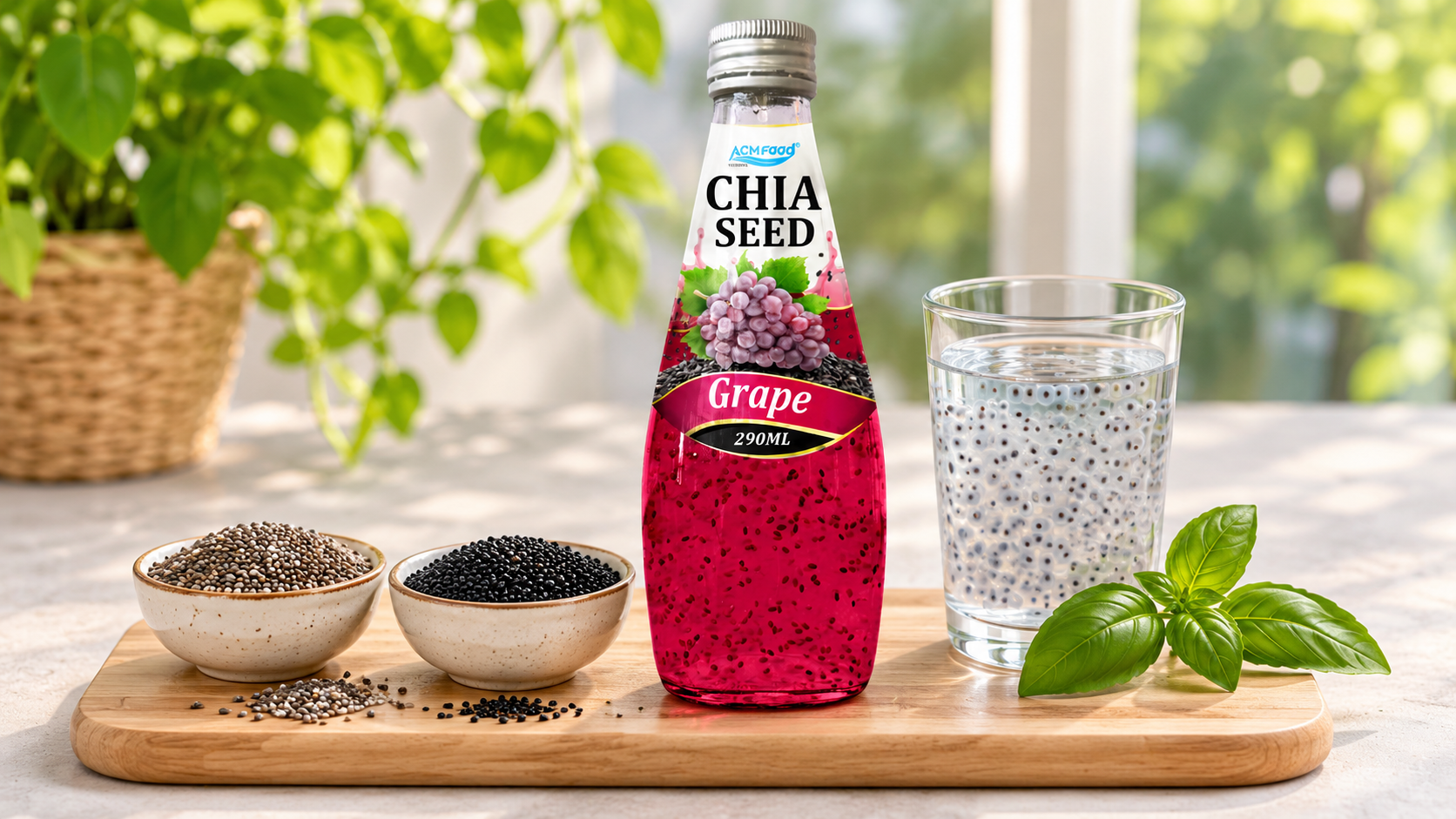
Dry chia seeds are oval and speckled in shades of grey, black, brown and white, while dry basil seeds are smaller, more teardrop-shaped and uniformly jet black. Once soaked, basil seeds develop a clear, thick halo around a black dot, while chia seeds form a more uniform gel.
A quick test is to drop a pinch of each into a glass of water. Within a minute or two, basil seeds will start to cloud with a white-grey gel coating, and within several minutes they will look like small translucent pearls. Chia seeds will still look mostly like seeds, with a thinner gel forming slowly over a longer period. Basil seeds also tend to clump together if not stirred, which is a useful tell-tale sign.
How fast do chia and basil seeds form gel?
Basil seeds form gel very quickly, typically reaching a usable texture within a few minutes in water, while chia seeds need longer, often a quarter of an hour or more, to fully hydrate. Temperature, seed-to-liquid ratio and stirring all affect timing.
The gel comes from mucilage, a polysaccharide layer in the seed coat that absorbs water. Basil seed mucilage swells rapidly and forms a thick, distinct coat. Chia mucilage hydrates more gradually and creates a gel that binds the liquid around it, which is why chia is used to thicken puddings and jams, while basil seeds are used more for suspended beads in drinks.
Practical points on preparing each:
- Soak basil seeds in plenty of water, stirring immediately to prevent clumping, then add them to the drink once swollen.
- Stir chia seeds into liquid, wait a few minutes, stir again to break up lumps, then leave to hydrate fully.
- Use more liquid than you think for basil seeds, since they swell considerably.
- For a drink rather than a pudding, keep chia ratios low so the liquid stays sippable.
| Feature | Chia seeds | Basil seeds |
|---|---|---|
| Plant | Salvia hispanica | Ocimum basilicum |
| Dry appearance | Oval, speckled grey, black, white | Smaller, teardrop-shaped, jet black |
| Gel speed | Gradual | Very fast |
| Swelling | Moderate | Large, distinct halo |
| Texture in drinks | Thicker gel, slight crunch | Soft, slippery beads |
| Flavour | Mild, faintly nutty | Almost neutral |
| Typical drink traditions | Chia fresca, smoothies, wellness drinks | Falooda, sherbets, Southeast Asian sweet drinks |
| Eaten dry | Common | Uncommon; usually soaked |
What do chia and basil seeds taste like?
Both seeds have very little taste of their own. Chia seeds have a faint nutty note, while basil seeds are nearly neutral and do not taste like basil leaves. In drinks, their role is texture; flavour comes from the juice, syrup or milk around them.
That neutrality makes both seeds flexible. They work with tropical fruit juices such as mango and passion fruit, with milk-based drinks and with lightly sweetened waters. Because they absorb some of the surrounding liquid, the gel coating carries the drink’s flavour, so every bead tastes of the juice it sits in.
How do chia and basil seeds feel in a drink?
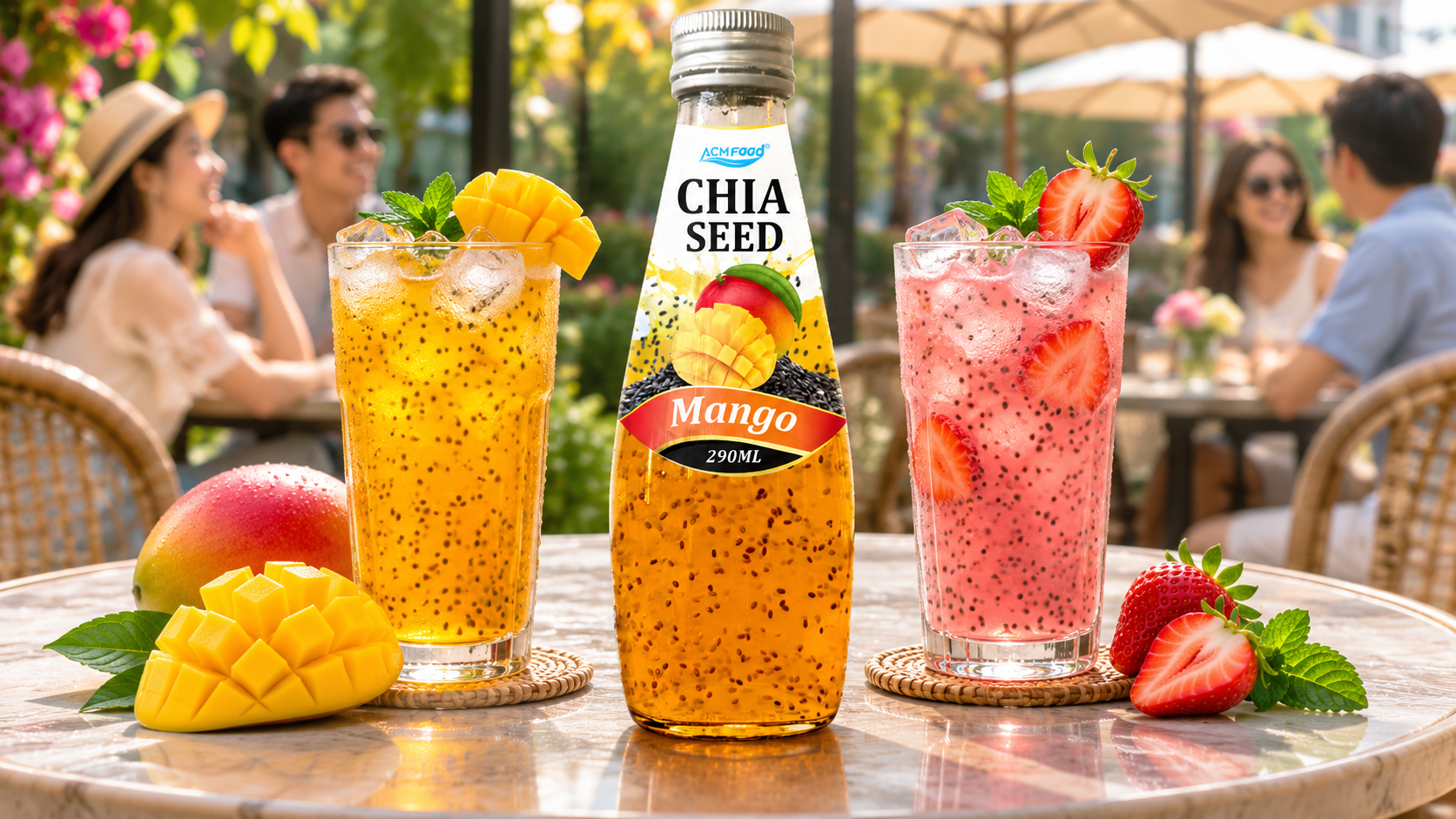
In a drink, basil seeds feel like tiny soft jelly beads that slide easily through a straw, while chia seeds feel thicker and slightly grainy, with a light crunch from the inner seed. Basil seeds make a drink feel lighter; chia seeds make it feel fuller and more substantial.
These differences guide how each seed is used:
- Basil seed drinks feel refreshing and playful, similar to a light jelly drink, and suit hot-weather refreshment.
- Chia seed drinks feel more like a light snack, with more body, and suit breakfast or on-the-go moments.
- Combined drinks balance the two: basil seeds add soft beads while chia seeds add body and a subtle crunch.
Seed density in the drink matters as much as the seed type. Too many seeds make a drink gloopy; too few make the experience feel thin. Commercial drinks aim for a level that is noticeable in every sip yet easy to drink from a straw or bottle.
How are chia and basil seeds used in traditional drinks?
Basil seeds have a long place in South Asian, Southeast Asian and Middle Eastern sweet drinks, while chia seeds are traditionally associated with Mexico and Central America. Each tradition shows how the seed’s texture is used.
Basil seeds appear in falooda, a layered dessert drink with rose syrup, milk and vermicelli popular in India, Pakistan and the Gulf. They are also stirred into lemonades, sherbets and rose drinks during hot months, and in Thailand, Vietnam, Malaysia and Indonesia they are added to sweet drinks with coconut, honey or fruit syrups. In these drinks the seeds act almost like a topping, giving soft beads in every sip.
Chia fresca, also known as agua de chía, is a simple Mexican-style drink of water, lime or lemon juice, a little sweetener and chia seeds. Here the seeds thicken the drink slightly and give it body rather than acting as distinct beads. More recently, chia has been widely used in smoothies, overnight oats and puddings.
These traditions help explain market preferences today. Shoppers who grew up with falooda or Thai basil seed drinks often recognise basil seed beverages instantly, while chia is the more familiar name in many Western wellness aisles.
What about nutrition?
Both chia and basil seeds are sources of dietary fibre, and chia seeds are also known for containing alpha-linolenic acid, a plant omega-3 fatty acid. However, the small amount of seeds in a typical drink means the nutritional contribution of the seeds depends heavily on the recipe.
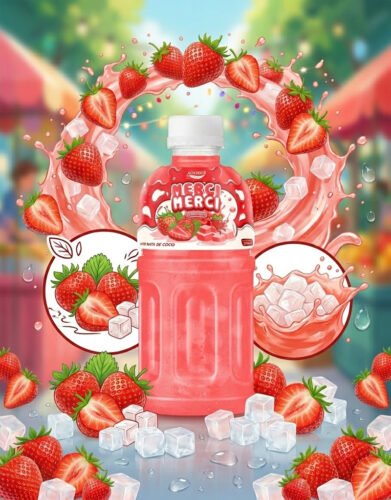
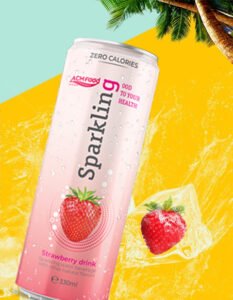
In a beverage, the overall nutrition is usually shaped more by the juice and sugar content than by the seeds. For this reason, the most useful information is the nutrition panel of the specific drink rather than figures for dry seeds per 100 grams. Readers interested in the detailed nutrition and evidence on basil seeds can find it in our dedicated article, and an example of chia in a juice format is covered in our review of strawberry juice with chia seeds.
How do chia and basil seeds perform in bottled and canned drinks?
Both seeds can be used in shelf-stable bottled and canned drinks when the recipe is designed for them. Basil seeds give a visible, bead-like suspension that shows well in clear bottles, while chia seeds thicken the drink slightly and help keep particles evenly distributed.
Points to consider for packaged drinks:
- Visibility: clear PET or glass bottles show basil seed beads, which is a strong shelf cue; cans hide them.
- Suspension: seeds should stay distributed rather than sinking or floating; recipe viscosity helps.
- Opening size: wide-mouth bottles make it easier to drink seed-heavy beverages comfortably.
- Heat treatment: the gel must hold up through processing and long storage.
- Shaking: many seed drinks are designed to be shaken gently before opening to redistribute seeds.
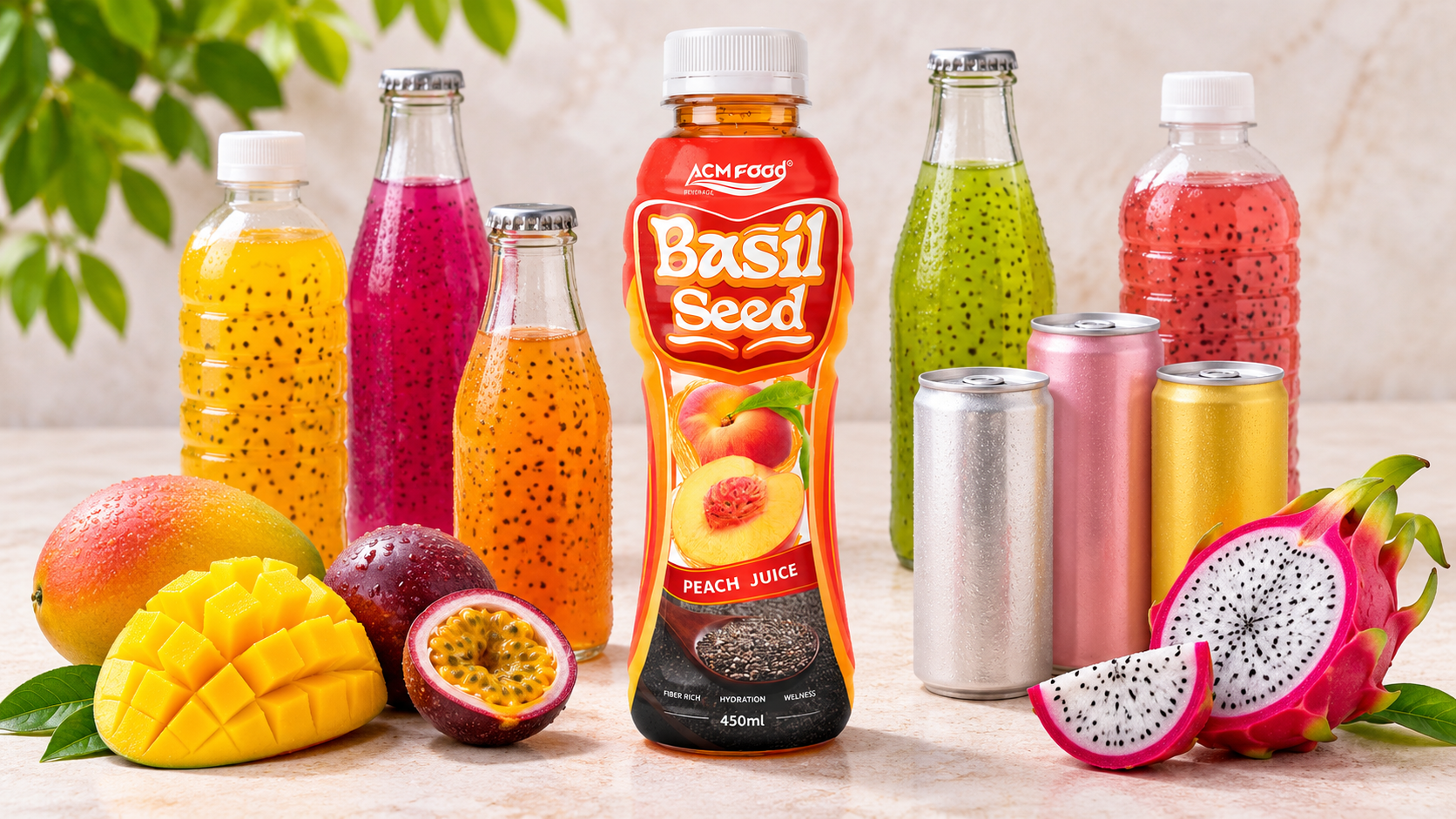
The ACM FOOD chia and basil seed range offered by ACM Beverage shows how format follows seed type. It includes Chia & Basil Seed Drinks, which combine both seeds, in 320ml sleek cans, 250ml slim cans, 350ml and 500ml PET bottles and 290ml glass bottles, plus Basil Seed Drinks with Juice in 450ml wide-mouth PET bottles in dragon fruit, grape, mango, passion fruit and peach. The product pages list an 18-month shelf life. You can browse the full chia and basil seed drink range.
Should you choose chia, basil or both?
Choose basil seeds for a light, refreshing drink with soft visible beads; chia seeds for a fuller drink with more body; and a blend when you want both texture and substance. The choice also depends on what consumers in the target market already know.
- South Asian, Southeast Asian and Middle Eastern consumers often know basil seeds from falooda, sherbets and sweet drinks.
- Consumers in North America, Europe and Australia are often more familiar with chia from wellness foods and smoothies.
- Blended seed drinks can bridge both audiences, offering familiar beads alongside a recognised ingredient name.
FAQ: chia seeds vs basil seeds
Are sabja seeds the same as chia seeds?
No. Sabja, also called tukmaria, is the name for basil seeds in South Asia. They come from sweet basil, while chia seeds come from Salvia hispanica. They look similar but gel and feel differently.
Which seed swells more?
Basil seeds swell more and faster, forming large translucent beads within minutes. Chia seeds swell more slowly and stay more compact.
Can you eat basil seeds without soaking?
Basil seeds are almost always soaked before eating, because dry seeds are hard and can clump. Chia seeds are more commonly eaten dry or lightly soaked.
Can chia and basil seeds be used together in a drink?
Yes. Combining them gives soft beads from basil seeds and extra body from chia seeds, which many people find pleasant in fruit drinks.
Chia vs basil seeds in summary
Chia and basil seeds both form gel, but basil seeds gel almost instantly into soft, visible beads, while chia seeds hydrate more slowly into a thicker, slightly crunchy gel. Both are mild in taste, so the drink provides the flavour. Basil seeds suit light, refreshing drinks in clear bottles; chia seeds suit fuller drinks; and blends combine both strengths.
If you would like specifications for chia and basil seed drinks in cans, PET or glass, the ACM Beverage team can help through the beverage enquiry contact page.