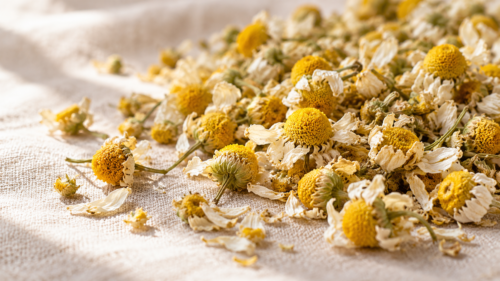


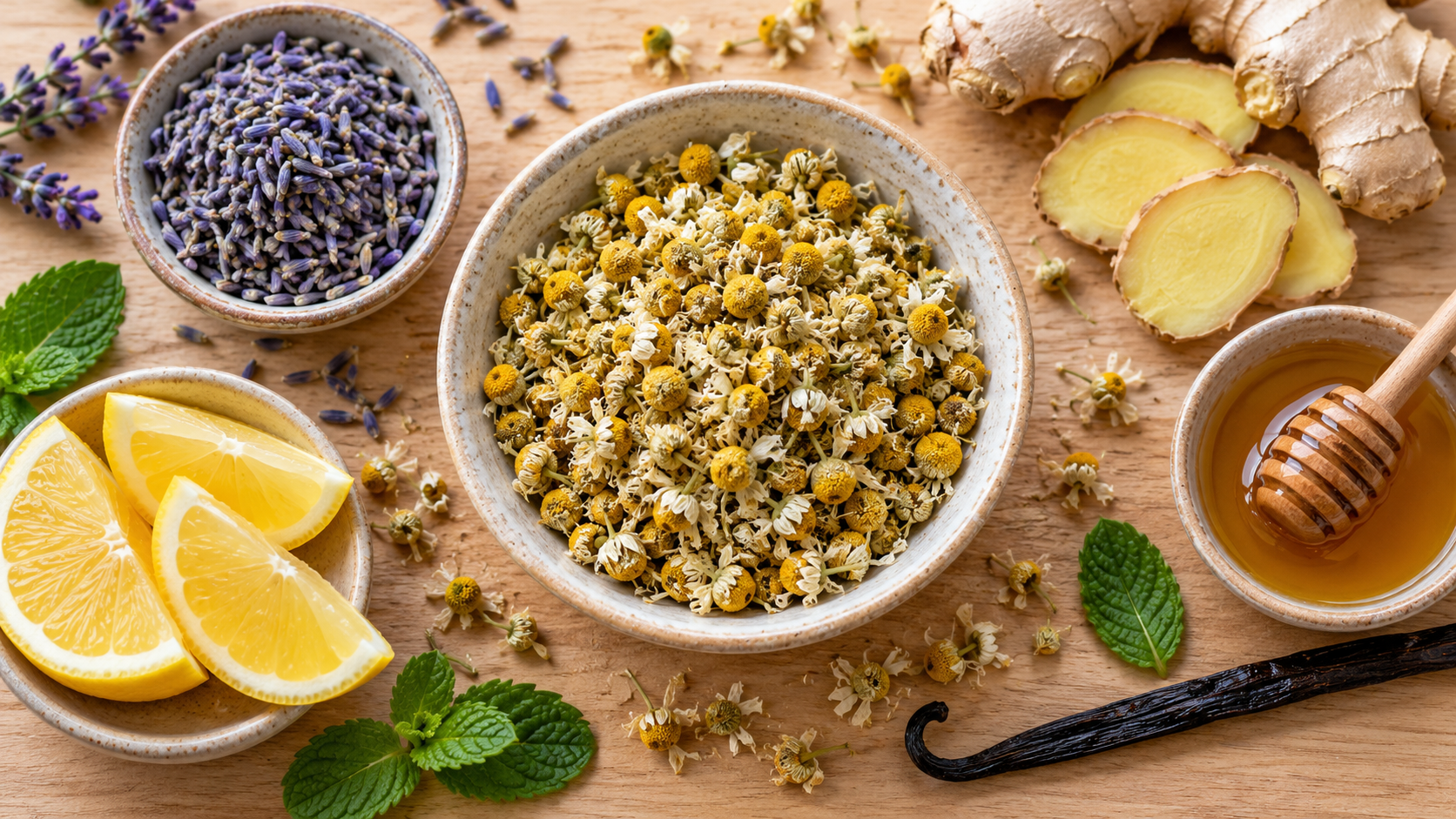
A chamomile herbal tea blend combines chamomile flowers with a second botanical or flavour, such as lavender, honey, ginger, lemon, mint or green tea, to create a drink with more character than chamomile alone. For ready-to-drink products, the partner ingredient decides almost everything: the taste, the colour, whether the drink contains caffeine, and which shoppers it will attract.
This article compares the most common chamomile pairings from a product development angle. Each blend is described by flavour, colour, a qualitative sweetness suggestion and the markets where it tends to fit. Single-ingredient chamomile, including pure and organic positioning, is covered in our guide to developing a ready-to-drink chamomile line. None of these blends is a current ACM Beverage SKU; they are development directions for brand owners working on a custom brief.
Why build a blend instead of pure chamomile?
A blend gives a chamomile drink a clearer identity on shelf and a wider flavour range for chilled serving. Pure chamomile is gentle and can taste thin when cold, while a partner ingredient adds aroma, body or freshness. Blends also let a brand create several SKUs from one base, which simplifies sourcing and production planning.
There is also a naming advantage. Shoppers search for “honey chamomile tea” or “lavender chamomile tea” because the combination tells them exactly what to expect. A distinct second flavour makes a product easier to describe in a single line on the can, and easier for a retailer to place in a range.
The trade-off is complexity. Each extra botanical has its own sourcing, stability and labelling requirements, and some combinations change the product category altogether. Adding green tea, for example, turns a caffeine-free herbal drink into a caffeinated tea.
Chamomile pairings at a glance
The table below summarises how each pairing typically behaves in an RTD. Sweetness is given as a qualitative direction only; the exact level should be set through sensory testing on processed samples.
| Blend | Flavour character | Typical colour | Sweetness direction | Caffeine |
|---|---|---|---|---|
| Lavender chamomile | Floral on floral, perfumed finish | Pale gold | Unsweetened to light | None |
| Honey vanilla chamomile | Rounded, dessert-like, soft | Gold to light amber | Light to medium | None |
| Honey chamomile | Warm, mellow, familiar | Gold | Light to medium | None |
| Ginger chamomile | Gentle floral with a warm, spicy edge | Gold, may be slightly hazy | Light | None |
| Lemon chamomile | Bright, fresh, citrus top note | Pale gold | Unsweetened to light | None |
| Chamomile green tea | Grassy tea body with floral finish | Yellow-green to gold | Unsweetened to light | Contains caffeine |
| Chamomile mint | Cool, clean, refreshing | Pale gold to light green | Unsweetened | None |
How does lavender change a chamomile tea?
Lavender adds a perfumed, slightly camphor-like note that makes chamomile taste more aromatic but can quickly become soapy if overdosed. Lavender chamomile tea works best with lavender as a background accent, so the drink still reads as chamomile first. Dosage control matters more here than in any other pairing.
Chamomile and lavender tea has strong appeal in premium and lifestyle channels, where shoppers associate the combination with calm evening rituals. That association should stay in imagery and occasion, not in claims about sleep or stress. For RTD development:
- Use culinary-grade lavender, typically Lavandula angustifolia, and confirm it is approved for food use in the target market.
- Start with a very low lavender level and increase in small steps; consumers tolerate less lavender in cold drinks than in hot ones.
- Pair with a hint of lemon or honey to soften the perfume, rather than raising sugar.
- Check the colour, since some lavender ingredients can add a grey or brownish tint.
Honey chamomile and honey vanilla chamomile
Honey is the most natural partner for chamomile, because the two share a warm, floral sweetness. A honey chamomile tea is often the easiest entry SKU for mainstream retail: familiar, mild and comforting. Honey vanilla chamomile tea goes one step further toward a dessert profile, with vanilla adding creaminess and roundness.
Two decisions shape these blends. The first is whether honey is the only sweetener or is combined with sugar or a reduced-sugar option, which affects both the label and cost. The second is how the honey is declared: “honey” in the ingredient list, “honey flavour”, or a combination. Brands that want a front-of-pack “made with honey” message need real honey at a level that justifies the claim under local rules.
Vanilla is usually supplied as a natural flavour or extract. Its sweetness perception lets the formula use less sugar for the same taste impression, which is helpful for reduced-sugar positioning. Honey can also darken over shelf life, so colour stability should be monitored, especially in clear bottles.
Is ginger chamomile tea a good fit for RTD?
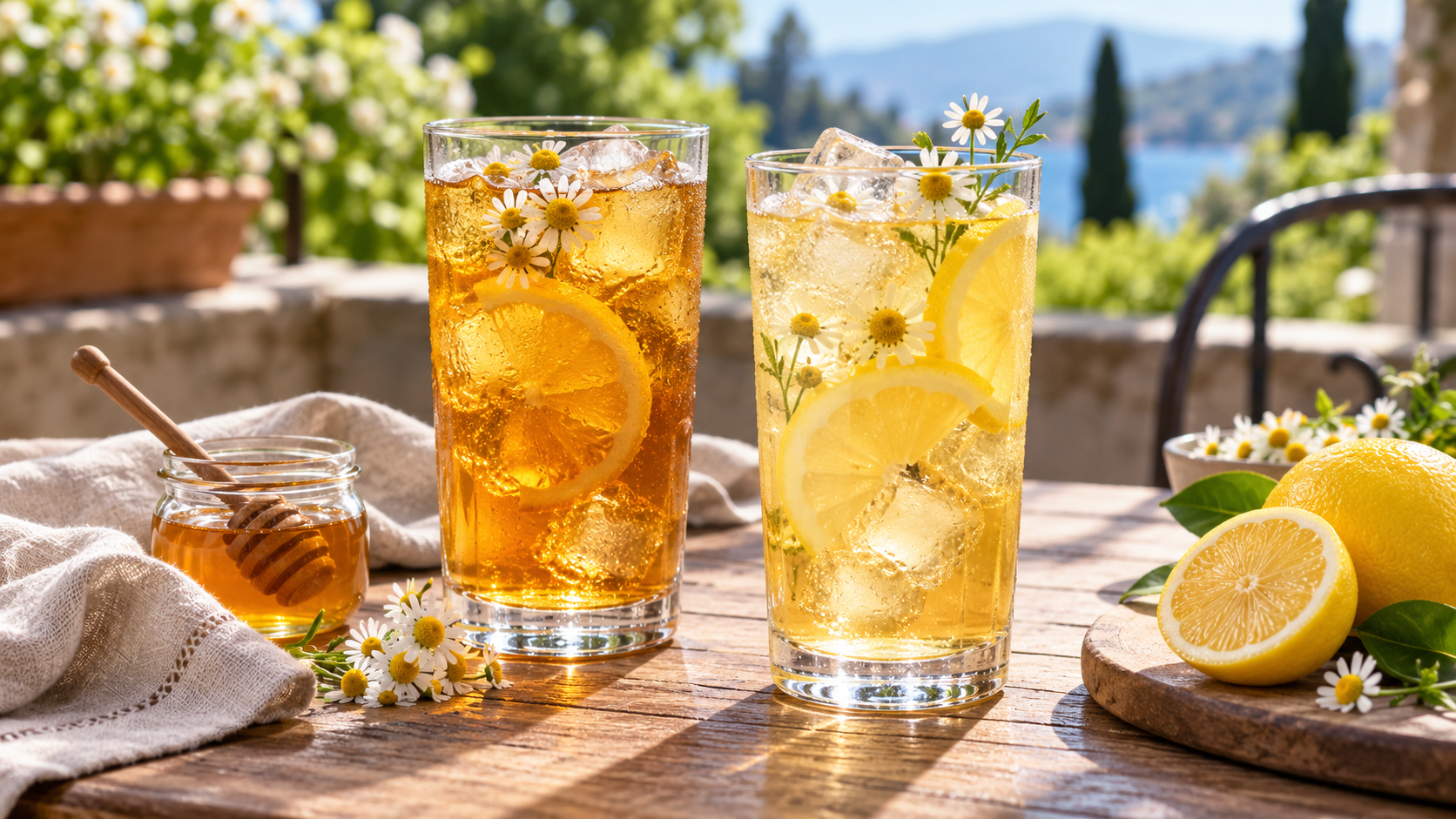
Yes, ginger chamomile tea is a practical RTD blend because ginger’s warmth survives heat treatment well and gives the chilled drink more presence. The key is balance: too much ginger hides chamomile completely, so most formulas keep ginger as a supporting note. Ginger can also add slight haze, which should be checked in transparent packs.
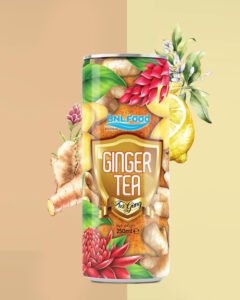
Ginger is already an established RTD flavour. Our article on the herbal ginger tea drink for private label explains how ginger is handled in cans, and that experience transfers directly to a chamomile blend. A honey and ginger drink already on the market is a useful benchmark for the warmth level shoppers accept.
When ginger is the partner, avoid digestive claims on the pack. Describe the taste instead: warming, gently spicy, smooth.
Lemon chamomile tea for a fresher profile
Lemon brings brightness that chilled chamomile often lacks. A lemon chamomile tea feels lighter and more thirst-quenching than honey blends, which makes it a strong candidate for summer, convenience and sports-adjacent channels where heavy sweetness is unwelcome.
Lemon also lowers the pH of the drink. That can be helpful for processing, because more acidic beverages can often use milder heat treatment, but it also changes the flavour balance and may require a small adjustment in sweetness. Lemon can come from juice, peel extract or natural flavour; juice adds authenticity but also cloudiness and a shorter flavour life, while peel extract and flavour give a cleaner top note.
Chamomile green tea: when caffeine is part of the story
Chamomile green tea combines the grassy body of green tea with chamomile’s floral finish. It suits brands that already sell green tea and want a softer, more aromatic variant. Because it contains caffeine, it cannot be positioned as a caffeine-free evening drink, and the label must say so where required.
The blend raises two technical points. Green tea is more sensitive to colour change than chamomile, often shifting from fresh yellow-green toward brown over time. Green tea also has more astringency, so chamomile’s softness can help round it out. For reference on how a floral green tea is handled in a slim can, see the jasmine green tea in a sleek 320ml can.
Chamomile mint tea for a cool, clean finish
Mint gives chamomile a cooling sensation and a cleaner finish, making chamomile mint tea one of the most refreshing caffeine-free blends. Spearmint is sweeter and softer; peppermint is sharper and more intense because of its higher menthol content. The choice affects how dominant mint becomes.
Mint aroma is volatile and can fade during processing and storage, so many formulas combine mint leaf extract with natural mint flavour. Unsweetened versions work well because mint creates a sense of freshness without sugar, which suits brands targeting reduced-sugar shelves.
Matching blends to markets and channels
There is no single best chamomile blend; the right choice depends on who buys the drink and where. Some general directions that brand owners often consider:
- Premium and specialty retail: lavender chamomile and pure-leaning profiles with minimal sweetness, often in sleek cans or glass.
- Mainstream supermarkets: honey chamomile and honey vanilla chamomile, which feel familiar and approachable.
- Convenience and on-the-go: lemon chamomile and chamomile mint, which feel refreshing and light.
- Tea-led ranges: chamomile green tea, where the brand already has a caffeinated tea audience.
- Warm-flavour markets: ginger chamomile, especially where ginger drinks are already familiar to shoppers.
Check local flavour preferences and labelling rules before choosing. A blend that performs well in one market may need a different sweetness level or ingredient declaration in another.
Development notes for any chamomile blend
Whatever the partner ingredient, the same disciplines apply. Fix the chamomile base first, then add the partner in steps, tasting at serving temperature after processing. Run colour and sediment checks in the final pack, and keep the specification and certificates for every botanical on file. Use descriptive taste and occasion language on the label instead of benefit claims, and keep the scope to finished drinks in cans and bottles; loose tea and bulk leaves are a different business.
Common mistakes when developing chamomile blends
Most failed blend projects fail for the same few reasons, and nearly all of them can be avoided by deciding the order of work before the first sample.
- Letting the partner take over: lavender, mint and ginger are all stronger than chamomile. If the drink no longer tastes of chamomile, the name on the can becomes misleading and the product loses its point of difference.
- Tasting warm samples: benchtop samples are often tasted soon after brewing. A cold drink tastes less sweet and less aromatic, so a blend tuned warm usually tastes flat when chilled.
- Adding sugar to fix balance: extra sugar can hide an unbalanced blend, but it moves the product away from reduced-sugar positioning and may trigger sugar taxes. Adjusting acidity or aroma is often the better fix.
- Skipping pack trials: the same liquid can age differently in a can and in a clear bottle. Colour and aroma checks should be done in the final pack.
Frequently asked questions about chamomile herbal tea blends
Which chamomile blend is easiest to launch first?
Honey chamomile is usually the easiest first launch because it is familiar, mild and widely accepted. Lemon chamomile is a strong second choice for markets that prefer lighter, less sweet drinks.
Does chamomile green tea contain caffeine?
Yes. The green tea component contains caffeine, so a chamomile green tea cannot be sold as caffeine-free. Pure chamomile and blends with herbs, honey, lemon or ginger are naturally caffeine-free.
Can lavender chamomile tea be sold without sugar?
Yes, and many premium versions are unsweetened. A small citrus note or honey flavour can soften lavender’s perfume without adding much sweetness, but the final balance should be confirmed through tasting.
Choosing your chamomile blend
The best chamomile herbal tea blend is the one that matches your channel and gives the drink a clear, single-line identity: honey for comfort, lemon or mint for freshness, lavender for a premium floral note, ginger for warmth, or green tea for a caffeinated range. To compare packaging, flavour and size options before writing a brief, use the beverage builder for cans and bottles. ACM Beverage can then review your target market, sweetness position and pack format and outline how a custom chamomile blend could be developed.