







Cabbage juice is the liquid pressed from raw cabbage, and the most honest thing to say about it is that it has a strong, sulphur-like smell and a vegetal taste that many people find challenging at first. This guide explains why it tastes that way, how to make it easier to drink, how much to start with and what to look for when you buy it in a bottle. It is written for curious drinkers and for beverage brands thinking about how consumers will actually use the product.
This article is general information about taste and use. It is not medical advice, and it does not describe cabbage juice as a treatment for any condition.
What does cabbage juice taste like?
Raw cabbage juice tastes green, slightly sweet and noticeably pungent, with a lingering note that some people compare to cooked cabbage or boiled eggs. The pungency comes from sulphur-containing compounds that form when the plant tissue is cut or crushed. Red cabbage tastes similar but slightly earthier, and green cabbage can taste a little milder and sweeter.
The strength of the taste varies with the type of cabbage, how fresh it is and how it is pressed. Older cabbage and heat both intensify the sulphurous note, which is why fresh, cold juice is easier to drink than juice that has been warmed.
Why does cabbage juice smell strong?
When cabbage is cut, enzymes convert natural compounds called glucosinolates into smaller, more volatile molecules that are responsible for the smell and sharp flavour. This is the same chemistry that gives mustard and horseradish their bite, only much gentler. Heating cabbage for a long time produces additional sulphur compounds, which explains the smell of overcooked cabbage.
Understanding the cause helps in practice: keep the juice cold, drink it soon after pressing, and combine it with ingredients that mask or balance the smell.
How can you make cabbage juice taste better?
You do not have to enjoy the plain taste. These approaches are widely used.
- Dilute it: mix with water or ice to soften the flavour.
- Add sweetness: apple, pear, pineapple or carrot juice rounds the taste.
- Add acidity: a little lemon or lime brightens and cuts the sulphurous note.
- Add freshness: cucumber or celery lightens the drink.
- Add warmth: a small piece of ginger gives a pleasant counterpoint.
- Serve it very cold: chilling reduces both smell and bitterness.
Start with a small amount of cabbage juice in a blend and increase gradually, which makes it easier to adapt.
Which pairings work best?
| Pairing | Effect | Good for |
|---|---|---|
| Apple | Sweetness and mild acidity soften the taste | Beginners |
| Carrot | Rounded sweetness and body | Those who like earthy flavours |
| Cucumber and celery | Freshness and a green profile | Green juice fans |
| Pineapple | Strong tropical acidity covers sulphur notes | Those who want a lighter, brighter drink |
| Lemon and ginger | Brightness and warmth | A small amount works in any blend |
Taste small samples before making a large batch, because the balance between cabbage and the other ingredients changes quickly.
How much cabbage juice should you start with?
There is no single correct amount, and this guide does not give a dose. A sensible approach for a curious drinker is to start with a small portion, mixed with other juices or water, and see how you feel before increasing. If you buy a bottled product, follow the serving size and storage instructions on the label.
If you have a medical condition, take regular medication or are unsure whether a new drink is suitable for you, ask a qualified health professional before changing your diet. A blog article cannot take your individual circumstances into account.
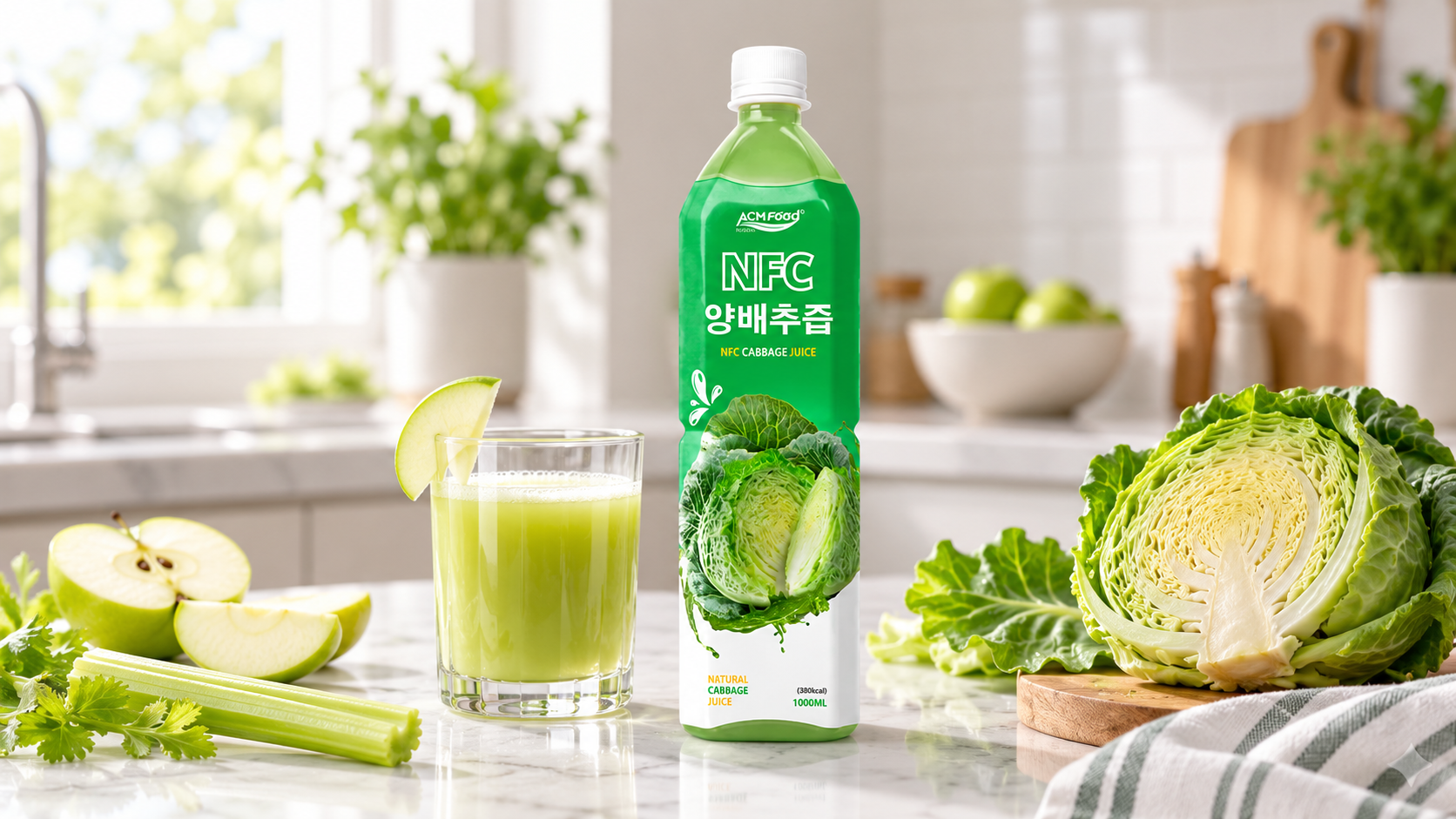
Should you drink it fresh or from a bottle?
Freshly pressed juice has the most vivid flavour but it changes quickly: the smell intensifies, the colour dulls and the taste can become harsher after a short time. Bottled juice that has been processed and stored correctly is more consistent and convenient, but the processing changes the flavour.
Look for these points on a bottle:
- Whether the product is pure cabbage juice or a blend.
- Whether it is chilled or shelf-stable, and the storage instruction.
- The ingredient list and the order of ingredients.
- The best-before date and the storage after opening.
- Whether the product has been pasteurised or treated in another way.
What about fermented cabbage juice?
Some products sold as cabbage juice are fermented, which gives a tangy, salty-sour taste and a different aroma. They are a separate kind of drink and are not interchangeable with raw juice. If you are trying one, read the label carefully, because salt content and flavour differ widely.
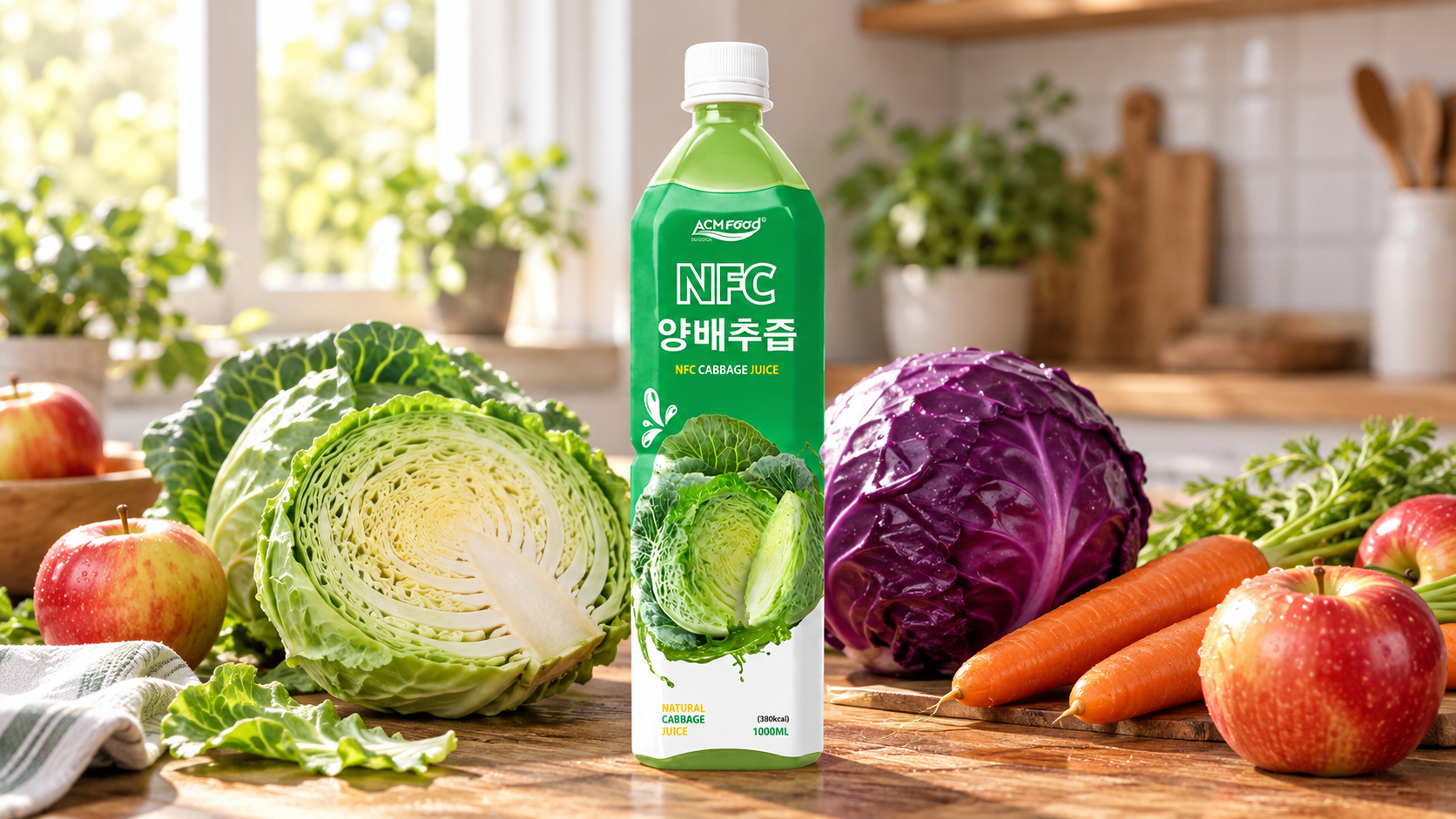
What does this mean for beverage brands?
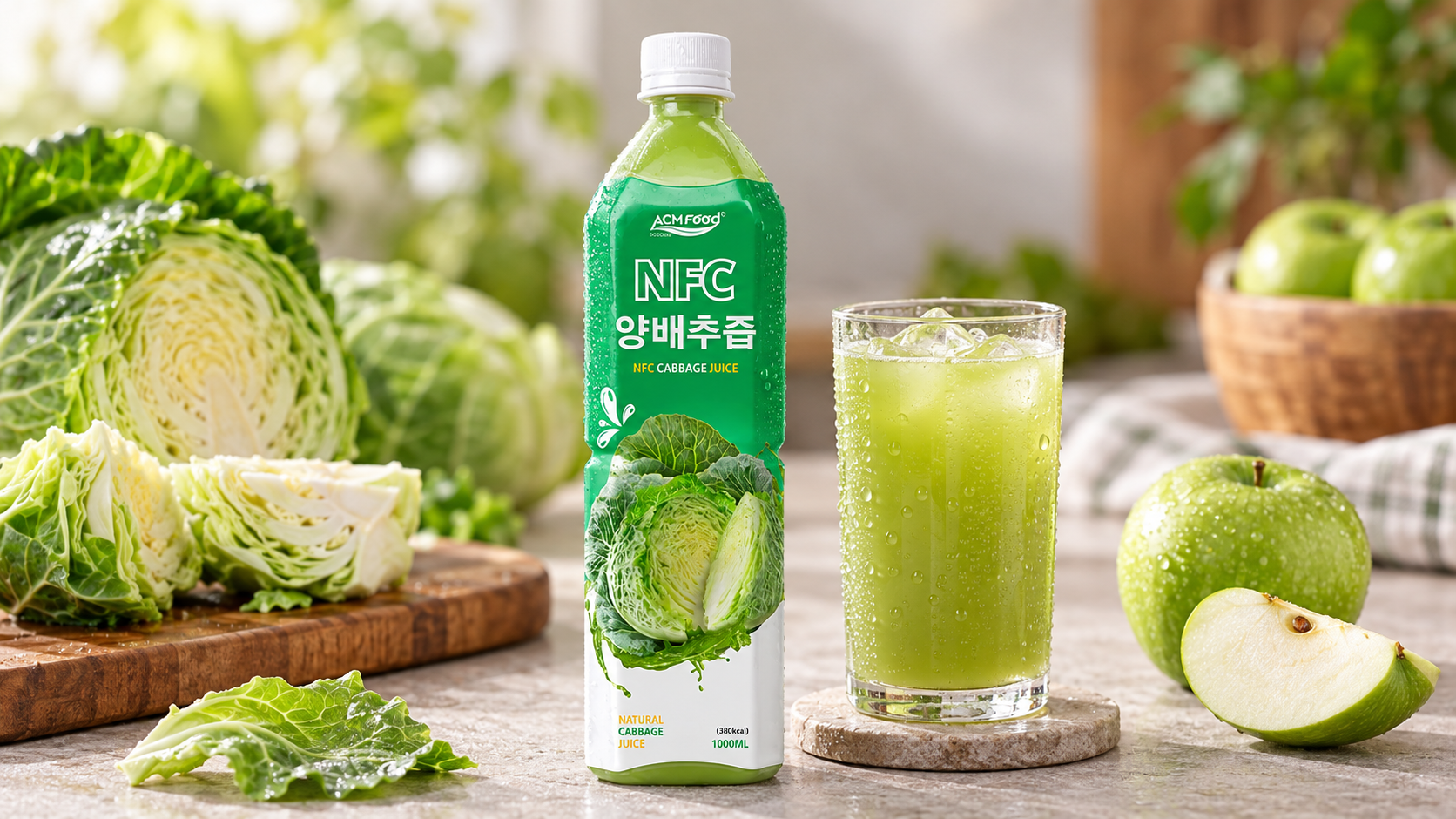
Cabbage juice is a polarising ingredient, so brands that use it usually combine it with fruit or vegetable juices, or position it as a niche, vegetable-forward product. Consumers need guidance on taste and serving, and the product should describe itself honestly. Key decisions include the blend ratio, the pack and the storage method. A can protects the juice from light, while a bottle shows colour but needs careful storage. ACM Beverage supplies finished drinks in cans and bottles, and the cabbage juice category shows how cabbage appears across the range.
Labels should describe taste, ingredients and the format. Avoid claims about treating or preventing conditions, because they need evidence and market-specific approval.
How should you store cabbage juice?
Keep fresh juice cold and drink it within a short time. For bottled products, follow the label: unopened shelf-stable products are stored as instructed, and opened products should be kept refrigerated and used by the date given. If a juice smells unusually strong, looks different from usual or has been stored warm, do not drink it.
Frequently asked questions
Why does cabbage juice smell like sulphur?
Cutting cabbage triggers a reaction that produces volatile sulphur compounds. Heat and age can intensify them.
Can you mix cabbage juice with fruit juice?
Yes. Apple, pineapple and carrot are common choices, and a little lemon or ginger helps balance the taste.
Is red cabbage juice different from green?
Red cabbage has a slightly earthier taste and a purple-red colour, and green is a little milder. Both share the same pungent character.
Is cabbage juice a medicine?
No. It is a drink. For any health concern, speak with a qualified professional.
Summary
Cabbage juice is easier to drink when it is cold, diluted or blended with sweet and acidic partners, and when you start with small amounts. It is a flavour that rewards patience and honest description. If you are developing a finished cabbage drink for your own label, ACM Beverage can discuss can and bottle formats and recipe options once you share your brief.