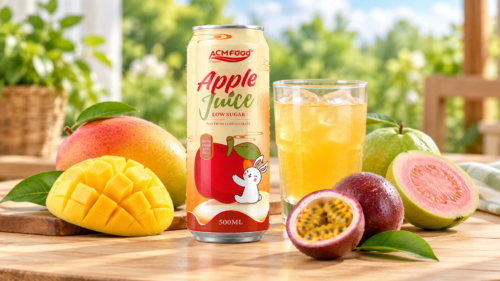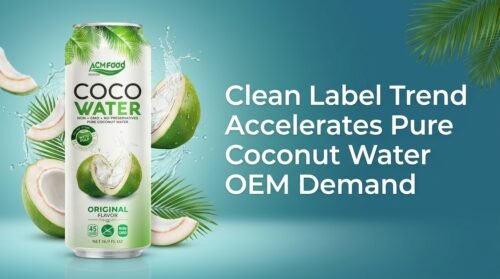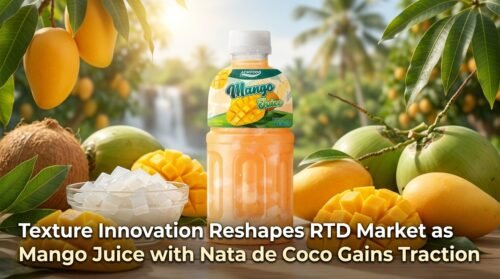

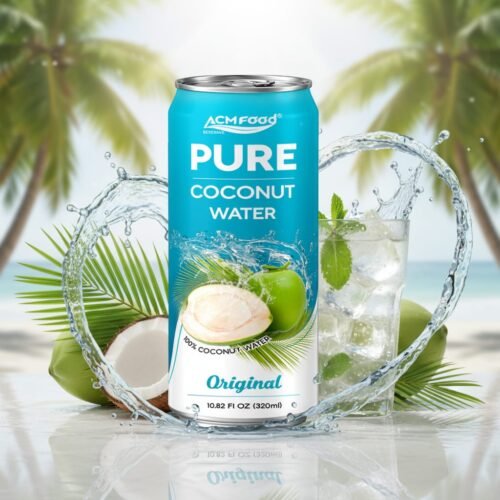
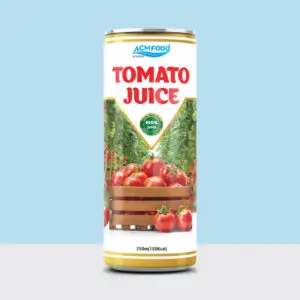
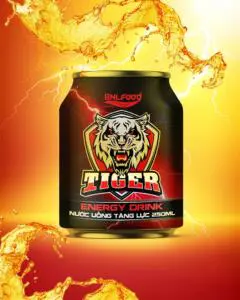
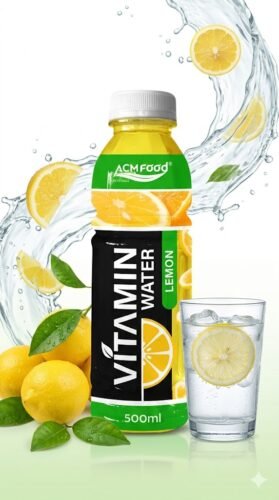
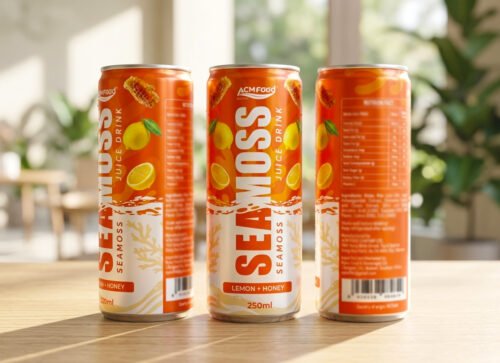
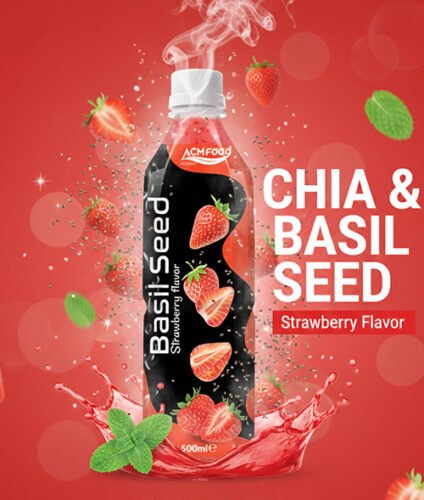
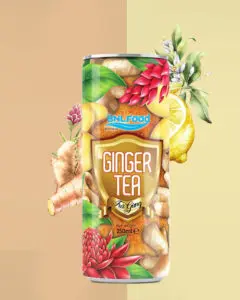
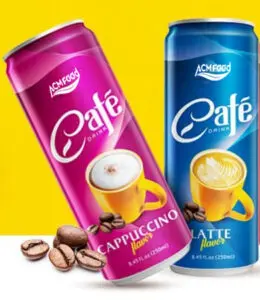
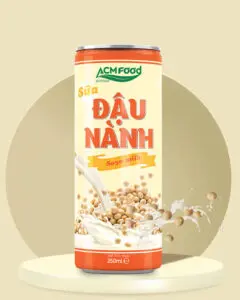
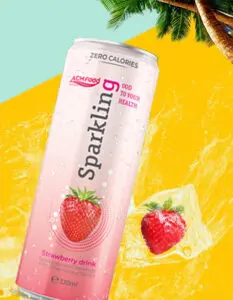
Private label beverage products are finished drinks that a manufacturer has already formulated and produced, which a brand then sells under its own name. The recipe, the process and the packaging specification exist before your project starts. Your decisions concentrate on selection, branding and commercial terms rather than on building a drink from nothing.
That distinction matters more than it first appears. Choosing an existing formula is not simply a cheaper version of custom development. It is a different commercial route with a different risk profile, a different timeline and a different set of things you are allowed to change. This guide sets out what that route actually gives you, so you can judge whether it fits your launch before you request a quotation.
What does private label mean for a beverage brand?
Private label means you sell a manufacturer’s existing product under your own brand. The formula, production process and quality controls stay with the manufacturer. What becomes yours is the brand name, the label artwork, the market positioning and the customer relationship. You are buying a finished product plus the right to put your identity on it.
This is worth separating from two neighbouring terms that buyers often use interchangeably. White label usually describes a generic product offered to many buyers with minimal differentiation. Custom development, sometimes called contract manufacturing or full OEM, means a formula is created or substantially reworked to your brief. Private label sits between them: an established product, adapted to your brand, with limited but real room to adjust.
Existing formula or custom development: which route fits?
The honest answer depends on whether your differentiation lives in the liquid or in the brand. If your competitive advantage is a genuinely novel taste, texture or functional position, an existing formula will constrain you. If your advantage is distribution, design, price position or an underserved customer segment, starting from a proven formula removes work that does not differentiate you anyway.
| Consideration | Existing formula (private label) | Custom development |
|---|---|---|
| Formulation control | Limited, within defined parameters | Full, subject to technical feasibility |
| Time to first production | Shorter, no formulation stage | Longer, includes sampling cycles |
| Sampling | Taste an existing product before committing | Iterate prototypes toward a target |
| Shelf life data | Already established for the product | Requires validation on the new formula |
| Main risk | Product may resemble competitors | Development effort with no guaranteed outcome |
| Best suited to | Brand-led or distribution-led launches | Product-led launches with a specific target |
Neither route is inherently superior. A brand entering a competitive retail category with strong design and a clear price position often succeeds faster with an existing formula. A brand whose entire proposition rests on a claim no current product supports has little choice but to develop.
What can you still change on an existing formula?
More than most first-time buyers expect, and less than the word custom implies. The liquid itself is the least flexible element because it carries validated shelf life and process parameters. Everything wrapped around it is usually open to discussion.
- Label and artwork. Your design, your brand name, your claims within the limits of the destination market’s labelling rules.
- Packaging format and size. Whether a given formula can run in an alternative can or bottle size depends on the filling line and the product’s process requirements, so this is a question to raise early rather than assume.
- Carton and outer packaging. Case count, carton print and pallet configuration are commonly adjustable and affect your landed cost more than buyers expect.
- Flavour selection within a range. Choosing from flavours a manufacturer already produces is usually straightforward, which is different from requesting a flavour that does not yet exist.
- Sweetness or ingredient variants where they already exist. If a reduced sugar version of a product is already in production, switching to it is a selection decision, not a development project.
The practical rule is that changes already proven on the line are quick, and changes that require new validation are not. Asking which category your request falls into will tell you more about your timeline than any general lead time estimate.
Where the commercial advantage actually comes from
Buyers often assume the saving is in unit price. In practice the more meaningful advantage is the removal of the development stage entirely. A formula that is already produced has already absorbed its recipe work, its stability testing and its process tuning. You are not paying for that again, and more importantly you are not waiting for it.
The second advantage is evidential. You can taste the actual product before committing, not a prototype that may shift between sampling and production. For a brand with limited capital, the ability to evaluate exactly what will arrive in the container removes a category of risk that custom projects carry until the first production run.
The third is inventory logic. Because the manufacturer produces the formula for several customers, minimum quantities are typically quoted against an established production schedule rather than a dedicated run. Confirm the exact figures in your quotation, since they vary by product, packaging format and destination.
How to evaluate a private label product properly
Tasting is necessary but not sufficient. A product that tastes right in your office can still fail commercially if it does not match the shelf it is meant to compete on.
- Compare the sample against the products it will sit beside, not in isolation. Relative sweetness and body matter more than absolute impressions.
- Check the ingredient declaration against the labelling rules of your destination market before you fall in love with a product.
- Ask what the stated shelf life is based on and under what storage conditions it was established.
- Confirm which packaging formats the formula currently runs in, rather than which ones are theoretically possible.
- Request the specification sheet and read the tolerance ranges, not only the headline values.
- Clarify who is responsible for label compliance in the destination market, since this is a frequent source of dispute.
Working through these points before requesting a price avoids the common pattern of negotiating hard on a product that later turns out to be unsuitable for the target market’s regulations.
Questions to settle before you request a quotation
A clear brief produces a useful quotation. A vague one produces a generic price list that tells you little. Before contacting a supplier, decide your destination market and its labelling regime, your packaging format and size, your target retail price band, your expected first order volume and your launch date.
Those five answers determine almost everything else. They tell the manufacturer which of its existing formulas are genuinely available to you, which packaging options are realistic and whether your timeline is compatible with production scheduling. Suppliers such as ACM Beverage in Vietnam produce across several drink categories, and the more precise your brief, the faster the shortlist narrows to products you can actually use.
What a useful quotation should contain
A quotation that lists only a unit price is difficult to act on, because unit price is rarely where private label projects go wrong. The figures that determine whether a launch is viable sit around it, and a supplier able to state them clearly is usually one who has run the process before.
Ask for the price to be broken down against a defined packaging format, a defined case configuration and a defined delivery term. Without those three anchors, two quotations cannot be compared, because each may assume different freight responsibility and different pack counts.
- Delivery term. Whether the price is ex works, free on board or delivered changes the number substantially and moves risk between the parties.
- Case and pallet configuration. Units per case and cases per pallet determine your freight cost per unit, which can outweigh small differences in unit price.
- Minimum order quantity. Stated per SKU and per format, since a range of several flavours may carry a minimum for each rather than one across the range.
- Artwork and setup costs. One-off charges that apply per design, and whether they recur when artwork is revised.
- Lead time from artwork approval. Measured from approval rather than from enquiry, since approval is usually the step that slips.
- Payment terms. The deposit structure and what triggers the balance, which affects your working capital more than the unit price does.
Treat a supplier’s willingness to answer these precisely as information in itself. Vague answers at quotation stage tend to become disputes at shipment stage, and the questions are straightforward for a manufacturer that regularly serves export customers.
What if no existing formula fits?
That outcome is useful rather than disappointing, because it converts a vague preference into a defined gap. If none of the available products match your target, you now know precisely what is missing, and that description is the starting point for a development brief.
Before concluding that nothing fits, check whether the objection is to the liquid itself or to how it is presented. A product rejected because the packaging format is wrong, the flavour name is unappealing or the sweetness sits slightly high may still be viable, since two of those three are adjustable without touching the formula. Only a genuine sensory or compositional gap justifies moving to development.
Frequently asked questions
Is a private label product identical to what other brands sell?
Not necessarily. The base formula may be shared, but flavour selection, packaging format, size and positioning often differ enough that two brands using the same manufacturer do not compete directly. Where a category is crowded, ask specifically about differentiation before committing.
Can I move from private label to a custom formula later?
Yes, and this is a common progression. Launching on an existing formula establishes demand and cash flow, which then justifies the investment in a custom product. Treat the first route as a way to earn the right to the second rather than as a permanent decision.
Does private label mean lower quality?
No. Quality is determined by the manufacturer’s standards and the specification you agree, not by whether the formula was created for you. A well-run existing formula with established stability data can be more reliable than a rushed custom development.
Who owns the formula?
In a private label arrangement the manufacturer retains the formula, since it predates your project and is typically supplied to other customers. Ownership questions belong in custom development discussions, and should be settled in writing before development begins.
Choosing the route that matches your launch plan
Private label beverage products suit brands whose advantage lies in positioning, design or distribution rather than in the liquid itself. The route removes the formulation stage, lets you evaluate the finished product before committing, and concentrates your effort on the parts of the business that actually differentiate you. Its limitation is equally clear: if your proposition depends on a drink that does not yet exist, an existing formula will not deliver it.
The most useful next step is a specific brief rather than a general enquiry. Define your market, packaging format, price position and timeline, then ask which existing formulas match. If none do, that answer is itself valuable, because it tells you that development, not selection, is the route your product requires. You can discuss a product brief with our team once those parameters are settled. For context on how ingredient and positioning trends are shaping current demand, the shift toward clean label formulations in hydration products shows how quickly the available formula pool can change.