














Private-label tomato juice is made by washing and crushing ripe tomatoes, heating the pulp to set colour and texture, refining out skins and seeds, then seasoning, sterilising and canning it. The key product decisions are sodium level, texture and blends. ACM produces tomato juice in 250 ml (8.5 fl oz) aluminium cans with a 24-month shelf life for OEM buyers.
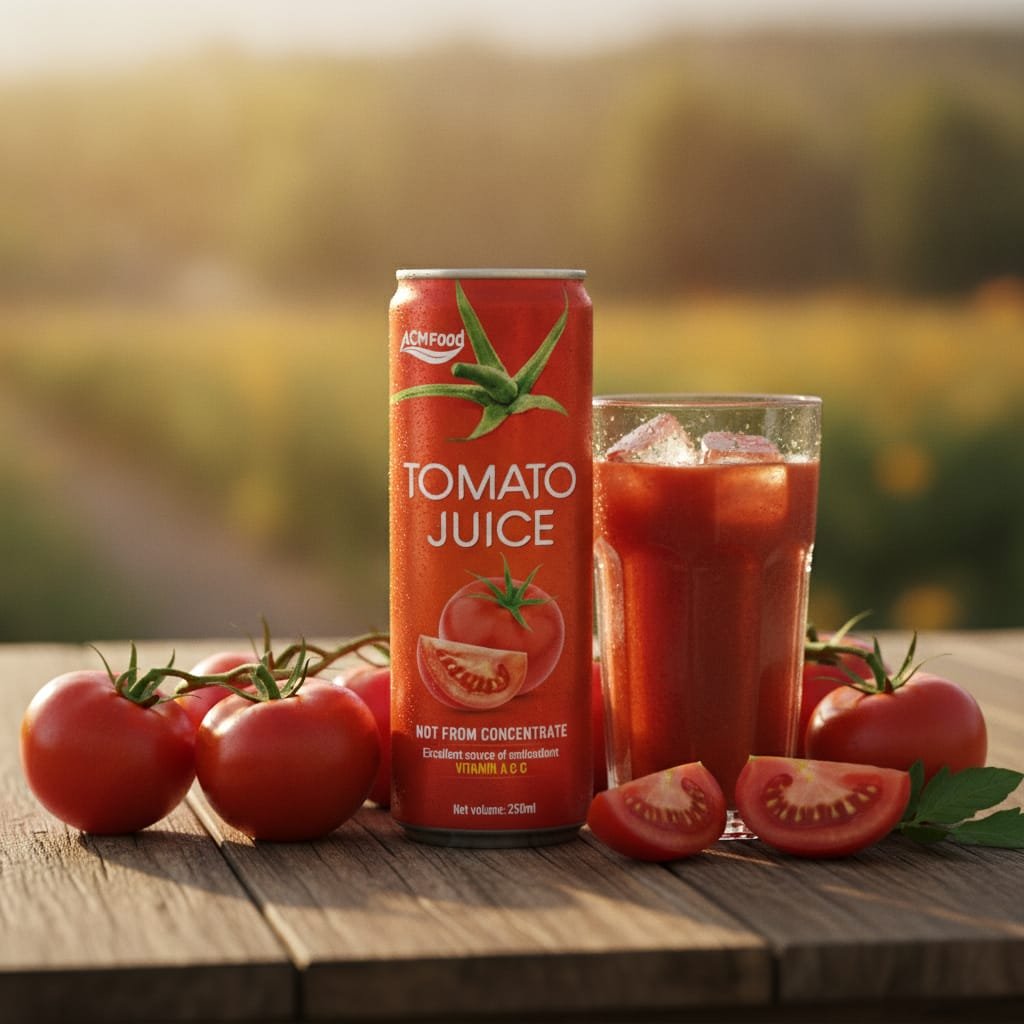
How is tomato juice produced?
- Sorting and washing: ripe, deep-red tomatoes are selected.
- Crushing and hot break: tomatoes are crushed and heated quickly, which inactivates enzymes and gives a thicker juice.
- Refining: skins and seeds are removed through fine screens.
- Seasoning: salt or other ingredients are added to the recipe.
- Sterilisation and filling: tomato juice is low-acid for a juice, so it needs a validated heat process before canning.
- Quality checks: colour, Brix, salt, viscosity and microbiology are tested.
Heat processing also makes lycopene easier to absorb than from raw tomatoes. For the consumer health side, see tomato juice benefits.
What can be customised?
| Option | Choices | Why it matters |
|---|---|---|
| Salt | Unsalted, low salt, regular | Salted juice can reach 200–400 mg sodium per 100 ml; low-salt suits health-focused markets |
| Texture | Thin or thick | Thicker juice feels richer; thinner is more refreshing |
| Blends | Tomato-carrot, tomato-celery, mixed vegetable | Broader flavour and nutrient story |
| Seasoning | Plain, spicy, with lemon | Spicy versions suit cocktail mixers |
| Pack | 250 ml can, 330 ml, PET | Single-serve vs multi-serve |
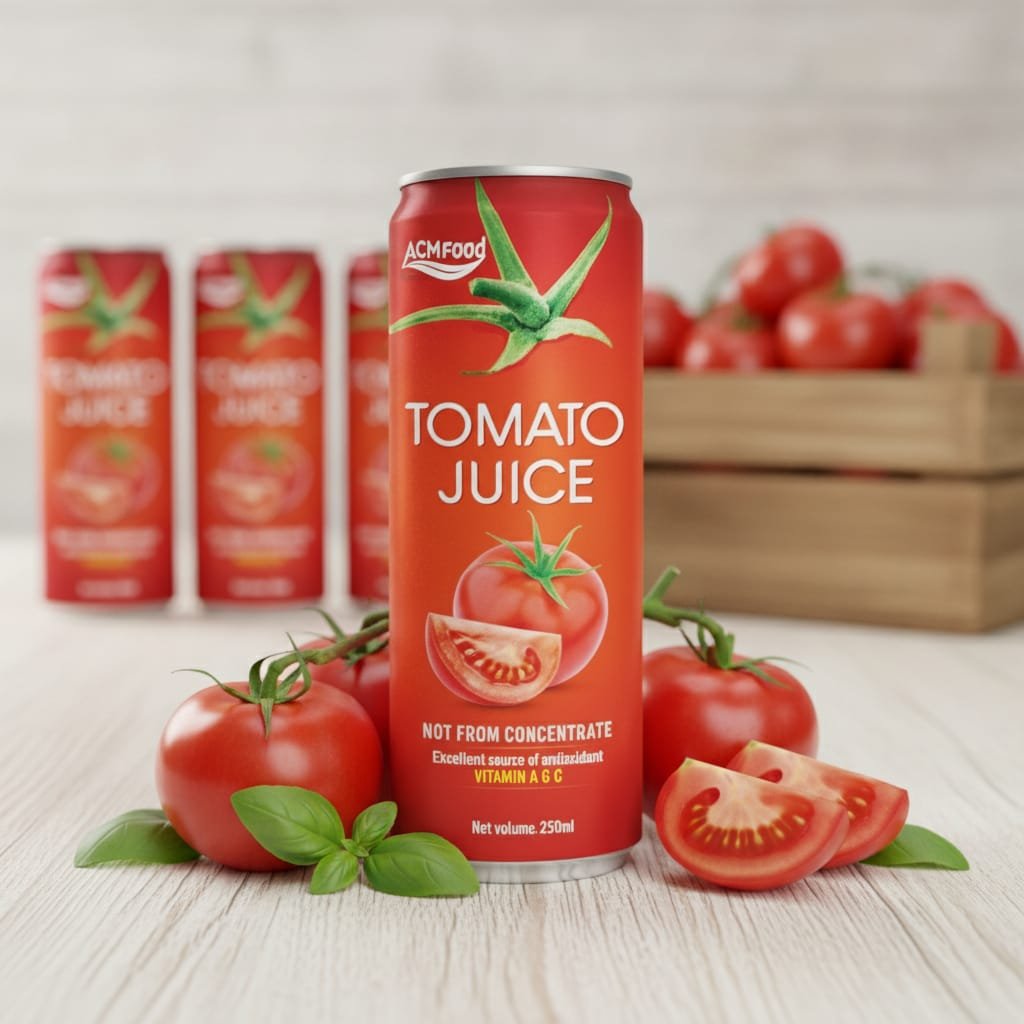
Product specifications
| Item | Detail |
|---|---|
| Product | ACM Tomato Juice 250ml |
| Category | Vegetable juice |
| Packaging | Aluminium can |
| Shelf life | 24 months |
| Certifications | FSSC 22000, HACCP, ISO 22000 |
Where does tomato juice sell?
- Japan and South Korea: strong demand for unsalted tomato juice as a daily health drink.
- Europe and North America: breakfast juice and cocktail mixer (for example Bloody Mary).
- Airlines and hotels: a classic in-flight and minibar option.
- Health and natural stores: low-sugar vegetable drinks.
See the vegetable drinks range and beetroot juice OEM.
Frequently asked questions
Is tomato juice low in sugar?
Yes. It has about 2.5–3.5 g of natural sugar per 100 ml, far less than fruit juice.
Should private-label tomato juice be salted?
It depends on the market. Unsalted or low-salt versions suit Japan, Korea and health channels; lightly salted suits cocktail and food-service use.
How long does canned tomato juice last?
ACM’s 250 ml can has a 24-month shelf life unopened.
Can tomato juice be blended with other vegetables?
Yes. Carrot, celery and beetroot are common blends.






