














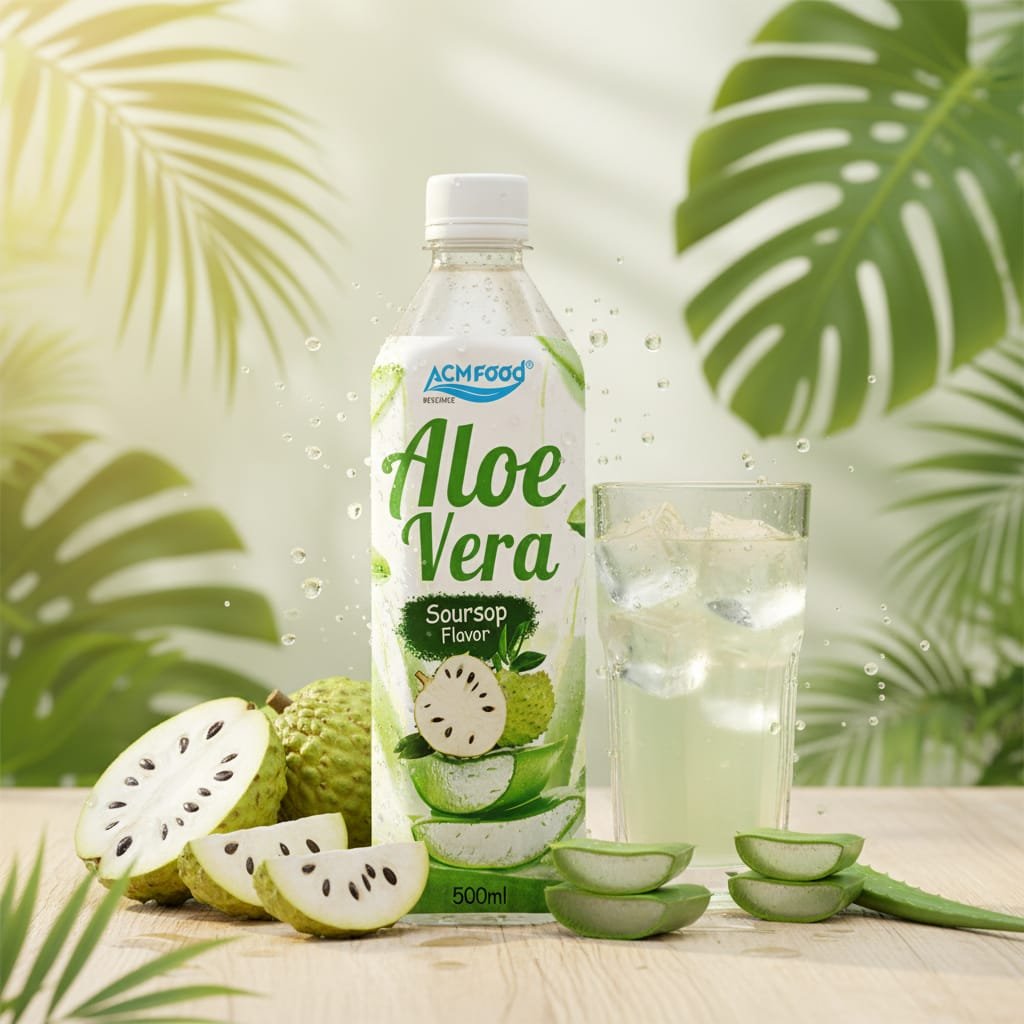
Aloe vera juice with soursop is a drink of aloe gel pieces in a sweetened base flavoured with soursop, the creamy, pineapple-strawberry-tasting tropical fruit. The key safety requirement is that the aloe is decolourised with aloin removed; the EU bans hydroxyanthracene derivatives such as aloin in food under Regulation 2021/468. Raw soursop provides about 21 mg of vitamin C per 100 g.
Key facts at a glance
- Aloe gel (inner leaf) is used; the latex layer containing aloin must be removed.
- Soursop (Annona muricata) per 100 g: 66 kcal, 20.6 mg vitamin C, 3.3 g fibre (USDA).
- “Soursop flavour” and “soursop juice” are different; check whether real fruit is listed.
- Sugar in aloe drinks typically runs 8–12 g per 100 ml.
- Health claims for aloe and soursop are not authorised in the EU.
What the drink contains
| Component | Role | Nutritional contribution |
|---|---|---|
| Aloe vera gel pieces | Texture, visual appeal | Mostly water; very little nutrition |
| Soursop juice or purée | Flavour, body | Some vitamin C and potassium, depending on % |
| Soursop flavouring | Flavour only | None |
| Sugar or sweetener | Balance | Calories if sugar |
Safety points
Aloin in aloe vera
Aloin is a laxative compound found in the yellow latex just under the leaf skin. Whole-leaf, non-decolourised aloe extract was classified as a possible human carcinogen (IARC Group 2B) after animal studies. Food-grade aloe drinks should use inner-leaf gel, filtered to remove aloin. Ask suppliers for aloin test results; the EU standard is effectively zero.
Annonacin in soursop
Soursop, especially its seeds and leaves, contains annonacin, a compound linked in studies from the Caribbean to atypical parkinsonism among people consuming large amounts of soursop products over long periods. Occasional drinks made from seed-free pulp are not considered a concern, but regular heavy consumption is best avoided.
Cancer claims
Claims that soursop treats or prevents cancer come from laboratory studies and are not supported in humans. Such claims are illegal on food labels in most markets.
What brands should specify with an OEM
- Aloe source and processing — inner-leaf gel, decolourised, with per-batch aloin testing.
- Aloe content, measured as drained weight of pieces.
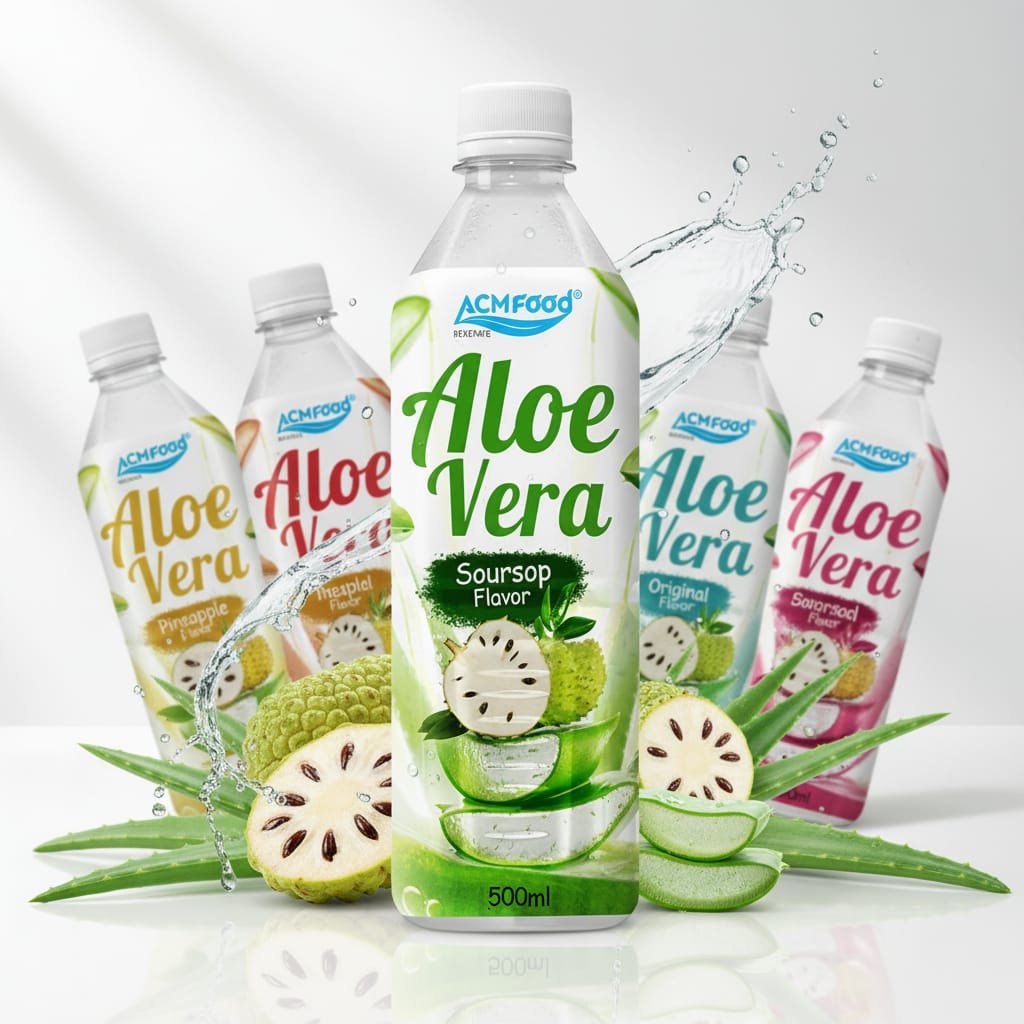
- Soursop juice percentage versus flavouring, for accurate labelling.
- Sugar target and permitted sweeteners for each market.
- Claims review — avoid digestive, immunity or disease claims unless authorised locally.
- Pack format — 500 ml PET is common; cans suit longer export routes.
Frequently asked questions
What does soursop taste like?
Sweet and slightly sour, often described as a mix of pineapple, strawberry and banana with a creamy texture.
Is aloe vera juice safe to drink?
Drinks made with decolourised inner-leaf gel, with aloin removed, are considered safe. Avoid whole-leaf, non-decolourised products, which can have a strong laxative effect.
Does soursop cure cancer?
No. Laboratory results have not been shown to apply in people, and soursop should never replace medical treatment.
Is aloe vera soursop juice good for digestion?
There is no strong evidence that aloe gel drinks improve digestion. The pieces add texture rather than a proven digestive benefit.
Who should avoid it?
Pregnant women should avoid aloe products as a precaution. People managing blood sugar should check sugar content, and anyone with Parkinson’s disease or on long-term soursop use should limit soursop intake.
Aloe vera drinks from ACM Beverage
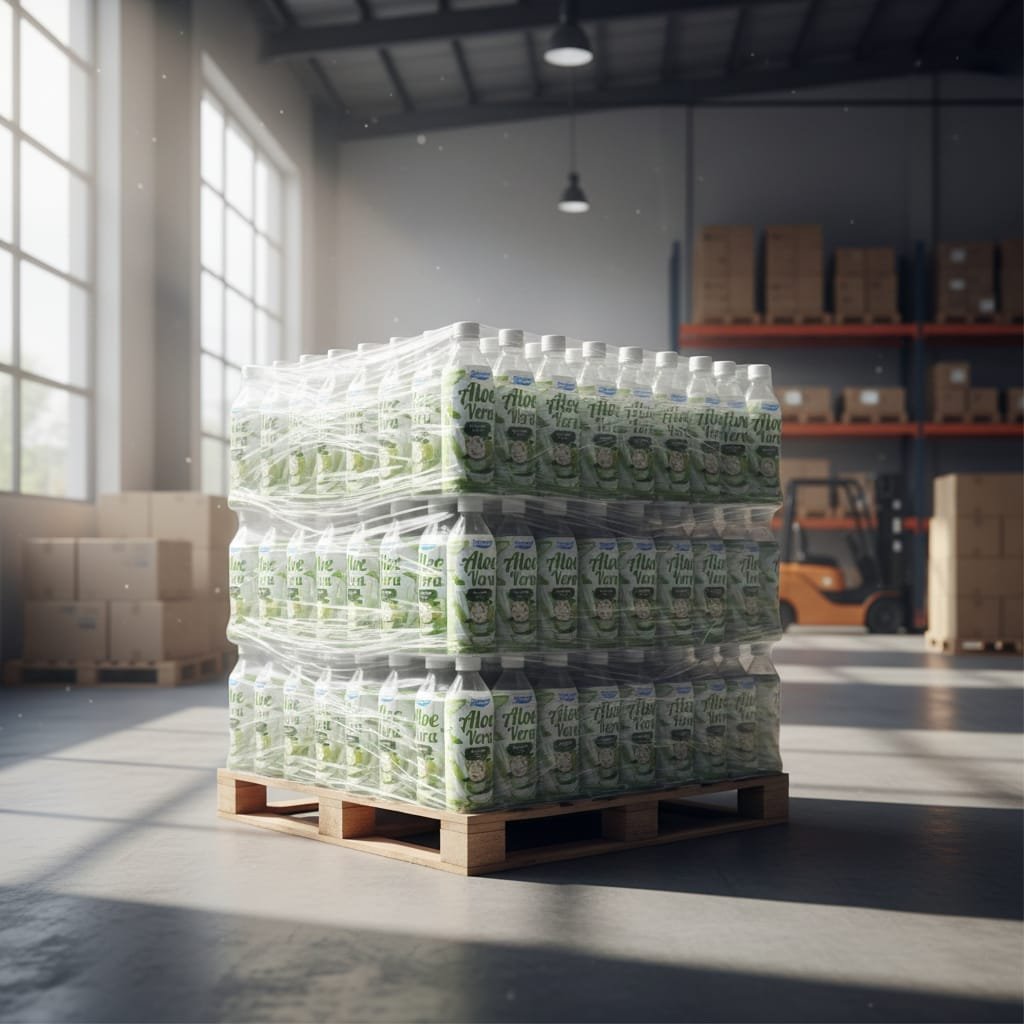
ACM Beverage produces aloe vera drinks in Vietnam for OEM and private label customers, in facilities certified to ISO 22000, FSSC 22000 and HACCP, exporting to more than 40 countries. See the 500 ml aloe vera juice with soursop flavour or the juice and drink range. Related reading: aloe vera and pomegranate juice. To discuss a formulation, contact our export team.
This article is general information, not medical advice.






