
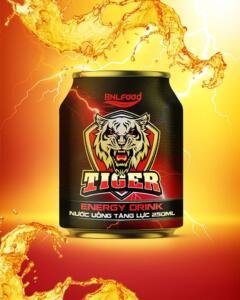
Most energy drinks are built from the same core ingredients: water, caffeine, sugar or sweeteners, taurine, a group of B vitamins, acids, flavourings and often carbon dioxide. Caffeine is the main active ingredient behind the alert feeling people associate with energy drinks, while sugar provides calories, and the other ingredients mostly shape taste, positioning and label claims.
This guide explains each common energy drink ingredient in plain terms, what it does and does not do, what the European Food Safety Authority (EFSA) has said about caffeine and taurine, and which groups are generally advised to avoid energy drinks. Broader questions about the advantages and drawbacks of energy drinks are covered in our article on the pros and cons of energy drinks.
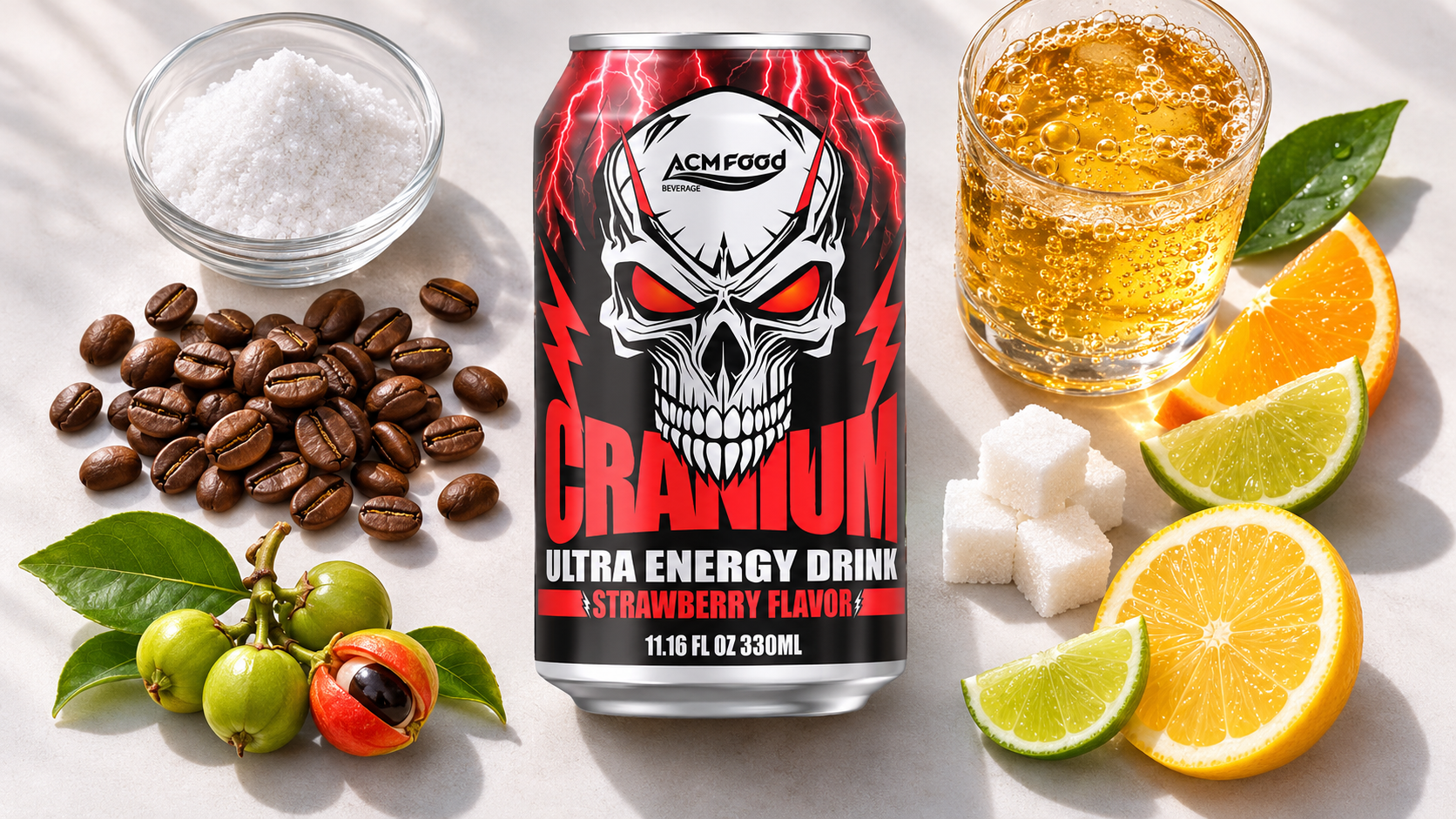
What are the main ingredients in an energy drink?
The main ingredients in a typical energy drink are water, caffeine, sugar or sweeteners, taurine, B vitamins, acidity regulators, flavourings and colours, and usually carbonation. Some products also contain plant extracts such as ginseng or guarana, or other added ingredients.
Not every energy drink has every ingredient. Sugar-free versions replace sugar with sweeteners, some still energy drinks are not carbonated, and recipes differ by brand and market. The ingredient list on the can is the reliable guide to what a specific product contains.
| Ingredient | Main role in the drink | What to know |
|---|---|---|
| Caffeine | Stimulant; the main source of the alert feeling | Amount varies by product and can size; check the label |
| Sugar | Sweetness and calories | Regular energy drinks can be high in sugar per can |
| Sweeteners | Sweetness without sugar | Used in sugar-free and reduced-sugar versions |
| Taurine | Traditional energy drink ingredient | An amino sulfonic acid also found naturally in the body and in foods |
| B vitamins | Added nutrients | Do not provide energy themselves; they are part of normal metabolism |
| Acids | Tartness and stability | Citric acid is the most common |
| Carbon dioxide | Fizz | Present in sparkling versions |
| Plant extracts | Flavour, positioning, sometimes extra caffeine | Guarana adds caffeine; ginseng is used for positioning |
What does caffeine do in an energy drink?
Caffeine is the ingredient mainly responsible for the alert, less-tired feeling people associate with energy drinks. It is a stimulant that acts on the central nervous system, and its effects depend on the dose, the person’s body weight, their usual caffeine intake and individual sensitivity.
Caffeine in energy drinks may come from synthetic caffeine, from coffee or tea extracts, or from plants such as guarana and yerba mate. Whatever the source, caffeine is the same molecule, and what matters is the total amount per can. Some markets require the caffeine content to be shown on the label, and drinks above certain caffeine levels may need a “high caffeine content” warning.
On safe intake, EFSA published a scientific opinion on caffeine in 2015. Its main conclusions for the general population were:
- Healthy adults: habitual caffeine intakes up to 400 mg per day from all sources do not raise safety concerns.
- Single doses for adults: up to 200 mg at one time do not raise safety concerns.
- Pregnant women: intakes up to 200 mg per day do not raise safety concerns for the unborn child.
- Children and adolescents: around 3 mg per kilogram of body weight per day was considered a level of no safety concern.
These figures cover caffeine from all sources combined, including coffee, tea, chocolate and soft drinks, not energy drinks alone. Caffeine content per can varies widely, so it is important to read the label rather than assume all energy drinks are the same.
What is taurine and why is it in energy drinks?
Taurine is an amino sulfonic acid that occurs naturally in the human body and in foods such as meat, fish and dairy. It has been part of energy drink recipes since the category began and is now almost a defining ingredient, even though its role in how energy drinks make people feel is less clear than caffeine’s.
The body produces taurine on its own, and it is involved in several normal physiological processes. Energy drinks add it in amounts larger than most people get from a single meal. In its 2015 work, EFSA concluded that taurine and D-glucurono-gamma-lactone at the levels typically found in energy drinks were not expected to interact adversely with caffeine or with each other.
From a consumer’s point of view, taurine is best understood as a traditional ingredient that gives energy drinks their familiar profile, not as a separate source of energy. It does not contain calories and is not a stimulant in the way caffeine is.

Do B vitamins in energy drinks give you energy?
No, B vitamins do not provide energy by themselves. Vitamins such as B3 (niacin), B5 (pantothenic acid), B6 and B12 are involved in the body’s normal energy-yielding metabolism, but energy comes from calories in food and drink. Adding B vitamins to a drink does not make it a source of extra energy for people who already get enough from their diet.
Energy drinks often list several B vitamins, sometimes at levels above typical daily reference amounts. Their presence supports the drink’s “energy” positioning on the label, and in some markets specific nutrient claims are allowed if the drink contains a qualifying amount. Those claims are tightly regulated and must match the tested content of the product.
For most people with a varied diet, B vitamins from an energy drink add little beyond what food already provides. They are one reason some consumers compare energy drinks with vitamin drinks; our guide to energy drinks vs vitamin drinks explains how the two concepts differ.
How much sugar is in an energy drink?
Regular energy drinks are usually sweetened with sugar or glucose syrup and can contain a substantial amount of sugar per can, comparable to other sugar-sweetened soft drinks. Sugar-free versions use sweeteners instead and contain little or no sugar. The nutrition panel shows the exact amount for each product.
Sugar in energy drinks has several roles:
- Taste: it masks the bitterness of caffeine, taurine and some vitamins.
- Calories: it is the main source of energy in the nutritional sense.
- Mouthfeel: it gives the drink body and a rounded taste.
Sugar-free energy drinks typically use sweeteners such as sucralose, acesulfame potassium or aspartame, alone or in combination. Rules on permitted sweeteners and labelling differ by country. Can size also matters: a 500ml can contains twice as much of everything as a 250ml can of the same recipe.
What other ingredients appear in energy drinks?
Beyond the core ingredients, energy drinks often include acidity regulators, flavourings, colours, preservatives and sometimes plant extracts. These shape taste, appearance and shelf life rather than the drink’s main effect.
- Citric acid and other acids: add tartness and help stability.
- Flavourings: create original “tutti-frutti” profiles or fruit flavours such as mango, apple or berry.
- Colours: give the drink its characteristic golden, red, blue or green tones.
- Preservatives: used in some recipes to protect quality.
- Guarana: a plant source of caffeine that increases total caffeine content.
- Ginseng: used mainly for flavour and positioning.
- Inositol, glucuronolactone and L-carnitine: found in some formulas as part of the traditional energy drink profile.
Any claims about these extra ingredients must follow the rules of the market where the drink is sold. A long ingredient list does not mean a drink is stronger; caffeine content per can remains the key number for most consumers.
Why do energy drinks taste the way they do?
The classic energy drink taste, often described as sweet, tangy and “tutti-frutti”, comes from balancing bitter functional ingredients with sugar, acid and strong flavourings. Caffeine is naturally bitter, and taurine and some B vitamins can add slightly medicinal or metallic notes, so recipes use sweetness and fruit-candy flavours to cover them.
Carbonation adds a sharp, refreshing edge and helps carry aroma. Acids such as citric acid make the drink taste crisp and stop the sweetness from feeling heavy. Fruit-flavoured energy drinks use the same principle with recognisable fruits such as mango, apple, orange or berries, which many people find easier to drink than the original flavour. Sugar-free versions rely on intense sweeteners and careful flavour work to achieve a similar profile without sugar.
Who should avoid energy drinks?
Energy drinks are generally not recommended for children, pregnant or breastfeeding women and people who are sensitive to caffeine. In many markets, labels on high-caffeine drinks carry warnings to that effect. People with heart conditions or who take medication affected by caffeine should seek advice from a healthcare professional.
Other situations that call for care include:
- Drinking several cans in a short period, which can push caffeine intake above comfortable levels.
- Combining energy drinks with other caffeine sources such as coffee or caffeine tablets.
- Drinking energy drinks late in the day, which may affect sleep.
- Mixing energy drinks with alcohol, which some health authorities advise against.
How do you read an energy drink label?
Start with caffeine per can and per 100ml, then check sugars, the serving size and any warning statements. Ingredient names and claims tell you how the drink is positioned, but caffeine and sugar are the numbers that matter most for most consumers.
- Find the caffeine content, often shown in mg per 100ml or per can.
- Check the can size: 250ml, 330ml and 500ml cans contain very different totals.
- Read total sugars or look for “sugar free” and the sweeteners used.
- Look for warnings about caffeine and suitability for children or pregnancy.
- Scan for extra caffeine sources such as guarana.
ACM Beverage offers a broad range of ACM FOOD energy drinks in 250ml, 320ml, 330ml and 500ml cans, including original, sparkling and fruit-flavoured versions, which you can browse in the energy drink range. Product pages list ingredients such as caffeine, taurine, B vitamins and sugar; caffeine levels for a specific SKU should be taken from its label or specification.
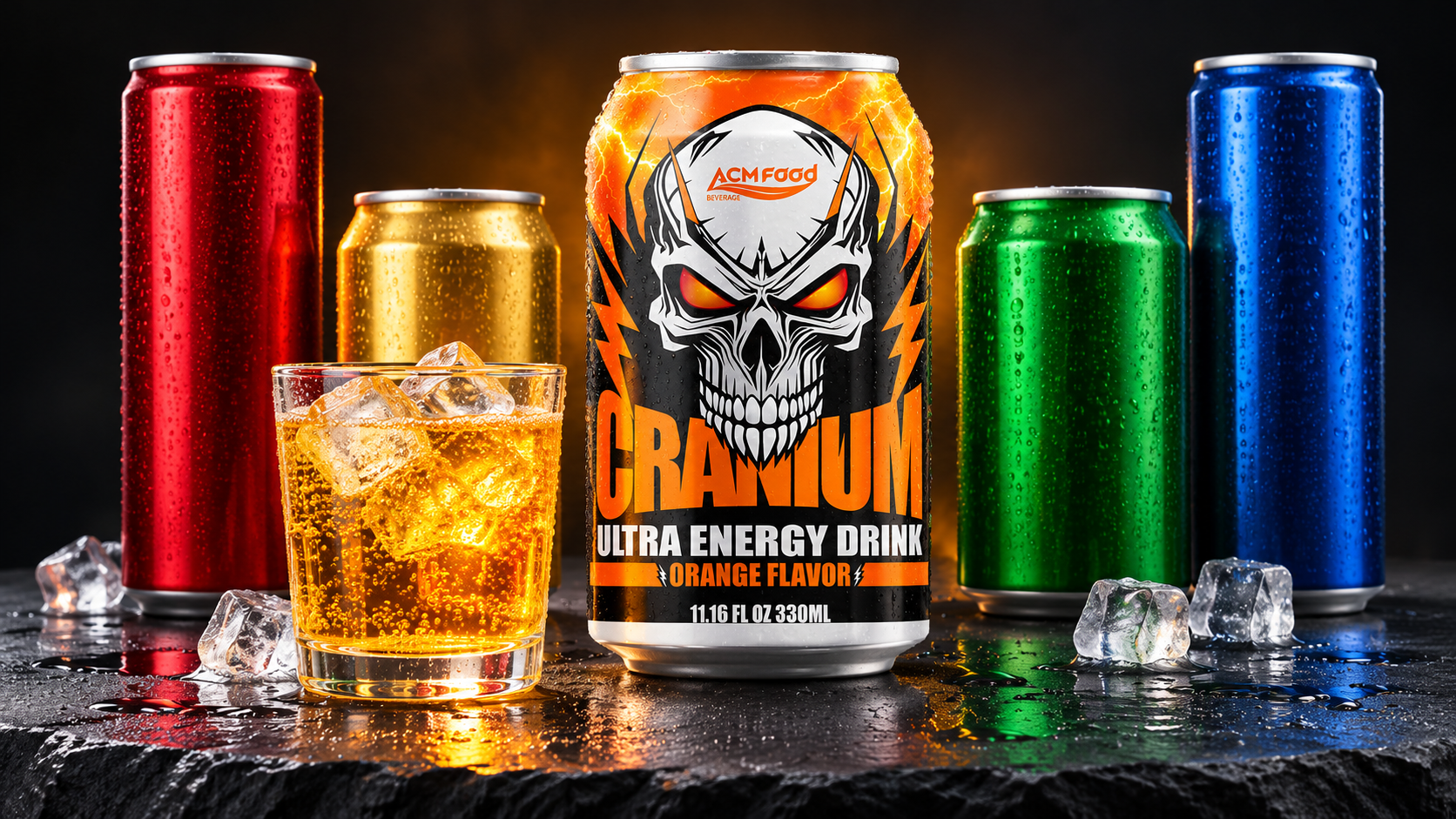
FAQ: energy drink ingredients
What is the most important ingredient in an energy drink?
Caffeine is the main active ingredient responsible for the alert feeling. Sugar provides calories, while taurine and B vitamins are traditional additions that mainly shape the product’s profile.
Is taurine dangerous?
EFSA concluded in 2015 that taurine at the levels usually found in energy drinks was not expected to interact adversely with caffeine. Taurine is also produced naturally by the body.
Do sugar-free energy drinks have caffeine?
Yes. Sugar-free energy drinks usually contain similar caffeine to regular versions; only the sugar is replaced with sweeteners.
Why do energy drinks contain B vitamins?
B vitamins are involved in normal energy metabolism, so they support the product’s energy positioning. They do not provide energy themselves.
Energy drink ingredients in summary
Energy drinks are mostly water, caffeine, sugar or sweeteners, taurine and B vitamins, with acids, flavourings and often carbonation. Caffeine drives the stimulating effect, sugar adds calories, and taurine and B vitamins are traditional ingredients rather than direct energy sources. EFSA’s 2015 guidance gives useful reference points for caffeine, but the label of each product is what tells you how much is in the can.
For specifications on energy drinks in different can sizes, contact the ACM Beverage team through the beverage enquiry contact page.