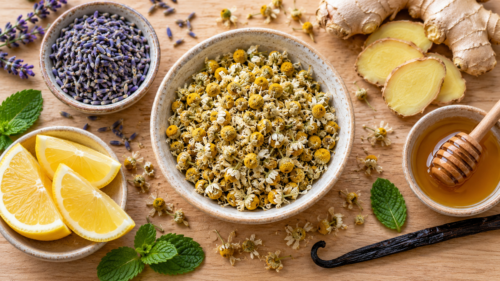



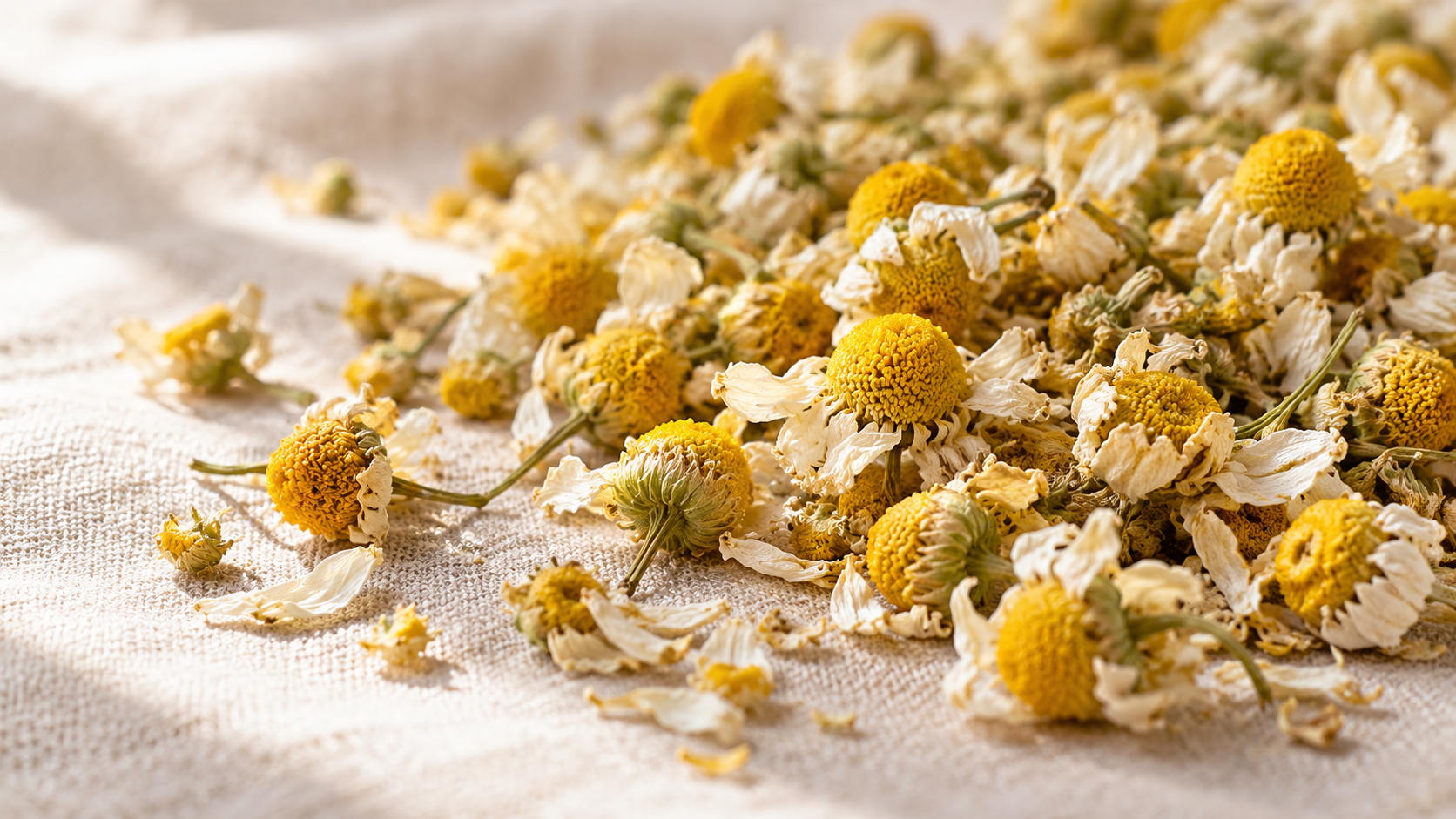
Chamomile tea is an herbal infusion made from the dried flower heads of chamomile, most commonly German chamomile (Matricaria chamomilla), and it is naturally caffeine-free because it contains no leaf from the tea plant. As a ready-to-drink product, chamomile tea sits in a narrow but useful space: a calm, floral, apple-like flavour that works chilled, needs very little sweetening, and appeals to shoppers who want an evening or all-day drink without caffeine.
This guide is written for importers and brand owners who are considering a canned or bottled chamomile line. It covers flavour profile, ingredient sourcing claims such as pure and organic, colour and clarity, heat treatment, and packaging choices. ACM Beverage does not currently list a chamomile SKU; the content below describes how such a drink is typically developed on request, so every specification should be confirmed during your own product brief.
What makes chamomile tea suitable for a ready-to-drink format?
Chamomile adapts well to RTD because its flavour stays pleasant when cold, it has no caffeine to manage on the label, and it pairs easily with honey or citrus. The main challenges are aroma loss during heat treatment and keeping a clear golden colour over shelf life, both of which can be addressed through extraction and process choices.
Most herbal teas taste flatter when chilled, because cold suppresses aroma perception. Chamomile is more forgiving than many botanicals. Its character comes from a soft, honeyed floral note with a hint of green apple, and a gentle bitterness that reads as “tea-like” rather than medicinal when the extract strength is controlled. That balance is why iced chamomile tea already appears in cafés and why it translates into cans and bottles better than stronger herbs such as sage or thyme.
From a positioning point of view, chamomile also solves a practical problem for retailers. Shelves of RTD tea are dominated by green and black tea, which carry caffeine. A caffeine-free option gives a range something to offer in the late afternoon and evening, and it does so without relying on the language of functional benefits.
Chamomile tea flavour profile for cans and bottles
Flavour work for an RTD chamomile tea usually starts with three decisions: how strong the floral note should be, whether the drink is unsweetened or lightly sweetened, and whether a second ingredient will support the profile.
- Floral intensity: a light extract gives a delicate, almost water-like drink that suits a “pure chamomile tea” story; a stronger extract brings more body but also more bitterness and a darker colour.
- Sweetness: chamomile tolerates very low sweetness. Many unsweetened herbal RTDs use acidity and aroma rather than sugar to create a finished taste, while lightly sweetened versions often use honey or cane sugar for a rounder mouthfeel.
- Acidity: a small amount of acid brightens the flavour and also matters for processing, because it influences which heat treatment can be used safely.
- Supporting flavours: lemon, honey, apple and vanilla sit naturally beside chamomile. Lavender, mint and ginger are stronger partners and are covered in our separate guide to chamomile herbal tea blend pairings.
Sensory testing should happen at serving temperature, not at room temperature. A sample that tastes balanced warm can taste thin and sharp when chilled, which is how most RTD tea is consumed.
How do pure and organic chamomile tea claims work?
“Pure” and “organic” are ingredient claims, not flavour descriptions, so they must be backed by the supply chain. An organic chamomile tea claim needs certified organic raw material and, in most markets, certification that covers processing too. “Pure” should only be used when chamomile is the sole botanical and the label wording complies with local rules.
Buyers sometimes treat these terms as marketing extras, but they shape the whole specification. A few points to settle before development starts:
- Organic scope: confirm whether the organic certificate covers only the dried flowers or the full finished beverage. A drink can contain organic chamomile without being sellable as an organic product.
- Target market rules: organic labelling under the EU, USDA and other schemes differs in logo use, percentage thresholds and recognition of foreign certificates.
- “Pure” wording: if natural flavourings, sweeteners or other herbs are added, “pure chamomile tea” may be misleading. Some brands use it only for single-botanical, unsweetened SKUs.
- Flower grade: whole flower heads generally give a cleaner flavour than fine siftings, which can carry more stem and dust and a duller taste. “High quality chamomile tea” should mean a documented raw material specification, not a slogan.
Keep the supplier’s certificates, specifications and test reports together in the product file. They support any claim on the can and they are the first documents an importer’s compliance team will ask for.
Extraction choices: brewed flowers, extract or flavour
There are three common ways to put chamomile into a ready-to-drink tea, and each has a different trade-off between authenticity, consistency and cost.
| Approach | How it works | Strengths | Watch points |
|---|---|---|---|
| Brewed from dried flowers | Flowers are steeped in hot water, then filtered | Most authentic taste; supports “brewed” and ingredient-led stories | Batch variation by harvest; more sediment to filter |
| Chamomile extract | A standardised liquid or powder extract is dosed into water | Consistent flavour and colour between batches | Can taste flatter; label wording depends on extract type |
| Extract plus natural flavour | Extract provides body, natural flavour restores top notes | Better aroma after heat treatment | Flavour declaration needed; may limit “pure” claims |
Many brands start with a brewed or extract base and then decide whether flavour support is needed after pilot heat treatment. That sequence avoids paying for flavour that the product does not need.

Why do colour and clarity matter for chamomile iced tea?
Shoppers judge an iced chamomile tea by its colour before they taste it, and a clear pale-gold drink signals freshness. Darkening, haze or sediment over shelf life can be read as spoilage, even when the product is safe, so colour stability is a commercial requirement as well as a technical one.
Chamomile infusions naturally range from pale straw to deep amber depending on extraction time, temperature and flower-to-water ratio. Problems usually appear later in the product’s life:
- Browning: polyphenols in the infusion can oxidise, especially with oxygen in the headspace or exposure to light in clear bottles.
- Haze and sediment: fine plant particles and compounds that come out of solution when chilled can form a cloud or a layer at the bottom.
- Interaction with other ingredients: honey, juice and some acids can change colour and clarity, which is why every added ingredient needs its own stability check.
Fine filtration, controlled extraction and limiting oxygen pick-up during filling all help. Packaging choice also plays a role, as covered below. For a transparent bottle, colour stability deserves more testing time than for an opaque can.
Heat treatment and shelf stability
A shelf-stable RTD chamomile tea must be heat treated or otherwise processed to be safe at ambient temperature, and the method depends mainly on the drink’s acidity and packaging. Low-acid teas need more intensive treatment than acidified ones, which affects both taste and the type of filling line that can be used.
Chamomile’s delicate aroma is the first thing to suffer from heat. Brand owners should expect the processed product to taste different from a kitchen-brewed benchmark. Practical steps that teams commonly use:
- Agree the processing route (for example hot fill, pasteurisation after filling, or retort for low-acid formulas) early, because it determines which recipes are realistic.
- Evaluate pilot samples after processing rather than before; the final flavour target should be set on processed product.
- Run accelerated and real-time shelf-life checks on colour, aroma, sediment and microbiological stability.
- Record the conditions used so that commercial production can repeat them exactly.
Shelf-life claims should come from these tests on the final formula and pack, not from general figures for herbal teas.
Packaging options: cans or bottles for chamomile tea
The two formats most often used for RTD herbal tea are aluminium cans and PET or glass bottles. The right choice depends on channel, price point and how you want the drink to look on shelf.
| Format | Best fit | Considerations for chamomile |
|---|---|---|
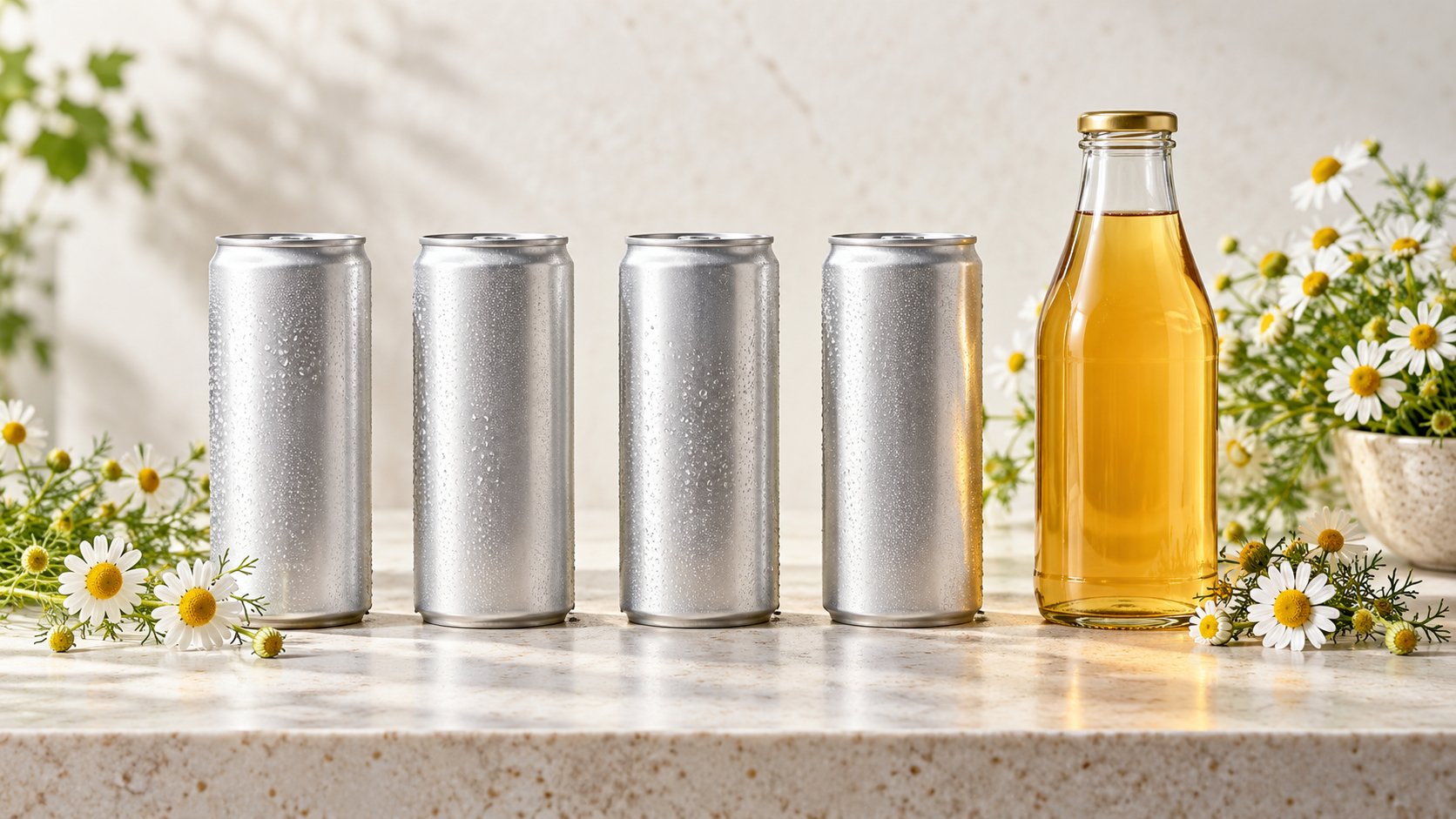
| Sleek or slim aluminium can | Convenience stores, cafés, multipacks, premium wellness shelves | Blocks light, protects colour and aroma; liquid colour is not visible |
| Standard aluminium can | Mainstream retail, value multipacks | Familiar format; strong protection from light and oxygen |
| Clear PET bottle | Grab-and-go, supermarkets, on-the-go drinking | Shows golden colour but exposes the drink to light; needs strong colour stability |
| Glass bottle | Premium retail, hospitality | Strong quality cue; heavier and more costly to ship |
For a first launch, a can often reduces risk because it protects a light-sensitive drink. A clear bottle makes sense when the visual appeal of the liquid is central to the brand and stability tests support it. If you are comparing formats, the ACM Beverage builder for packaging and flavour is a useful starting point for organising options before a formal brief.
Positioning chamomile tea without health claims
Chamomile has a long history of use as a soothing evening drink, and it is tempting to translate that into label claims. Most markets restrict health claims on foods and beverages, and claims about sleep, stress or digestion usually need authorisation or substantiation. The safer route is to describe the product rather than promise an effect.
- Describe the taste: “floral”, “gentle”, “honeyed”, “lightly sweet”, “brewed from chamomile flowers”.
- Describe the occasion: an afternoon pause, a caffeine-free drink with dinner, a café-style iced tea at home.
- Describe verifiable facts: “naturally caffeine-free” where the formula supports it, “no added sugar” where it is true and permitted in the target market.
This approach keeps the label compliant and also widens the audience: someone who simply wants a pleasant non-caffeinated tea will not feel the drink is a supplement.
Where chamomile fits in a tea drink range
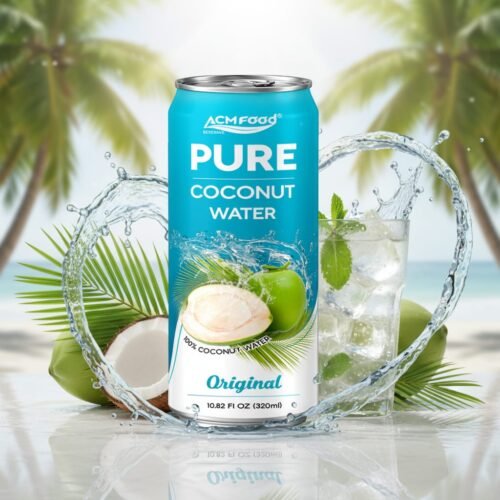
Chamomile rarely launches alone. It usually extends a range that already includes a caffeinated tea, giving buyers a day-to-evening story. If your range already includes green tea, the chrysanthemum and honey green tea in a sleek can shows how a floral note and honey are handled in a 320ml format, which is a helpful reference when setting the chamomile profile. More examples of current formats sit in the tea drink product category.
Think about the role of each SKU. A pure, unsweetened chamomile appeals to label readers and health-aware shoppers, while a honey-lemon chamomile is more approachable for mainstream buyers. Blends with lavender or mint can follow once the core profile proves itself in market.
What to include in a chamomile tea product brief
A clear brief shortens development and reduces sample rounds. For a ready-to-drink chamomile tea, include:
- Target market and channel, including any labelling or organic schemes you plan to use.
- Flavour direction with one or two benchmark products, plus what you want to be different.
- Sweetness position: unsweetened, lightly sweetened, or no added sugar.
- Ingredient claims required, such as organic, pure, or brewed from flowers.
- Pack format and size, and whether the liquid should be visible.
- Expected shelf life and storage conditions in your distribution chain.
Frequently asked questions about chamomile tea drinks
Is chamomile tea naturally caffeine-free?
Yes. Chamomile tea is made from chamomile flowers rather than leaves of the tea plant, so it is naturally caffeine-free. A blend that adds green or black tea will contain caffeine, and the label must reflect that.
Can chamomile tea be sold as an iced RTD without sugar?
Yes, unsweetened chamomile iced tea is a viable product. Its natural floral and apple-like notes give it flavour without sugar. Some brands add a small amount of acid or a citrus note to keep the taste lively when chilled.
What is the difference between pure and organic chamomile tea?
“Pure” refers to composition, meaning chamomile is the only botanical. “Organic” refers to how the raw material was grown and processed, and it requires certification. A product can be one, both, or neither, and each claim needs its own evidence.
Does ACM Beverage sell loose chamomile tea?
No. The scope here is finished drinks in cans and bottles. Loose flowers or bulk tea are outside this offer.
Next steps for a chamomile tea line
Chamomile tea works as an RTD when the floral character survives processing, the colour stays clear and golden, and the label describes the drink honestly instead of promising effects. Start with a defined flavour target, decide early on pure or organic claims, and test on processed samples in the final pack. If you would like to explore a custom chamomile drink in cans or bottles, ACM Beverage can review your brief covering formula direction, sweetness, packaging and target market, and outline what a development project would involve.