
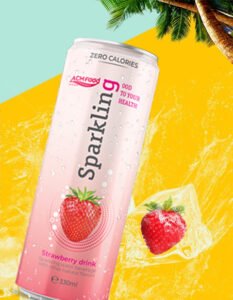
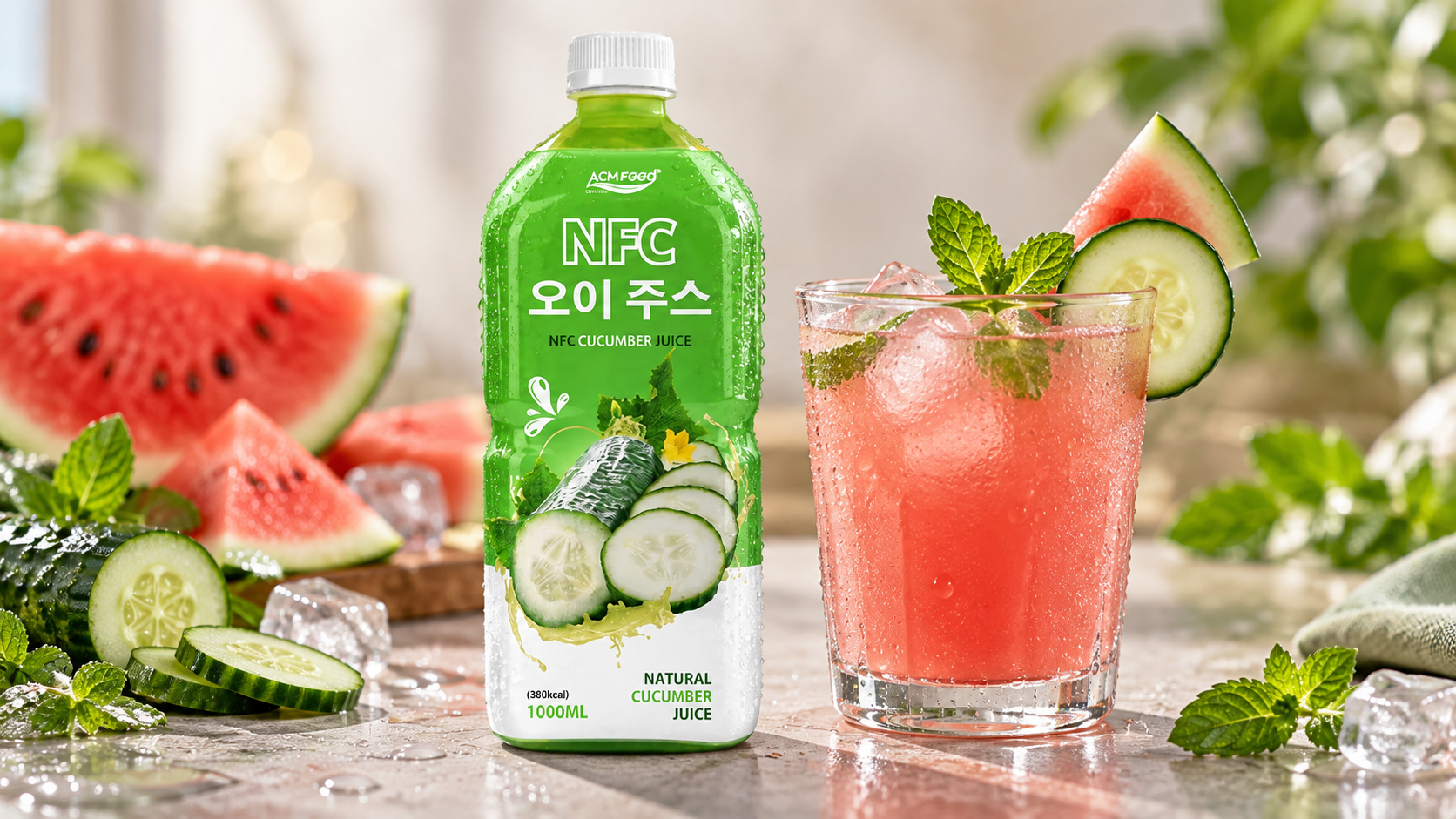
Watermelon, cucumber and mint is a classic summer combination: watermelon supplies sweetness and colour, cucumber adds cooling freshness, and mint finishes with a clean, aromatic lift. In a bottle or can it is a lively, pink-red drink, but it also behaves in ways that surprise developers: watermelon juice separates quickly, its colour fades, and mint can dominate. This guide covers flavour balance, stability, process and pack choices for a ready-to-drink version.
All directions are starting points for tasting trials, not a formula. Fruit ripeness and variety vary, so every blend needs bench testing.
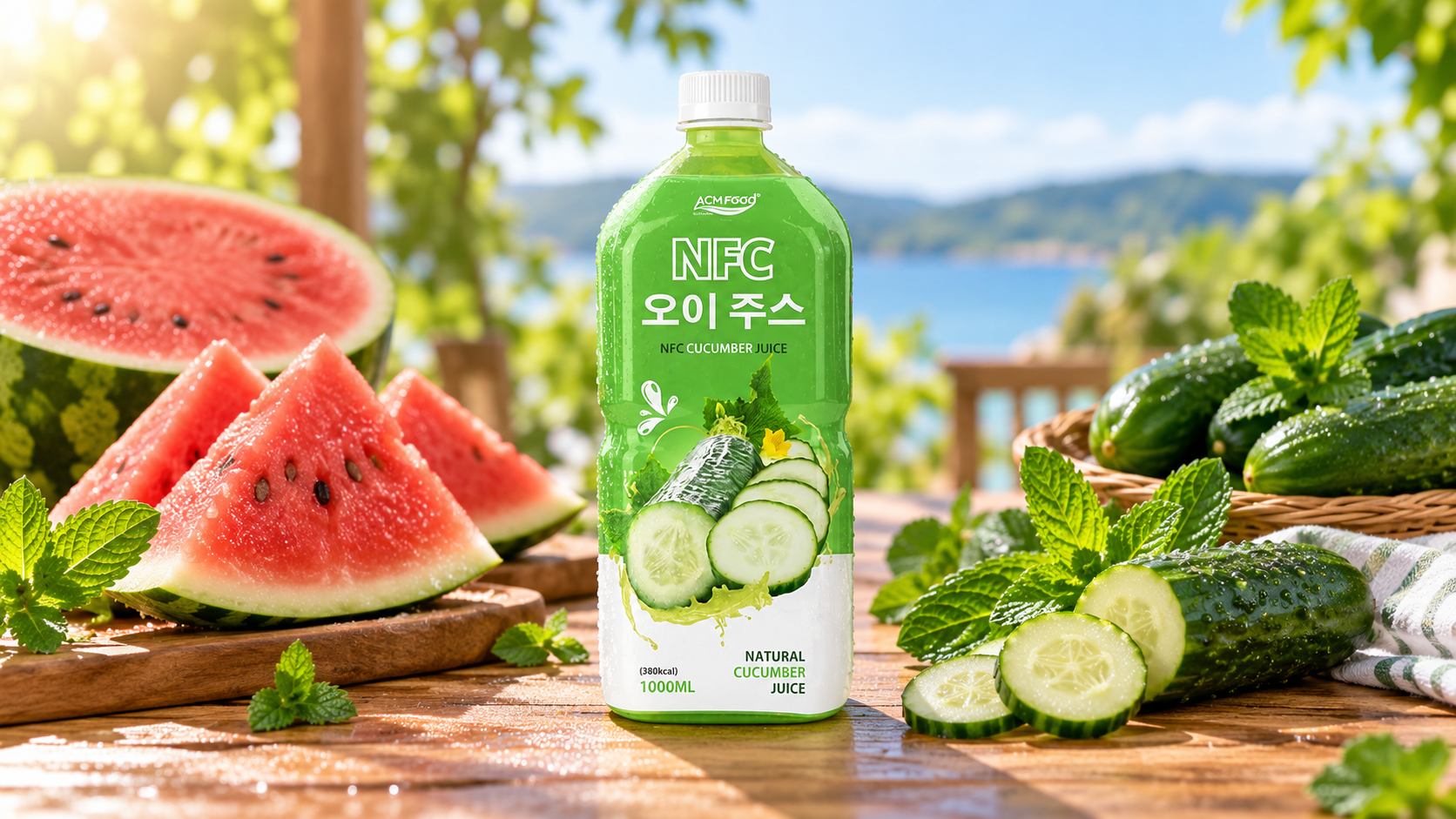
Why does this combination work?
Watermelon is sweet, light and very juicy, with a gentle flavour that is easy to like but can taste simple on its own. Cucumber shares the watery, cooling character and adds a green note. Mint adds aroma and a cooling sensation that makes the drink feel colder than it is. The trio is intuitive, and consumers readily understand it from the name alone.
For a brand, that clarity is useful: the flavour story needs few words, and the colour on shelf is vivid and appetising.
How do you choose the ratio?
| Starting direction | Character | Who it suits |
|---|---|---|
| Watermelon-led, cucumber for freshness | Sweet, juicy, light | Mainstream retail, summer ranges |
| Balanced watermelon and cucumber | Fresh, cooling, less sweet | Those who want a less sugary profile |
| Cucumber-led, watermelon for colour | Green-leaning, subtle | Spa-style and wellness positioning |
Taste each version chilled, with and without mint, and note sweetness, freshness and aftertaste separately. Because watermelon is delicate, small changes in ratio can shift the drink from “refreshing” to “watery”, so change one variable at a time.
How much mint is enough?
Mint is powerful, and a small excess is quickly perceived as toothpaste-like or medicinal. It can also become more intense during storage as other flavours fade.
- Start with a very light level and increase in tiny steps.
- Taste at the serving temperature, since chilling reduces perceived mint.
- Re-taste after storage, because balance changes over time.
- Consider whether the mint is fresh, an extract or a flavour component, since each behaves differently.
A good rule is that mint should be noticed as a finish, not as the first impression.
Why does watermelon juice separate?
Watermelon juice is thin and carries fine solids that settle quickly, leaving a clear layer on top and a pink layer below. This is natural and not a defect in itself, but it looks unappealing on shelf. Producers manage it through process and formulation, such as adjusting particle size, using processing steps that stabilise the cloud or blending with ingredients that add body. Ask how separation is controlled in any sample, and test by leaving a bottle undisturbed for a day.
A shake-before-use note is acceptable, but it should not be the only strategy.
How do you protect the colour?
The pink-red colour of watermelon comes largely from lycopene, which is sensitive to heat, light and oxygen. A drink can lose its colour and turn dull orange or pale over time. Cucumber peel adds green that fades too, and the combination can lead to an unattractive beige if not managed.
Practical measures include limiting oxygen at filling, controlling heat exposure, protecting from light and testing colour at the end of the intended shelf life. Cans protect from light, while clear bottles show colour but need storage conditions that avoid light exposure.
What does the process need to account for?
Watermelon and cucumber are both low in acid, so the blend is low-acid unless lemon or another acid is added. The final pH determines which heat treatment and storage conditions are appropriate. The process must be confirmed by the producer and verified by testing, not assumed. Ask for the final pH, the treatment and the storage conditions of any sample, and record them in the specification.
Many developers add a small amount of lemon or lime for brightness, which also changes the pH and the safety considerations. Treat that as part of the same decision.
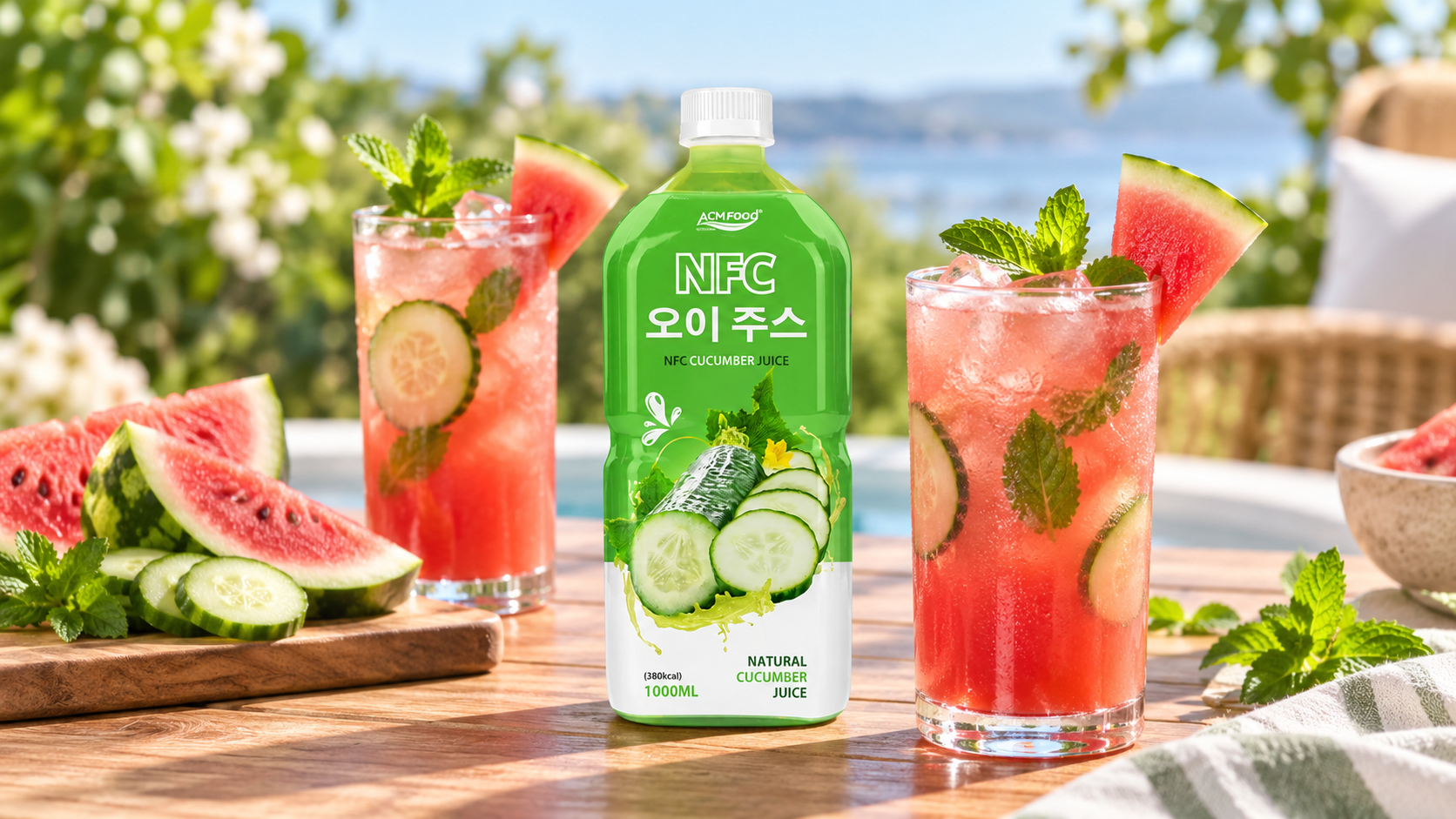
Should you add lime, lemon or ginger?
Additions change the concept.
- Lime or lemon: brightens and balances sweetness, and is common in summer drinks.
- Ginger: adds warmth, moving toward a different flavour story.
- Sparkling: a light carbonation suits the style but changes pack requirements. For ideas on carbonated citrus formats see the article on lime sparkling juice formulation.
Which pack suits watermelon cucumber mint juice?
| Format | Strengths | Points to check |
|---|---|---|
| Slim or sleek aluminium can | Opaque, protects lycopene colour, single-serve | Lining, line compatibility |
| Glass bottle | Shows pink colour, premium | Light exposure, weight |
| PET bottle | Light, practical | Barrier needs, recycling rules |
ACM Beverage supplies finished drinks in cans and bottles. For a drink whose appeal depends on colour, a can is safer for stability, while a clear bottle needs a display and storage plan.
How can the drink be positioned?
Describe taste, ingredients and the occasion, such as a poolside or picnic drink. Avoid statements about hydration performance, detox or health outcomes, which need evidence and market approval. For serving inspiration with tropical bases see the article on simple drinks made with canned coconut water, and the cucumber juice category shows how cucumber appears across finished products.
What should a product brief include?
- Lead ingredient and ratio direction.
- Mint level in plain words and form: fresh, extract or flavour.
- Optional additions: lime, lemon, ginger.
- Separation tolerance and cloud preference.
- Colour target at the end of shelf life.
- Pack type and size.
- Target markets and labelling rules.
How do you run a development trial?
- Choose the lead: watermelon-led, balanced or cucumber-led.
- Prepare three ratio versions and taste them chilled.
- Add mint in tiny steps and note when it becomes noticeable.
- Leave samples undisturbed for a day and check separation.
- Test colour in the real pack and after storage.
- Record notes and photographs of each version.
- Approve a written reference and a physical reference sample.
Common mistakes with watermelon cucumber mint juice
- Using too much mint and losing the cucumber.
- Ignoring separation until the product is on shelf.
- Forgetting that lycopene colour fades with time and light.
- Choosing a process without checking the final pH.
- Printing hydration or detox claims.
Frequently asked questions
Why does watermelon juice separate in the bottle?
Fine solids settle quickly in a thin juice. Formulation and process choices reduce it, and a shake-before-use note is common.
Does the colour fade?
It can. Lycopene is sensitive to heat, light and oxygen, so packaging and storage matter.
Is mint added as leaves or flavour?
Both are used, and each behaves differently. The ingredient list should describe the form that is actually in the drink.
Summary
Watermelon, cucumber and mint is easy to like and tricky to stabilise. Balance sweetness with freshness, keep mint in the background, control separation and colour and match the process to the final pH. If you are planning a finished watermelon cucumber mint drink for your own label, ACM Beverage can discuss can and bottle formats and recipe options once you share your brief.