Pineapple cucumber juice is a light, refreshing blend in which cucumber tames the sharpness of pineapple and pineapple gives cucumber the flavour it lacks on its own. It sells easily as a summer drink and a spa-style refresher, but it has its own technical quirks: pineapple is acidic and foams easily, cucumber is low-acid and delicate, and the colour is a pale yellow-green that shifts with time. This article covers ratios, flavour balance, process points and pack choices for a ready-to-drink version.
All directions are starting points for tasting trials, not a formula. Ripeness, variety and processing change the result, so every blend needs bench testing.
Why do pineapple and cucumber work together?
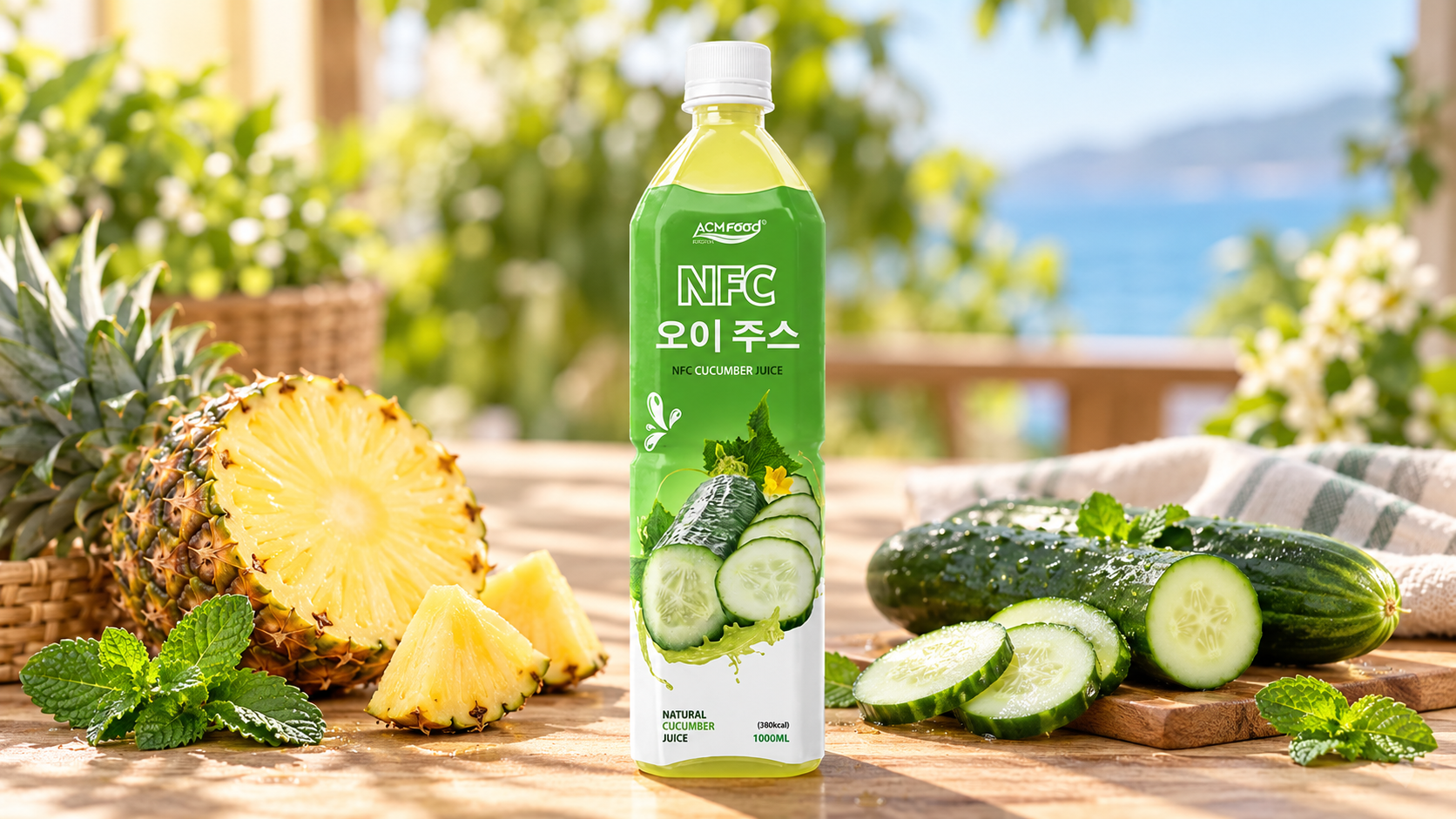
Pineapple is aromatic, sweet and acidic, but it can be sharp and heavy when used alone. Cucumber is cooling, mild and very watery, so it dilutes the intensity and adds freshness. Together they make a drink that is lighter than pineapple juice and more flavourful than cucumber juice.
The pairing also sits well in positioning terms: tropical but not sugary-heavy, refreshing but with some character. That makes it a good candidate for a range alongside heavier tropical drinks.
What starting ratio should you try?
| Starting direction | Character | Who it suits |
|---|---|---|
| Cucumber-led, a little pineapple | Light, cooling, hint of tropical | Those who want a subtle drink |
| Balanced pineapple and cucumber | Tangy, fresh, clearly tropical | Mainstream refreshment |
| Pineapple-led, a little cucumber | Fruit-forward, cucumber as cooling note | Fruit juice drinkers wanting something lighter |
Prepare three versions on each side of your target, taste them chilled and record acidity, sweetness and aroma separately. Because cucumber is thin, differences can feel small, so tasters need a clear vocabulary such as “sharper”, “lighter” or “rounder”.
How do you balance acidity and sweetness?
Pineapple carries most of both. Cucumber lowers perceived intensity without adding sweetness.
- If the drink is too sharp, reduce pineapple or add a touch of apple juice for roundness.
- If it is too sweet and heavy, increase cucumber or add a little lemon for lift.
- If it tastes thin, increase pineapple or reduce dilution.
- If the aroma is faint, check ripeness and whether the process is stripping volatile compounds.
Always taste chilled, and compare against a reference made with the same ingredients.
How does cucumber change the process?
Cucumber is a low-acid vegetable, while pineapple is acidic. The final pH depends on their proportions, and pH determines what heat treatment and storage conditions are appropriate. A pineapple-led blend may be acidic enough for one approach, while a cucumber-led blend may need another. The producer must confirm the process and verify it by testing, not assume it from the recipe name.
Ask for the pH, the treatment and the storage conditions of any sample you evaluate, and record them in the specification.
What about foam and texture?
Pineapple juice foams readily when it is poured or filled, which can cause filling problems and a messy appearance in the glass. Producers deal with it through process and filling choices. Ask how foam is controlled, and test how the drink behaves when poured from a can or bottle at the serving temperature.
Both fruits also carry fibre and fine particles. Decide whether you want a clear, lightly cloudy or pulpy drink, and ask how the texture will be kept stable. Natural drinks can separate, and a shake-before-use note is acceptable, though good formulation reduces the need.
How do you manage colour?
The pale yellow-green colour comes from fruit pigments and the chlorophyll in cucumber peel. Chlorophyll fades with heat, acid and time, so a drink that starts bright can turn yellowish or dull. Protect colour by limiting oxygen at filling, controlling heat exposure, sealing well and choosing a pack that blocks light or planning storage that does. Test at the end of shelf life and agree in advance what change is acceptable.
Should you add mint, ginger or lemon?
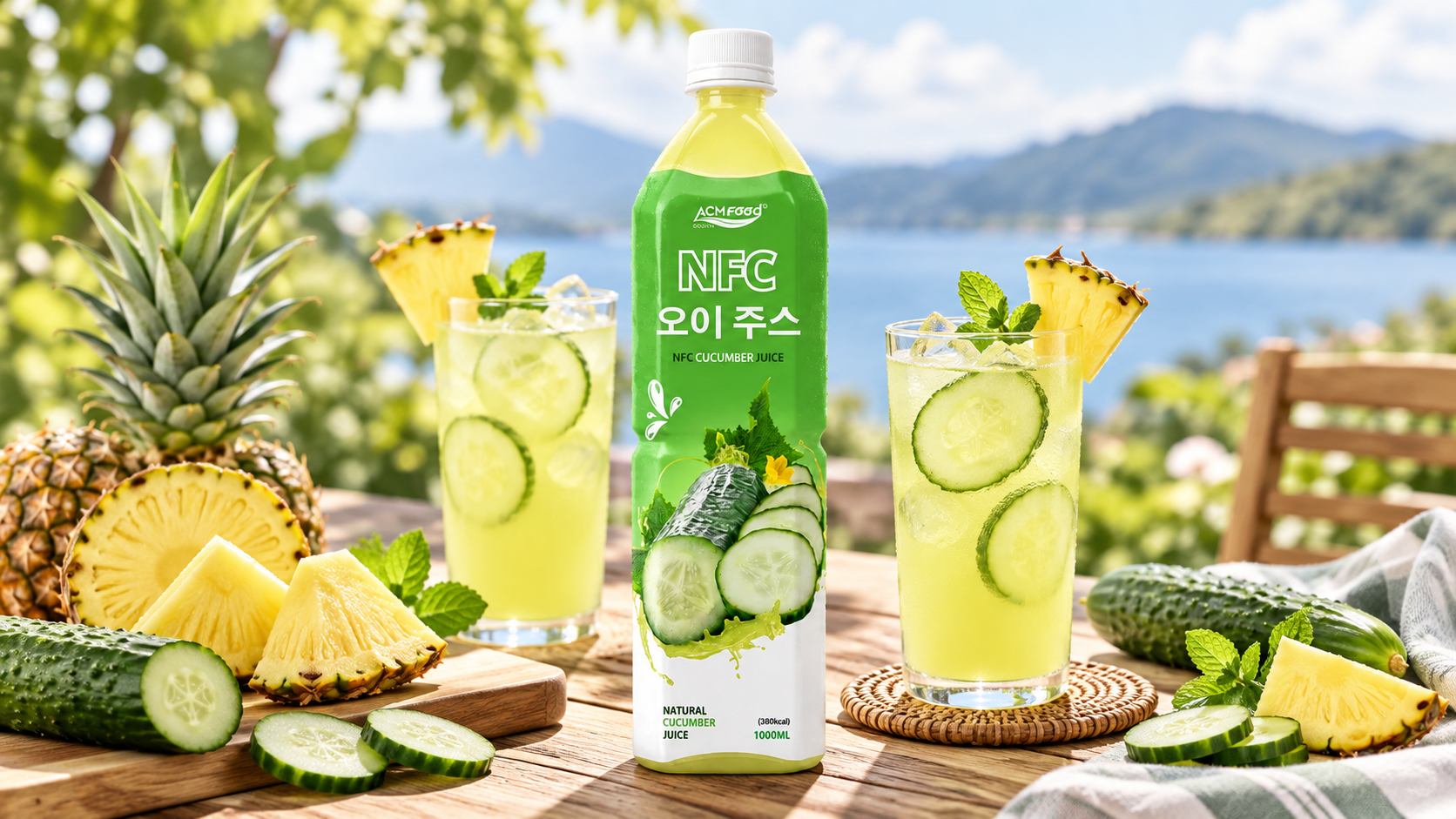
Additions change the concept, so use them with purpose.
- Mint: adds a cooling note that suits the blend but can dominate.
- Ginger: adds warmth, moving toward a spiced style.
- Lemon: a small amount lifts flavour with little change.
- Coconut water: can add roundness, but changes the label and positioning.
For easy drink ideas that pair tropical flavours with coconut water, see the article on simple drinks made with canned coconut water, which shows how a tropical base can be extended.
Which pack suits pineapple cucumber juice?
| Format | Strengths | Points to check |
|---|---|---|
| Slim or sleek aluminium can | Opaque, protects colour, single-serve | Lining suitability for an acidic drink, foam at filling |
| Glass bottle | Shows pale colour, premium | Light exposure, weight |
| PET bottle | Light, practical | Barrier needs, recycling rules |
ACM Beverage supplies finished drinks in cans and bottles. Because pineapple makes the drink acidic, confirm the can lining and closure suit the pH of your recipe.
What should a product brief include?
- Lead ingredient and ratio direction.
- Optional additions: mint, ginger, lemon, apple.
- Taste target in plain words.
- Texture preference: clear, lightly cloudy or pulpy.
- Sugar positioning and ingredient list goals.
- Pack type and size.
- Target markets and labelling rules.
Claims and labelling depend on the final recipe, tested values, serving size and destination market rules. For background on label terms, see what organic juice means.
How do you run a development trial?
- Choose the lead: cucumber-led, balanced or pineapple-led.
- Prepare three ratio versions and taste them chilled.
- Adjust with a small amount of lemon or apple if needed.
- Check foam, colour and texture after a day.
- Test in the real pack and after storage.
- Record notes and photographs of each version.
- Approve a written reference and a physical reference sample.
Common mistakes with pineapple cucumber juice
- Treating the blend as acidic without checking the final pH.
- Ignoring foam at the filling stage.
- Letting cucumber dilute the flavour until the drink is bland.
- Forgetting that the pale colour changes with time.
- Printing health or detox claims.
Frequently asked questions
Is pineapple cucumber juice sweet?
It tastes lightly sweet and tangy. Pineapple supplies most of the sugar and acid, while cucumber dilutes and cools.
Why does pineapple juice foam?
Pineapple juice contains compounds that stabilise foam when the liquid is agitated. Filling and pouring need to be designed to handle it.
Can the blend be sold in cans?
Yes. Cans protect colour. The lining and closure must suit an acidic drink, and the process must be confirmed for the formula.
Summary
A good pineapple and cucumber blend uses cucumber to cool pineapple without erasing it, manages foam and colour and uses a process matched to the final pH. Choose a lead ingredient, test in the pack you will sell and record each version. If you are planning a finished pineapple cucumber drink for your own label, ACM Beverage can discuss can and bottle formats and recipe options once you share your brief.