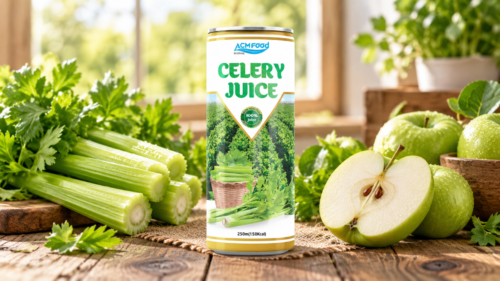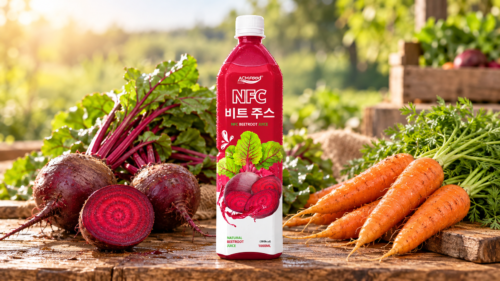

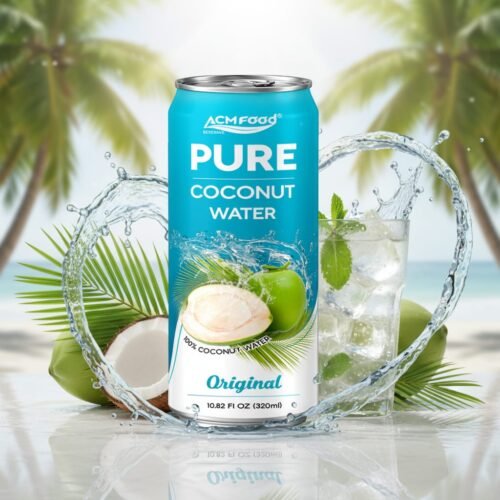

Celery water and light celery drinks sit between celery juice and flavoured water: they keep a gentle celery aroma and a pale green hue but are much lighter in taste and body. For beverage developers they open a different set of questions from full-strength juice, such as how little celery is enough, whether the drink should be still or sparkling, and how to keep a subtle product stable. This article lays out the concepts, the flavour logic and the packaging points for finished cans and bottles.
All directions here are starting points for tasting trials. Celery strength and process vary, so every concept needs bench testing.
What is celery water?
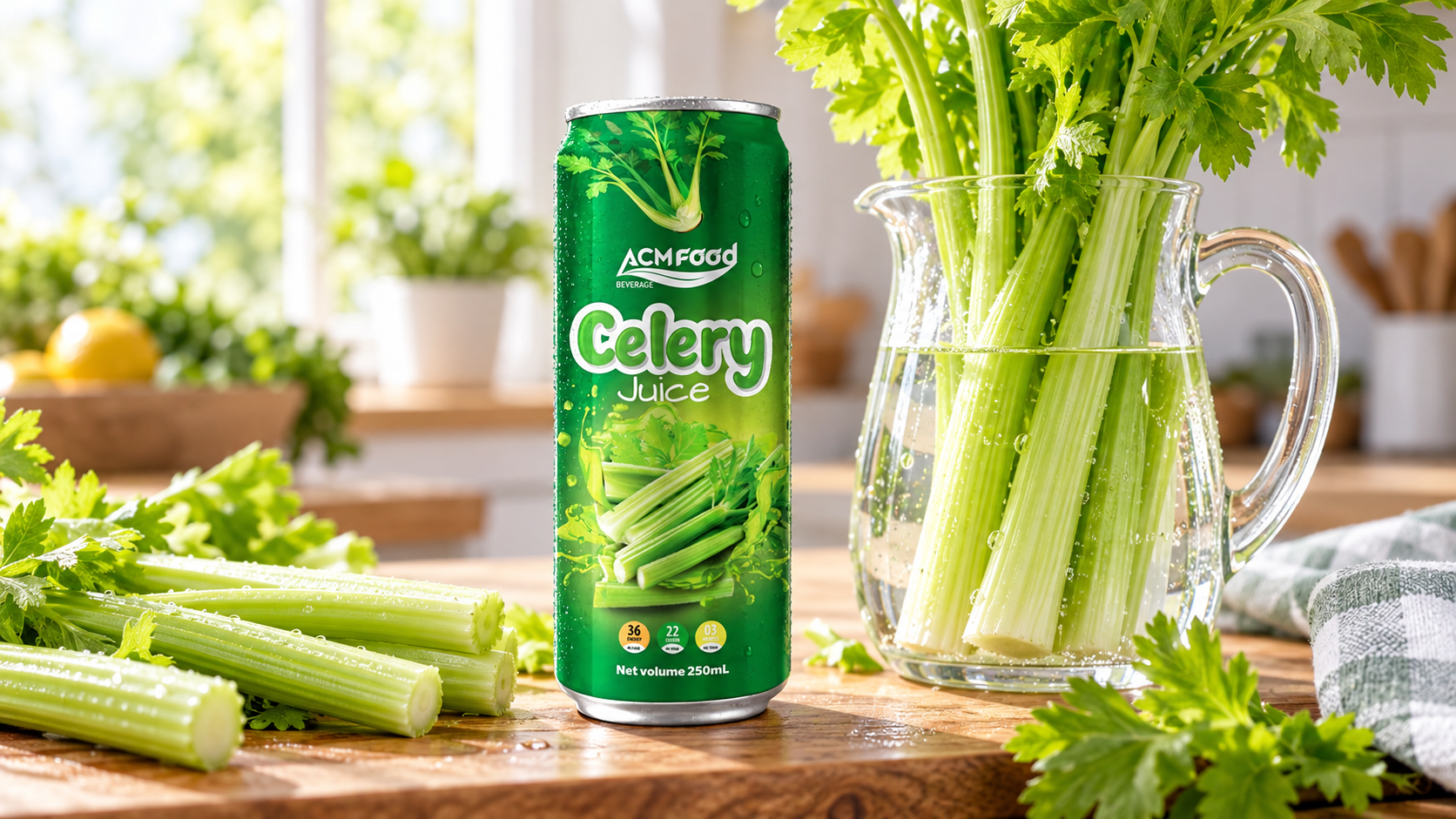
Celery water is a light drink in which celery juice or extract is diluted with water to give a subtle celery character. It can be still or lightly sparkling, plain or combined with lemon, cucumber or mint. It is usually more translucent and lighter than celery juice, and the flavour is meant to be refreshing rather than intense.
There is no single standard definition. Labelling rules differ by market, so the product name, ingredient list and wording must describe what is actually in the drink, and the amount of celery juice should not be implied to be higher than it is.
How is it different from celery juice?
| Feature | Celery juice | Celery water or light drink |
|---|---|---|
| Celery content | High | Low to moderate |
| Taste | Strong, savoury, green | Subtle, refreshing |
| Colour | Medium green | Pale, sometimes almost clear |
| Body | Fuller | Light |
| Typical use | Stand-alone juice | Everyday refreshment |
The two products appeal to different occasions. A light celery drink fits a drinker who wants something clean and non-sugary-tasting, while celery juice suits someone who wants a bold vegetable drink.
What product concepts can you build?
- Still celery water: celery juice diluted with water, perhaps with a little lemon.
- Sparkling celery drink: lightly carbonated, crisp, suitable for aperitif-style positioning.
- Celery and cucumber water: extra cooling and very light.
- Celery with herbs: mint, parsley or basil for a garden-style profile.
- Celery with ginger and lemon: warmer and sharper.
Each concept needs its own tasting trials, and sparkling versions raise additional questions about pack strength and pressure that the producer must confirm.
How much celery is enough?
Too little celery and the drink tastes like plain water with a faint greenness; too much and it becomes juice. The right level depends on the taste goal and the strength of the celery source. Test several dilution levels and ask tasters what they notice first.
A helpful approach is to taste a series in a row, from very light to fairly strong, and mark the point where the celery flavour becomes noticeable but not dominant. Then test a little above and below that point.
How do you balance flavour in a light drink?
Light drinks show every flaw. A small amount of bitterness, off-aroma or sweetness becomes obvious when there is no strong flavour to cover it.
- Acidity: a small amount of lemon or lime gives the drink lift.
- Sweetness: a very small touch can round the taste, though many concepts aim for no sweetness.
- Water quality: neutral, clean water matters more than in a juice.
- Carbonation: if used, it increases the perception of acidity and bitterness, so retest after carbonating.
What about colour and clarity?
A pale green or almost clear drink is more sensitive to colour change than a strong green juice, because small shifts are easy to see. Chlorophyll fades with heat, acid and time, and a drink that starts pale green can end up yellowish. Decide what colour you want at the end of shelf life, and test in the actual pack.
Clear packaging shows the colour, but light exposure speeds change. Cans block light, while bottles need a storage and display plan.
How should the process be designed?
Celery is low-acid, but a light drink diluted with water and acidified with lemon may end up with a different pH from a full juice. The producer must determine the final pH and choose a process and storage plan to match, and that must be verified by testing. Ask for these details in writing, and keep them in the specification. For home preparation ideas see the guide to making celery juice taste good, which is a different purpose from product development.
Which pack suits a celery water?
| Format | Strengths | Points to check |
|---|---|---|
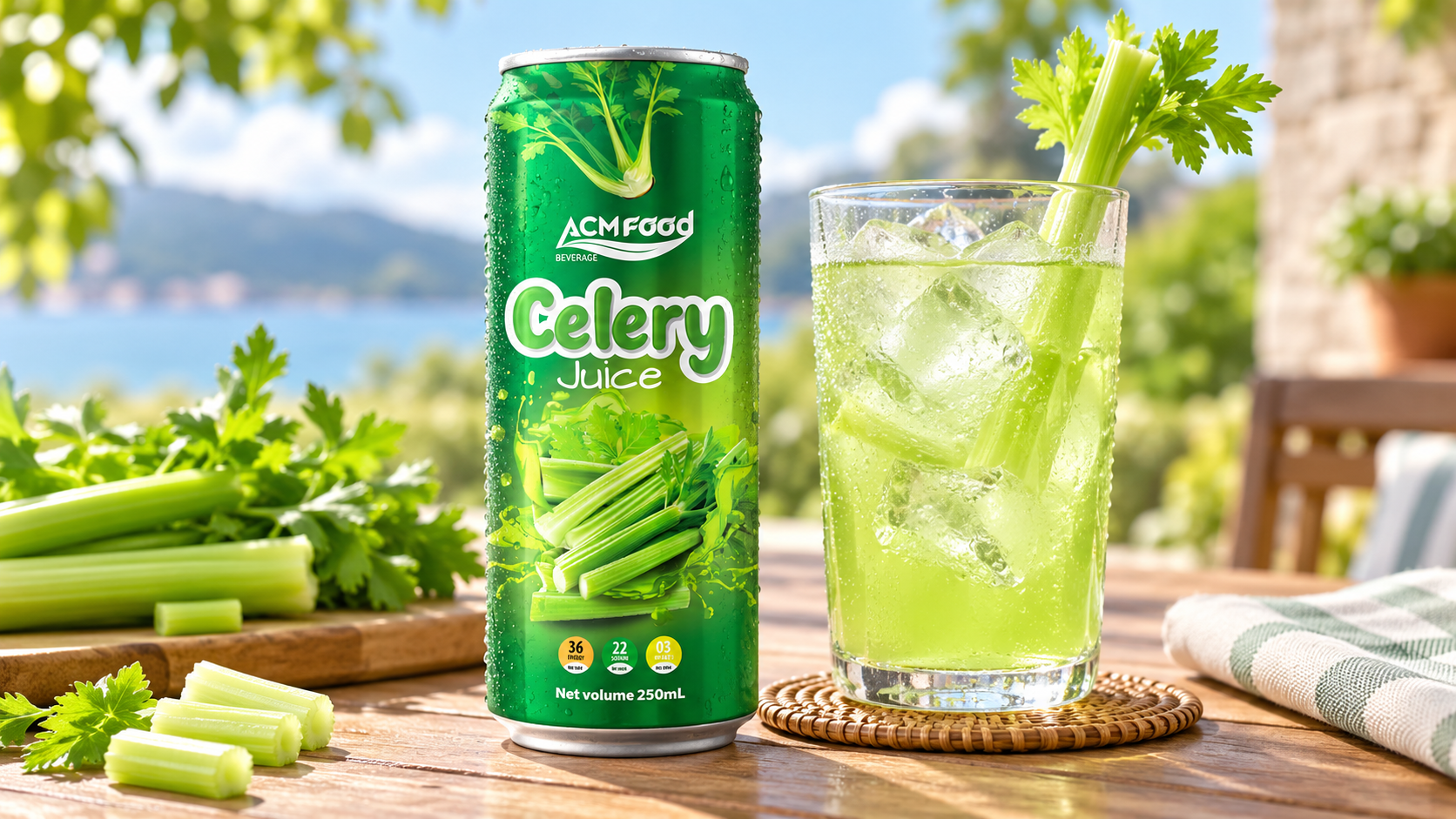
| Slim or sleek aluminium can | Opaque, ideal for sparkling, modern | Lining, pressure suitability for sparkling |
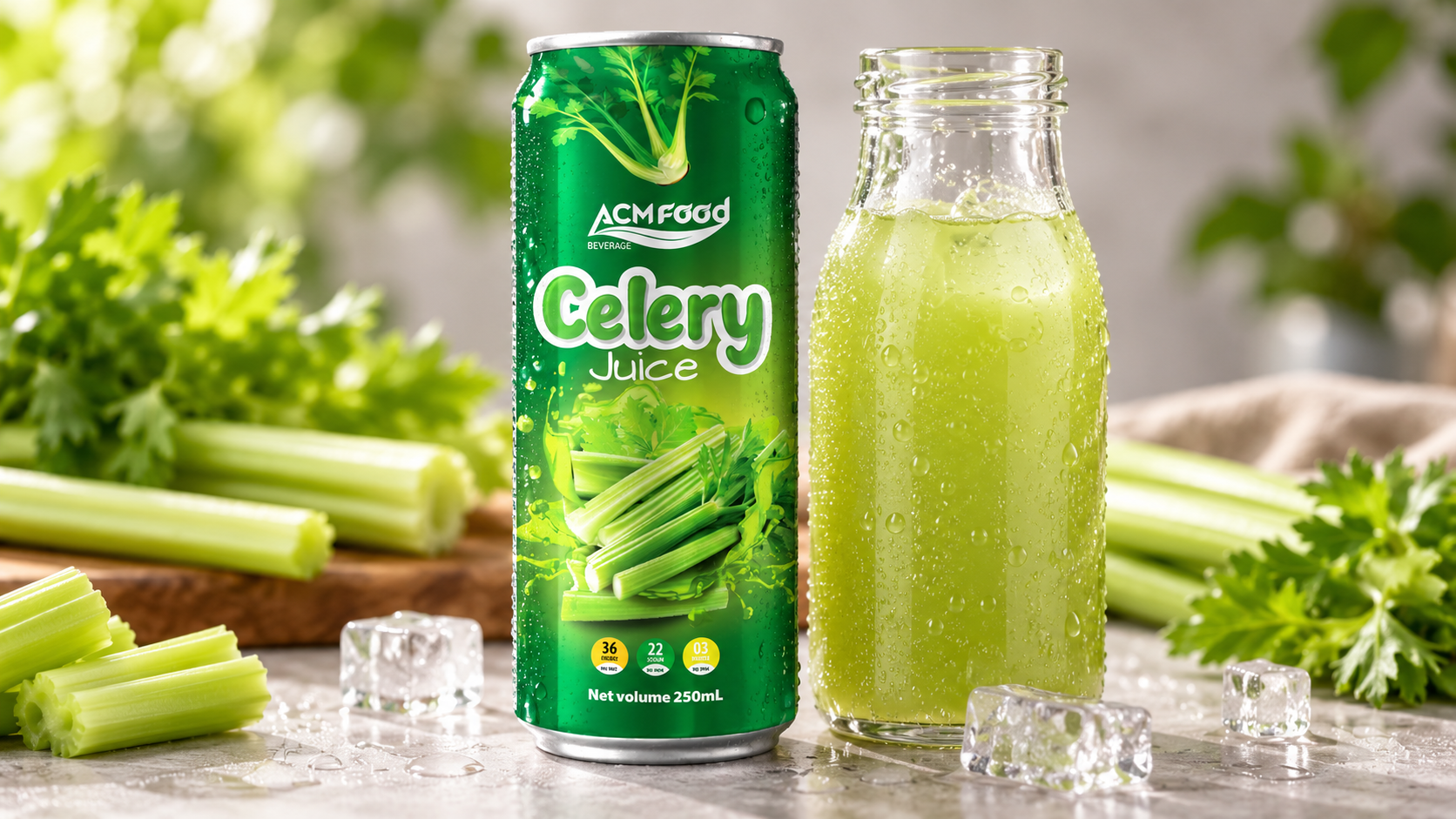
| Glass bottle | Shows pale colour, premium | Light exposure, weight, pressure rating if sparkling |
| PET bottle | Light, practical | Barrier needs, carbonation suitability |
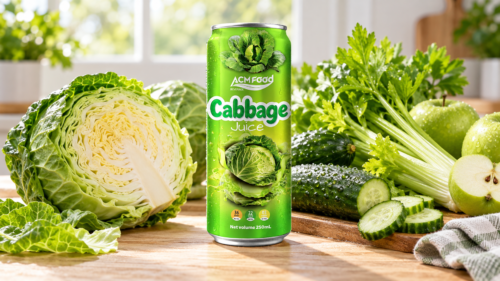
ACM Beverage supplies finished drinks in cans and bottles. Sparkling versions need a pack designed for pressure, so confirm this with the packaging supplier before approving a design.
How should you position it without health claims?
Describe taste, ingredients and the occasion, such as a clean afternoon drink. Avoid statements about detox, weight loss or hydration performance. Claims depend on tested values, the recipe and local rules, and they are best avoided unless you hold evidence and approval. For background on label wording, see what organic juice means.
What should a product brief include?
- Concept: still, sparkling or infused.
- Target celery strength described in plain words.
- Optional additions: lemon, cucumber, mint or ginger.
- Sweetness: none, minimal or moderate.
- Colour target at the end of shelf life.
- Pack type and size.
- Target markets and labelling rules.
How do you run a development trial?
- Prepare a dilution series from very light to fairly strong.
- Taste chilled, note the point where celery is noticeable.
- Add lemon in small steps and compare.
- If sparkling, carbonate small samples and retaste.
- Check colour in clear glass and in the real pack.
- Store samples and re-evaluate over time.
- Approve a written reference and physical reference sample.
Common mistakes with celery water
- Making the drink so light that the celery character disappears.
- Forgetting that carbonation intensifies bitterness.
- Ignoring colour drift in a pale drink.
- Using a process designed for a full-strength juice without checking.
- Printing hydration or detox claims.
Frequently asked questions
Is celery water the same as celery juice?
No. Celery water is diluted and lighter, with a subtle celery taste, while celery juice is stronger and more savoury.
Can celery water be carbonated?
Yes, but carbonation changes taste and needs a pack suited to pressure. Retest the drink after carbonating.
Will the colour stay pale green?
It can shift with heat, acid and time. Test colour in your pack across the intended shelf life.
Summary
Celery water and light celery drinks are a distinct product category: subtle, refreshing and sensitive to every detail. Decide the concept, find the right celery level, protect the colour and design the process for the final pH. If you are exploring a light celery drink for your own label, ACM Beverage can discuss can and bottle formats and recipe options once you share your brief.