

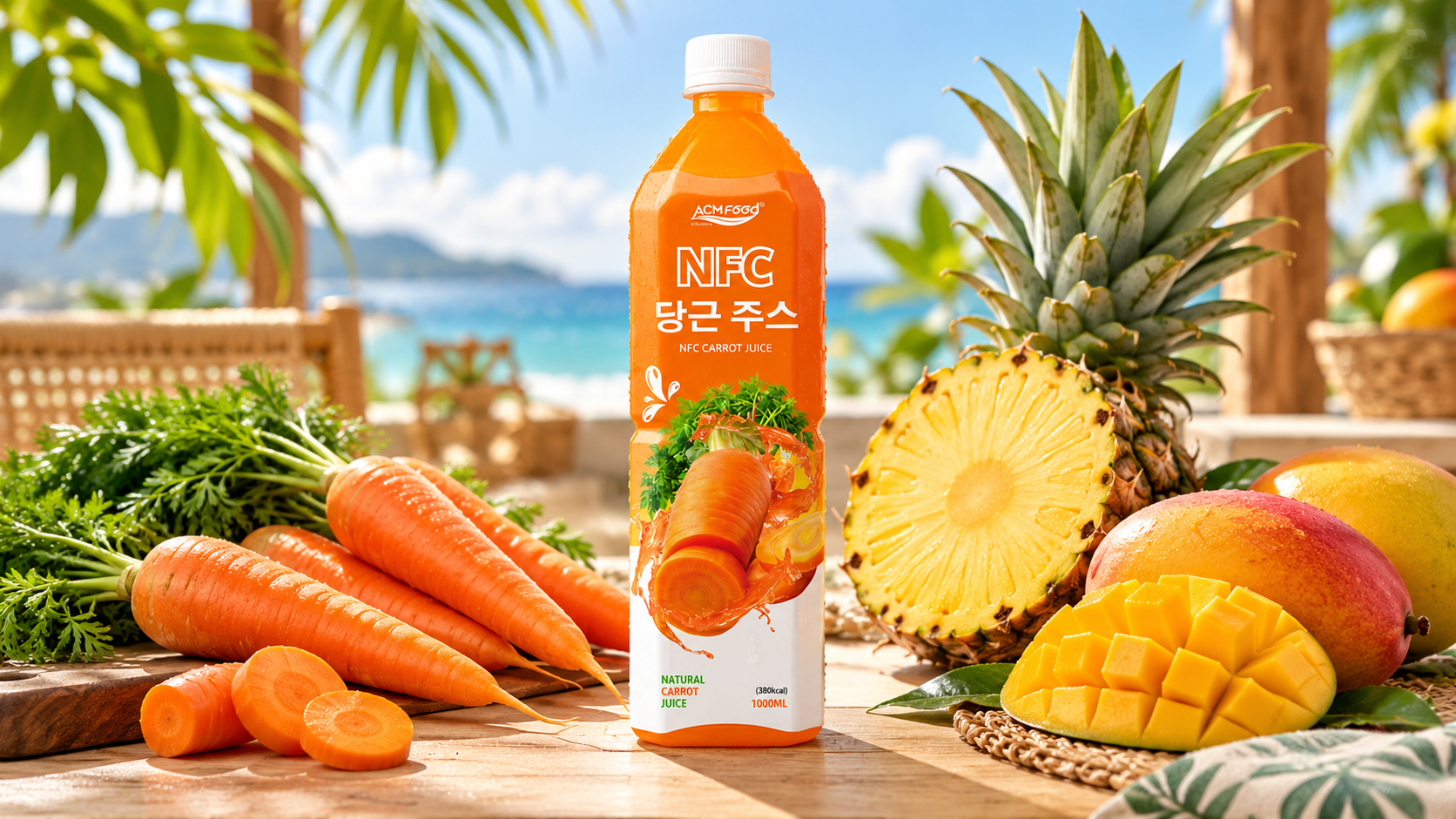
Carrot with pineapple or mango makes a sunny, golden drink that feels more indulgent than plain carrot juice while still keeping a vegetable base. Pineapple brings sharp acidity and aroma; mango brings smooth sweetness and body. This guide explains how each fruit changes the blend, how to choose starting directions, how to manage acidity and colour, and what to define for a finished can or bottle.
Ratios here are starting directions for tasting trials. Fruit ripeness, variety and processing change results, so every blend needs bench testing.
Why do carrot and tropical fruit work together?
Carrot is mellow and slightly earthy. Tropical fruit is bright, aromatic and sweet. Blended, the fruit covers the earthiness and the carrot adds body and a steady orange colour. The result is a drink that feels familiar and easy, with a story that is simple to explain: a vegetable base with a tropical lift.
Both pairings also look appealing. The colour sits between orange and golden yellow, which reads as ripe and warm without added colouring.
Carrot pineapple or carrot mango: how do they differ?
| Pairing | Taste | Texture | Acidity | Best for |
|---|---|---|---|---|
| Carrot and pineapple | Bright, tangy, aromatic | Light, juicy | Higher | Refreshing, summer drinks |
| Carrot and mango | Sweet, smooth, floral | Fuller, more viscous | Lower | Rich, dessert-like drinks |
| Carrot, pineapple and mango | Rounded tropical, balanced | Medium | Medium | Mainstream tropical RTD |
A three-way blend often gives the most balanced result: pineapple supplies the acidity, mango supplies the body, and carrot supplies the base and colour.
What starting ratios should you test?
Start carrot-led and move toward fruit in steps. Because tropical fruit flavours are strong, small changes are noticeable.
- Carrot-led: vegetable character with a tropical accent.
- Balanced: carrot and fruit in similar proportion, sweet and fresh.
- Fruit-led: a tropical drink with carrot as body and colour.
Prepare three versions for each pairing, taste them chilled and record sweetness, acidity and aroma in plain words. Test with and without a small amount of lemon, because it can sharpen a drink that has become too sweet.
How do you balance sweetness and acidity?
Mango is sweet and low in acid; pineapple is acidic and moderately sweet; carrot is sweet and low in acid. A blend of carrot and mango can therefore taste flat and heavy, while a blend of carrot and pineapple can taste sharp.
- If the drink is cloying, add pineapple or a small amount of lemon for acidity.
- If it is sharp, increase carrot or mango.
- If aroma is weak, check ripeness and variety of the fruit, and consider whether the process is stripping aroma.
Always taste at the serving temperature and compare against a reference sample.
Why does acidity affect processing?
Carrot and mango are low-acid, while pineapple is acidic. The final pH of the blend depends on the proportions, and the pH influences which heat treatment and storage conditions are appropriate. The right process must be confirmed by the producer and verified by testing, not assumed from the recipe name.
Ask for the final pH, the treatment and the storage conditions of any sample you receive, and add them to the specification. A process suitable for a high-acid pineapple-led drink may not be suitable for a carrot-and-mango-led drink.
How do you manage texture and cloud?
Mango adds viscosity and fine pulp, which gives a creamy mouthfeel but can also settle or thicken. Pineapple is thinner and can contain fibres. Carrot adds fine particles. Decide whether you want a smooth, creamy drink or a lighter, more juice-like one, and ask how the texture will be kept consistent through shelf life.
Shake-before-use notes are common for natural drinks with pulp, but formulation can reduce separation.
How do you protect colour and aroma?
Carotenoid colour is fairly stable, but heat, light and oxygen change it. Tropical aroma is volatile, so it can fade with heat or storage. Practical steps include limiting oxygen at filling, sealing well, choosing a pack that blocks light or planning storage that does, and testing taste and colour at the end of shelf life.
For background on label terms such as organic, see what organic juice means.
Which pack suits tropical carrot blends?
| Format | Strengths | Points to check |
|---|---|---|
| Slim or sleek aluminium can | Opaque, light, single-serve | Line compatibility, lining, acidity of the drink |
| Glass bottle | Shows golden colour, premium | Weight, light exposure |
| PET bottle | Light, practical, family sizes | Barrier needs, recycling rules |
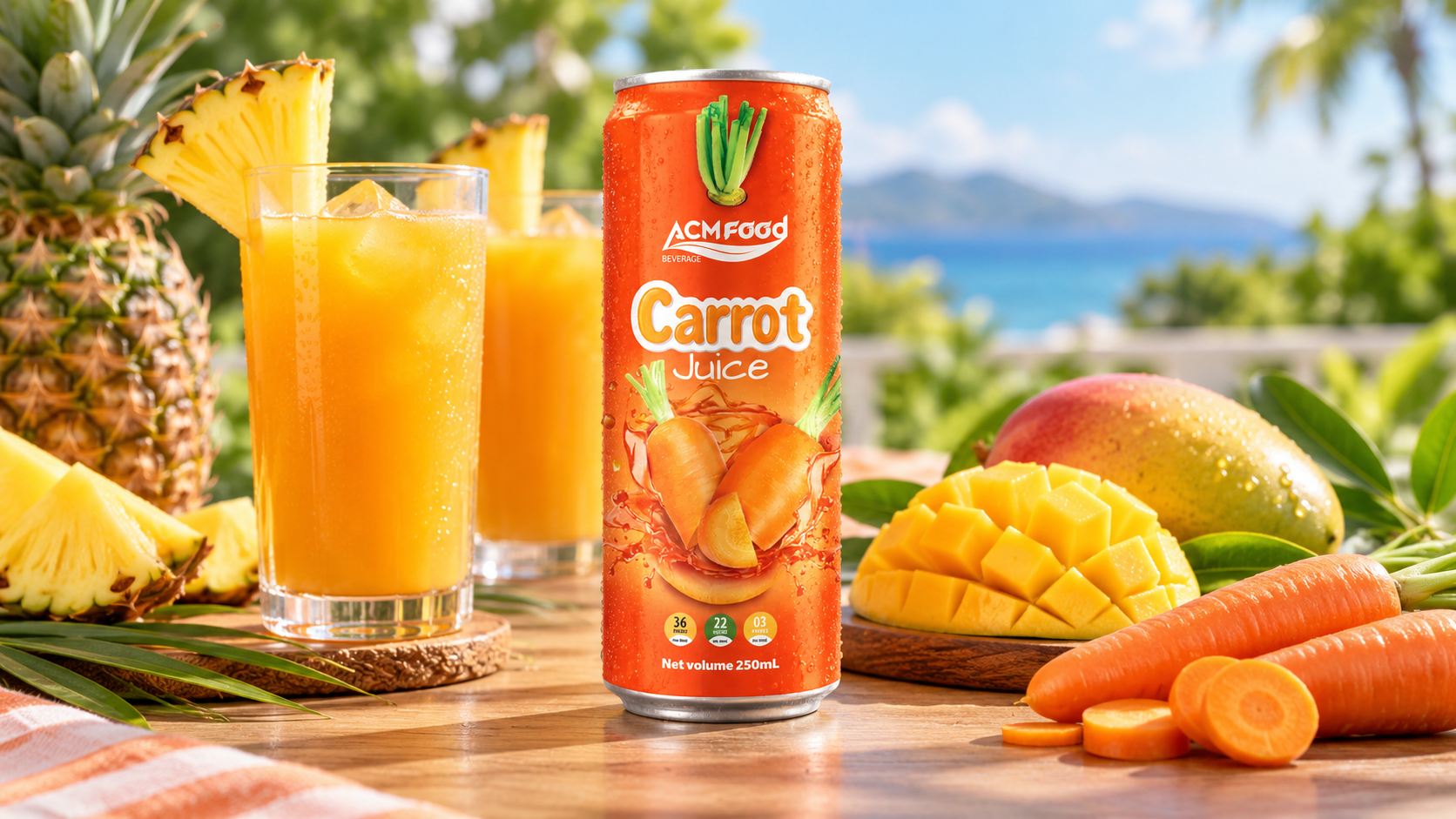
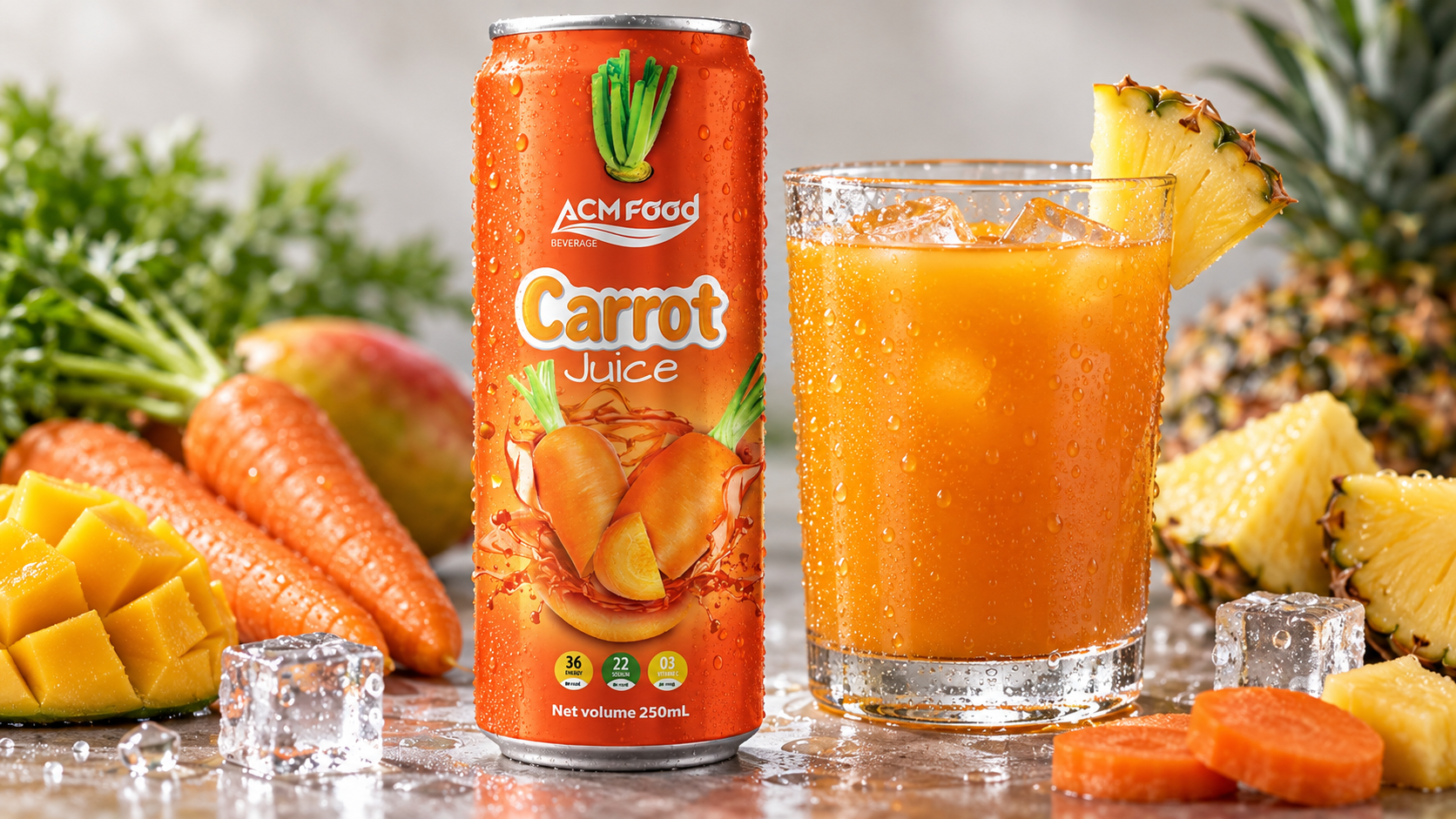
ACM Beverage supplies finished drinks in cans and bottles. Acidic drinks need a can lining and closure suited to them, so confirm this with the packaging supplier.
What should a product brief include?
- Fruit choice: pineapple, mango or both.
- Lead ingredient and ratio direction.
- Taste target in plain words.
- Texture: smooth, lightly pulpy or clear.
- Sugar positioning and ingredient list goals.
- Pack type and size.
- Target markets and labelling rules.
Claims and labelling depend on the final recipe, tested values, serving size and destination market rules.
How do you run a development trial?
- Choose the pairing: pineapple, mango or both.
- Prepare three ratio versions and taste them chilled.
- Adjust acidity with a small amount of lemon if needed.
- Check texture and separation after a day.
- Test colour and aroma in the real pack.
- Store samples at the intended temperature and re-evaluate.
- Approve a written reference and a physical reference sample.
Common mistakes with tropical carrot blends
- Using too much mango and losing freshness.
- Using too much pineapple and making the drink sharp.
- Ignoring how pH changes the choice of process.
- Skipping an aroma check after storage.
- Printing claims that the recipe does not support.
Should the fruit be juice, puree or concentrate?
Tropical fruit can enter a blend in different forms, and each changes the texture and the label. Juice is thin and bright. Puree is thicker, carries fibre and gives a creamy body, which suits mango well. Concentrated forms reduce volume and are common in industrial recipes, but labelling rules for how they are described differ by market.
Choose the form according to the texture you want and the name you intend to use. A drink that is described as a juice may have rules about what can be added, while a nectar or a drink has different rules. Check the requirements of your target market before settling on the product name.
How do seasonality and variety affect tropical blends?
Fruit ripeness changes sweetness, acidity and aroma through the year. A mango blend made with very ripe fruit tastes sweeter and softer than one made with less ripe fruit, and pineapple acidity varies with variety and maturity. Agree an acceptable range for key measures with the producer and define how the recipe is adjusted to stay within it, so that the drink tastes consistent from batch to batch.
How can you test the blend in a structured way?
A simple matrix helps you compare options quickly. Taste carrot-led, balanced and fruit-led versions for each pairing, and score each for sweetness, acidity, aroma and texture on a short scale agreed in advance. Record comments in plain words. After the first round, narrow to the best two versions and repeat with a small change, such as a little lemon or a different fruit share. After the second round you should have a clear winner, and the notes explain why.
How should you name and describe the drink?
Names that list ingredients in order of quantity are generally the most honest. A drink called “Carrot and Pineapple” implies that carrot leads, while “Pineapple and Carrot” implies the reverse. If a third fruit is present, decide whether it appears in the name. Keep descriptions factual, such as “carrot with pineapple and mango”, and avoid claims that go beyond the recipe. Check the naming rules of your destination markets, because the way a blend is described can be regulated.
What should you check on the can lining and closure?
Acidic tropical drinks put more demand on packaging than a neutral drink. Ask the packaging supplier to confirm that the can lining and the end are suited to a drink at the pH of your recipe, and that the closure and seal on bottles hold up over the shelf life. Request test results or a written confirmation, and include them in your specification. A packaging problem can ruin a good recipe.
Frequently asked questions
Which is better with carrot, pineapple or mango?
It depends on the taste goal. Pineapple gives a bright, tangy drink, while mango gives a smooth, sweet one. A blend of both often balances well.
Does mango make the drink thicker?
Yes. Mango adds viscosity and fine pulp, which gives a creamy feel. Decide how thick you want the drink before choosing the ratio.
Can the blend be sold in cans?
Yes. Cans suit tropical blends well, but the lining and closure must suit an acidic drink, and the process must be confirmed for the formula.
Summary
Carrot with pineapple or mango gives a golden, tropical drink when acidity, sweetness and texture are balanced and the process matches the final pH. Choose the pairing, test in the pack you will sell and keep a record of each version. If you are planning a finished tropical carrot drink for your own label, ACM Beverage can discuss can and bottle formats and recipe options once you share your brief.