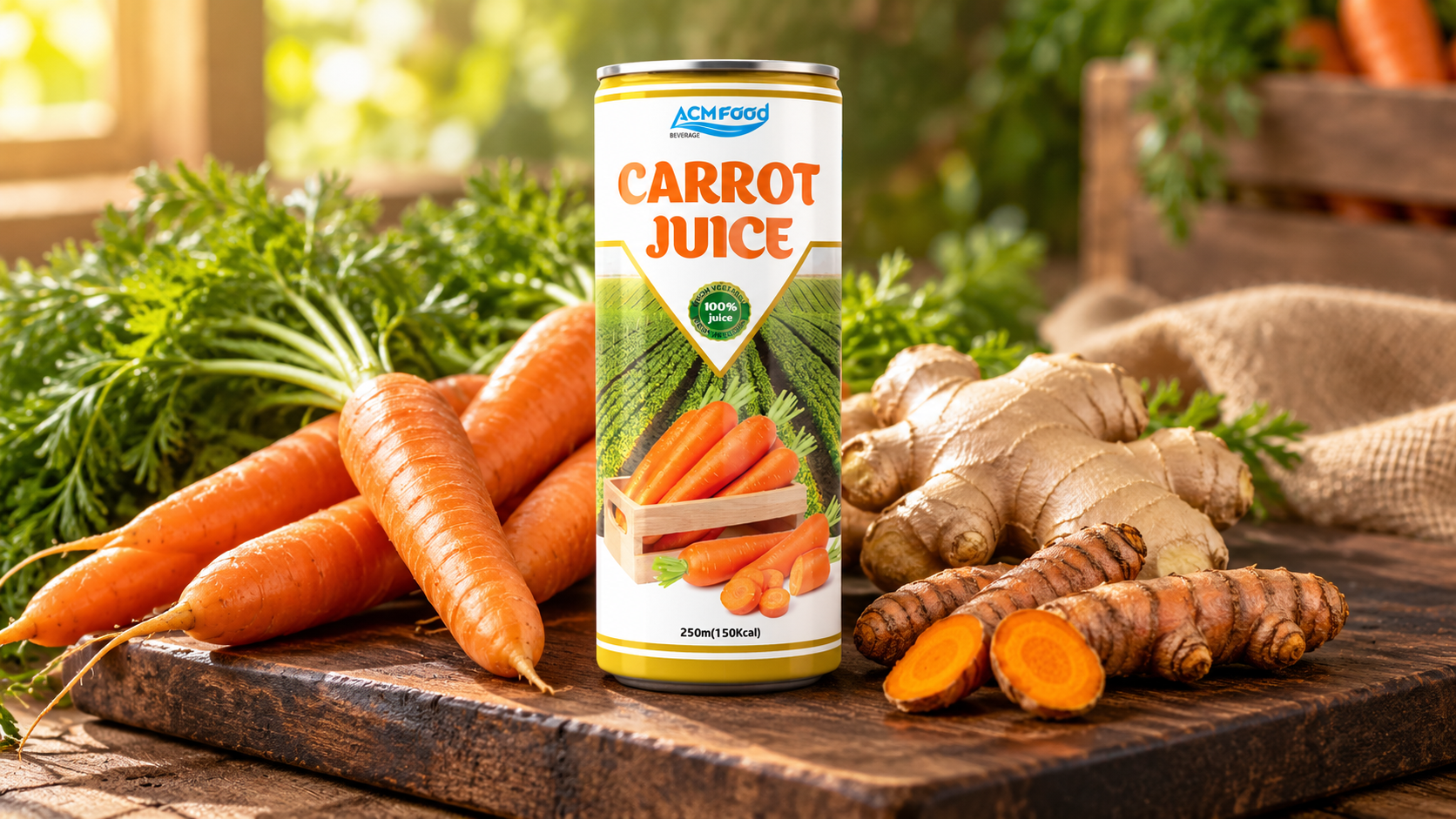
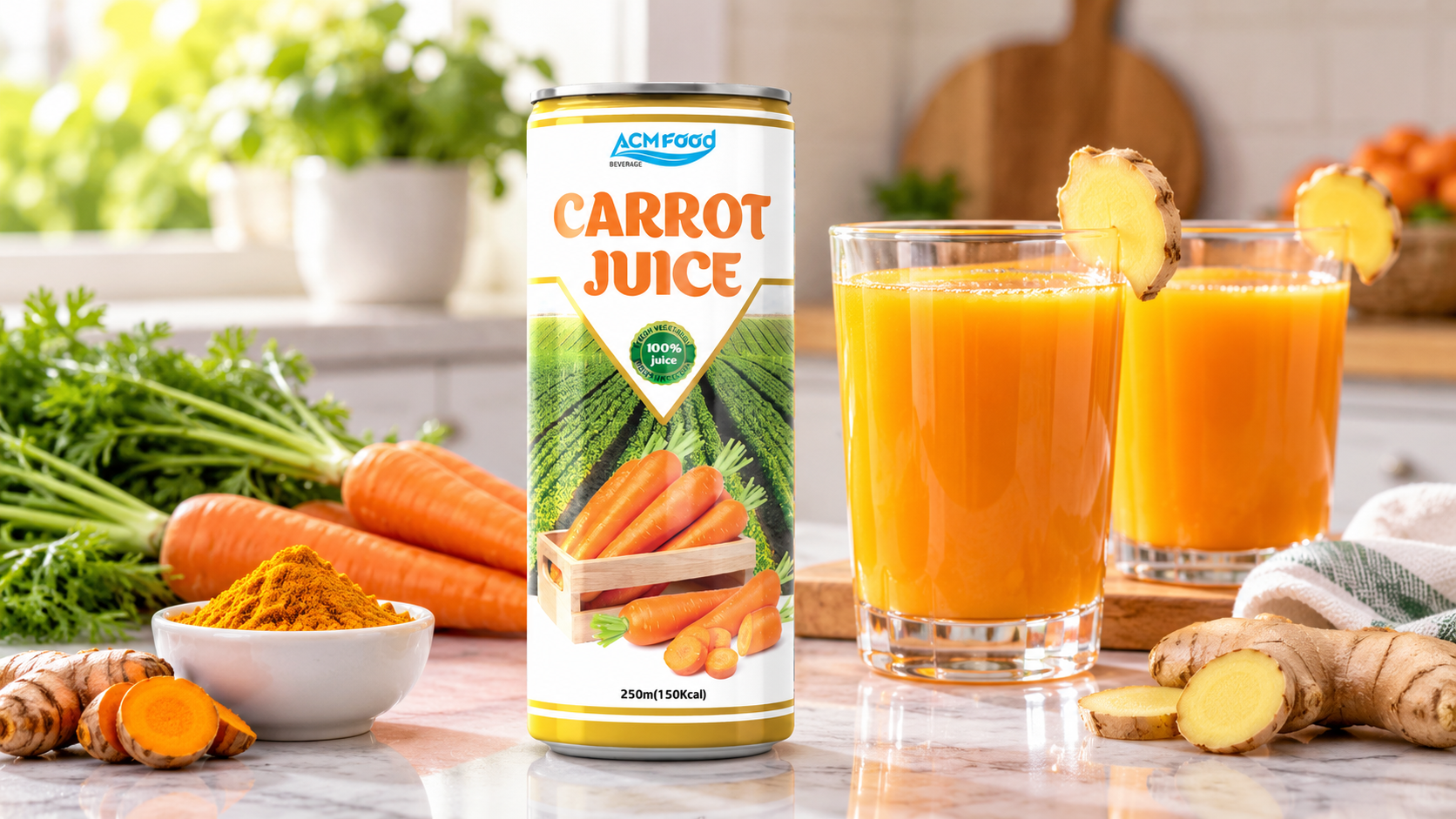
Carrot, ginger and turmeric make a warm, golden-orange juice that appeals to people who want more character than plain carrot juice offers. Because ginger heat and turmeric bitterness are both strong, the work is in dosing and balance. This guide covers how the three ingredients behave together, starting directions for trials, how to keep colour and aroma stable, and what to define for a finished can or bottle.
Nothing here is a formula. Spice strength varies by source and form, so every recipe needs tasting trials in the real drink.
Why combine carrot with ginger and turmeric?
Carrot supplies body, sweetness and a rich orange colour. Ginger adds warmth and a clean, aromatic finish. Turmeric adds an earthy depth and a golden tone. Together they make a drink that feels hearty yet lively, with a flavour story that is easy to describe in a few words.
The combination also fits an existing consumer idea of “warming” drinks, without requiring any health statement. That is important, because claims depend on the recipe, tested values and local rules and should not be borrowed from other brands.
What are sensible starting directions?
| Direction | Character | Best for |
|---|---|---|
| Carrot-led, light ginger, trace turmeric | Mellow, gentle warmth | Everyday drink, broad appeal |
| Carrot with medium ginger, light turmeric | Noticeable warmth and earthiness | Adults who like spice |
| Strong ginger, turmeric as colour and depth | Bold, tonic-style | Niche or shot-style products |
Begin with the first row and increase spice in small steps. Turmeric in particular should be added in tiny amounts: a level that looks harmless in a recipe can taste bitter in the glass.
How do you dose ginger and turmeric?
Treat the two spices separately.
- Ginger: the heat builds after swallowing, so taste both the first sip and the finish. Taste chilled and at room temperature.
- Turmeric: adds earthy bitterness and yellow colour. Use sparingly and check how it changes the colour of the carrot base.
- Citrus: a little lemon lifts the drink and makes the spices feel cleaner.
Always have several people taste, because sensitivity to ginger varies widely. A recipe approved by a spice enthusiast alone is often too strong for the market.
How does turmeric change the colour?
Turmeric pigment gives a strong yellow-orange that shifts the carrot colour toward gold. It can also stain surfaces and packaging parts such as caps and labels, which is worth checking in handling trials. Turmeric colour is also affected by light and by acidity, so test colour in the intended pack and after storage.
Because the drink is naturally coloured, decide what colour is acceptable at the end of shelf life and record it with photographs taken under standard light.
Why does carrot need a suitable process?
Carrot is a low-acid vegetable and needs processing designed for it. Ginger and a little lemon change the acidity slightly, but the overall result depends on the whole recipe. The right heat treatment and storage depend on the final pH and the pack, and they must be confirmed by the producer and verified by testing.
Ask for the pH, the heat treatment and the storage conditions of any sample, and add them to your specification. Do not transfer a process from another product based on a similar name.
How do you keep aroma and flavour stable?
Ginger aroma is volatile and can fade or change with heat and time. Turmeric flavour is more stable but can taste harsher in some recipes after storage. To protect the drink, limit oxygen at filling, seal well, and check taste at the end of the intended shelf life. If the aroma weakens, adjust the starting level or the process, but base that decision on testing and not guesswork.
Which pack suits carrot ginger turmeric juice?
| Format | Strengths | Points to check |
|---|---|---|
| Slim or sleek aluminium can | Opaque, modern, protects colour | Line compatibility, lining |
| Glass bottle | Shows golden colour, premium | Light exposure, weight |
| PET bottle | Light and practical | Barrier needs, recycling rules |
ACM Beverage supplies finished drinks in cans and bottles. Check how turmeric colour interacts with label and cap materials in your chosen pack before approving artwork.
How should you position it without health claims?
Describe taste, ingredients and the occasion. A phrase such as “warming carrot blend with ginger and turmeric” is accurate and checkable. Statements about immunity, inflammation or disease are health claims that need evidence and market-specific approval, and they are best avoided unless you have both. For background on responsible label wording, see what organic juice means.
What should a product brief include?
- Lead: carrot, with ginger and turmeric levels in plain words.
- Optional additions: lemon, orange or apple.
- Sugar positioning and ingredient list goals.
- Cloud and pulp preference.
- Pack type and size.
- Target markets and labelling rules.
- Storage condition: ambient or chilled.
For a sense of how finished vegetable drinks are developed with a supplier, see beetroot juice OEM and private label production. The carrot juice recipe and nutrition guide covers home preparation, which differs from product development.
How do you run a development trial?
- Make a plain carrot base and taste it.
- Add ginger in small steps and note where it becomes uncomfortable.
- Add turmeric in tiny amounts and record the effect on taste and colour.
- Add a little lemon and compare.
- Decide whether apple or orange is needed.
- Test in the real pack and after storage.
- Approve a written reference and a physical reference sample.
Common mistakes with spiced carrot juice
- Adding turmeric until the drink turns bitter.
- Setting ginger from a small sample cup, not from the real drink.
- Ignoring how turmeric stains caps and labels.
- Using a process suited to an acidic juice without checking the carrot base.
- Printing health claims that are not supported.
What forms of ginger and turmeric can be used?
Spices reach a drink in several forms, and each has a different effect on taste, consistency and labelling. Fresh juice or pressed root gives a natural, lively profile but varies between batches. Extracts and concentrated flavour components give more consistency but may be listed differently on the label. Dried and powdered forms can add colour and body but may affect cloudiness and texture.
| Form | Strength | Consideration |
|---|---|---|
| Fresh pressed | Natural, aromatic | Batch variation, handling |
| Extract | Consistent | Label wording, taste can feel narrower |
| Powder | Easy to store | Can settle, affect texture and clarity |
Decide which forms fit your positioning, then confirm that the ingredient list will describe them accurately. Positioning a drink as made from natural root juice, for example, only works if the recipe really uses it.
How do you run a sensory panel for a spiced drink?
Spice perception varies a lot between people, so a panel is more reliable than a single tasting. Gather a small group of people who represent your target customers, give each a coded sample in a neutral cup, and ask the same questions: how strong is the ginger heat, is there bitterness, how does the finish feel, and would you drink a whole can? Include a sample at a lower and a higher spice level so you can see where preference sits. Take notes on comments, not only scores, because words often reveal problems that numbers hide.
What storage and handling points matter for spiced juices?
Spice flavour and colour change with time, light and temperature. Keep samples in the real pack, store them at the intended temperature and taste them at intervals. Note any change in aroma, bitterness or colour, and record the date. If you plan to ship the product, test samples after a simulated transport as well, because vibration and temperature swings can affect cloud and appearance.
Which markets suit a spiced carrot blend?
Spiced vegetable blends tend to do well in channels where consumers look for distinctive flavours, such as specialist grocers, cafes and online stores. Mainstream shelves may prefer a milder version. Rather than guessing, test your short-listed recipes with the customers you want to reach, and consider launching a mild version first and a stronger one as an extension.
Frequently asked questions
Is carrot ginger turmeric juice spicy?
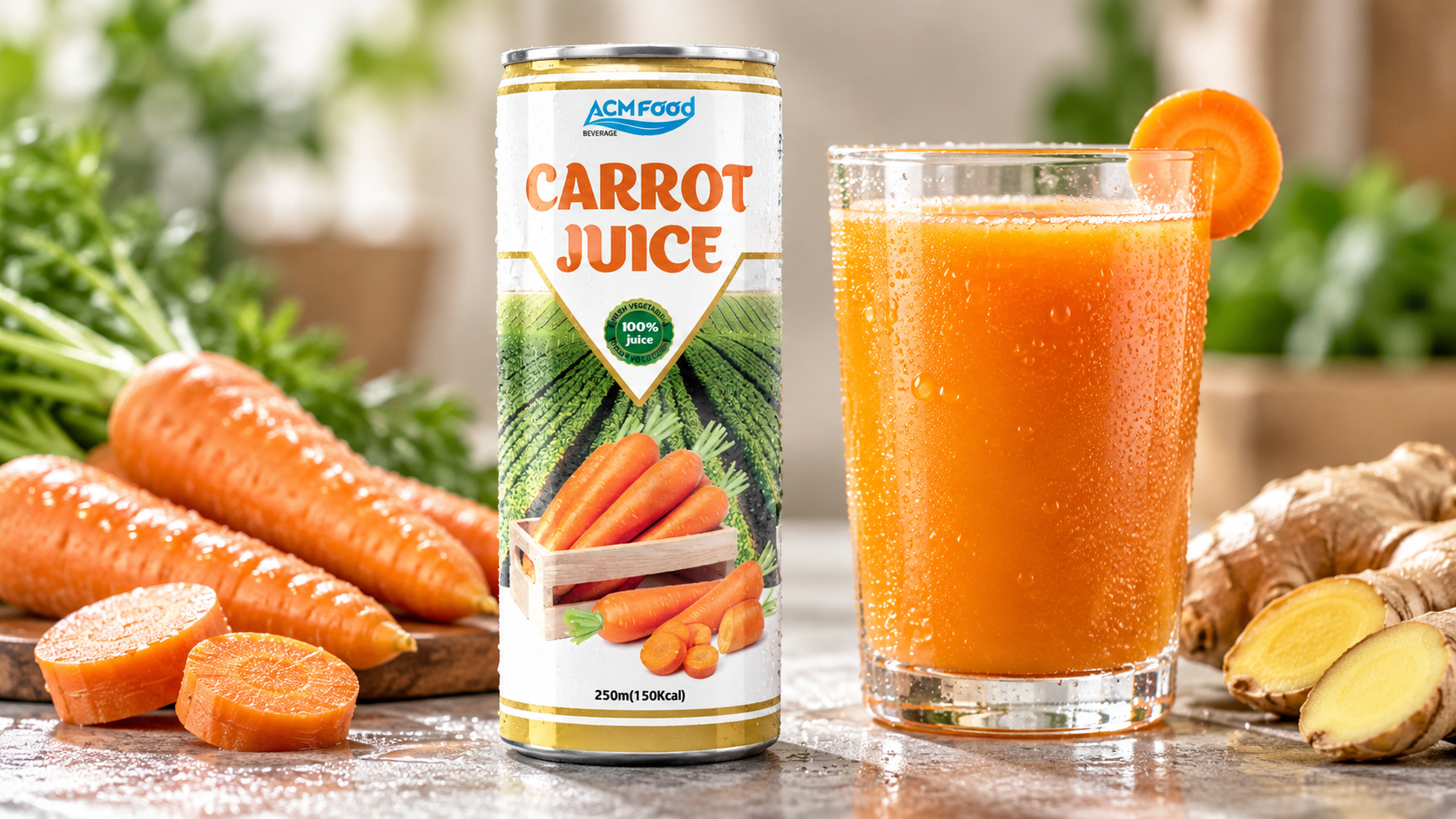
It can be, depending on the ginger level. A light dose gives gentle warmth, while a strong dose gives a clear bite. Turmeric adds earthiness rather than heat.
Does turmeric stain the packaging?
It can stain porous materials and some label or cap parts. Run a handling trial with your real pack before approving the design.
Can the drink be shelf-stable?
It can, if the process and pH are suitable for the recipe and the pack. Ask the producer for the process description and storage guidance for the specific formula.
Summary
Carrot, ginger and turmeric work when the spices are dosed carefully, the colour is protected and the process respects carrot’s low acidity. Define the spice levels, test in the real pack and keep a record of each trial. If you are planning a finished spiced carrot drink for your own label, ACM Beverage can discuss can and bottle formats and recipe options once you share your brief.