


NFC fruit juice, juice made directly from fresh fruit without ever being reduced down to concentrate and later reconstituted, offers a genuinely different product experience than a from-concentrate equivalent, but that difference comes with operational trade-offs a brand needs to plan around rather than simply a premium claim to put on the label. Shelf life, seasonal supply variation and production cost all work quite differently for NFC than for concentrate-based juice, and a brand entering this category benefits greatly from understanding those mechanics before committing to a specification.
This guide focuses specifically on what NFC actually means for the finished product experience and for a brand’s sourcing and private label options, rather than simply repeating the basic technical definition of NFC versus concentrate juice.
What the product experience actually differs on
NFC juice generally delivers a fresher, more vivid flavor profile and a fuller mouthfeel than a from-concentrate equivalent, since the juice has not gone through the heat and water removal process concentration involves, followed by reconstitution back to drinking strength. This produces a taste experience closer to fresh-squeezed fruit, which is the core of the NFC positioning’s appeal to a shopper willing to pay a premium for it.
This freshness advantage comes with a corresponding operational cost. NFC juice generally has a shorter shelf life than a from-concentrate product, since it has not gone through the same intensity of processing, and depending on the specific pasteurisation and packaging approach used, it may need cold chain distribution that a shelf-stable from-concentrate product does not require. A brand choosing NFC needs to plan its distribution and retail channel around these constraints from the outset, not discover them after a first production run is already committed to a distribution plan built for a shelf-stable product.
The distinction, covered in more technical detail in the comparison of NFC and from-concentrate juice, is worth understanding at the process level as well as the finished product level, since a brand’s manufacturing partner will need to confirm which specific pasteurisation method they use for NFC production, as this directly determines both the shelf life the finished product can achieve and whether ambient or refrigerated distribution is viable. Different manufacturers may offer meaningfully different shelf life outcomes for what is nominally the same NFC format, so this is worth confirming specifically rather than assumed to be standard across suppliers.
Seasonal supply and batch variation
Because NFC juice is made from fresh fruit rather than a stored, standardised concentrate, its taste and even its colour can vary somewhat between production batches, reflecting natural variation in the fruit’s ripeness, growing conditions and harvest timing. A from-concentrate product can be blended and standardised more precisely to a consistent specification, while an NFC product carries a degree of natural batch variation as an inherent characteristic of the format, not a defect.
| Consideration | What it means for an NFC product |
|---|---|
| Flavor and mouthfeel | Fresher, fuller profile closer to fresh-squeezed fruit |
| Shelf life | Generally shorter than from-concentrate; may need cold chain |
| Batch consistency | Some natural variation between batches reflecting fruit conditions |
| Sourcing predictability | More exposed to seasonal fruit availability than concentrate |
| Production cost | Typically higher, reflecting fresh fruit input and shorter shelf life logistics |
Setting shopper and retailer expectations around this natural variation, rather than promising a level of batch-to-batch uniformity the format cannot genuinely deliver, avoids a credibility problem once a shopper or buyer notices a difference between two batches of the same product.
Production planning also needs to account for this seasonality directly rather than treating fruit supply as a constant input available on demand. A fruit with a defined, relatively short harvest window may require a manufacturer to process and store a larger batch during the season to supply the year ahead, which has its own implications for tank or cold storage capacity and for how far in advance a brand needs to place its annual order. A brand planning a year-round NFC product should discuss this production and storage cycle directly with its manufacturer, since the answer varies considerably by fruit and by region of origin, and a mismatch between assumed and actual supply continuity is one of the more disruptive surprises a brand can encounter after launch.
Learning from proven NFC formulations
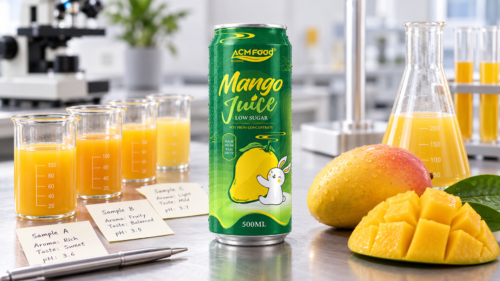
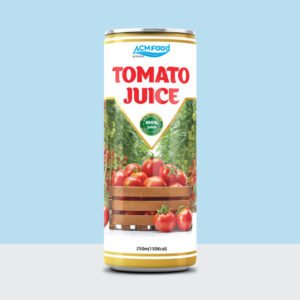
A straightforward single-fruit NFC juice can serve as a clean entry point into the category, and existing formulations offer a useful reference for how this works in practice. Pure mango juice demonstrates how a naturally rich, distinctive fruit performs well in an NFC format, since the fruit’s own intensity carries the product without needing additional formulation complexity. A tomato-based option, covered in the NFC tomato juice formulation, shows how the same NFC principle extends beyond sweet fruit juice into a savoury, clean-label positioned product.
A berry-forward option built around antioxidant positioning follows a similar logic, pairing the NFC format’s freshness story with a fruit already associated with a health-conscious appeal, giving the product two complementary reasons for a shopper to choose it beyond the NFC claim alone. Choosing a first NFC flavor that already carries a strong, well-understood health or freshness association tends to shorten the marketing work needed to explain the format, since the shopper does not have to be educated about both the fruit and the NFC process at the same time.
Private label options for an NFC product
Starting from an existing NFC base formula is generally a faster route to shelf than developing a new NFC recipe from scratch, since a manufacturer with established NFC production capability already has proven sourcing relationships and processing parameters for specific fruits. Pure fruit juice innovation within the wider RTD beverage category illustrates the kind of established capability a brand can draw on for a private label NFC launch, rather than needing to build sourcing and processing relationships independently from the ground up.
Building an NFC product brief
Five inputs help a brand plan an NFC product launch around its actual operational requirements.
- Distribution and cold chain plan. Confirm whether the target retail channel can support NFC’s shorter shelf life and any cold chain requirement before committing to the format.
- Fruit sourcing and seasonality. Understand the harvest calendar for the target fruit and plan production timing and inventory accordingly.
- Batch variation expectations. Set realistic expectations with retail partners and in marketing language about natural batch-to-batch variation.
- Cost position against from-concentrate alternatives. Confirm the target price point can absorb NFC’s typically higher production cost.
- Base formula availability. Check whether a manufacturer already has a proven NFC base for the target fruit before committing to a from-scratch development timeline.
Common mistakes in NFC product development
A consistent set of avoidable errors accounts for much of the friction brands encounter when launching an NFC product.
- Underestimating shelf life and cold chain requirements. Planning distribution as though the product were shelf-stable, then discovering NFC’s shorter shelf life after production, creates costly last-minute logistics problems.
- Promising uniform batch consistency. Marketing language implying identical taste every time can set an expectation the natural product cannot always meet.
- Ignoring fruit seasonality in production planning. Committing to a year-round supply plan without confirming the target fruit’s harvest calendar risks a sourcing gap.
- Pricing without accounting for the full NFC cost structure. A price point set against from-concentrate competitors without reflecting NFC’s higher input and logistics cost can leave the product unprofitable.
Each of these is avoidable by planning distribution, sourcing and pricing around NFC’s actual operational characteristics from the outset, rather than treating it as a like-for-like substitute for a from-concentrate product. A brand that raises these four points directly with its manufacturer during the first planning conversation, rather than discovering them one at a time across several production cycles, generally reaches a stable, profitable NFC listing considerably faster than one that learns each constraint the hard way after launch.
Frequently asked questions
How much shorter is NFC juice’s shelf life compared with from-concentrate?
This varies by the specific pasteurisation and packaging technology used, but NFC juice generally carries a meaningfully shorter shelf life than a shelf-stable from-concentrate product, and some NFC products require refrigerated distribution throughout. Confirming the exact shelf life and storage requirement with the manufacturer for the specific process used is essential before finalising a distribution plan.
Does NFC always cost more to produce than from-concentrate juice?
In most cases yes, reflecting the fresh fruit input cost, the shorter shelf life’s logistics implications and generally lower production efficiency compared with concentrate-based processing. The exact premium varies by fruit and by the manufacturer’s specific production setup.
Can a brand launch with a blend of NFC and from-concentrate products in its range?
Yes, this is a common approach, using NFC for a premium tier within the range while relying on from-concentrate products for a broader, more accessible price point. This lets a brand offer the NFC experience without committing its entire range to NFC’s operational constraints.
How should a brand communicate natural batch variation to shoppers without it reading as a flaw?
Framing it as an expected characteristic of a genuinely fresh, minimally processed product, rather than apologising for it or hiding it, tends to work well with the audience NFC products are already targeting. This audience generally understands, and often values, that a product made from real fruit rather than a standardised concentrate will not be perfectly identical from batch to batch.
What packaging formats are commonly used for NFC juice?
This depends heavily on the pasteurisation method and target shelf life. Some NFC products use aseptic packaging that allows ambient shelf-stable distribution, while others rely on standard pasteurisation with refrigerated distribution throughout. Confirming which approach a specific manufacturer uses is essential, since it directly determines the packaging format options available and the logistics the finished product will require.
Is private label a realistic route into the NFC category?
Yes, particularly by starting from an existing NFC base formula a manufacturer already produces, which avoids the sourcing and processing development work of building NFC capability entirely from scratch. This is generally the faster and considerably lower-risk route for a brand that is new to the category and still learning its operational requirements.
Starting an NFC product brief
An NFC fruit juice product works best when distribution, sourcing and pricing are planned around the format’s actual shelf life, seasonality and cost characteristics, rather than treated as a simple premium variant of a from-concentrate product.
ACM Beverage actively develops and supplies NFC fruit juice products and can advise thoroughly on distribution, sourcing, packaging format and cost planning before a first order is placed. Reach out through the enquiry and contact page with the target fruit, distribution channel and intended shelf life in mind to start that conversation, and confirming the pasteurisation and packaging approach early is generally the single most useful thing to clarify before the rest of the launch plan is finalised.