
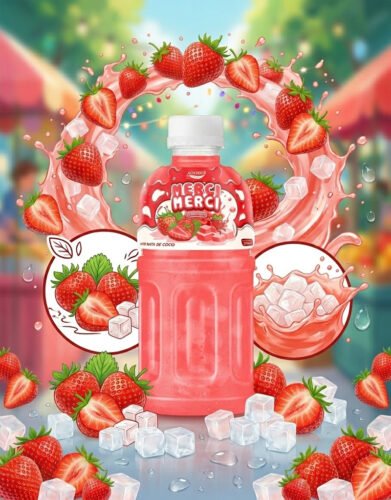
Beverage product customization describes everything a brand can alter about a drink it did not create. The range runs from label artwork at one end to a completely new formula at the other, and the cost of moving along that range is uneven rather than gradual. Some changes are routine. Others quietly trigger a revalidation that resets your timeline.
Knowing which is which is the practical skill. Brands frequently spend development budget on changes buyers never notice, while accepting constraints they could have removed cheaply. This guide maps the territory so you can decide where customization genuinely earns its cost.
What does customization actually cover?
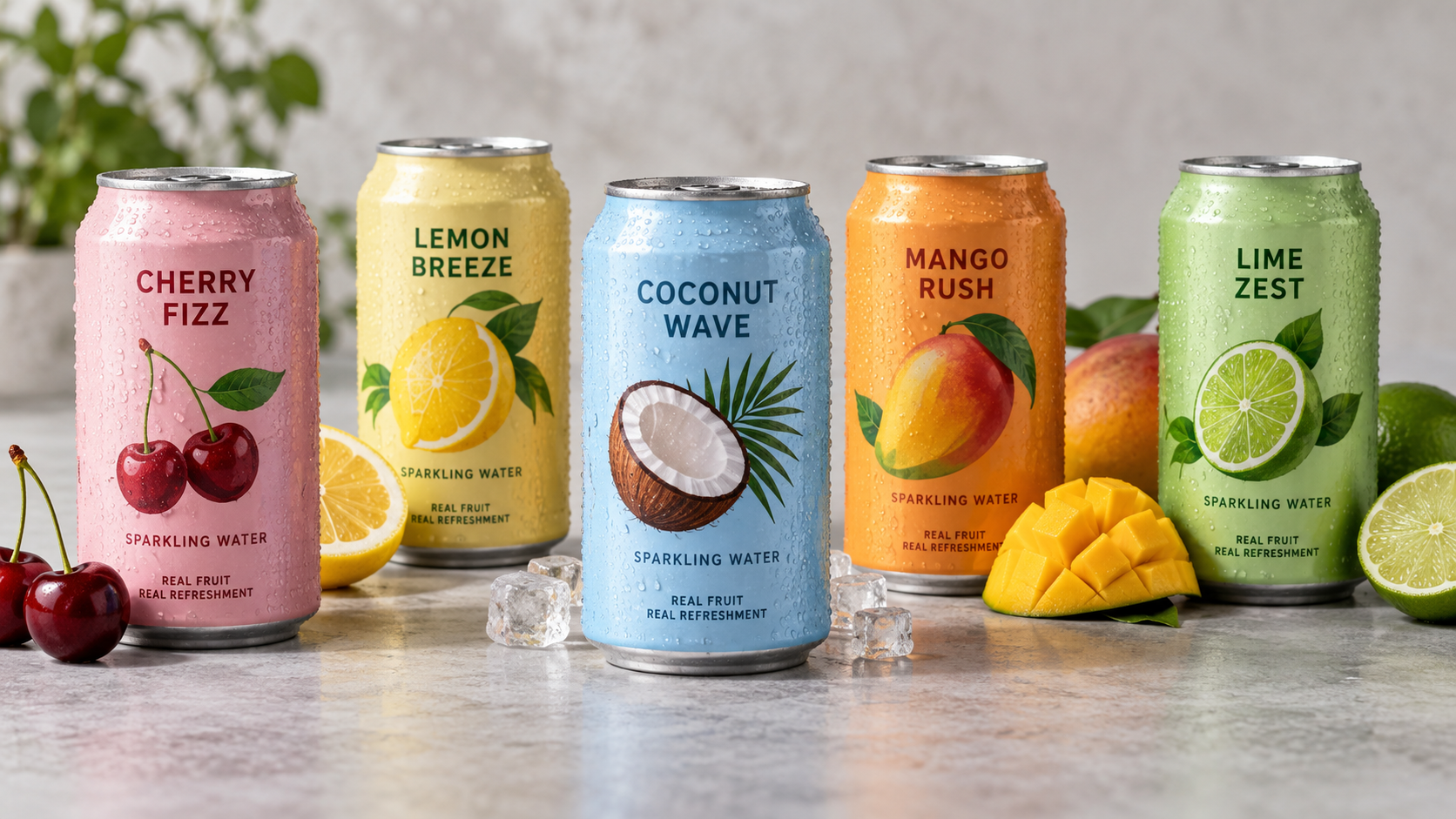
Customization covers four distinct layers: the brand presentation, the packaging, the product configuration and the liquid itself. Each sits further from the finished formula than the last, and each carries progressively more technical consequence. Treating them as one undifferentiated request is what makes quotations difficult to compare.
The useful question is not how much can be changed, but how far from the existing product each change moves you. A different label is a printing decision. A different can size may be a filling line decision. A different sweetness level is a formulation decision that carries stability testing behind it.
| Layer | Examples | Typical technical consequence |
|---|---|---|
| Brand presentation | Label artwork, brand name, carton print | Artwork approval and print setup only |
| Packaging | Can or bottle format, size, closure, case count | Depends on filling line compatibility |
| Product configuration | Flavour selection, variant choice within a range | Minimal if the variant is already produced |
| Liquid | Sweetness, fruit content, texture, functional ingredients | Formulation work plus stability validation |
Which changes are straightforward?
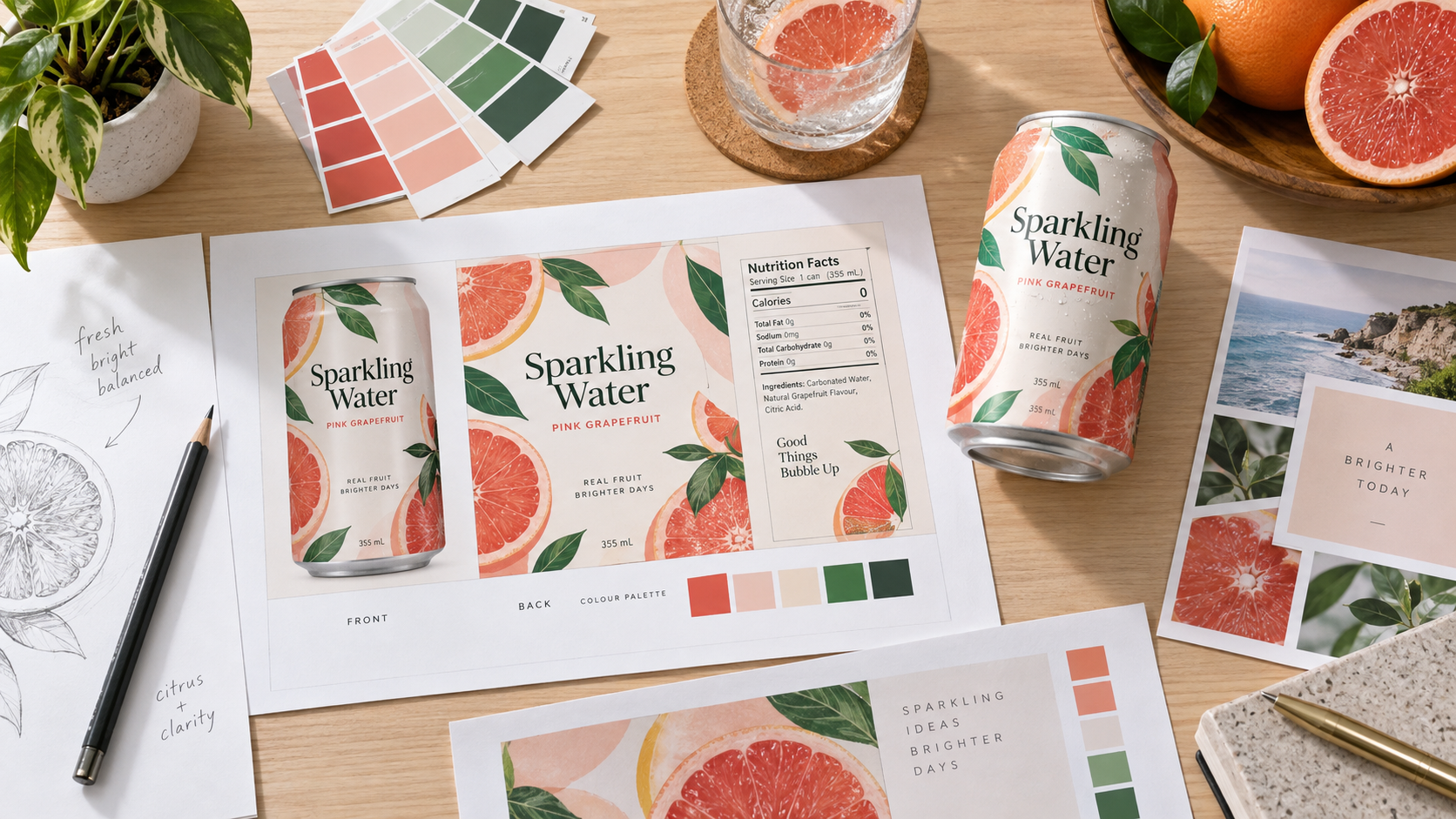
Changes that do not alter the liquid or the process are generally quick. Label artwork, brand name, carton design and case configuration fall into this group, along with selecting a different flavour from a range a manufacturer already produces. None of these affect shelf life or require new testing.
These are also the changes that do most of the visible differentiation work. A brand’s shelf presence, price perception and category positioning are carried far more by design and format than by small differences in the liquid. For many launches, customization at this layer alone is sufficient.
- Label and artwork. Your design and claims, within your destination market’s labelling rules.
- Brand name and identity. Applied to the product and its outer packaging.
- Flavour selection. Choosing from flavours already in production is a selection, not a development.
- Carton and pallet configuration. Case counts and outer print, which affect landed cost more than buyers expect.
- Existing variants. Switching to a reduced sugar or alternative version that already runs on the line.
Which changes require revalidation?
Any change that affects the liquid, the packaging barrier or the heat process may require the shelf life to be re-established. That is the dividing line worth understanding, because revalidation takes real time and cannot be compressed by commercial pressure.
Moving a product into a different packaging material is the change buyers most often underestimate. A juice validated in an aluminium can has documented stability under conditions that exclude light completely. The same liquid in a clear bottle faces a different environment, and its colour and flavour behaviour over months must be established rather than assumed. The formula has not changed, but the product has.
How does customization affect cost and timeline?
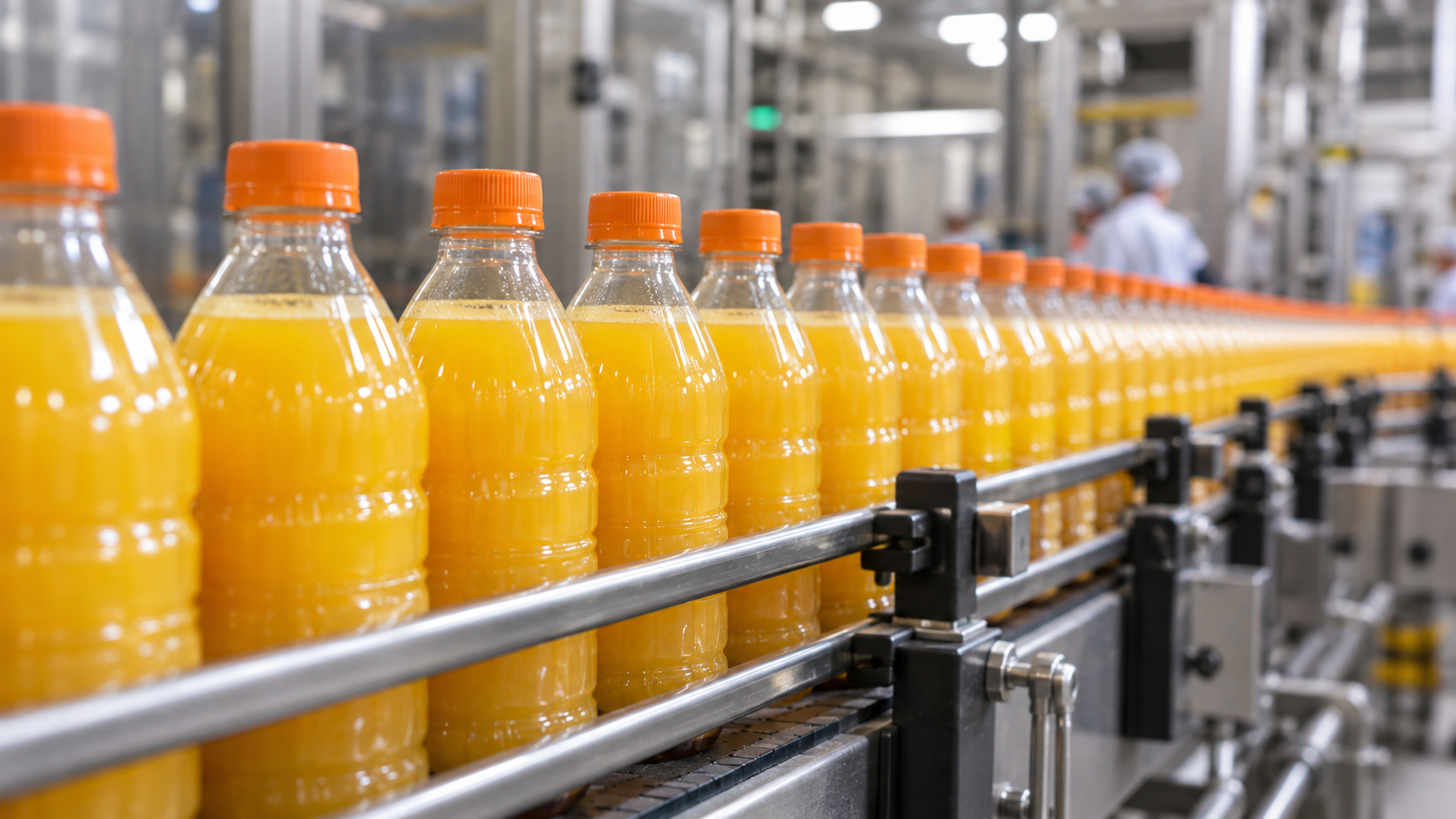
Cost follows the same layered logic. Artwork changes carry a one-off setup cost. Packaging changes may carry tooling or component minimums that sit outside your unit price. Liquid changes carry development effort and testing time before any production run happens.
Timeline behaves differently from cost, and this catches brands out. A change can be inexpensive and still slow, because validation is measured in elapsed time rather than in work. When a launch date is fixed, the right question to ask a manufacturer is not what a change costs but what it does to the schedule.
Sequencing your decisions
Customization decisions are easier when taken in an order that reflects their dependencies. Working from the outside in produces contradictions. Working from the constraints inward does not.
- Fix your destination market first, since it governs permitted ingredients, claims and label format.
- Fix your sales channel, which largely determines the format and size that will work.
- Fix your retail price band, which sets the realistic raw material and packaging budget.
- Select the closest existing product, and identify precisely what is wrong with it.
- Separate that list into changes buyers would notice and changes only you would notice.
- Take the noticeable changes into the quotation. Drop the rest.
- Design artwork last, once the format and declaration are settled.
Step five is where most budget is saved. A change that no buyer perceives on shelf is a cost without a commercial return, however much it matters internally.
How customization affects minimum order quantity
Minimum order quantity is often treated as a single figure attached to a supplier. In practice it is attached to a configuration, and each layer of customization can generate its own minimum independently of the others.
The reason is that different components are ordered from different sources on different schedules. Printed cans, sleeves, closures and outer cartons may each carry a supplier minimum that has nothing to do with how much liquid you want. A brand ordering a modest volume across four flavours can therefore find that the constraint is not production capacity but the label print run for each individual design.
- Ask whether the stated minimum applies per order, per SKU or per packaging format.
- Establish which components carry their own minimums, particularly printed packaging.
- Check whether selecting an existing variant rather than a customized one reduces the minimum.
- Consider whether a shared design across flavours, differentiated by a smaller printed element, lowers the component minimum.
- Confirm whether unused customized components are stored for a future run or written off.
The last point is worth settling in writing. Printed components produced for a first run and then made obsolete by an artwork revision represent a cost that is easy to overlook when planning a second order.
Managing a range with several variants
Customization becomes harder to control as a range grows, because each decision multiplies across variants. A change to the mandatory information panel affects every design. A change to case configuration affects every freight calculation. What was manageable across two products becomes an administrative burden across eight.
The usual solution is a design system rather than a set of individual designs. A shared structure with defined positions for the brand, the flavour identifier and the information panel allows new variants to be added without redesigning the range, and keeps the products recognisable as a family when faced together on shelf.
Operationally, the same logic applies to specification. Keeping variants on a common packaging format and a common case configuration wherever possible reduces the number of independent variables you have to manage, and makes the range considerably easier to forecast and replenish.
Claims and label wording as a customization limit
Some of the most commercially attractive customizations are constrained by regulation rather than by production. A brand wanting to describe a product as reduced sugar, high in a particular nutrient or free from an ingredient is making a claim, and claims carry conditions.
Those conditions typically involve a measured composition threshold, and they differ between markets. A wording permitted in one country may be unavailable in another for an identical product. This is why label wording should be confirmed against the destination market before artwork begins rather than after, and why a product intended for several markets often needs market-specific information panels.
The same applies to the legal product name. Whether a drink may be described as juice, nectar or a juice drink is determined by its composition against defined thresholds, not by preference. A design built around the wrong category name has to be redrawn, which is avoidable with a single check at the start.
Testing a customized product before full commitment
Where a customization is substantial, testing it at limited scale before committing to a full launch reduces the exposure considerably. The options depend on what has been changed and how much flexibility the production schedule allows.
- Evaluate samples against the competitive shelf rather than in isolation, at the temperature buyers will drink the product.
- Where possible, run a limited first order in one format before extending the customization across a range.
- Keep artwork revisions until after the first run, since real shelf feedback is more useful than pre-launch opinion.
- Record what you changed and why, so later variants can build on the decision rather than revisit it.
The third point saves money more often than it appears to. Artwork reprinted after a first run is a known cost, whereas artwork reprinted twice because the first revision was made on speculation is avoidable.
Who approves what, and when
Customization involves approvals from more than one party, and unclear ownership of those approvals is a frequent cause of delay. Artwork typically requires sign-off from the brand, from the manufacturer for technical printability, and in some markets from a regulatory reviewer for the mandatory information panel.
Agreeing at the outset who holds each approval and how long each is expected to take turns a vague schedule into one that can be planned against. It also identifies the approval most likely to slip, which is almost always the one involving a third party outside both companies.
Frequently asked questions
Can I customize only the label and nothing else?
Yes, and for many launches this is the sensible route. It is the fastest path to market and carries the least technical risk, while still giving you full control over how the product is presented and positioned.
Will customization make my product unique?
Packaging and brand-level customization make your product distinctive rather than unique. Genuine formulation uniqueness requires changing the liquid, which costs more and takes longer. Whether that matters depends on how crowded your category is and what your buyers actually compare.
Can I change the packaging size later?
Sometimes, but it depends on whether the formula already runs in that format. A size change can involve different filling parameters and new packaging components, so it is worth confirming which sizes are available before launch rather than assuming flexibility later.
Does more customization always mean a higher minimum order?
Often, because dedicated components and dedicated production time need volume to be viable. Confirm the specific figures in your quotation, since they vary with the product, the format and the extent of the changes requested.
Deciding where customization earns its cost
Beverage product customization is most effective when it is targeted rather than comprehensive. The layers closest to the buyer, meaning brand, label and format, deliver most of the visible differentiation at the lowest technical cost. The layers closest to the liquid deliver genuine product difference but bring development time and validation with them.
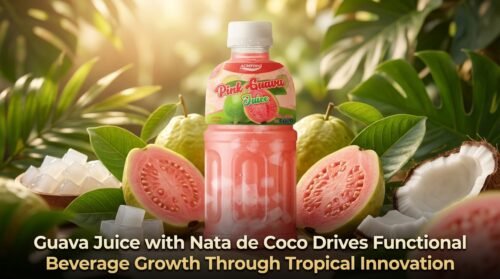
Deciding which layer your proposition actually depends on is the decision worth spending time on. Once it is clear, a manufacturer can tell you quickly which existing products sit close enough and what the remaining gap involves. You can outline your customization requirements to our team, and our supplier background gives context on the categories and formats available. Where texture is the differentiator, products such as guava juice with nata de coco show how an inclusion changes the product’s shelf identity.