
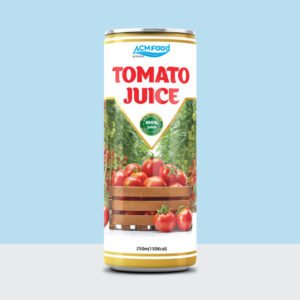




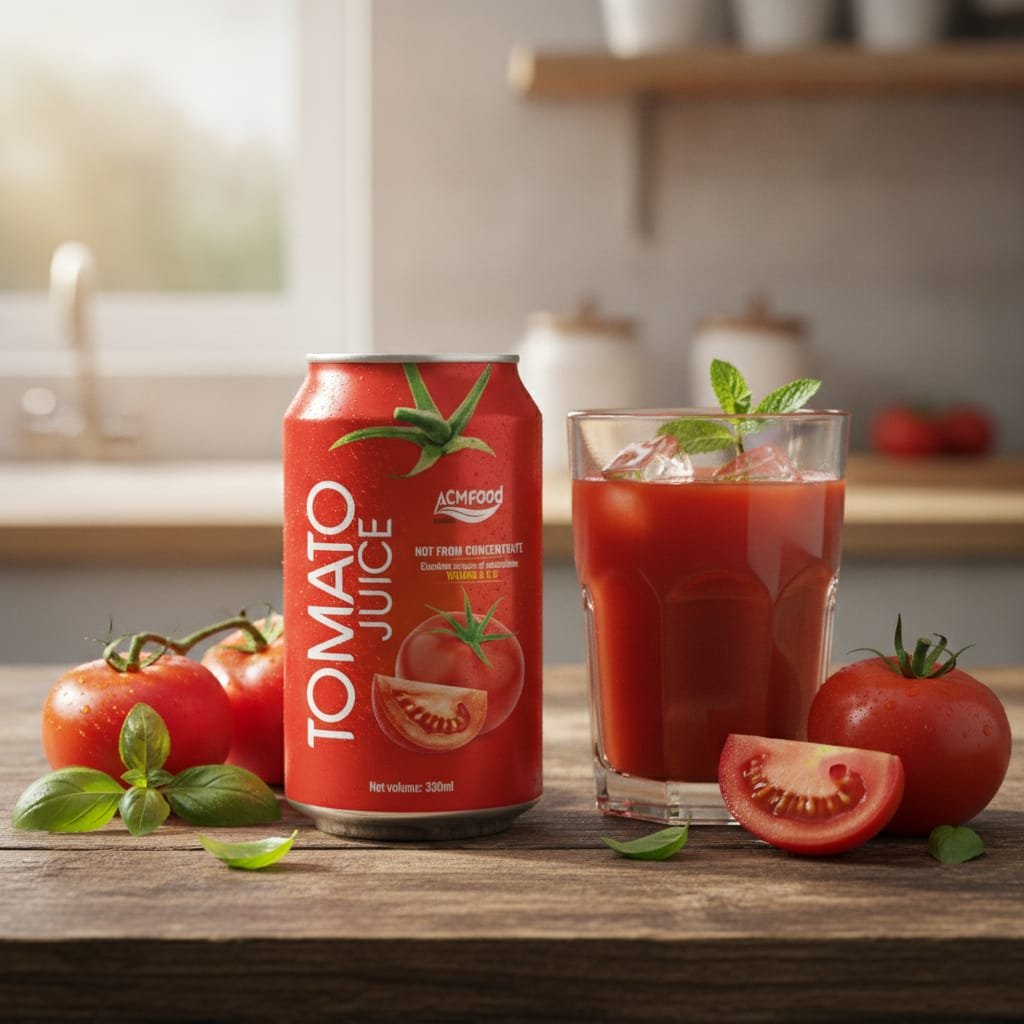
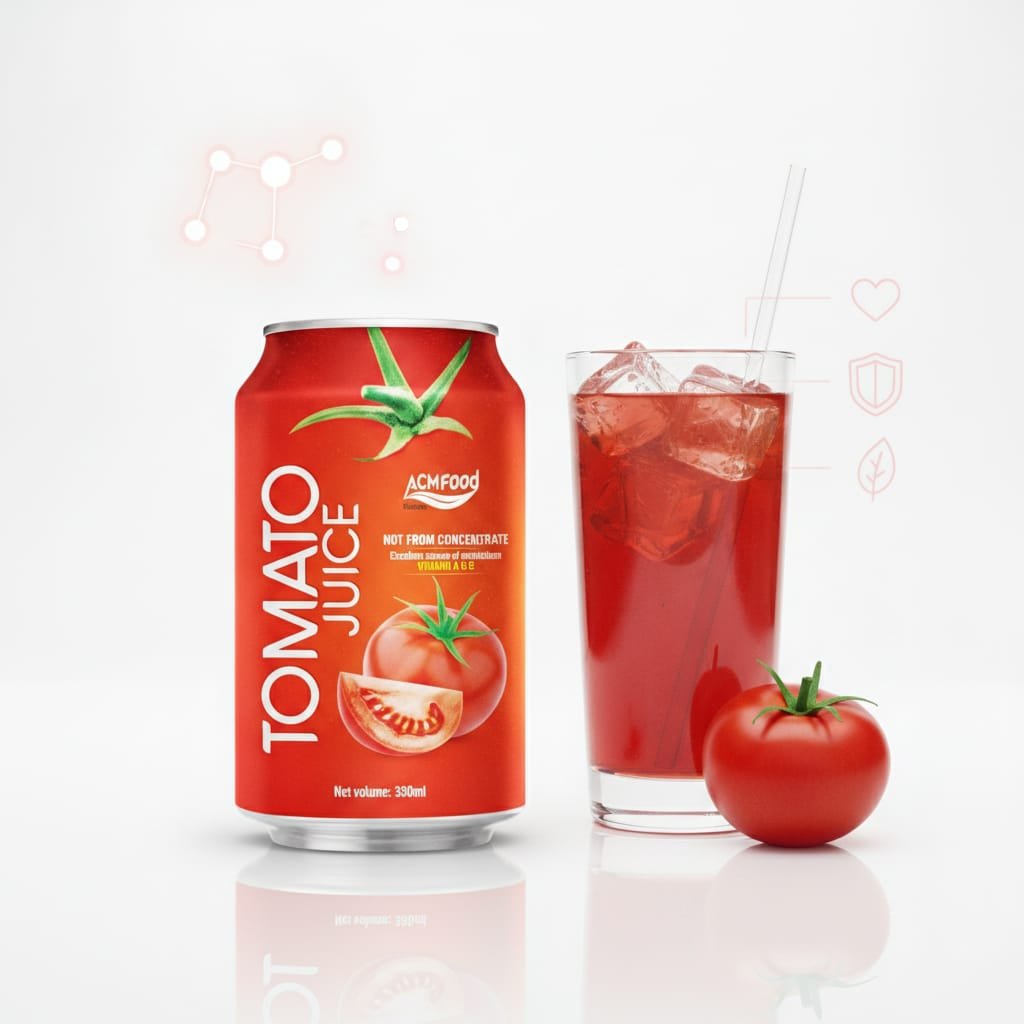
NFC tomato juice is tomato juice pressed and packed without being concentrated and reconstituted, giving about 17 kcal and roughly 9 mg of lycopene per 100 ml. Heat processing makes lycopene more available to the body than in raw tomatoes. The main thing to check is salt: salted versions can reach 250 mg of sodium per 100 ml, while unsalted ones have about 10 mg.
Key facts at a glance
- NFC = not from concentrate: pressed, heat-treated and packed directly.
- Low energy: about 17 kcal and 2.6 g sugars per 100 ml.
- Lycopene is the headline compound; it is better absorbed from processed tomato with a little fat.
- Salt varies tenfold between unsalted and salted products.
- Clean label tomato juice lists tomatoes, and at most salt.
Tomato juice nutrition
| Nutrient | Per 100 ml (approx.) |
|---|---|
| Energy | 17 kcal |
| Sugars | 2.6 g |
| Potassium | 217 mg |
| Vitamin C | 18 mg (unfortified) |
| Lycopene | about 9 mg |
| Sodium | about 10 mg unsalted; up to 250 mg salted |
Source: USDA FoodData Central, canned tomato juice. Products vary by tomato variety and processing.
NFC versus from concentrate
| NFC | From concentrate | |
|---|---|---|
| Process | Pressed, heat-treated, packed | Evaporated to paste, water added back later |
| Flavour | Fresher, brighter | More cooked |
| Cost | Higher; seasonal pack or bulk aseptic storage | Lower; paste ships and stores easily |
| Nutrition | Similar | Similar |
What the evidence says
- Lycopene intake from tomato products is associated with lower cardiovascular risk in observational studies; causation is not established.
- Blood pressure: a Japanese study found unsalted tomato juice lowered blood pressure modestly over one year — salted juice would work against this.
- Cancer prevention claims are not authorised on labels.
What brands should specify with an OEM
- Salt policy — unsalted, reduced salt or regular, with sodium per 100 ml.
- NFC or reconstituted, for accurate labelling.
- Brix and viscosity targets for consistent body.
- Additives — citric acid or vitamin C only if needed, to keep the label short.
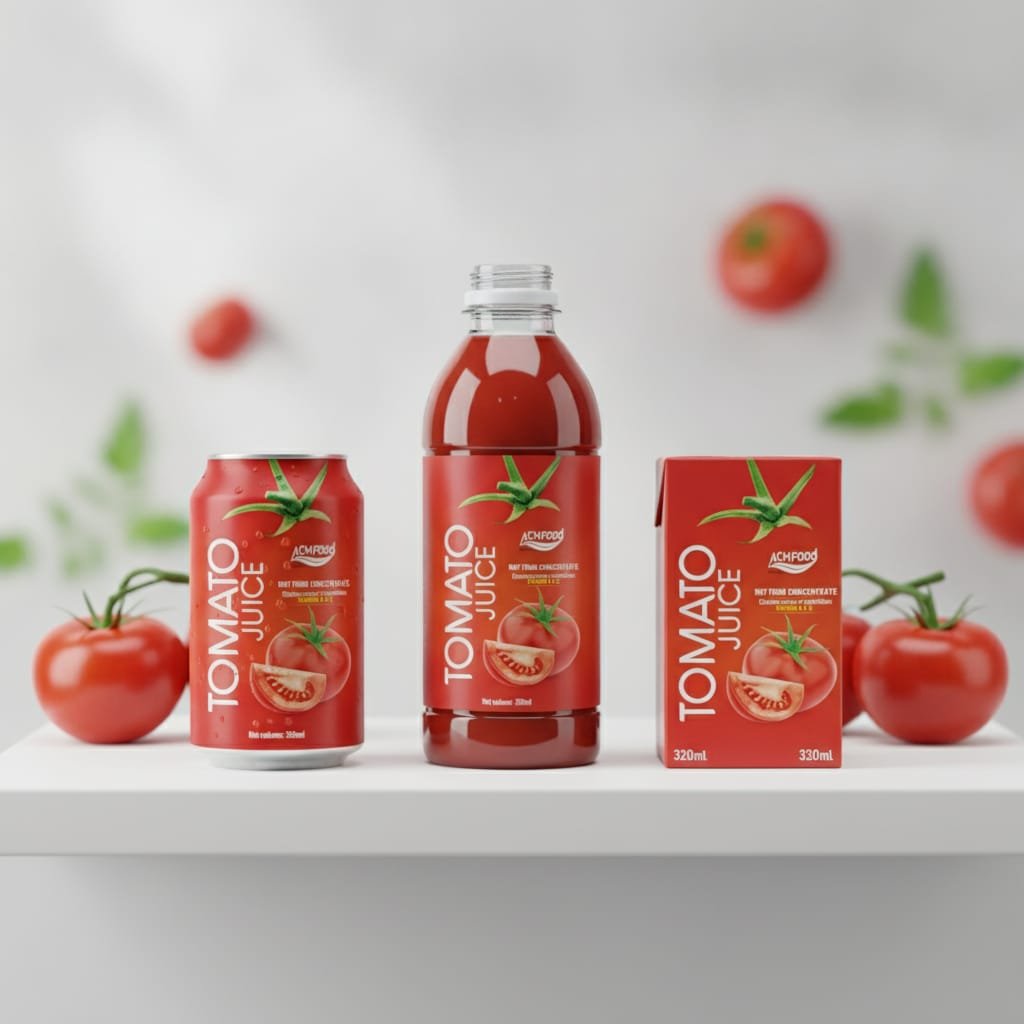
- Pack — cans or glass protect lycopene from light better than clear PET.
Frequently asked questions
What does NFC mean on tomato juice?
Not from concentrate: the juice was never evaporated into paste and diluted again.
Is tomato juice healthy?
It is low in calories and sugar and rich in lycopene and potassium. Choose unsalted or low-salt versions to avoid excess sodium.
Is lycopene better absorbed from juice than raw tomatoes?
Yes. Heating breaks down cell walls, and a little fat in the meal improves absorption further.
Who should limit tomato juice?
People on low-sodium diets should avoid salted versions; people with reflux may find tomato acidity uncomfortable; those on potassium-restricted diets should count it.
Can tomato juice be made for private label?
Yes. Salt level, NFC or reconstituted base, blends with other vegetables and pack design are standard OEM variables.
Tomato juice from ACM Beverage
ACM Beverage produces NFC tomato juice in Vietnam for OEM and private label customers, in facilities certified to ISO 22000, FSSC 22000 and HACCP, exporting to more than 40 countries. See the 330 ml NFC tomato juice or the juice range. Related reading: NFC and concentrate explained. To discuss a formulation, contact our export team.