














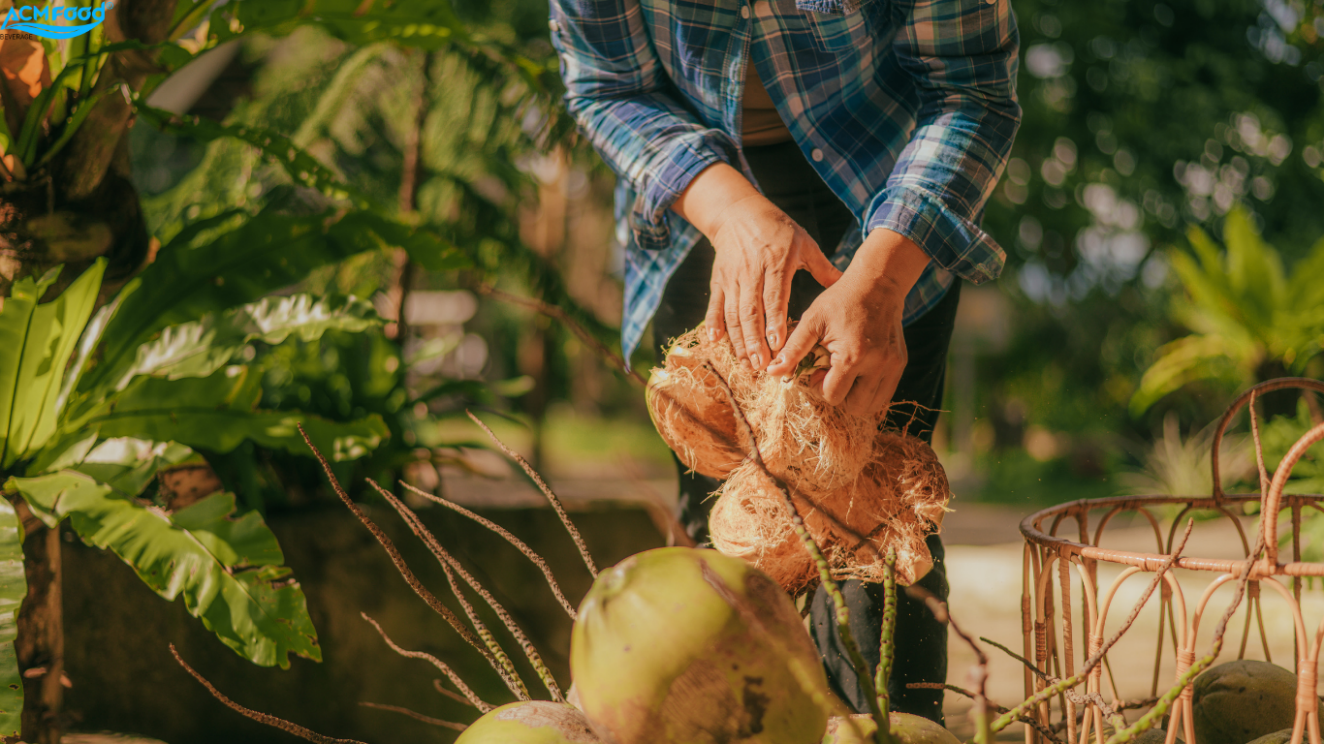
The coconut palm was domesticated in two regions – Southeast Asia and the Pacific, and southern India – and spread across the tropics by sea currents and traders. Vietnam grows coconuts on about 200,000 hectares, mainly in the Mekong Delta, with Ben Tre alone accounting for roughly 80,000 hectares. Almost every part of the palm is used.
Where does the coconut come from?
Genetic studies show two separate origins of cultivated coconuts: one in the Pacific and Southeast Asia and one around southern India and Sri Lanka. Coconuts tolerate salty soil and their buoyant, waterproof husks can float for months, which helped them spread along tropical coastlines. In Vietnam, coconut has long been part of daily life in the central coast and the south.
Where are coconuts grown in Vietnam?
| Region | Known for |
|---|---|
| Ben Tre | “Coconut capital” of Vietnam; green (xiêm xanh) drinking coconuts and processed coconut products |
| Tra Vinh, Tien Giang, Vinh Long | Both drinking coconuts and coconuts for flesh and oil; Tra Vinh is home to the wax coconut (dừa sáp) |
| Binh Dinh, Quang Ngai | Coastal coconut growing in central Vietnam |
What are the benefits of coconut?
| Part | Why it is valued |
|---|---|
| Coconut water | Natural source of potassium (about 250 mg per 100 ml), low in calories and fat-free |
| Coconut flesh | Provides fibre and energy; high in saturated fat, so eat in moderation |
| Husk, shell, leaves, trunk | Coir fibre, charcoal, handicrafts, building material, compost |
| Coconut-based alternatives | Leaf straws and shell bowls replace some single-use plastics |
| Economy | An important export crop for the Mekong Delta |
For more on using every part of the fruit, see coconut as a zero-waste resource.
Which coconut drinks does ACM make?
1. Pure coconut water
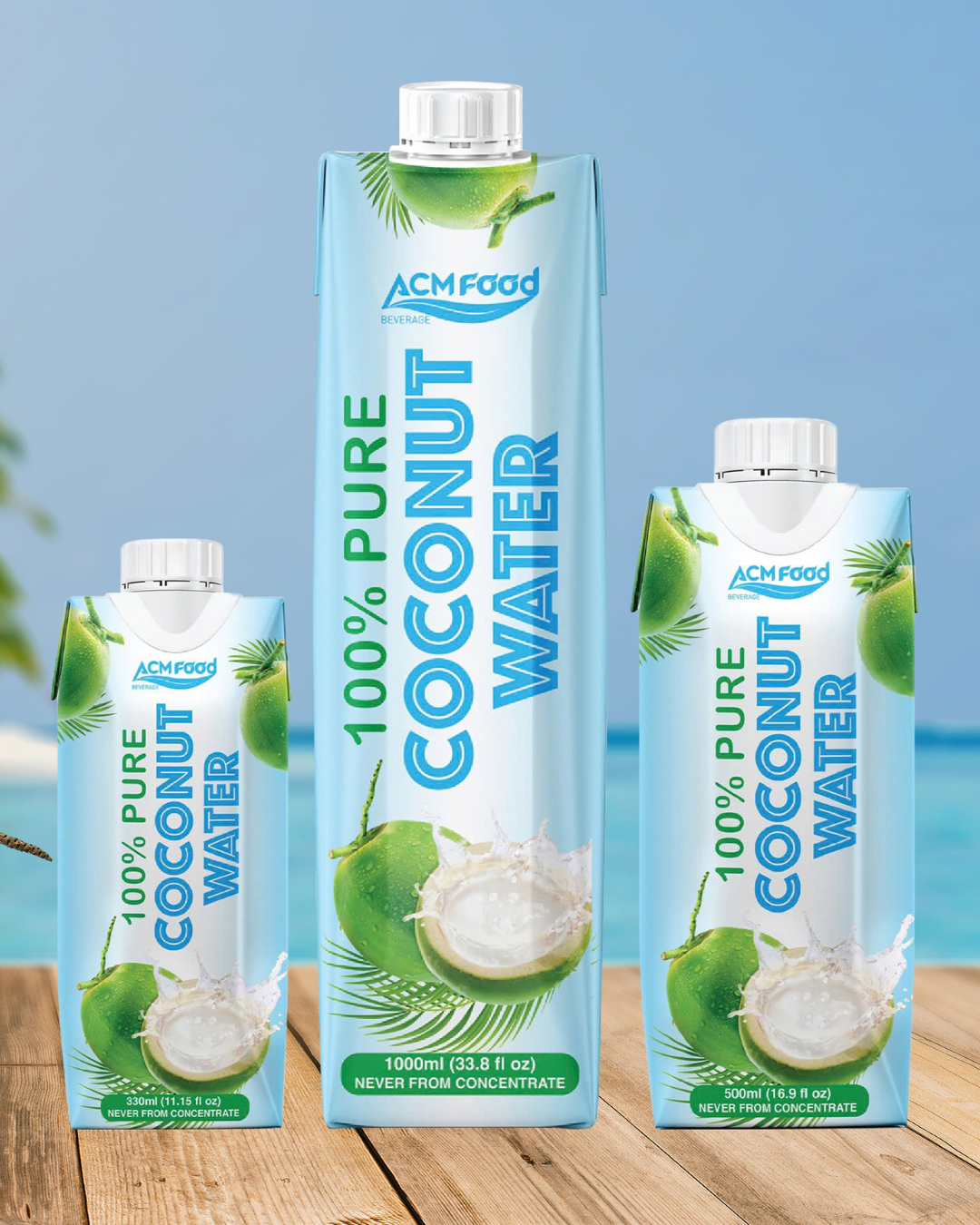
100% coconut water with no added sugar, heat-treated for a long shelf life. A convenient way to rehydrate after sport or on hot days. See the coconut water range.
2. Coconut water with pulp
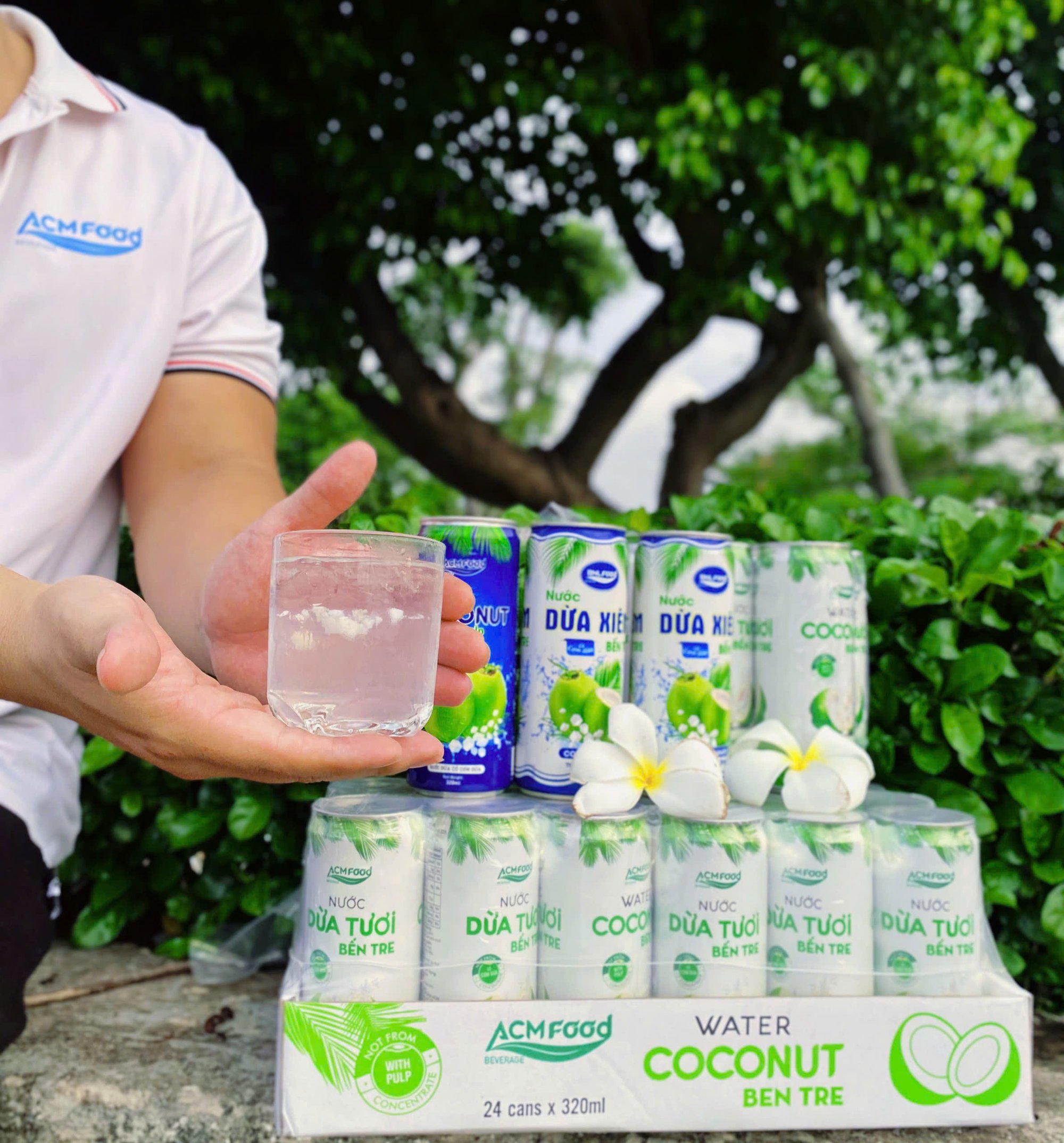
Coconut water with strips of soft young coconut flesh, such as Ben Tre coconut water with pulp, for a more filling drink.
3. Fruit juice with nata de coco
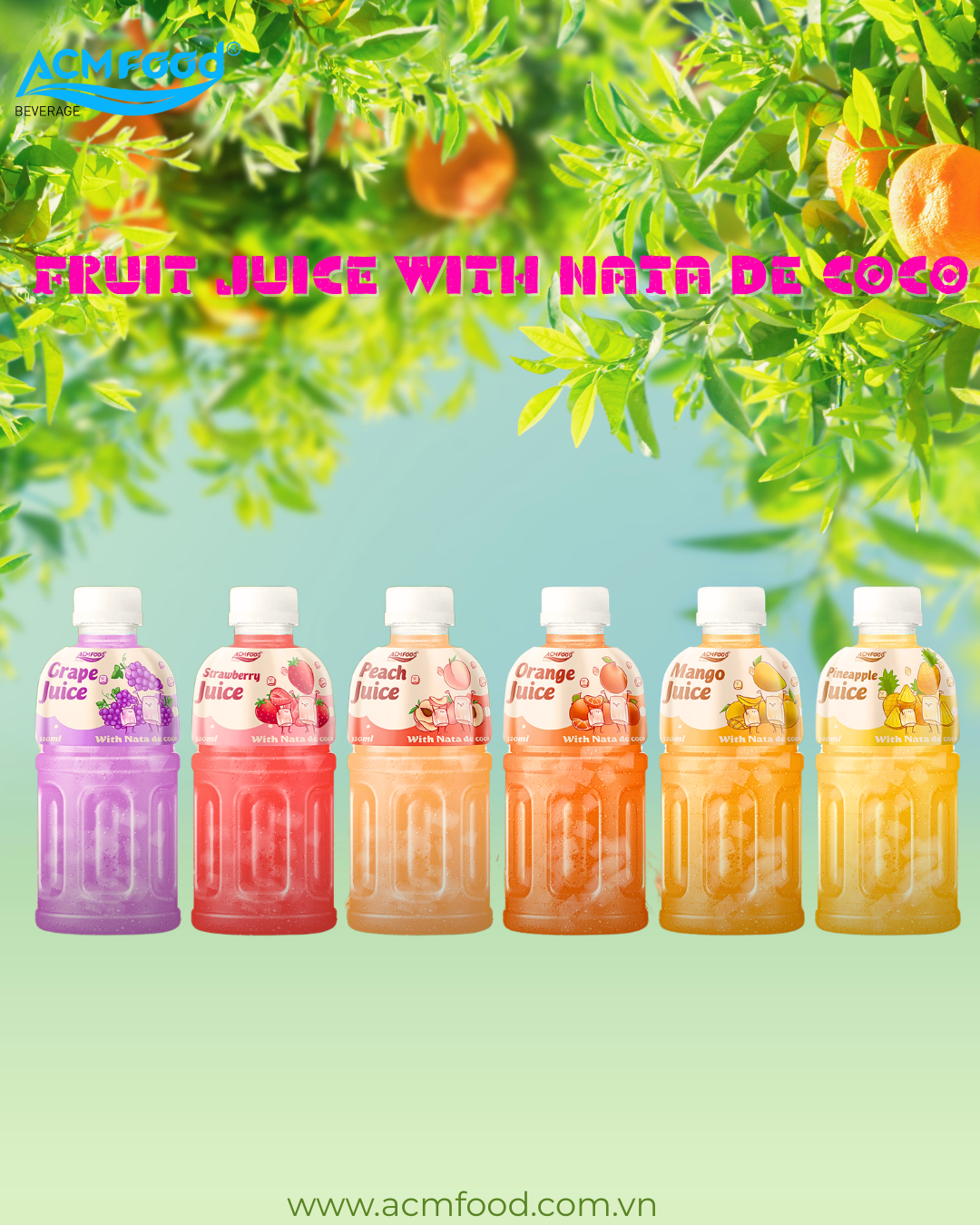
Fruit juices such as orange juice with nata de coco combine juice with chewy coconut gel made by fermenting coconut water.
All are produced under ISO, FSSC 22000, FDA and HALAL systems and exported to more than 40 countries.
How else is coconut used?
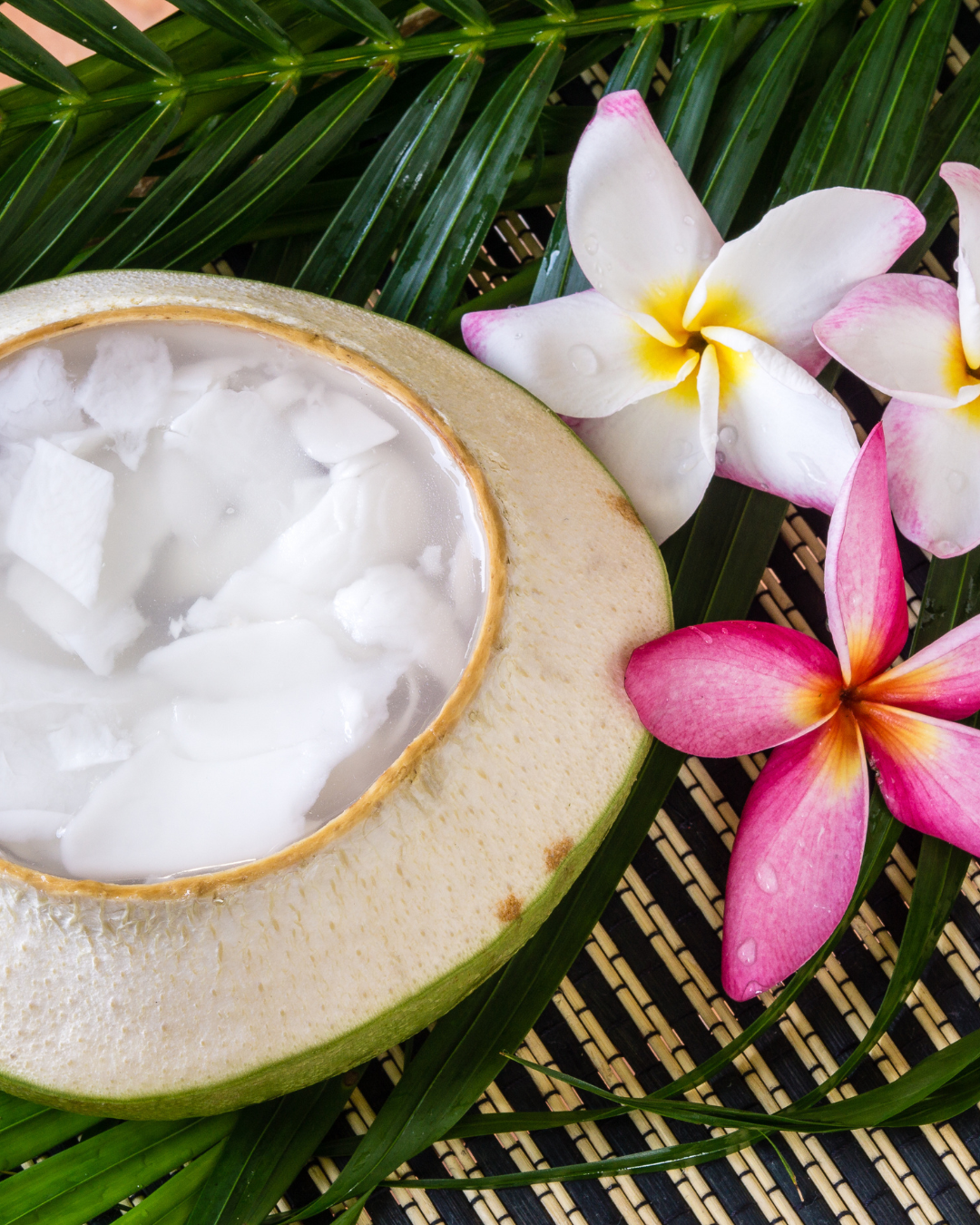
- Food and drink: coconut water, coconut milk and cream, desiccated coconut, coconut candy, coconut oil, fermented coconut drinks.
- Personal care: coconut oil for skin and hair, lip balms and lotions.
- Household and handicrafts: shell cups and spoons, coir mats, plant pots, activated carbon.
- Agriculture: coco peat and crushed husk as growing media.

Frequently asked questions
Why is Ben Tre called the coconut capital?
Ben Tre has Vietnam’s largest coconut area and a long tradition of coconut farming and processing, from candy to handicrafts.
Is coconut water good for hydration?
Yes. It is mostly water with potassium and small amounts of sodium and sugar, making it a good everyday hydration drink.
What is the difference between coconut water and coconut milk?
Coconut water is the clear liquid inside young coconuts. Coconut milk is made by pressing grated mature coconut flesh and is rich in fat.






