














Bottled fruit juice can fit a healthy diet in small amounts. A 150 ml glass of 100% juice counts as one of your five a day under UK guidance, and it supplies vitamin C and potassium. But juice has little fibre and about 9–11 g of natural sugar per 100 ml, so it should not replace whole fruit or water.
Is bottled juice as healthy as fresh juice?
Nutritionally, pasteurised 100% juice is close to freshly squeezed juice. Heat treatment reduces some vitamin C and aroma, but keeps sugars, minerals and most plant compounds. The bigger difference is between types of bottled drink:
| Type | Fruit content | What to expect |
|---|---|---|
| 100% juice (NFC or from concentrate) | 100% | No added sugar; sugar comes from the fruit |
| Nectar | Usually 25–50% | Juice or purée plus water, often with added sugar |
| Juice drink | Often under 25% | Mostly water, sugar or sweetener and flavour |
For a deeper comparison, see 100% juice, NFC and concentrate explained.
How is bottled juice made safe?
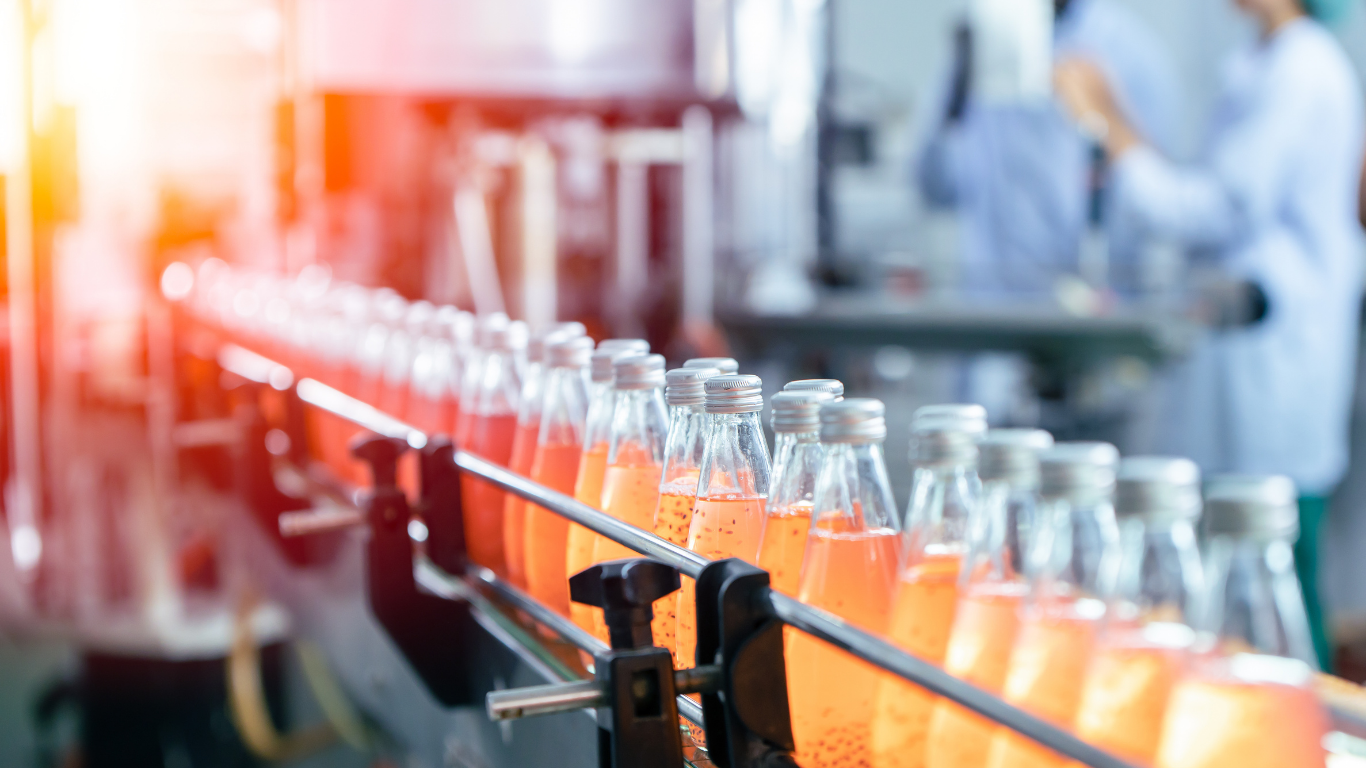
- Ingredients: fruit is sorted, washed and processed quickly to protect flavour.
- Heat treatment: pasteurisation or UHT kills harmful microorganisms, so shelf-stable juice does not need preservatives.
- Sealed filling: juice is filled in hygienic or aseptic conditions into cans, PET or glass.
- Quality checks: each batch is tested for microbiology, pH, sugar (°Brix) and seal integrity.
What are the benefits and downsides of bottled juice?
Benefits
- Convenient, portable and long-lasting.
- A source of vitamin C (orange, guava, strawberry) and potassium (orange, coconut water).
- Helps with hydration and can replace sugary soft drinks.
Downsides
- Much less fibre than whole fruit, so it is less filling.
- Free sugars: the WHO advises keeping free sugars, including juice sugars, below 10% of daily energy.
- Frequent sipping can harm teeth; drink it with meals.
Popular bottled juice flavours
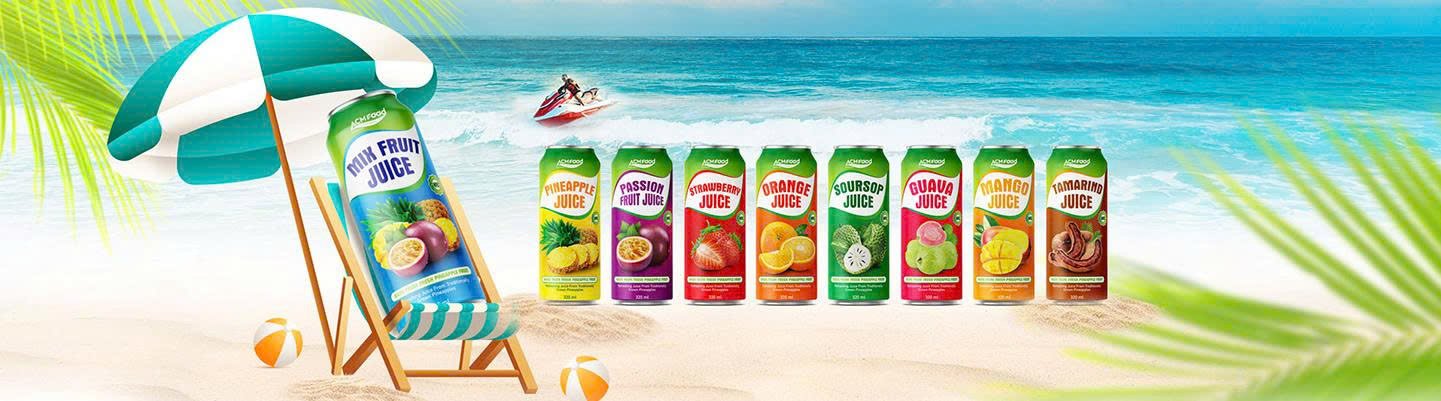
| Fruit | Taste | Notable nutrient |
|---|---|---|
| Orange | Sweet-sour, familiar | Vitamin C, potassium |
| Mango | Sweet, creamy | Vitamin A (beta-carotene) |
| Guava | Mildly sweet, aromatic | Very high vitamin C |
| Pineapple | Sweet with tartness | Vitamin C, manganese |
| Passion fruit | Tart, tropical | Vitamin C, vitamin A |
| Strawberry | Sweet, fragrant | Vitamin C |
| Soursop | Creamy, slightly sour | Vitamin C |
| Tamarind | Tangy-sweet | Potassium, magnesium |
ACM produces these flavours and more in cans and bottles; see the fruit juice range.

How to choose a healthier bottled juice
- Look for “100% juice” or “no added sugar” on the label.
- Compare sugar per 100 ml; under 10 g is typical for 100% juice.
- Keep portions to about 150 ml a day for adults.
- Dilute with water or sparkling water for children.
- Still eat whole fruit for fibre.
Buyers can also read what consumers look for when choosing bottled juice.
Frequently asked questions
Is bottled juice full of preservatives?
Not necessarily. Most shelf-stable juices are made safe by heat treatment and sealed packaging. Check the ingredient list for preservatives such as potassium sorbate or sodium benzoate.
How much fruit juice is healthy per day?
UK guidance is no more than 150 ml of juice or smoothie a day in total, counted as one of your five a day.
Is bottled juice good for children?
In small amounts and diluted, yes. The American Academy of Pediatrics advises no juice under 1 year and up to about 120–180 ml a day for ages 4–6.
Does pasteurisation destroy the nutrients in juice?
It reduces some vitamin C, but sugars, minerals and most other nutrients remain.






