
Cabbage is one of the hardest vegetables to turn into a drink people want to finish, which is exactly why it attracts product developers looking for something unusual. The raw material is inexpensive and familiar, but the sulphur-like smell and the vegetal taste demand deliberate design. This article is for beverage developers: it lays out the main taste-masking strategies, a set of concept directions and the process and packaging points for a finished can or bottle.
All directions are starting points for tasting trials, not a formula. Cabbage varies by season and source, so every concept needs bench testing.
Why develop a cabbage drink at all?
Cabbage offers a distinctive vegetable story, a natural and sometimes vivid colour in the case of red cabbage, and an ingredient that is easy to source. A drink that handles the taste well can stand out in a crowded green juice section, and a range can include a cabbage option next to celery or cucumber drinks.
The risks are equally clear. If the taste is not managed, consumers will not buy a second bottle. Treat the cabbage as an ingredient with a challenge to solve, not as a headline that carries the product by itself.
What causes the taste problem?
Cutting cabbage releases volatile sulphur compounds responsible for the pungent smell, and heat and time intensify them. The taste is also slightly bitter and earthy. The challenge is therefore to reduce, cover or complement these notes without losing the vegetable character entirely.
Which taste-masking strategies work?
| Strategy | How it helps | Trade-off |
|---|---|---|
| Fruit juice (apple, pineapple, pear) | Sweetness and acidity cover sulphur note | More sugar, more fruit-forward |
| Citrus (lemon, lime) | Acid lift reduces perception of pungency | Can become sharp |
| Aromatic partners (celery, cucumber, mint, ginger) | Fresh aromas compete with the note | Changes the concept |
| Dilution | Lowers intensity of everything | Risk of a weak drink |
| Cold serving | Reduces volatility | Needs chilled consumption |
| Sparkling | Carbonation brightens and lifts | Needs pressure-rated pack |
Combine strategies in small amounts rather than relying on one. For example, a drink with a little apple, a touch of lemon and a hint of ginger often works better than a drink with a lot of apple alone.
What concept directions are possible?
- Light green blend: green cabbage, cucumber and apple, designed as an easy daily drink.
- Red cabbage fruit drink: red cabbage with apple or orange, designed around vivid colour.
- Cabbage and celery: savoury, aromatic, positioned as a vegetable-forward drink.
- Sparkling cabbage tonic: lightly carbonated with citrus and ginger, positioned as a sophisticated soft drink.
- Cabbage and carrot: mellow and sweet, positioned for those who like earthy flavours.
Each concept has different technical requirements, so start with one and expand later.
How do you choose a concept?
Ask three questions. Who is the first customer and what do they already drink? What taste do they accept as normal? And what channel will they find the product in? A concept that looks clever in a presentation but does not fit those answers is unlikely to succeed. A mainstream retail customer will accept a mild, fruit-forward blend; a specialist channel may be open to a more vegetal drink.
How do you handle colour?
Red cabbage gives a vivid colour that depends on pH, and green blends shift toward olive with heat, acid and time. Decide the colour you want at the end of shelf life and test in the real pack. Cans protect colour from light, while clear bottles show colour but need storage conditions that limit exposure.
What does the process need to account for?
Cabbage is low-acid, and vegetable-only drinks are low-acid. Adding fruit juice or citrus lowers the pH. The final pH determines which heat treatment and storage conditions are appropriate, and the producer must confirm the process and verify it by testing. Heat can also strengthen the sulphur-like note, so taste after processing. Ask for the final pH, the treatment and the storage conditions of any sample, and record them in the specification.
Which pack suits a cabbage drink?
| Format | Strengths | Points to check |
|---|---|---|
| Slim or sleek aluminium can | Opaque, protects colour, suitable for sparkling | Lining, pressure suitability |
| Glass bottle | Shows colour, premium | Light exposure, weight |
| PET bottle | Light, practical | Barrier needs, carbonation suitability |
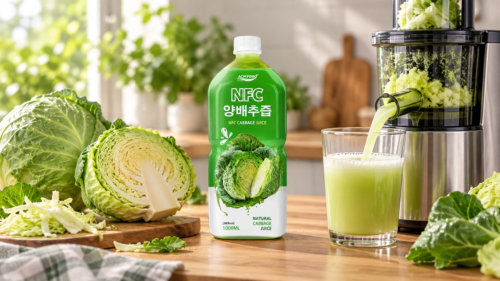
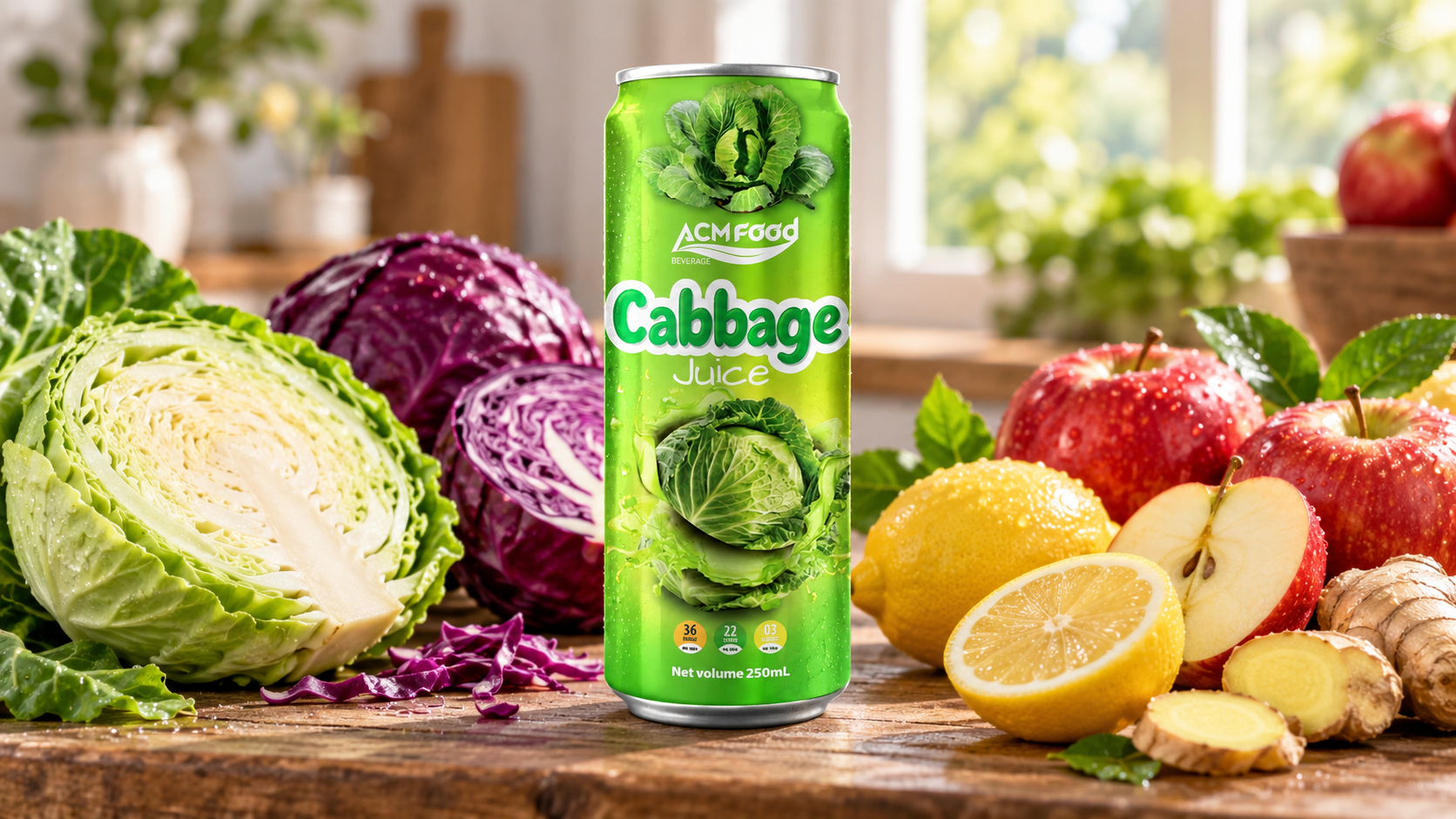
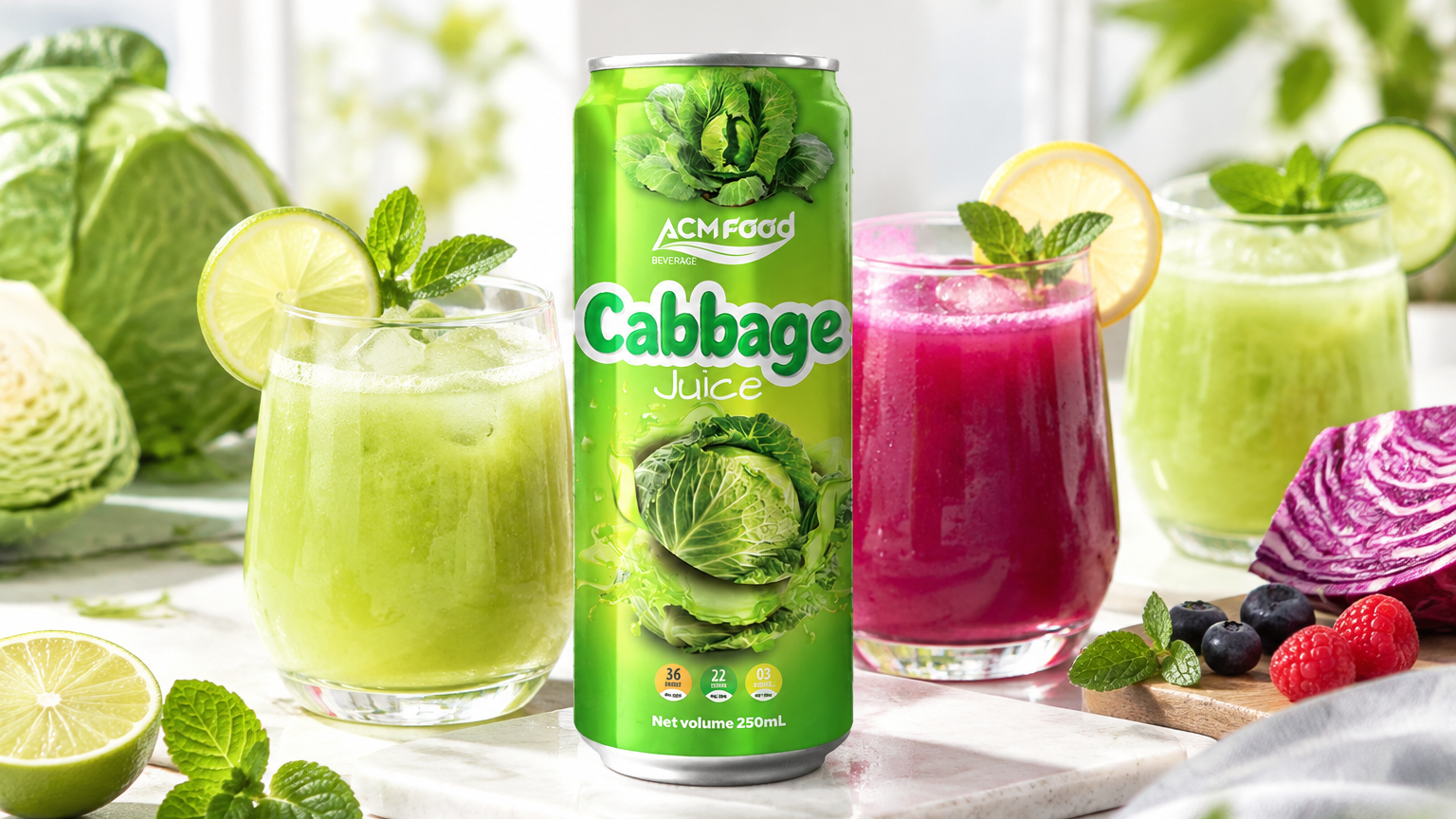
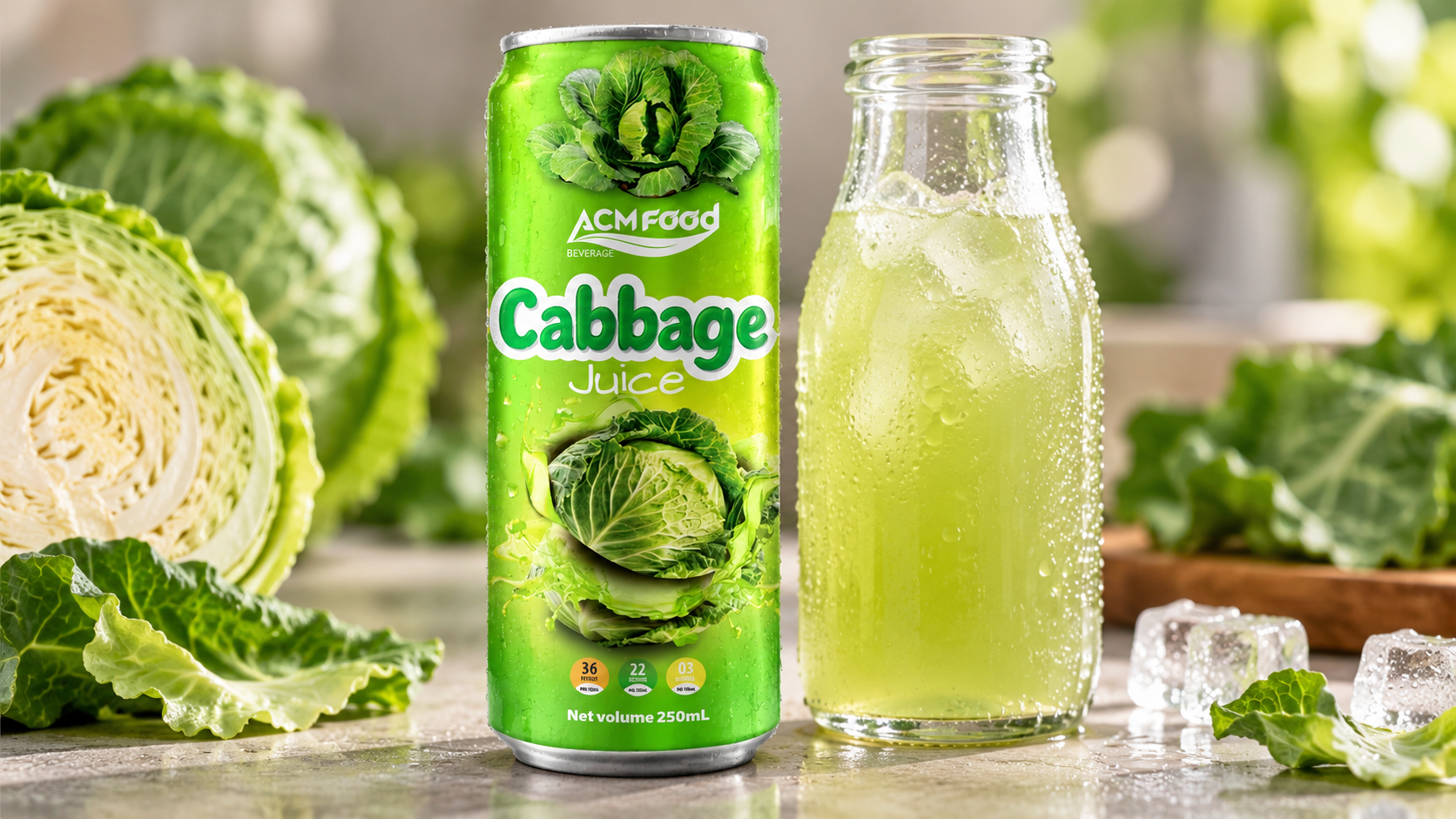
ACM Beverage supplies finished drinks in cans and bottles. The cabbage juice category shows how cabbage appears across the range.
How should you describe it honestly?
Name the ingredients, describe the taste and avoid claims about gut health, detox or disease. A name that suggests a larger share of cabbage than the recipe contains is misleading, so match the product name to the ingredient order. Labelling rules differ by market, so check them before printing.
What should a product brief include?
- Concept direction and first customer.
- Cabbage type and level in plain words.
- Masking strategy: fruit, citrus, aromatics or sparkling.
- Colour target at the end of shelf life.
- Sugar positioning and ingredient list goals.
- Pack type and size.
- Target markets and labelling rules.
How do you run a development trial?
- Choose one concept and prepare three cabbage levels.
- Test each masking strategy in turn, then in combination.
- Taste chilled and after processing.
- Check colour in the real pack and after storage.
- Ask tasters outside the project to describe the drink blind.
- Record notes and photographs of each version.
- Approve a written reference and a physical reference sample.
Common mistakes with cabbage drinks
- Relying on the cabbage story to sell a drink that tastes poor.
- Over-sweetening to hide the note and losing the vegetable story.
- Tasting before heat treatment and not after.
- Ignoring colour drift.
- Printing gut health claims that are not supported.
Frequently asked questions
Can a cabbage drink taste good?
Yes, with careful masking and balance. Fruit, citrus and aromatic partners are the usual tools, and serving cold helps.
Is red cabbage easier to use than green?
Red cabbage gives vivid colour but a similar taste challenge. Colour depends on pH, so acidity must be managed.
Can a cabbage drink be sparkling?
Yes, but carbonation changes taste and requires a pack suited to pressure. Retest after carbonating.
Summary
A cabbage drink succeeds when the taste is designed, not hoped for. Pick one concept, combine masking strategies in small amounts, protect the colour and match the process to the final pH. If you are exploring a cabbage drink for your own label, ACM Beverage can discuss can and bottle formats and recipe options once you share your brief.