



Green cabbage is the mildest and most widely available cabbage for juicing, and when it is paired with cucumber, celery or green apple it can become a clean, light green drink with only a hint of cabbage in the background. The challenge is to keep it that way: cabbage carries a sulphur-like note that grows with heat and time, and the pale green colour shifts as acids and oxygen act on it. This guide covers the pairings, starting ratios, process points and pack choices for a finished blend.
Directions here are starting points for tasting trials, not a formula. Cabbage and produce vary by season, so every blend needs bench testing.
Why use green cabbage in a blend?
Green cabbage is milder and slightly sweeter than red, and its juice is pale, which makes it a flexible base. It adds volume and a vegetal depth without a strong flavour of its own, so it can sit comfortably next to cucumber, celery or apple. For a brand it provides a differentiated vegetable ingredient in a green range, and it can be positioned as a gentle, everyday vegetable blend.
The main drawback is the sulphur-like note, which is why the other ingredients matter so much.
Which partners work best?
| Partner | Role | Effect |
|---|---|---|
| Cucumber | Freshness and volume | Dilutes cabbage note, adds cooling |
| Celery | Savoury backbone | Matches cabbage’s vegetal profile, adds aroma |
| Green apple | Sweetness and acidity | Softens and brightens |
| Lemon or lime | Acid lift | Cuts the sulphur note |
| Ginger | Warmth | Adds interest, can mask |
Combinations such as cabbage and cucumber, cabbage and celery, or cabbage, cucumber and apple are the usual starting points. Each needs its own trials.
What starting ratio should you try?
Start with cucumber or apple in the lead and add cabbage in small steps.
- Partner-led, a little cabbage: light, fresh, barely cabbage.
- Balanced: a clear green character, vegetal and fresh.
- Cabbage-led: more earthy and pungent; a niche taste.
Taste chilled and record cabbage note, sweetness, freshness and aftertaste separately. Use plain words and sample codes.
How do you manage the sulphur-like note?
The note forms when cabbage tissue is cut and then intensifies with heat and age, so process and time matter as much as recipe.
- Use fresh cabbage and process promptly after pressing.
- Keep the juice cold between steps.
- Increase acidity with apple or lemon, which lessens the perception.
- Check taste after heat treatment, because processing can strengthen the note.
- Use pairings with strong, fresh aromas such as celery, cucumber or ginger.
If the note remains too strong, reduce cabbage or change the partner. Always compare against a reference sample.
How do you keep the green colour?
Green cabbage juice is pale, and chlorophyll from cucumber or celery adds green. Heat, acid and time shift chlorophyll toward olive, so the colour of a blend can dull. Practical measures include limiting oxygen at filling, controlling heat exposure, sealing well and protecting from light. Test at the end of the intended shelf life and agree what change is acceptable.
What does the process need to account for?
Cabbage, cucumber and celery are all low-acid, so a vegetable-only blend is low-acid and needs a process designed for it. Adding apple or lemon lowers the pH. The final pH determines what heat treatment and storage conditions are appropriate, and the producer must confirm the process and verify it by testing. Ask for the final pH, the treatment and the storage conditions of any sample, and record them in the specification.
How do you handle texture?
Cabbage contributes fibre and fine particles, and combined with cucumber and celery the drink may be cloudy or separate. Decide whether you want a clear, lightly cloudy or pulpy drink, and ask how texture will be kept stable. A shake-before-use note is acceptable for natural drinks, though good formulation reduces it.
Which pack suits green cabbage blends?
| Format | Strengths | Points to check |
|---|---|---|
| Slim or sleek aluminium can | Opaque, protects colour, single-serve | Lining, process compatibility |
| Glass bottle | Shows pale colour, premium | Light exposure, weight |
| PET bottle | Light, practical | Barrier needs, recycling rules |
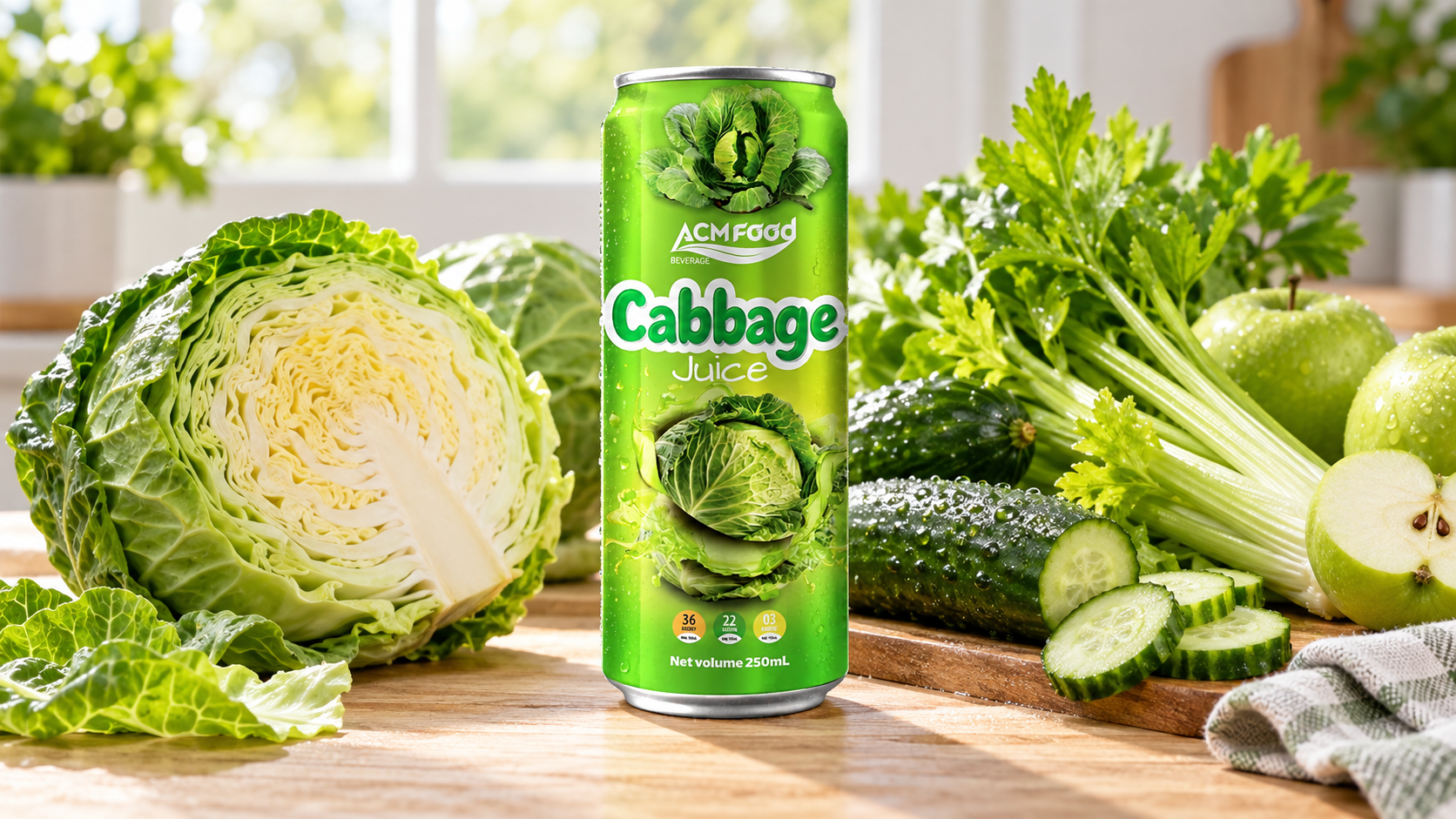
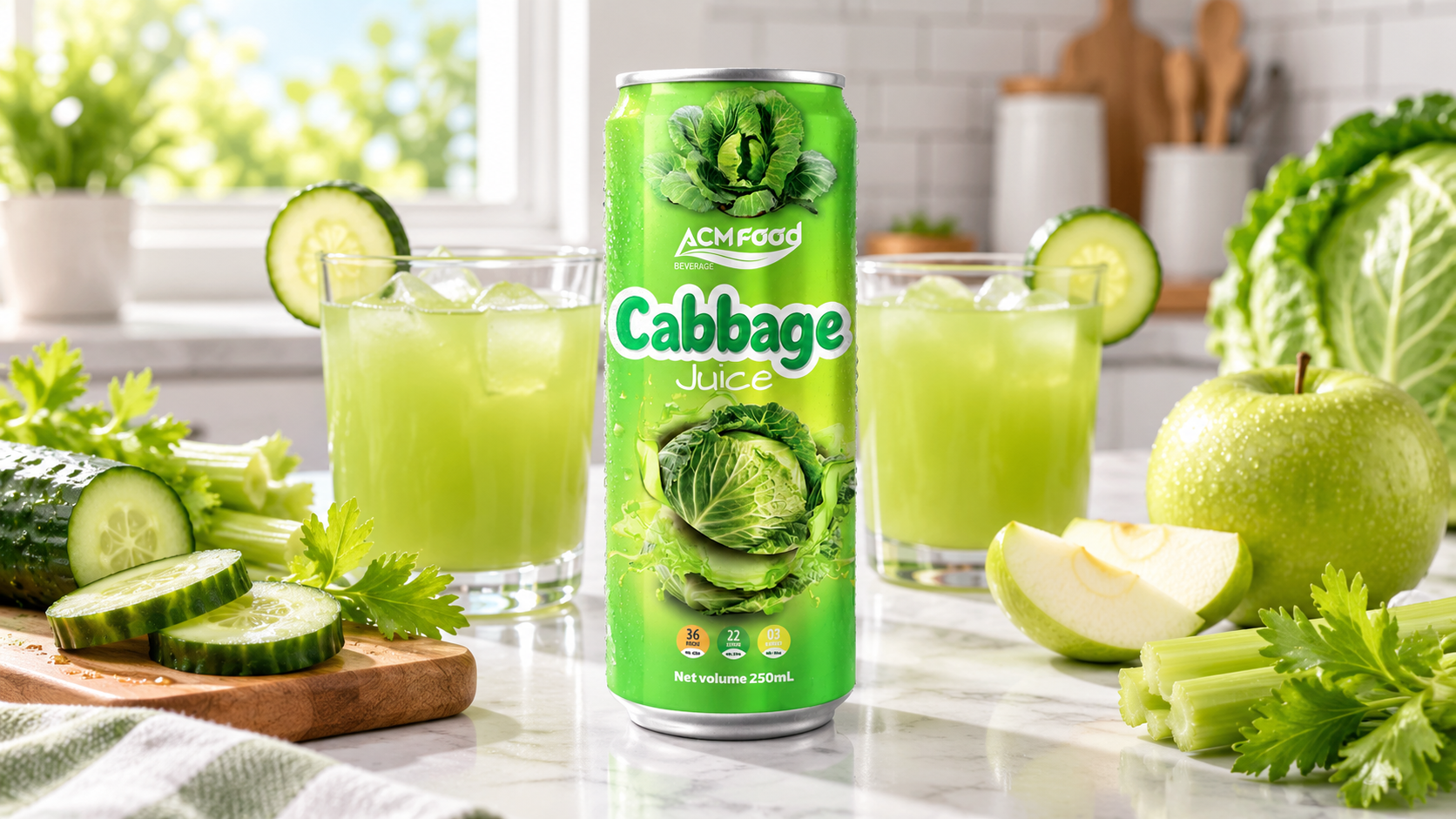
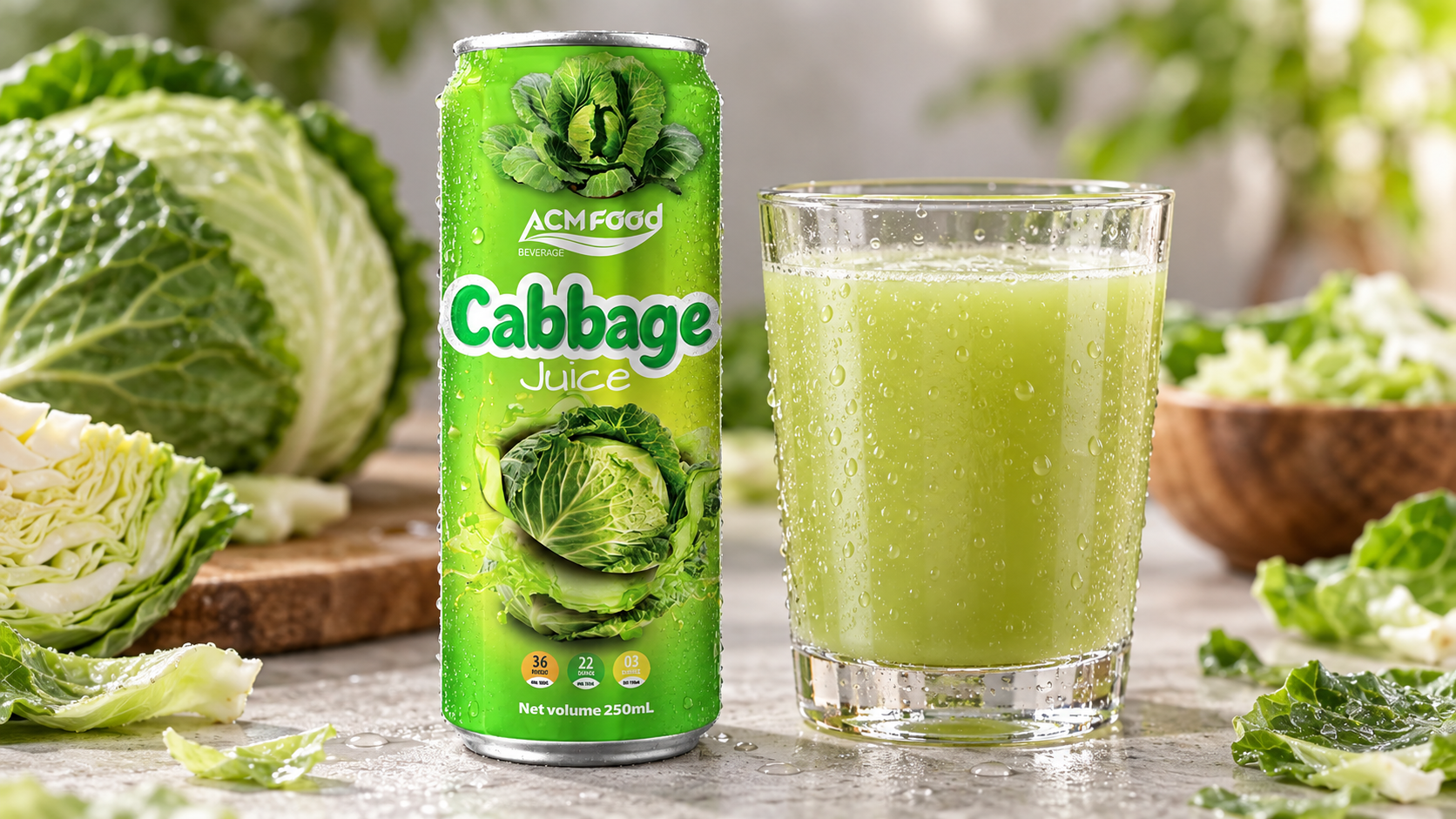
ACM Beverage supplies finished drinks in cans and bottles. Cans are a natural fit because they protect the green colour from light. The cabbage juice category shows cabbage across the range.
How should you position it without health claims?
Describe taste, ingredients and the occasion, such as a light green lunch drink. Avoid statements about gut health, detox or disease, which need evidence and market-specific approval. Claims depend on tested values, the recipe and local rules.
What should a product brief include?
- Partner choice: cucumber, celery, apple or a combination.
- Cabbage level in plain words.
- Optional additions: lemon, ginger, mint.
- Cloud and texture preference.
- Colour target at the end of shelf life.
- Pack type and size.
- Target markets and labelling rules.
How do you run a development trial?
- Choose the partner and prepare three cabbage levels.
- Taste chilled and record the cabbage note.
- Add lemon in small steps and compare.
- Check colour and texture after a day.
- Test in the real pack and after storage.
- Record notes and photographs of each version.
- Approve a written reference and a physical reference sample.
Common mistakes with green cabbage blends
- Letting cabbage lead and ending with a harsh drink.
- Judging taste before heat treatment.
- Ignoring colour drift in a pale drink.
- Using a process designed for an acidic juice on a low-acid blend.
- Printing gut health or detox claims.
Frequently asked questions
Does green cabbage juice taste milder than red?
Generally yes, though the difference is modest. Both share the sulphur-like character, which blending helps to soften.
Why does the drink smell stronger after heating?
Heat produces extra sulphur compounds, so taste after processing and adjust the recipe if needed.
Can I sell it in cans?
Yes. Cans protect colour from light. The process and pH must be confirmed for the specific formula.
Summary
Green cabbage works as a quiet partner in a green blend when the sulphur-like note is controlled, the colour is protected and the process matches the final pH. Choose the partners, test at serving temperature and record each version. If you are planning a finished green cabbage blend for your own label, ACM Beverage can discuss can and bottle formats and recipe options once you share your brief.