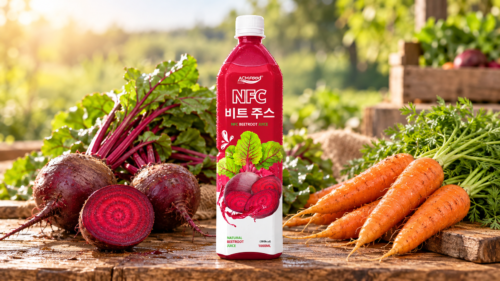


Cold-pressed beetroot juice is juice extracted by pressing the root without a heating step during extraction, and it is often sold chilled and treated with a non-thermal method to extend shelf life. For brands, the term raises practical questions about what “cold-pressed” actually guarantees, how high pressure processing, or HPP, fits in, and which packaging protects the colour. This article explains those points for finished bottled products.
What does cold-pressed beetroot juice mean?
Cold-pressed describes how juice is extracted: the beetroot is crushed and pressed, and the juice is collected without a heating step during pressing. It does not by itself describe what happens afterwards. A cold-pressed juice may be bottled and sold as it is, treated by HPP, or pasteurised.
That is why two bottles labelled cold-pressed can behave very differently on the shelf. The label should state the post-pressing treatment, and buyers should ask for it in writing.
What is HPP and why is it used?
High pressure processing places a sealed, packaged product under very high pressure in a water-filled vessel for a set time. It is used to reduce microbial load without a conventional heating step, so juice can keep more of its fresh character.
Points to understand:
- The product is treated in its final sealed pack, so the pack must be suitable for the process.
- HPP does not make a product immortal. Shelf life still depends on formulation, cleanliness, packaging and temperature.
- Chilled storage is normally still required for products sold as cold-pressed.
Whether HPP is the right choice depends on the shelf-life target, the sales channel and the regulations of the destination market. Ask a supplier to describe the process used for the specific product.
How does cold pressing affect beetroot taste and colour?
Beetroot juice made without a heating step tends to taste fresher and more vegetal, with a vivid colour. It still has the earthy note typical of the root, so cold-pressing does not remove it. Some brands blend with apple, carrot or ginger to soften it.
Colour is the beetroot’s strongest asset and its weakest point. The pigment is sensitive to heat, light and oxygen. Cold pressing avoids heat during extraction, but oxygen exposure during pressing, filling and storage can still dull the colour. Careful handling and a well-sealed pack matter as much as the pressing method.
Cold-pressed, pasteurised or HPP: how do they compare?
| Approach | Treatment after extraction | Typical storage | Points to consider |
|---|---|---|---|
| Cold-pressed, no further treatment | None | Chilled, short life | Highest freshness impression, highest handling risk |
| Cold-pressed with HPP | Pressure treatment in final pack | Chilled | Longer life than untreated; needs suitable pack |
| Pasteurised | Heat treatment | Shelf-stable or chilled, depending on process | Predictable stability; taste can be more cooked |
Do not pick a method based on a slogan. Choose it according to the shelf-life goal and the cold chain you can rely on. For a market with long distribution or ambient shelves, a heat-treated product may be the more reliable option.
Which packaging suits cold-pressed beetroot juice?
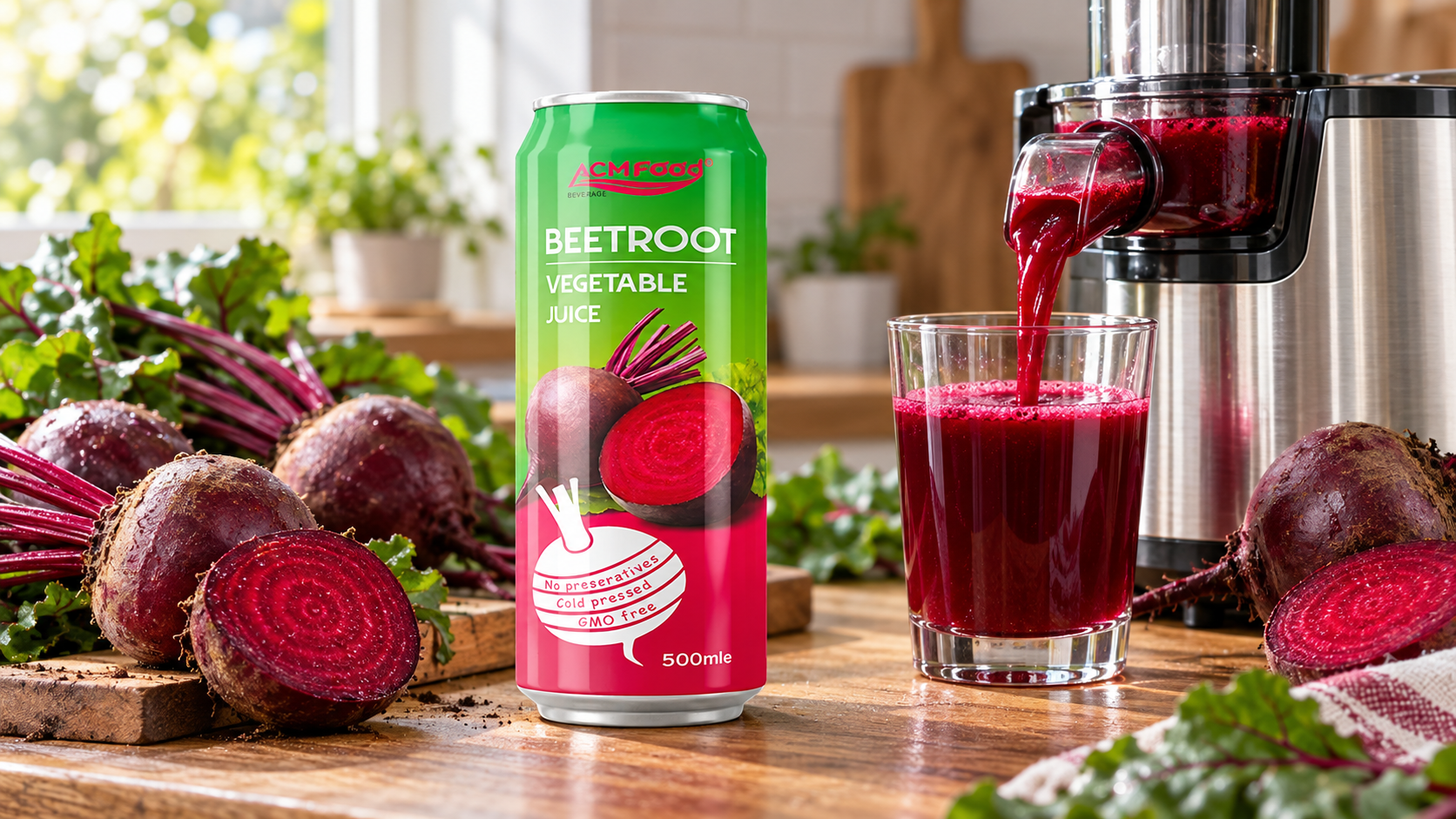
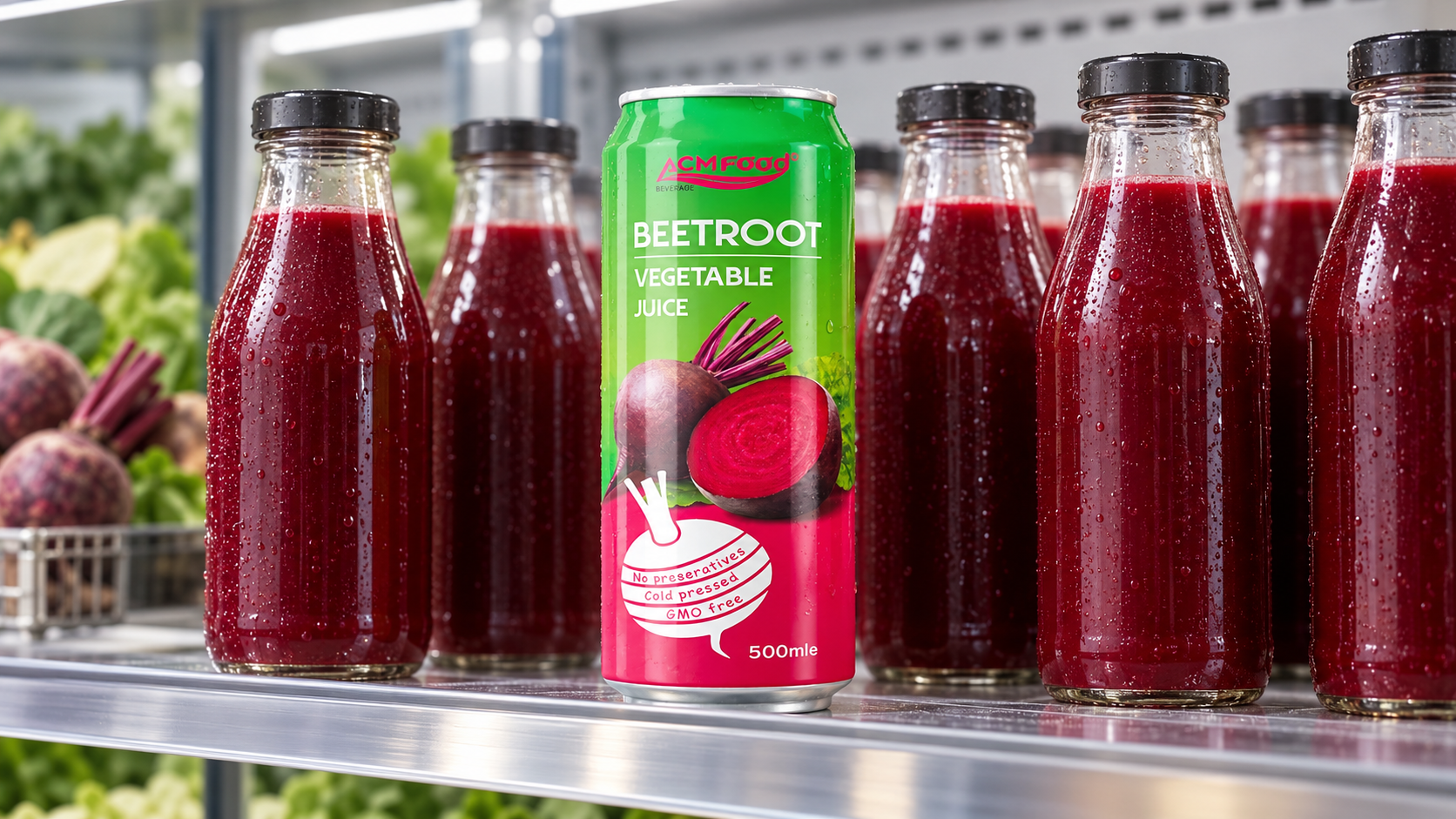
Finished drinks are supplied in cans and bottles. For cold-pressed beetroot juice, bottles are the more usual choice because the chilled product is seen through the pack and HPP needs a pack that tolerates pressure.
- PET bottles: common for HPP products because they tolerate the process, are light and can be clear.
- Glass bottles: a premium look, heavier to ship, need a design that tolerates the process in use.
- Cans: an option for heat-treated or shelf-stable beetroot drinks; they block light, which suits the pigment.
Check with the packaging supplier that the container, closure and label are suitable for the chosen treatment and for chilled storage. A pack that deforms or leaks will damage a product before the consumer ever tastes it.
What shelf life can you claim?
Shelf life must come from testing on your own formulation, pack and storage conditions, not from a number you saw elsewhere. A shelf-life study checks taste, colour, microbiology and pack integrity over time at the storage temperature you plan to specify.
Ask the supplier how shelf life is established and which storage temperature is assumed. Plan your distribution against it. A chilled product that spends time at room temperature during transport is a risk, so agree the cold-chain expectations before launch.
How should you plan retail for a chilled beetroot juice?
Chilled products need chilled shelf space, which limits where they can be sold. Before you commit, consider:
- Channels with reliable refrigeration, such as supermarkets and cafes.
- Minimum shelf-life remaining at delivery for retailers.
- A display that keeps colour attractive without light exposure.
- A clear storage message on the label.
If your channel cannot keep a cold chain, consider a heat-treated can or bottle instead. The beetroot juice OEM overview covers the development steps for private-label drinks.
What should a cold-pressed brief include?
List the following before sampling:
- Whether you want untreated, HPP or heat-treated product.
- Bottle or can type and size.
- Taste direction: pure beet or a blend.
- Target shelf life and storage temperature.
- Target markets and the labelling rules there.
- Any claim you plan to make, to be checked by a qualified adviser.
Related reading on how colour influences purchase decisions is available in the article on juice colour and clarity.
How does the cold chain affect a cold-pressed beetroot juice?
A chilled product depends on temperature control from the filling room to the consumer’s fridge. If the chain breaks, shelf life shortens and quality can suffer, even if the process was well designed. Before launch, map the route and ask who is responsible for temperature at each step.
- Production to warehouse: chilled storage and transport.
- Warehouse to retailer: refrigerated delivery with temperature records where possible.
- Retailer shelf: a chilled display kept at the stated temperature.
- Consumer: clear storage instructions on the pack.
For export, cold-chain products are more complex than ambient ones, because transit times are longer and conditions less predictable. This is one reason many brands use heat-treated cans or bottles for long-distance markets and keep chilled cold-pressed products for local or regional distribution.
What quality checks matter for a cold-pressed beetroot juice?
Ask the supplier which checks are performed on the finished drink and how often. Typical areas include:
- Sensory: taste, aroma and appearance against an approved reference sample.
- Colour: visual and instrumental checks, since colour is central to the product.
- Acidity and sugar content: measured to keep batches consistent.
- Microbiological testing: according to the process and the market rules.
- Pack integrity: closures, seals and bottle condition after treatment.
These checks vary by supplier, so ask for the list that applies to the product you are considering, in writing. Avoid assuming that any particular test is carried out unless it is stated.
How should the label describe a cold-pressed beetroot juice?
Accurate wording builds trust and avoids problems. If the product has been treated with HPP, many markets expect that to be stated or at least not contradicted by the label. If it is pasteurised, calling it “raw” would be misleading. A few safe habits:
- Describe the extraction method and the post-pressing treatment accurately.
- State the storage condition clearly, for example that the product must be kept refrigerated.
- Avoid words such as “fresh” or “raw” unless they are accurate under your market’s rules.
- Keep claims to what the recipe and tests support.
Rules differ by country, so check the requirements of the destination market before printing.
Is cold-pressed beetroot juice worth the extra complexity?
It can be, when the brand story depends on freshness and the channel has reliable refrigeration. It is less attractive when you need long shelf life, ambient storage or long-distance export. A useful decision test is to ask what the customer expects when they open the bottle. If they expect a fresh, vivid and vegetal drink, a cold-pressed route may fit. If they expect a dependable, shelf-stable drink they can keep in a pantry, a heat-treated can or bottle is usually a better match.
Common mistakes with cold-pressed beetroot juice
- Choosing HPP without checking that the bottle suits the process.
- Promising a shelf life that was not confirmed by testing.
- Selling into channels that cannot keep a cold chain.
- Using a clear bottle without protecting the colour from light.
- Labelling a pasteurised product as raw.
How do you evaluate a supplier’s cold-pressed process?
Ask for a plain description of each step: how the beetroot is washed and prepared, how it is pressed, how the juice is filled, what treatment follows, and how the product is stored and shipped. Ask how colour and taste are checked and what happens to a batch that fails. If a supplier cannot explain these steps clearly, treat it as a warning sign.
Request a sample in the final pack and keep it under the storage condition you plan to use. Taste and inspect it at intervals. A sample that looks great on day one but dull on day ten tells you more than any brochure.
What does a launch checklist look like?
- Confirm the process: untreated, HPP or heat-treated.
- Confirm that the pack and closure suit the process.
- Confirm the storage temperature and the shelf life from testing.
- Confirm the cold chain for each channel.
- Confirm the label wording and the rules of each market.
- Approve a reference sample for colour and taste.
What are the most common questions from retail buyers?
Retail buyers often ask the same few things about a chilled juice, so prepare answers in advance.
- How long does it last once delivered? Give the shelf life from testing and the minimum remaining life at delivery you can commit to.
- What temperature must it be stored at? State the temperature clearly and show that the pack carries the same instruction.
- What happens if the cold chain is interrupted? Explain the recommended handling and return policy.
- How is it treated after pressing? Be ready to describe HPP or heat treatment in one clear sentence.
- What sizes are available? List the bottle sizes you can support, and only those.
A short, clear one-page fact sheet that answers these questions makes the conversation easier and reduces misunderstandings later.
How does sustainability enter the conversation?
Buyers increasingly ask about packaging. PET and glass bottles are both recyclable in many places, but local collection rules differ, so avoid broad claims and describe what is true for your pack and your market. Weight affects transport emissions, closures and labels can affect recyclability, and refillable or returnable schemes are possible in some markets. Check what is accurate before you print any environmental statement on the label.
Frequently asked questions
Is cold-pressed beetroot juice raw?
Not necessarily. The pressing step has no heating, but the juice may then be treated with HPP or pasteurised. Check the label and ask for the process description.
Does HPP change the taste?
HPP generally preserves a fresher taste than heat treatment, though results depend on the recipe. Test with your own formulation before deciding.
Can cold-pressed beetroot juice be sold ambient?
Products sold as cold-pressed are normally chilled. If you need ambient storage, a heat-treated process in a can or bottle is a more usual route.
Conclusion
Cold-pressed describes how juice is extracted, not how long it lasts. Decide on the post-pressing treatment, choose packaging that suits it and confirm shelf life by testing. If you are developing a bottled beetroot drink for your brand, ACM Beverage can discuss format options and sampling once you share your market and storage plans.