














The decisive fact in aloe vera beverages is regulatory, not nutritional: the aloe must be decolourised, with aloin removed. EU Regulation 2021/468 prohibits hydroxyanthracene derivatives — including aloin — in food. Pomegranate contributes punicalagins and anthocyanins, and it is added partly because aloe on its own has almost no flavour.
Key facts at a glance
- Aloin must be removed. EU Regulation 2021/468 prohibits hydroxyanthracene derivatives from aloe in food.
- Two different materials: aloe latex (contains aloin, a laxative) and aloe gel (the inner leaf fillet, used in drinks).
- Aloe gel is nearly flavourless — which is why aloe drinks are always flavoured.
- Pomegranate supplies punicalagins and anthocyanins, with reasonable cardiovascular research behind them.
- The pulp is the product. Visible aloe cubes are what the category is bought on.
- Main technical challenge: keeping the cubes suspended, not settled, over shelf life.
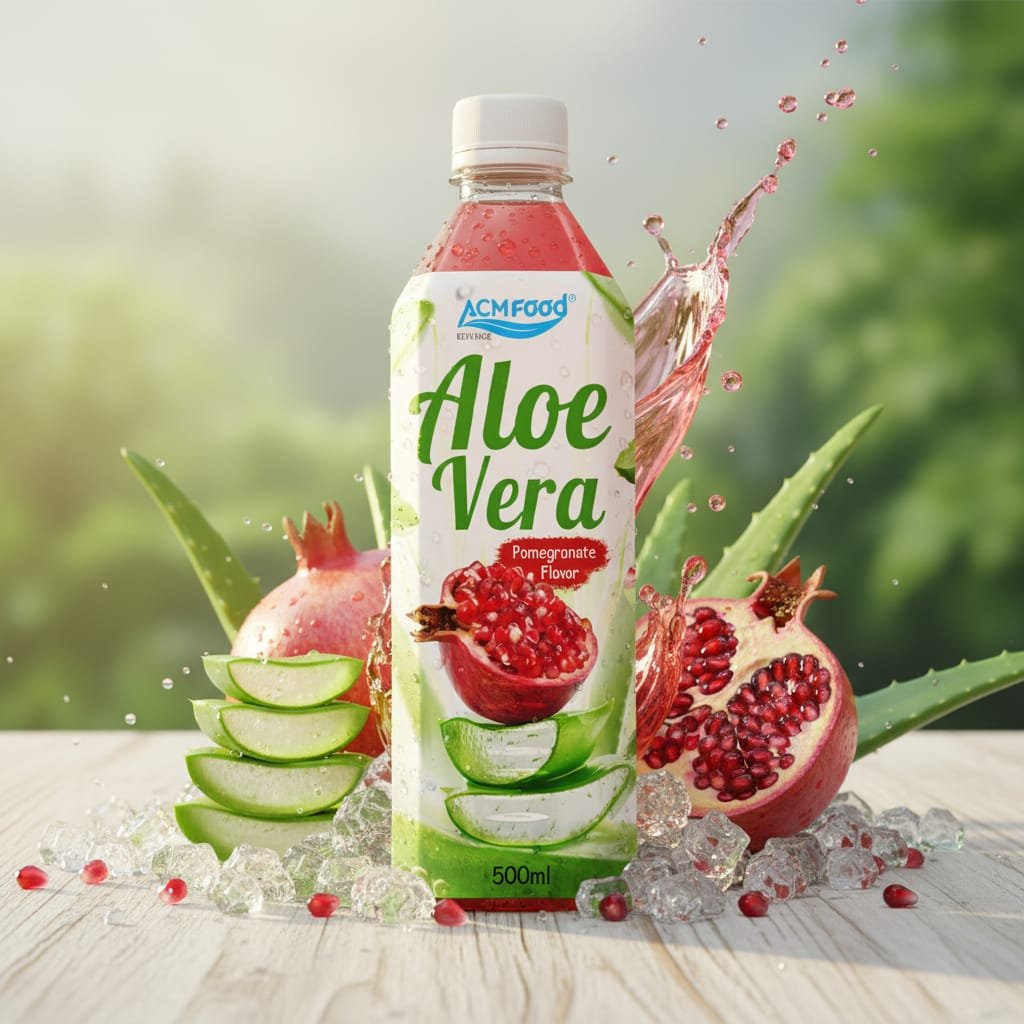
Aloe latex versus aloe gel — the distinction that matters
Most confusion about aloe vera drinks comes from treating the plant as one ingredient. It is two.
| Aloe latex | Aloe gel (inner fillet) | |
|---|---|---|
| Where it sits | Just under the leaf skin | Centre of the leaf |
| Contains aloin | Yes | No, once properly filleted |
| Effect | Strong laxative | Neutral |
| Permitted in EU food | No | Yes, decolourised |
| Taste | Bitter | Almost none |
Commercial aloe vera drinks use decolourised inner-leaf gel. Decolourisation — usually activated carbon filtration — removes residual aloin. For an exporter, the practical requirement is a certificate of analysis showing aloin below the applicable limit for each destination.
This is not a minor compliance detail. It is the single most common reason an aloe vera beverage is rejected at import.
Why aloe drinks are always flavoured
Properly decolourised aloe gel has almost no taste. That is a feature for formulation — it carries whatever flavour you pair with it — but it means an unflavoured aloe drink has nothing to sell except texture.
Pomegranate works for three reasons:
- Colour. Aloe gel is translucent; pomegranate gives the liquid a colour that reads as fruit while leaving the cubes visible.
- Acidity. Lower pH improves microbiological stability in a product that is otherwise close to neutral.
- Positioning. Pomegranate carries a recognised wellness association, which suits the category without requiring a health claim.
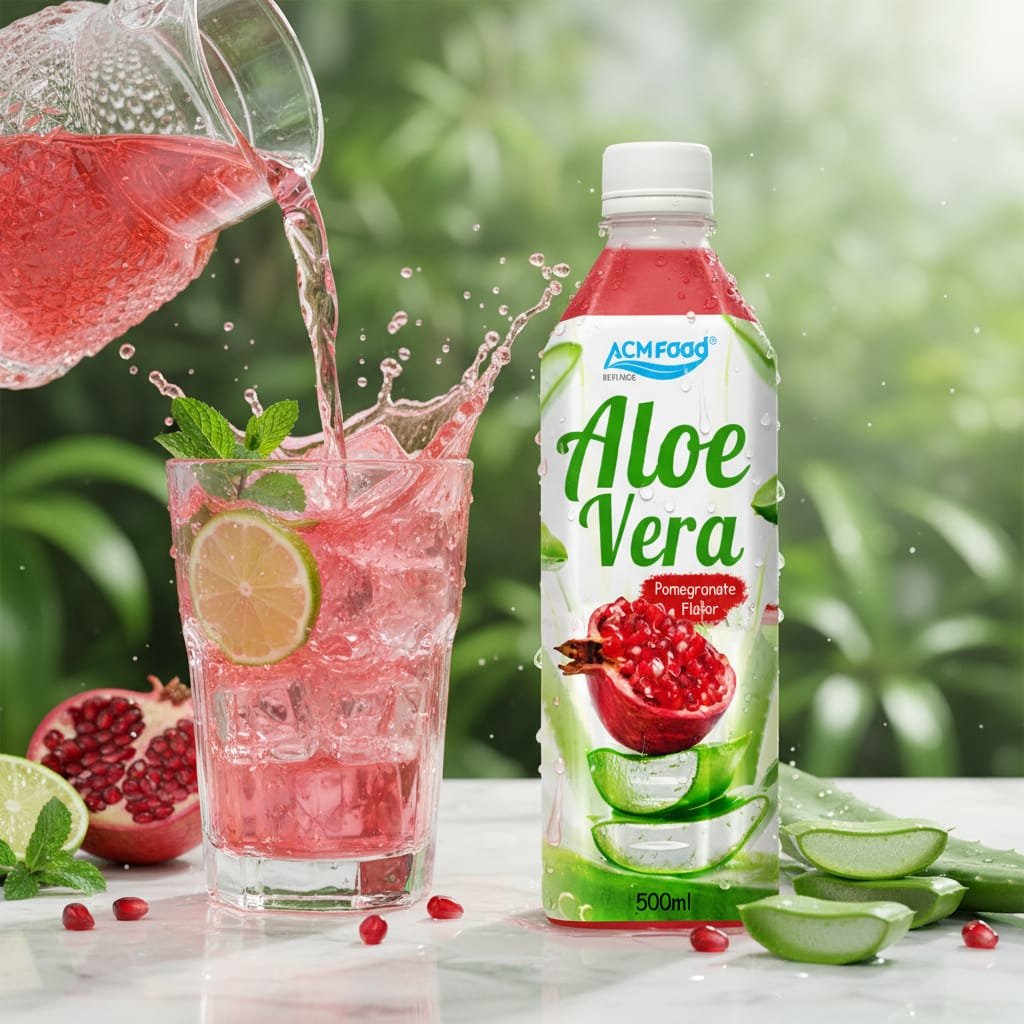
What pomegranate actually contributes
Pomegranate is genuinely rich in punicalagins — ellagitannins largely specific to the fruit — and in anthocyanins. Trials on pomegranate juice and cardiovascular markers have produced reasonable, if not conclusive, results.
Two caveats for a blended product:
- Dose matters. The research uses pomegranate juice at meaningful volumes. A flavoured aloe drink with a small juice share delivers a fraction of that.
- Flavouring is not juice. “Pomegranate flavour” and “pomegranate juice” are different declarations. Only the second contributes polyphenols.
Claims to avoid in this category
- “Aloe vera detoxes or cleanses internally.” The liver and kidneys do that continuously. Historically this claim traded on the laxative effect of aloin — the very compound that must be removed.
- “Clinically proven digestive benefits.” Evidence for decolourised aloe gel in drinks is limited. Stating it as proven invites regulatory trouble.
- “Boosts immunity.” Not supported, and a regulated claim in most markets.
- “Antioxidant benefits” on a flavour-only product. If there is no pomegranate juice, there are no pomegranate polyphenols.
The defensible position is straightforward: a low-calorie drink with a distinctive texture, made with compliant decolourised aloe and a declared percentage of real juice.
Formulation variables that decide the product
- Aloin level. Non-negotiable, and destination-specific. Get the certificate of analysis.
- Cube size and drained weight. The visible pulp is the reason the category exists.
- Suspension system. Aloe cubes settle. Keeping them evenly distributed through shelf life is the hardest technical problem here.
- Sugar level, increasingly set by destination thresholds rather than by taste.
- Juice percentage versus flavouring — this sets both cost and what you may claim.
- pH, which affects both microbiological stability and anthocyanin colour retention.
Frequently asked questions
Is aloe vera juice safe to drink?
Decolourised inner-leaf aloe gel, as used in commercial drinks, is permitted in food. Aloe latex containing aloin is a different material with a strong laxative effect, and hydroxyanthracene derivatives from aloe are prohibited in food under EU rules. Buy products from manufacturers who can document aloin levels.
What is aloin and why does it have to be removed?
Aloin is a hydroxyanthracene derivative found in the latex just beneath the aloe leaf skin. It acts as a strong laxative, and EU Regulation 2021/468 prohibits it in food. Commercial aloe drinks use decolourised gel with aloin filtered out.
Does aloe vera juice aid digestion?
Evidence for decolourised aloe gel in beverages is limited. Much of the historical reputation came from aloin’s laxative action — which is precisely the compound now removed. Treat digestive claims cautiously.
Does aloe vera pomegranate juice contain real pomegranate?
It depends on the product. “Pomegranate flavour” indicates flavouring and no polyphenols; a declared juice percentage indicates real fruit. Check the ingredient list rather than the front of pack.
Why do the aloe pieces sink to the bottom?
Aloe cubes are denser than the surrounding liquid and settle over time. This is normal and not spoilage. Keeping them suspended through an 18-month shelf life is the main formulation challenge in the category — shake before drinking.
Is aloe vera juice suitable during pregnancy?
Guidance is cautious, largely because of historical aloin content. Decolourised gel drinks are a different product, but anyone pregnant should check with a healthcare professional rather than relying on the label.
Aloe vera beverages from ACM Beverage
ACM Beverage manufactures aloe vera drinks in Vietnam under OEM and private label terms, in facilities certified to ISO 22000, FSSC 22000 and HACCP, exporting to more than 40 countries. Aloin documentation, cube specification and the suspension system are the three things worth settling before anything else in this category.
See the 500 ml aloe vera juice with pomegranate or the aloe vera juice range (42 SKUs). For export requirements generally see the five factors that decide a beverage launch. To request documentation, contact our export team.
Regulatory information above is for orientation and changes over time. Confirm current requirements with the relevant authority before finalising a specification. This article is not medical advice.






