














Strawberries contain 58.8 mg of vitamin C per 100 g — more than oranges, at 53.2 mg (USDA FoodData Central). They are also low in sugar for a fruit, at about 4.9 g per 100 g. Juicing keeps the vitamin C and anthocyanins but strains out the 2 g of fibre.
Key facts at a glance
- Vitamin C: 58.8 mg per 100 g — higher than orange, kiwi or grapefruit.
- Energy: 32 kcal per 100 g, among the lowest of common fruits.
- Sugar: ~4.9 g per 100 g — roughly half that of an apple.
- Fibre: 2.0 g per 100 g in whole fruit; largely removed by juicing.
- Red pigment: pelargonidin-3-glucoside, the anthocyanin specific to strawberries.
- Watch: “strawberry drink” often means 10–20% juice plus added sugar. Read the label.
Strawberry nutrition per 100 g
| Nutrient | Per 100 g raw | Why it matters |
|---|---|---|
| Energy | 32 kcal | Very low energy density |
| Vitamin C | 58.8 mg | Exceeds an adult daily reference intake in ~150 g |
| Sugars | 4.9 g | Low for a fruit |
| Fibre | 2.0 g | In the flesh and seeds; lost on straining |
| Potassium | 153 mg | Blood pressure regulation |
| Folate | 24 µg | Cell division; relevant in pregnancy |
| Manganese | 0.39 mg | Enzyme cofactor; strawberries are a notable source |
Values from USDA FoodData Central for raw strawberries. Juice values differ — see below.
What strawberry juice genuinely does
1. More vitamin C than citrus
This is the fact most people get wrong. At 58.8 mg per 100 g, strawberries beat oranges by a clear margin. Around 150 g — seven or eight medium berries — covers an adult’s full daily reference intake. Vitamin C supports normal immune function, is required for collagen synthesis, and improves absorption of non-haem iron eaten in the same meal.
2. Low sugar for a fruit juice
Pure strawberry juice carries roughly half the sugar of apple or orange juice. In a category where sugar is the main nutritional objection, that is a genuine advantage — provided the product is actually juice rather than a sweetened drink.
3. Anthocyanins with real research behind them
The red colour comes from pelargonidin-3-glucoside. Anthocyanins are among the better-studied polyphenols, with observational associations to cardiovascular markers. The evidence supports “associated with” rather than “prevents”, and applies to regular dietary intake rather than a single glass.
4. Potassium and folate
153 mg of potassium per 100 g contributes to blood pressure regulation, and folate content is useful — particularly relevant during pregnancy, though supplementation guidance still applies.
What strawberry juice will not do
- “The fibre lowers cholesterol.” Whole strawberries contain 2 g of fibre per 100 g; strained juice retains very little. If fibre is the goal, eat the fruit or keep the pulp.
- “It reduces cancer risk.” Diets rich in fruit and vegetables are associated with lower risk of some cancers. No single juice has been shown to prevent cancer, and it should not be presented that way.
- “It reverses skin ageing.” Vitamin C is a required cofactor for collagen synthesis, which supports normal skin. That is a long way from reversing ageing.
- “Strawberry drinks are low in sugar.” Pure juice is. A “strawberry drink” or “nectar” may contain as little as 10% juice with sugar added — often more sugar than a soft drink.
Juice, drink or nectar: reading the label
| Label term | Typical juice content | Added sugar |
|---|---|---|
| 100% strawberry juice | 100% | None permitted |
| Strawberry nectar | ~25–50% | Usually yes |
| Strawberry juice drink | ~10–20% | Usually yes |
| Strawberry flavoured drink | May be 0% | Yes |
Definitions vary by market, but the ranking holds. Compare sugar per 100 ml rather than per serving, since serving sizes differ between products.
How to get the most from strawberry juice
- Keep the pulp. Straining removes fibre and a share of the anthocyanins with it.
- Drink within 20 minutes. Vitamin C oxidises on contact with air, and anthocyanins fade with light.
- Do not add sugar. Ripe strawberries need none; underripe ones need better strawberries.
- Pair with iron-rich plant foods. The vitamin C improves non-haem iron absorption in the same meal.
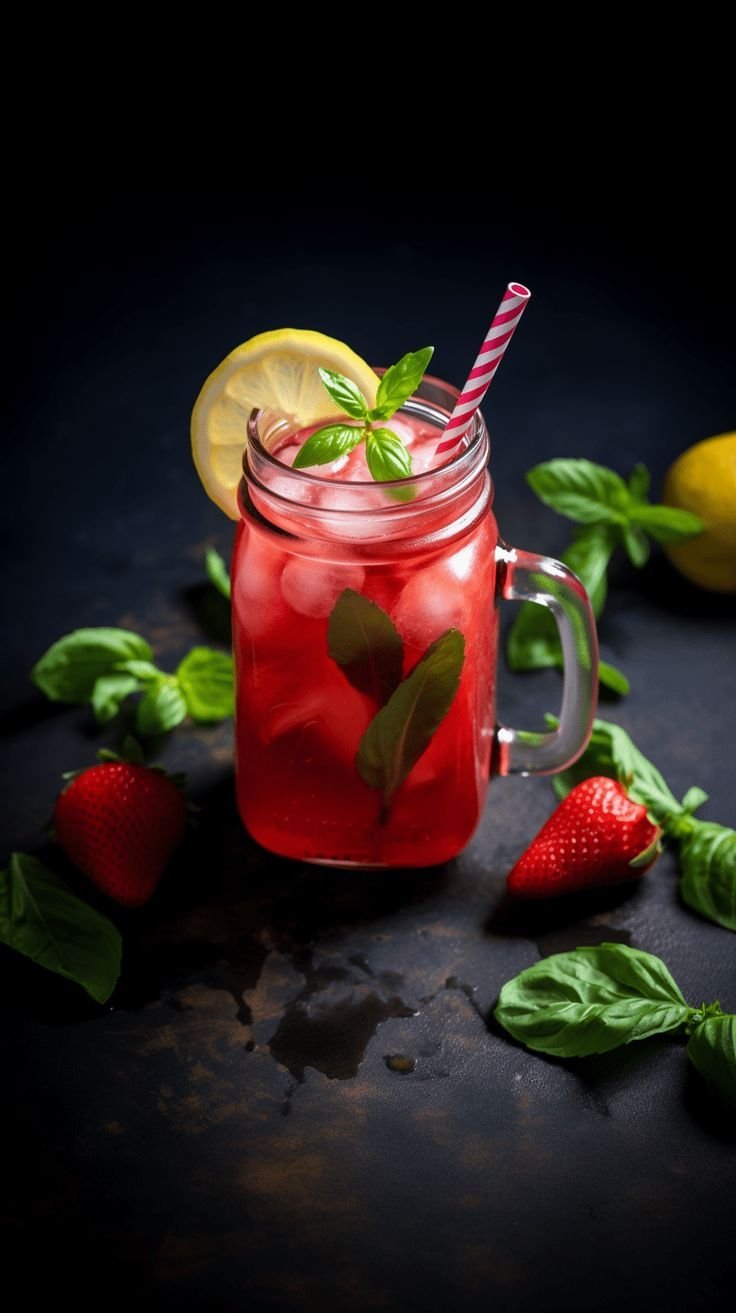
- Add basil, mint or lemon rather than sweetener if the flavour needs lifting.
Frequently asked questions
Do strawberries have more vitamin C than oranges?
Yes. Strawberries contain 58.8 mg per 100 g against 53.2 mg for oranges. About 150 g of strawberries covers an adult’s daily reference intake of vitamin C.
Is strawberry juice high in sugar?
Pure strawberry juice is comparatively low — strawberries carry about 4.9 g of sugar per 100 g, roughly half an apple. Commercial “strawberry drinks” are a different matter, since they often add sugar to a small share of real juice.
Is strawberry juice as good as eating strawberries?
Not quite. Juice retains the vitamin C, potassium and anthocyanins but loses most of the 2 g of fibre per 100 g. Keeping the pulp narrows the gap. Whole fruit remains the better option if fibre matters.
Can strawberry juice help with skin?
Vitamin C is required for collagen synthesis, so adequate intake supports normal skin. That is a maintenance role, not a corrective one — it will not reverse existing wrinkles, and claims to that effect are not supported.
Who should avoid strawberries?
People with a strawberry or birch-pollen related allergy, which can cause oral allergy syndrome. Strawberries are also moderately high in salicylates, which matters for the small number of people who are sensitive.
Does freezing affect strawberry nutrition?
Very little. Freezing shortly after harvest preserves vitamin C well — often better than fresh berries stored for several days. Frozen strawberries are a reasonable substitute for juicing.
Strawberry beverages at commercial scale
ACM Beverage manufactures strawberry juices and juice drinks in Vietnam under OEM and private label terms, in facilities certified to ISO 22000, FSSC 22000 and HACCP, exporting to more than 40 countries. Colour stability is the main technical challenge in this category: strawberry anthocyanins degrade with heat and light, so the pink in a finished product depends on process design as much as on fruit content.
See the strawberry juice range (9 SKUs), the mixed fruit juice range (18 SKUs), or read NFC versus from concentrate. To discuss a formulation, contact our export team.
This article is general nutrition information, not medical advice. Consult a qualified healthcare professional about your own diet.






