





Coconut water can support heart health mainly through potassium: a 330 ml glass provides about 825 mg, nearly a quarter of the WHO’s recommended 3,510 mg a day, and higher potassium intake is linked to lower blood pressure. Direct evidence for coconut water itself is limited to a few small studies. It is a helpful swap for sugary drinks, not a treatment.
Key facts at a glance
- Potassium: about 250 mg per 100 ml (USDA).
- Low energy: about 19 kcal per 100 ml, with no fat or cholesterol.
- Sodium: about 105 mg per 100 ml — not negligible for people on low-sodium diets.
- Direct trials are small. The blood pressure link comes mostly from potassium research in general.
- Not for everyone: people with kidney disease or on certain heart medicines must limit potassium.
How coconut water may help the heart
Potassium and blood pressure
Potassium helps the body excrete sodium and relaxes blood-vessel walls. Meta-analyses of potassium intake show meaningful reductions in blood pressure, especially in people with high blood pressure and high salt intake. Coconut water is one convenient source, alongside fruit, vegetables and beans.
Replacing sugary drinks
Swapping a 330 ml soft drink (about 35 g sugar) for unsweetened coconut water (about 9 g natural sugar) cuts roughly 100 kcal and 26 g of sugar. High sugary-drink intake is linked to higher cardiovascular risk.
What is not supported
- “Alkalising” or anti-inflammatory effects — no good human evidence.
- Lowering cholesterol — results come from animal studies only.
- Improving heart rhythm — no evidence in people; potassium disorders need medical care.

Coconut water nutrition
| Nutrient | Per 100 ml | Per 330 ml |
|---|---|---|
| Energy | 19 kcal | 63 kcal |
| Sugars | 2.6 g | 8.6 g |
| Potassium | 250 mg | 825 mg |
| Sodium | 105 mg | 347 mg |
| Magnesium | 25 mg | 83 mg |
| Fat / cholesterol | 0.2 g / 0 | 0.7 g / 0 |
Source: USDA FoodData Central. Packaged products vary.
How to drink it
- One glass a day (250–330 ml) is a sensible amount for healthy adults.
- Choose 100% coconut water with no added sugar.
- Count it as part of your diet, not a replacement for fruit, vegetables and lower salt intake.
- Any time of day works; after exercise and in hot weather are the most practical.
Who should be careful
- People with chronic kidney disease, who may not clear potassium.
- People taking ACE inhibitors, ARBs, spironolactone or other potassium-sparing diuretics.
- People told to restrict sodium or fluid, for example in heart failure.
Very large intakes have caused dangerous hyperkalaemia in rare case reports. If you have a heart or kidney condition, ask your doctor before drinking coconut water regularly.
Frequently asked questions
Is coconut water good for high blood pressure?
Its potassium may help modestly as part of a balanced diet. It does not replace blood pressure medication.
Is coconut water good for the heart?
It is a low-calorie, fat-free source of potassium and a better choice than sugary drinks. Evidence of a direct heart benefit from coconut water itself is limited.
Does coconut water contain cholesterol?
No. Coconut water is virtually fat-free. Coconut milk and coconut oil, by contrast, are high in saturated fat.
How much coconut water is safe per day?
For healthy adults, about one glass (250–330 ml) a day. People with kidney problems or on potassium-raising medicines should ask their doctor.
Can people with heart disease drink coconut water?
Often yes, but many heart medicines affect potassium levels. Check with your doctor first.
Coconut water from ACM Beverage

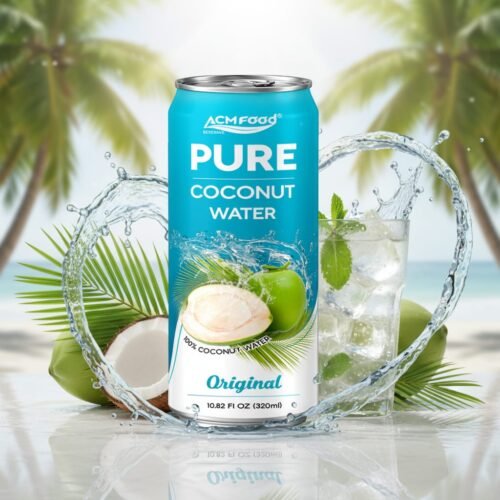
ACM Beverage produces 100% coconut water in Vietnam for OEM and private label customers. See the 500 ml coconut water original or the coconut water range. Related reading: coconut water nutrition facts and the best time to drink coconut water.
This article is general information, not medical advice.